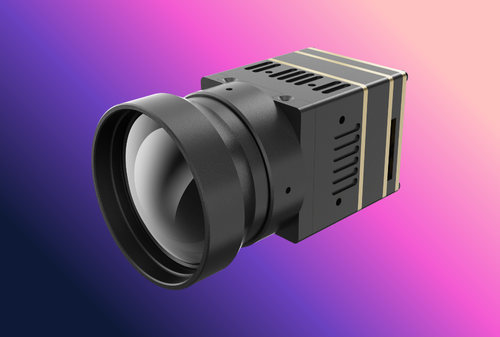
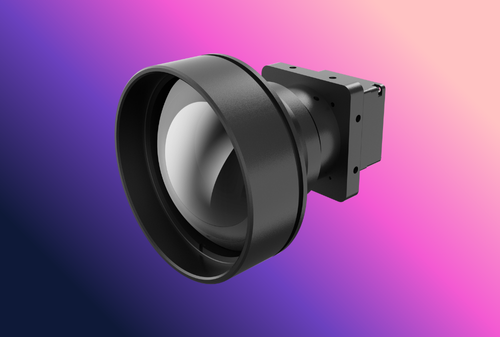
In thermal camera module projects, optical performance is often discussed in terms of sensor, lens material, focal length, and image quality. Those factors matter, but they are not enough by themselves. A strong optical design can still become unstable if the mechanical mounting around the lens is not controlled tightly enough. In real OEM products, small tolerance drift, weak thread retention, or inconsistent assembly force can turn a good module into an inconsistent one.
Table of Contents
ToggleThat is why lens mount tolerance and thread lock rules matter. For a thermal camera module supplier, the lens mount is not only a mechanical detail. It is part of focus stability, part of optical repeatability, and part of what determines whether the delivered module can survive transport, pilot build, and long-term integration without drifting away from the approved baseline.
Why Mount Control Matters
A thermal camera module can look excellent during early engineering work and still become problematic later if the lens mounting structure is too loose, too variable, or too dependent on manual judgment. In the lab, one skilled engineer may focus the module carefully and achieve a strong image result. Later, another build of the same module may look slightly softer, slightly shifted, or less stable after handling. The optical design itself may not have changed at all. The real cause may be in mount tolerance, thread condition, or retention weakness.
For thermal camera modules, this matters because the lens mount sits directly at the boundary between optics and manufacturing. If the mount does not control the lens position reliably, then focal baseline, optical alignment, and even customer confidence can all suffer. The project may first suspect calibration or software, but the problem often starts in a mechanical layer that was treated as simple.
A strong mount-control strategy reduces that risk by making optical positioning more repeatable and more durable.
What These Rules Should Do
A good lens-mounting guide should do four things.
First, it should define the mechanical tolerance areas that matter most to optical stability.
Second, it should explain how thread engagement and retention affect real delivered quality.
Third, it should reduce unit-to-unit variation during assembly.
Fourth, it should protect the approved focus state from drift after shipment and integration.
The goal is not to overcomplicate the lens mount. The goal is to make it stable enough that the module behaves like a controlled OEM component rather than like a lab-adjusted sample.
Why the Lens Mount Is a System Issue
It is easy to think of the lens mount as only a local hardware feature. In practice, it affects the whole OEM system. If the mount is inconsistent, the module may not match the approved golden sample. Incoming inspection becomes harder. Pilot build may show wider unit spread than expected. The host product may need more image recheck, more support effort, or more incoming review than planned.
For thermal camera modules, this is especially important because the buyer usually treats the delivered module as a defined baseline. If that baseline can drift because of mechanical weakness around the lens, the supplier loses one of the most important qualities in B2B work: repeatability. A mount problem therefore becomes much more than a drawing problem. It becomes a delivery-confidence problem.
What Mount Tolerance Means Here
Mount tolerance refers to the controlled dimensional and positional limits that determine how the lens sits relative to the module and how repeatably that position can be achieved from unit to unit. This includes thread fit, concentricity, seating depth, axial position, radial stability, interface straightness, and the consistency of the surrounding mechanical support.
For thermal camera modules, the lens does not only need to fit physically. It needs to sit in a position that supports the intended optical baseline. If tolerance spread is too wide, the same lens and the same sensor can still produce different practical imaging results across otherwise similar modules.
That is why optical repeatability starts with mechanical tolerance discipline.
What Thread Lock Means Here
Thread lock refers to the method used to keep the lens from shifting after the focus state and optical position have been approved. In many lens-mounted module designs, the lens position is established through thread engagement and then protected by a locking method.
For thermal camera modules, the lock method may involve adhesive, mechanical retention, controlled torque interaction, secondary locking geometry, or another design approach. The exact method depends on the mount architecture. The important point is that focus approval is not enough by itself. The approved position must remain stable through handling, transport, assembly, and normal product life.
A lens that is well focused but weakly locked is still a weak delivery state.
Tolerance and Optical Baseline Are Connected
The mount tolerance strategy should always connect back to the optical baseline the project is trying to protect. If the project does not know how much positional variation the optical system can tolerate, then the mount rule becomes vague and usually too loose.
For thermal camera modules, this means optics and mechanics must work together. The module team should understand which tolerance directions matter most to focus and alignment. A mount may appear mechanically acceptable while still being optically too loose. On the other hand, an over-tightened tolerance strategy may create unnecessary manufacturing difficulty without improving real product behavior enough to justify the cost.
The most useful question is practical: which mechanical variation actually threatens the approved optical result?
Focus Drift Often Starts in the Mount
Many focus-drift problems are blamed on optics or adhesive quality first. In reality, the mount geometry itself often sets the risk level. If the thread fit is inconsistent, if the seating behavior changes too much across units, or if the retention strategy depends too much on uncontrolled friction, then the approved focus position becomes harder to keep stable.
For thermal camera modules, this matters because even small movement at the mount can influence the final image enough to create uncertainty in incoming inspection, pilot comparison, or field-use confidence. The project may not always see catastrophic failure. More often it sees “slightly different” behavior that is difficult to explain. That is exactly the kind of variation a stronger mount rule is meant to prevent.
Axial Tolerance Matters Most for Focus
In many lens-mounted systems, axial position is one of the most critical tolerance dimensions because it directly affects focus. If the lens sits slightly too far forward or too far back relative to the intended baseline, the optical result shifts.
For thermal camera modules, this means the mount and focus workflow should pay close attention to how axial position is established, verified, and preserved. The thread itself may allow adjustment, but once the final position is set, the mechanical system should be able to hold that position repeatably. If axial control remains too sensitive to assembly variation, focus consistency becomes weak even if the optical parts are nominally correct.
This is one reason why thread and lock quality cannot be separated from focus quality.
Radial Stability Matters for Alignment
Axial position affects focus strongly, but radial stability also matters because it influences alignment and consistency. If the lens can sit off-center, tilt slightly, or settle inconsistently inside the mount structure, image behavior may vary across units even when focus is nominally acceptable.
For thermal camera modules, this is especially important in tighter optical designs where small mount variation can affect the effective image baseline, edge behavior, or relative optical centering. The customer may not describe the problem as “radial tolerance.” The customer may simply say that one lot feels less consistent or that one unit does not match the approved sample closely enough.
That is why radial support and thread quality should be treated as real optical control points, not only machining details.
Thread Geometry Should Be Chosen for Repeatability
The thread design itself influences how repeatably the lens can be adjusted and retained. If the thread is too loose, too shallow, too rough, or too inconsistent, the optics process becomes harder to stabilize. If the thread is overly sensitive to manufacturing spread, then assembly outcomes may depend too much on operator feel.
For thermal camera modules, the thread should therefore be selected not only for manufacturability, but also for controlled optical adjustment and retention. The team should consider whether the chosen geometry supports smooth focus adjustment, predictable seating, and stable post-lock behavior. A design that works only under careful engineering handling may not be strong enough for pilot or production use.
Good thread design makes the later workflow easier. Weak thread design forces the process to compensate for hardware inconsistency.
Thread Engagement Length Matters
Thread engagement length is also important. If the lens engages too little, mechanical stability and lock reliability may be weak. If it engages more fully, the mount usually gains better positional support and better retention margin, although packaging and assembly constraints may increase.
For thermal camera modules, this should be reviewed as part of the optical-mechanical trade-off. The smallest and fastest mount is not always the most stable one. A mount with insufficient engagement may look acceptable in prototype use but become more sensitive to transport, repeated handling, or tolerance spread later.
The key question is not only whether the lens can be assembled. It is whether the mounted lens remains trustworthy afterward.
Mount Tolerance Should Match the Product Stage
Like many other control rules, mount tolerance strategy should evolve by project stage. Early engineering work may allow more flexibility. Later stages should reduce that flexibility.
For thermal camera modules, EVT may tolerate a more engineering-driven focus process while the project learns the optical direction. DVT should tighten mount understanding, thread performance, and tolerance awareness. Pilot and production stages should move toward a more repeatable mounting method with clearer retention and stronger unit-to-unit control. If the mount strategy does not mature with the project, later production confidence stays weaker than it should.
A project that still relies on engineering judgment at the mount level too late is often carrying hidden optical risk.
Mount Tolerance and Golden Sample Control
If the project uses a golden sample, the mount state of that sample should be especially well understood. The golden sample is not only the “best image” unit. It is the reference baseline for later comparison.
For thermal camera modules, that means the lens mount of the golden sample should reflect the intended production logic as closely as practical. If the golden sample was focused and locked through an unusually careful manual process that cannot be repeated later, then it may become a misleading reference. The project will keep comparing future units against an optical standard that the mount process cannot reproduce reliably.
A stronger golden sample is one whose optical quality and mount process both make sense for future controlled builds.
Locking Method Must Be Intentional
The thread lock method should be chosen intentionally rather than added at the last moment. Too many module programs treat locking as a secondary step after focus has already been solved. In reality, the lock method is part of how the approved focus survives.
For thermal camera modules, the right lock method depends on thread geometry, material pairing, assembly process, cure conditions if adhesive is used, future service expectation, and environmental stress. The lock should be strong enough to preserve the approved state but not so uncontrolled that it introduces new position shift during curing or retention. The method should also fit the project’s production reality. A lock method that works only in very slow manual engineering flow may not be appropriate for a more repeatable build environment.
A good lock method protects the optics without destabilizing the assembly process.
Adhesive Lock Is Not Automatically Enough
In many designs, thread lock uses adhesive. Adhesive can be useful, but it should not be treated as a universal answer. If the thread geometry is poor or the tolerance spread is already too wide, adhesive may only freeze inconsistency rather than solve it.
For thermal camera modules, adhesive-related questions should include where the adhesive is applied, how much is applied, what positional shift risk exists before cure completion, whether the cure environment is controlled, and how the process avoids contamination of nearby optical surfaces. If those questions are ignored, the lock process may create variation rather than remove it.
Adhesive should support a good mount design. It should not be expected to rescue a weak one.
Mechanical Lock Features May Improve Stability
In some projects, a purely adhesive locking strategy may not be the strongest long-term solution. Depending on the product and the risk profile, secondary mechanical features can help improve consistency and stability.
For thermal camera modules, this may involve structure that limits post-adjustment movement, improves retention consistency, or reduces reliance on one variable process step. The correct method depends on the module architecture. The larger point is that the locking strategy should be reviewed like a real design decision, not only like a workshop habit.
If the OEM product will face significant vibration, transport stress, or repeated handling, stronger mechanical logic around the mount often becomes more valuable.
Thread Lock Should Not Disturb Focus
A frequent hidden problem is that the lock process itself changes the focus state. The lens may be adjusted correctly, but the lock operation introduces small movement during adhesive application, cure, handling, or retention.
For thermal camera modules, this is one of the clearest reasons why lock and focus cannot be treated as separate worlds. The workflow should verify not only that the lens can be focused, but that it stays in the correct state after the lock step is complete. If the lock changes the result unpredictably, then the process is still weak even if the mount looks secure afterward.
This is especially important in pilot and production stages where the project can no longer rely on re-adjusting each unit through slow expert review.
Incoming Inspection Should Watch the Mount State
If lens position is part of the approved module baseline, then incoming inspection and lot review should have at least some awareness of mount state. The buyer does not always need to evaluate the thread directly, but it should be able to detect whether the received optical state still appears consistent with the approved delivery condition.
For thermal camera modules, this is useful because mount drift may not be obvious from a pure electrical inspection. If the OEM buyer receives a lot that is mechanically and electrically intact but optically less consistent, the root cause may still trace back to mount tolerance or retention weakness. Better incoming awareness helps catch that earlier.
This is one more reason why mount control belongs in the OEM conversation, not only inside supplier manufacturing.
Tolerance Stack-Up Can Shift the Whole Optical Result
The mount does not exist in isolation. Thread behavior, lens barrel tolerance, module housing tolerance, carrier support, and fixture alignment can all contribute to the final optical outcome. If the team reviews each piece separately but ignores the full stack-up, it may underestimate the real variation risk.
For thermal camera modules, stack-up awareness is important because the optical result is often more sensitive than any one mechanical drawing suggests. A small variation in several directions at once may produce a larger visible image effect than the team expected. The strongest projects therefore do not only define one “good” mount dimension. They evaluate how the full stack behaves in the actual product context.
That is how mount tolerance becomes a system-level quality control point.
Transport and Handling Can Expose Weak Retention
A lens mount that looks stable on the assembly bench may still be weak under transport, field handling, or repeated internal project use. This is why mount control should also connect to packaging, vibration review, and reliability planning.
For thermal camera modules, this matters because a customer may evaluate one sample in the lab and later receive another after shipment that no longer matches the same optical behavior as closely. The difference may not be in the lens design. It may be in how well the mount retained the approved position through movement and handling.
A strong thread-lock strategy should therefore be judged by post-handling stability, not only by initial assembly feel.
Pilot Build Is the Real Test of the Mount Process
Pilot build is one of the most useful stages for exposing whether the mount and lock process is truly repeatable. In engineering, one or two modules can often be made to look excellent. In pilot, the question changes: can multiple units be built with the same optical behavior using the defined process?
For thermal camera modules, pilot build should therefore review mount repeatability explicitly. Are focus outcomes staying close enough across units? Is the lock method stable? Does the thread process create too much operator dependence? Are any units shifting after handling or short reliability screens? If the mount process is weak, pilot build will usually expose it.
That is why pilot results should feed back into both tolerance review and lock-method refinement.
Mount Rules Should Connect to the Focus Workflow
The lens mount rule and the focus workflow should never be separated. A focus process that ignores mount variation is incomplete, and a mount process that ignores focus sensitivity is incomplete.
For thermal camera modules, the best approach is to treat them as one integrated optical-mechanical control loop. The module should define how the lens is adjusted, how the mount supports that adjustment, how the lock protects it, and how the result is verified afterward. If any one of those layers is weak, the total module quality becomes less repeatable.
A good mount rule therefore makes the focus workflow easier, not more fragile.
Mount Tolerance and Yield
Mount consistency also affects yield. If thread behavior, seating, or retention is too variable, the optics workflow may need extra rework or extra inspection to achieve acceptable results. Over time, this reduces production efficiency and raises cost even if final units can still be recovered.
For thermal camera modules, this matters commercially as well as technically. An OEM buyer may not initially ask about thread yield, but it will care if lot consistency, supply reliability, or pilot timing begin to suffer because the lens mount is too difficult to control in practice. That is why a mature supplier treats mount tolerance as part of manufacturability, not just part of optics.
The best mount design supports both image consistency and stable production yield.
Lens Mount and Thread Lock Matrix
A simple matrix helps keep the design rules practical.
| Control area | Main question | Main output |
|---|---|---|
| Axial tolerance | Does the lens sit at the intended optical depth? | Better focus consistency |
| Radial stability | Does the lens remain centered and stable? | Better alignment repeatability |
| Thread geometry | Does the mount support controlled adjustment? | Smoother and more repeatable assembly |
| Engagement length | Is the lens retained with enough stability? | Stronger mechanical support |
| Lock method | Does the approved focus survive handling and shipment? | Reduced drift risk |
| Post-lock verification | Does the optical result stay correct after locking? | Better delivery confidence |
| Pilot consistency | Can the process reproduce the same optical state across units? | Stronger OEM readiness |
This kind of structure helps the team treat the mount as a controlled optical interface rather than only as a threaded hardware detail.
Common Mistakes
Several mistakes appear repeatedly in thermal camera module lens mounting. One is assuming that a manually focused engineering sample proves the mount process is already good enough. Another is using adhesive as the main answer without checking whether thread geometry and tolerance are already stable enough. Another is focusing the lens carefully but failing to verify the result after locking. Another is ignoring how transport and pilot handling may expose weak retention.
A further mistake is evaluating mount quality only from the mechanical side and not from the optical result it is supposed to protect. For module projects, the strongest mount strategies are not the ones with the most complicated locking method. They are the ones that keep the optical baseline repeatable across real project conditions.
Conclusion
Thermal camera module lens mount tolerance and thread lock rules are essential for stable optical delivery. They help the supplier turn one good focus result into a repeatable and durable module baseline by controlling lens position, retaining the approved optical state, and reducing unit-to-unit variation.
For OEM buyers, this improves confidence that the delivered module will stay close to the approved reference after transport, receiving, pilot build, and normal integration handling. For suppliers, it reduces support friction, improves lot consistency, and helps the optics workflow scale more cleanly into controlled production. For both sides, it turns the lens mount from a hidden variability source into a deliberate quality-control point.
The most useful principle is simple: do not ask only whether the lens can be focused. Ask whether the mount can hold that focus, repeat that focus, and protect that focus across real OEM use.
FAQ
Why do lens mount tolerances matter in a thermal camera module?
Because small mount variation can affect focus stability, optical alignment, and unit-to-unit consistency even when the lens and sensor are nominally the same.
Is thread lock only a mechanical detail?
No. Thread lock directly affects whether the approved optical state remains stable after handling, transport, and normal integration use.
Can adhesive alone solve lens mount stability?
Not always. Adhesive can help, but if the thread geometry or mount tolerance is weak, adhesive may only freeze variation rather than solve it.
Why should post-lock verification be included?
Because the locking step itself can disturb the focus state. A module should be verified after locking, not only before it.
What is the biggest mount-control mistake?
A common mistake is assuming that one well-focused engineering sample proves the mount and locking process are already repeatable enough for OEM delivery.
CTA
If you are building an OEM or integration product around a thermal camera module, stronger lens mount tolerance and thread lock control will improve optical consistency and reduce avoidable focus drift. For project discussion, please visit CONTACT.