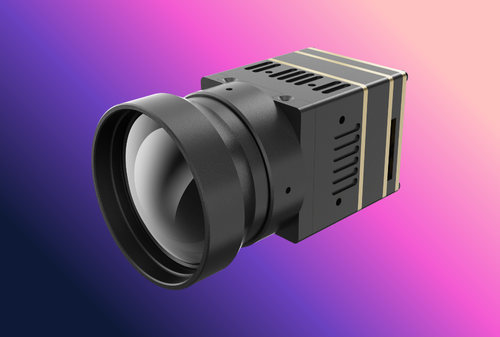
In thermal camera module projects, many teams choose the sensor, lens, and interface carefully, then treat the front window and optical path as a secondary enclosure decision. That usually looks reasonable at first. The module works on the bench, the housing closes, and the product appears mechanically complete. Later, problems begin to appear: image clarity seems lower than expected, transmission feels weaker, reflections show up in certain scenes, contamination becomes harder to control, or mechanical packaging starts affecting optical consistency.
Table of Contents
ToggleThat is why infrared window and optical path design matter. For a thermal camera module supplier or OEM integrator, the optical path is not only the lens. It includes everything between the target scene and the sensing core. Once an IR window, enclosure cavity, protective cover, or mounting structure enters that path, the module is no longer operating in the same condition as the open-bench sample.
Why IR Window Design Matters
A thermal camera module is often validated early in open optical conditions. The lens sees the scene directly, without a final front window, final housing geometry, or final contamination-control structure. In a real OEM product, those elements are usually added later. The moment they are added, the optical system changes.
For thermal camera modules, this matters because a poor front-window decision can reduce the value of an otherwise strong module. Transmission may drop. Reflections may increase. Mechanical spacing may become harder to control. Condensation or contamination risk may rise. In some projects, the module still works, but it no longer matches the performance impression created by the original sample.
A strong IR window strategy reduces that risk by treating the window and the optical path as part of the module integration baseline, not as a cosmetic housing feature added at the end.
What This Guide Should Do
A useful IR window and optical path guide should do four things.
First, it should explain why the window is part of the optical system.
Second, it should help the OEM team choose a window strategy that supports real product use.
Third, it should reduce avoidable performance loss caused by enclosure and front-end design.
Fourth, it should make validation more realistic before pilot build or production release.
The goal is not to force one universal optical stack for every project. The goal is to help the team make window and path decisions that still preserve the value of the chosen thermal camera module.
The IR Window Is Not Just a Cover
One of the most common mistakes in module integration is thinking of the infrared window as only a protective cover. In reality, once the window sits in front of the lens, it becomes part of the imaging path. It affects how much energy reaches the sensor, how reflections behave, how contamination appears, and how the module interacts with the enclosure.
For thermal camera modules, this is especially important because the buyer often compares the final product against an earlier sample that was tested without the production window. If the window is weak, the OEM team may conclude that the module has become worse, when the real change is in the optical path around it.
That is why the front window should be treated like a real optical component with mechanical, thermal, and contamination implications.
What the Optical Path Means Here
In this context, the optical path means the full front-end route from the outside scene to the module lens and sensor system. That includes the infrared window, the window mount, the cavity between window and lens, the lens itself, and any structural or environmental elements that influence what enters the module.
For thermal camera modules, this broader definition matters because good lens choice alone is not enough. If the path around the lens is poorly designed, the module can lose clarity, transmission, consistency, or environmental robustness. A strong path design makes sure the module sees the scene through a controlled front-end environment instead of through a mechanically convenient but optically weak opening.
Start With the Product Environment
Before choosing an IR window or front-end optical structure, the team should define the product environment. Will the module live indoors or outdoors? In a sealed housing or a vented one? In a dusty industrial product, a compact handheld device, or a more controlled embedded system? The right window and path strategy depends heavily on those answers.
For thermal camera modules, the environment matters because the front window must do more than transmit energy. It may need to resist contamination, survive cleaning, tolerate field handling, manage temperature differences, and still preserve acceptable optical behavior. A window that is acceptable for a benign lab environment may be a poor choice in a rugged outdoor product.
A stronger design therefore begins with operating reality, not only with optical catalog data.
Window Material Choice Changes the Product
The IR window material is one of the most important front-end decisions. It affects transmission, durability, cost, contamination behavior, mechanical packaging, and the overall commercial feasibility of the product.
For thermal camera modules, the right material depends on the optical band, the product environment, and the market position of the OEM product. The project should not choose the material only by asking which option transmits more. It should also ask which option fits the product’s mechanical, environmental, and cost constraints. A technically attractive material can still be the wrong answer if it pushes the product into a more fragile or more expensive direction than the market allows.
This is one reason why B2B optical design is not only a physics exercise. It is a product-definition decision.
Transmission Is Important, But Not the Only Criterion
Transmission matters because the window should allow the module to receive enough useful energy. But transmission alone should not decide the whole design.
For thermal camera modules, a very high-transmission window may still create integration problems if it is mechanically fragile, costly, highly reflective in the actual stack, or difficult to keep clean in the target environment. On the other hand, a slightly less aggressive transmission choice may still be better for the total product if it supports stronger enclosure design, lower cost, or better field durability.
The useful question is not “which material transmits the most?” It is “which material gives the best total optical and product result for this OEM program?”
Reflections Can Become a Hidden Problem
Reflections are one of the most underestimated IR window problems. A front window can introduce internal reflection paths that were not present in open-bench testing. The system may still show image, but certain conditions may reveal unwanted artifacts or weaker visual clarity than expected.
For thermal camera modules, reflections matter because the lens, the cavity, and the window surfaces all interact. If the window placement, angle, coating, or cavity condition are poor, the final product may experience reflection-related behavior that is difficult to diagnose later. The OEM team may blame the module or the lens, while the real issue lives in the front-end stack.
That is why optical path design should always ask not only how energy enters, but how unintended reflections are controlled.
Window Flatness and Optical Quality Matter
Not every mechanically usable window is optically acceptable. Surface quality, flatness, thickness behavior, and overall optical finish all affect how the product performs.
For thermal camera modules, this is especially important where the OEM buyer expects stable image quality across lots or across multiple SKUs. A poor-quality front window can introduce enough optical variation that the buyer begins seeing module inconsistency where the real problem is front-end part quality. The project should therefore define the optical quality standard of the window as part of the product baseline, not leave it as a loosely sourced mechanical cover.
A window that is physically acceptable and a window that is optically acceptable are not always the same thing.
Coating Strategy Should Match the Product
If the window uses coatings, those coatings should be chosen intentionally. Coating can help support transmission and reflection control, but it also adds design sensitivity, cost, and handling implications.
For thermal camera modules, the coating strategy should reflect the real use case. A premium OEM product may justify stronger coating control. A cost-sensitive product may need a more balanced trade-off. The important point is that the team should know what the coating is supposed to achieve and how it behaves in the actual optical stack. Coating should not be treated as a generic upgrade term without a clear project reason.
A strong optical path is one where the coating choice supports the product strategy instead of only the material spec sheet.
Window Thickness Influences Packaging
Window thickness is often chosen from mechanical instinct or supplier habit, but it should be reviewed as part of the optical path. Thickness affects the front-end stack, mounting method, cavity depth, and sometimes reflection behavior or thermal packaging trade-offs.
For thermal camera modules, the project should ask whether the thickness is driven by real structural need, cleaning requirement, sealing method, or environmental durability, rather than by convenience alone. A thicker window may feel safer mechanically but can also increase packaging complexity. A thinner one may package more easily but feel less robust in demanding use.
The best thickness choice is the one that supports the optical and mechanical system together.
Window Size and Clear Aperture Must Match the Lens Path
A front window should not only cover the product opening. It should provide an adequate clear optical aperture relative to the actual module lens path. If the clear area is too small, poorly centered, or too close to obstructive housing features, the final product may show clipping, shading, or unexpected optical compromise.
For thermal camera modules, this matters because the front-end aperture must align with the chosen lens FOV and the mechanical placement of the module. A window opening that looks generous from the outside may still be too restrictive once the real optical path and enclosure depth are considered.
That is why window size should be defined from optical geometry, not only from industrial design appearance.
Window-to-Lens Spacing Is a Real Design Variable
The distance between the front window and the module lens is often treated as packaging residue, but it deserves more deliberate review. Spacing affects cavity volume, reflection risk, contamination behavior, mechanical tolerance, and enclosure depth.
For thermal camera modules, too much spacing may create a larger cavity that is harder to keep clean or more likely to accumulate moisture or unwanted internal reflections. Too little spacing may make packaging difficult, tighten tolerance risk, or increase the chance of mechanical interference. The correct spacing is therefore a practical product trade-off, not a random gap.
A well-designed optical path usually includes a defined rationale for this spacing.
The Cavity Between Window and Lens Must Be Controlled
Once the window and lens are separated by a cavity, that cavity becomes part of the optical path behavior. It can collect dust, moisture, residue, condensation, and stray reflections. If the cavity is not designed deliberately, it becomes one of the easiest ways for the final product to differ from the approved module sample.
For thermal camera modules, cavity control matters especially in sealed or ruggedized products. The OEM team should consider how the cavity is assembled, cleaned, protected, and maintained during build. It should also ask whether the cavity geometry encourages contamination visibility or optical interference. A good front-end design is not just a window plus a lens. It is a window, lens, and cavity system.
Keep the Window Mechanically Stable
The front window must also be mounted in a mechanically stable way. If the window seating is inconsistent, stressed, or weakly retained, the optical path can vary or degrade over time.
For thermal camera modules, this matters because the window is often attached to the enclosure, not to the module itself. If the housing applies uneven force, if the mount creates stress, or if retention allows small shifts, then the front-end optical condition may change without the module changing at all. The project may still perceive this as module inconsistency.
That is why window mounting should be reviewed as part of optical stability, not only as enclosure assembly.
Avoid Stress That Disturbs the Optical Path
Mechanical stress in the window area can become an optical problem. A housing that over-constrains the window, a seal that introduces uneven loading, or an assembly method that creates tension can all affect the real optical path or its long-term consistency.
For thermal camera modules, this risk is especially relevant in compact sealed products, rugged designs, or structures that combine window retention with strong environmental sealing. The team should check whether the method that keeps the window in place also keeps it optically stable. If not, the product may show avoidable lot-to-lot or use-related variation.
Strong optical packaging depends on controlled mechanical behavior.
Sealing Strategy Must Match Optical Reality
If the product uses a sealed front design, the sealing method should be considered alongside optical performance rather than after it. Seal placement, compression, adhesive use, and environmental barriers all affect the practical front-end stack.
For thermal camera modules, sealing strategy matters because the enclosure may need to block moisture, dust, or weather while still keeping the optical path clean and stable. A weak seal can allow contamination or condensation. An overly intrusive seal can reduce clear aperture or add mechanical stress. The right answer depends on product environment, but the design should treat sealing and optical function as one integrated problem.
A sealed product that is optically unstable is not truly a strong module integration.
Condensation Risk Should Be Considered Early
Condensation is one of the most common hidden front-window issues, especially in products exposed to changing temperature or field conditions. A product may work well in a lab and later show degraded usability because the window, cavity, or front chamber behaves poorly under thermal transition.
For thermal camera modules, condensation risk should be considered early if the product will see outdoor use, variable ambient conditions, or sealed-cavity operation. The team should ask how moisture enters, where it could condense, and whether the window and cavity design make recovery or prevention more difficult. If the product ignores this risk until late testing, correction usually becomes more painful.
A stronger optical path design asks not only how the scene enters, but how the environment behaves around the entry point.
Contamination Control Is Part of Optical Design
Dust, residue, cleaning marks, adhesive haze, and assembly debris can all affect the front optical path. That is why contamination control should be included in the window strategy, not treated as general assembly housekeeping.
For thermal camera modules, contamination control matters because the front path is highly visible to the customer’s experience even when the contamination source is small. A tiny contamination problem in the cavity or on the window may be much harder to detect and correct once the enclosure is closed. The project should therefore define how the window area is cleaned, protected, and verified during assembly.
This is one of the clearest differences between a lab sample and a product-ready optical path.
Cleaning Rules Need to Match the Material
The front window will often be cleaned during assembly, inspection, service, or field use. That means the cleaning method must match the actual material and coating condition of the window.
For thermal camera modules, this matters because an optically strong material can still become a weak product choice if it is too easy to scratch, haze, or degrade during normal cleaning practice. The OEM buyer should understand what cleaning method is safe, what materials should be avoided, and whether the chosen window strategy is realistic for the intended maintenance environment.
A window that performs well only when never touched is rarely a strong OEM answer.
IR Window Choice Changes Thermal Packaging Too
The IR window is part of the optical path, but it also influences thermal and mechanical packaging. Window material, thickness, mounting method, and cavity design can all affect how the front of the product behaves under ambient change.
For thermal camera modules, this is important because the product may combine thermal sensitivity, sealed architecture, and external environmental exposure in one front-end assembly. The window choice should therefore be reviewed together with thermal management and enclosure logic rather than only in optical isolation.
A strong front-end design is one where optics, thermal behavior, and enclosure structure all support each other.
The Front Window Must Match the Chosen FOV
Window and aperture design should always be checked against the actual FOV and focal length selected for the module. A product can choose the right lens and still weaken it by building the wrong front-end opening around it.
For thermal camera modules, this means the clear aperture, spacing, cavity walls, mounting geometry, and any window support features should all be reviewed against the real optical cone. If the project ignores that geometry, the final system may show edge clipping, reduced usable field, or front-end interference that did not exist during early sample evaluation.
Optical path design should therefore begin with the real module optics, not only with the housing face.
Prototype the Real Optical Stack Early
If the final product will use a front window, then at least one meaningful prototype stage should evaluate the module through that real stack instead of only in open-lens bench conditions. This does not always require full production tooling, but it does require enough realism to expose the main path risks early.
For thermal camera modules, this is one of the most practical ways to prevent late disappointment. The buyer can compare open-path performance and enclosed-window performance early enough to understand whether transmission, reflection, contamination, or packaging trade-offs are acceptable. Without this step, the project often discovers front-end optical weakness only after enclosure decisions are already much harder to change.
A good optical stack should be validated as a stack, not only as separate parts.
Window Supplier Quality Matters
Even a good optical design can become inconsistent if the window supplier quality is weak. Variation in material quality, coating execution, cosmetic acceptance, flatness, or cleaning state can all affect what the OEM team sees.
For thermal camera modules, this matters especially when the product depends on consistent incoming quality across batches. If the window specification is vague or the supplier qualification is weak, the final product may experience more optical spread than the module itself would create. That often leads the OEM team to question the module, when the real variation is entering through the front window supply chain.
This is why window control should be treated as part of module integration quality, not only as enclosure sourcing.
Validation Should Include the Window Stack
Once the product architecture becomes serious, the validation plan should include the module with the actual front window and optical path conditions, not only the bare module. This should apply to image review, thermal review, contamination review, and if relevant, environmental or reliability review.
For thermal camera modules, the window stack may affect enough of the final product behavior that leaving it out of validation gives the team false confidence. A module that passes in open form may still need meaningful re-check after the real front-end path is added.
A stronger validation plan reflects the system the customer will actually buy, not only the module the engineer first powered up.
IR Window and Optical Path Matrix
A simple matrix helps keep the design logic practical.
| Design area | Main question | Main goal |
|---|---|---|
| Window material | Does the material fit transmission, durability, and cost needs? | Strong total product fit |
| Surface and coating | Are reflection and optical quality controlled well enough? | Cleaner image path |
| Thickness and aperture | Does the window fit the chosen lens and housing geometry? | Better packaging and optical clearance |
| Cavity design | Is the space between window and lens controlled well? | Lower contamination and reflection risk |
| Mounting and sealing | Is the window stable and environmentally suitable? | Better long-term consistency |
| Validation | Has the real optical stack been tested early enough? | Fewer late-stage surprises |
This structure helps the team think about the front window as a controlled system element instead of as a simple protective cover.
Common Mistakes
Several mistakes appear repeatedly in IR window design. One is choosing the window too late and assuming any acceptable material will work. Another is thinking only about transmission and ignoring reflection, contamination, and mechanical packaging. Another is validating the module without the real production window and assuming the performance will transfer directly. Another is allowing the cavity between window and lens to become an uncontrolled space.
A further mistake is sourcing the window as a generic mechanical part instead of an optical part. For thermal camera modules, that usually creates avoidable inconsistency exactly where the customer looks first: the final image path.
The strongest products are not the ones with the most expensive front window. They are the ones whose front-end optical path was designed deliberately enough to protect the value of the chosen module.
Conclusion
Thermal camera module IR window and optical path design are essential parts of OEM integration. They shape how much useful energy reaches the sensor, how reflections and contamination are controlled, how the enclosure affects the optical system, and how closely the final product matches the approved sample performance. A stronger design process treats the front window as part of the imaging path from the start and validates the real optical stack before the product is too mature to change easily.
For OEM buyers, this reduces optical surprises and improves the fit between module evaluation and final product behavior. For suppliers, it reduces support friction and makes the module easier to integrate successfully into real enclosures. For both sides, it turns the front window from a late housing detail into a deliberate optical decision.
The most useful principle is simple: do not ask only whether the module lens is good. Ask whether the full path in front of that lens still lets the module perform the way the product actually needs.
FAQ
Why is the IR window important in a thermal camera module product?
Because once the window sits in front of the module, it becomes part of the optical system and can affect transmission, reflections, contamination behavior, and final image consistency.
Is the front window just a protective cover?
No. It is also an optical component with real impact on the imaging path and on how the final product behaves compared with the open-bench sample.
Why does window-to-lens spacing matter?
Because spacing influences cavity behavior, reflection risk, contamination control, packaging depth, and overall optical stability.
Should the real front window be included in validation?
Yes. A module that performs well without the production window may still behave differently once the real optical stack is added.
What is the biggest IR window design mistake?
A common mistake is treating the window like a simple enclosure part instead of defining it as an optical and environmental design element from the beginning.
CTA
If you are building an OEM or integration product around a thermal camera module, a stronger IR window and optical path design will reduce optical surprises and improve final product consistency. For project discussion, please visit CONTACT.