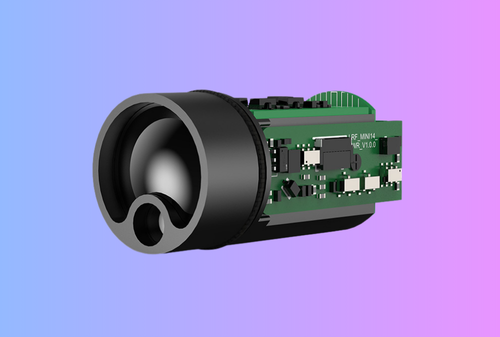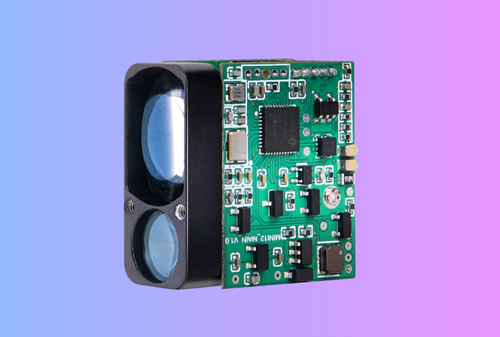
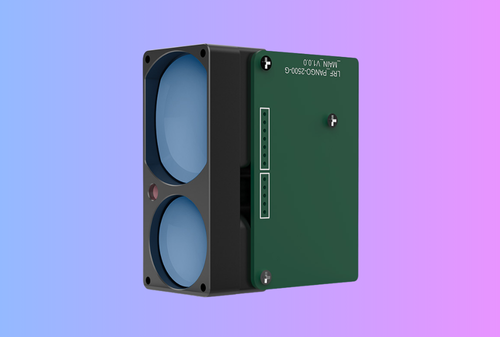
A laser rangefinder module can perform well in a controlled lab and still fail when it enters a real product program. That gap is where environmental validation matters. For OEM teams, the question is rarely only whether the module can measure distance today. The real question is whether it can keep doing so after temperature swings, sealing stress, vibration, transport shock, low-battery use, condensation risk, and repeated assembly variation.
Table of Contents
ToggleThis is why a laser rangefinder module environmental test plan should be defined early. It gives engineering, quality, and purchasing a shared framework for deciding whether a sample is merely promising or truly ready to move deeper into the project. Without that framework, one team may trust the prototype because the bench results look clean, while another team still sees too many unknowns to support tooling, pilot build, or volume release.
Your current site structure already supports this logic. Gemin’s LRF content now includes a broader Rangefinder Module Integration page, a recent Laser Rangefinder Module Integration Checklist, separate articles on Power and EMI Design and Mechanical Integration and Alignment, plus older pages covering incoming tests, harsh climates, and eye-safe design. That makes an environmental test plan the right next step, because it ties those engineering concerns into one validation path.
Why OEM teams need a dedicated environmental test plan
In many projects, environmental testing begins too late. Teams first focus on distance performance, communication, power-up behavior, and mechanical fit. Those are necessary checks, but they do not answer the harder commercial question: will the module remain stable enough to justify the next investment stage?
That question matters because OEM development is not one decision. It is a sequence. A team may move from sample evaluation to engineering prototype, then to DVT, pilot build, and mass production. At each stage, the risk tolerance changes. A module that is acceptable for early bench work may still be too uncertain for enclosure freeze, line setup, or customer delivery.
Your site already frames OEM development in that staged way. The OEM Project Timeline page describes the path from requirements and samples through validation, pilot build, mass production, and lifecycle support, while the Rangefinder Module Integration page positions validation as part of moving from evaluation to production rather than as a final box-check. An environmental test plan fits directly into that framework because it tells the team what must be proven before the next gate is opened.
Environmental testing should answer business questions, not just engineering curiosity
A weak test plan is often just a list of stress items. Temperature. Vibration. Humidity. Drop. Dust. That kind of list may look complete, but it does not automatically help decision-making.
A strong environmental test plan starts from the questions the business actually needs answered. Does the module stay aligned after sealing and temperature cycling? Does it remain electrically stable under harness noise and low battery? Does the window stack survive condensation risk without creating field inconsistency? Can repeated vibration or transport shock move the optical relationship enough to affect user trust? Does a unit that passes early validation still behave the same after pilot-line assembly?
These are not abstract technical questions. They determine whether the project can move into tooling, whether factory acceptance criteria can be written clearly, and whether the product team can forecast support risk with confidence.
That is why a useful plan should connect each environmental stress to a failure mode that matters to the product. Stress without failure logic is just activity.
Start with the real operating envelope
Before defining any test matrix, the OEM team should describe the actual operating envelope. That includes more than ambient temperature range. It should cover how the product is stored, transported, powered, mounted, and used in the field.
A handheld device carried outdoors has a different risk profile from an industrial module installed behind a fixed housing. A UAV payload sees different vibration behavior than a thermal optic. A product used in monsoon humidity faces different sealing and fogging challenges than a desert device exposed to dust and solar heating.
Your existing Gemin article on Laser Rangefinder Modules for Harsh Climates is relevant here because it already emphasizes that altitude, dust, and heavy humidity can change real field behavior even when a module looks fine in the lab. The Top 5 Tests for Incoming LRF Modules article also shows that validation becomes more meaningful when tied to actual buyer scenarios rather than generic lab routines.
The practical implication is simple: define the operating envelope first, then build the test plan around it. Do not inherit a generic test matrix from another product and assume it fits.
The environmental test plan should be structured by failure mode
The cleanest way to build a laser rangefinder module environmental test plan is to group tests by the kind of failure they are intended to expose. This prevents the matrix from becoming a random accumulation of lab habits.
A useful structure usually includes five groups. The first is optical and ranging stability, which asks whether the module still measures correctly after stress. The second is mechanical stability, which asks whether alignment, mounting, and window position remain controlled. The third is electrical stability, which covers startup, communication, and noise behavior under stress. The fourth is sealing and environmental resistance, which focuses on moisture, contamination, and condensation pathways. The fifth is production consistency, which asks whether the validated behavior survives repeated build variation.
This structure aligns well with the rest of your current LRF content. The recent Integration Checklist separates optics, mechanics, electrical, validation, and production handoff. The environmental test plan should use the same logic, but convert it into actual stress-and-check sequences.
Temperature testing should focus on drift, not only survival
Temperature testing is one of the most misused validation items in OEM programs. Teams often ask whether the module still powers on at high or low temperature. That is important, but it is not enough. A laser rangefinder module can remain operational while still drifting enough to reduce confidence in the finished product.
A better temperature plan should ask four questions. Does ranging accuracy shift across temperature? Does short-term repeatability change? Does the module’s optical relationship to the host change because of bracket, window, or housing expansion? And does startup or communication behavior become less stable when temperature combines with low battery or long harness conditions?
The right test sequence usually includes hot soak, cold soak, temperature cycling, and post-cycle verification at room condition. For products with visible or thermal aiming references, boresight verification should be included rather than only distance measurement. If the product is sealed, condensation-sensitive checks may need to be inserted around transition steps.
This is also where your earlier Mechanical Integration and Alignment Guide becomes a strong internal link, because temperature-driven movement is often a mechanical alignment issue before it becomes a “range accuracy” issue.
Vibration and shock should not be treated as the same test
Many teams still combine vibration and shock into one vague durability category. That is a mistake. Shock and vibration act differently, and they tend to reveal different weaknesses.
Shock is useful for exposing sudden movement, seating weakness, bracket slip, connector interruption, and transport damage. Vibration is better at revealing cumulative loosening, intermittent contact, harness fatigue, gradual alignment walk, and long-duration structural instability. If the product is recoil-bearing or sees repeated directional impulse, that should be treated separately rather than assumed to be covered by generic vibration.
Your current site already suggests this more specific approach. The mechanical-integration article now frames recoil, shock, and vibration as different mechanical loads, while older Gemin content around rugged or climate-driven use cases treats field survival as more than a single pass/fail lab event. That is exactly the right mindset for an OEM test plan.
The practical rule is this: match the stress type to the real use case, and verify the failure mode you actually care about after each stress stage.
Sealing and humidity tests should verify function, not just ingress
If the module or final product depends on sealing, the test plan should do more than verify whether liquid visibly enters the assembly. In many OEM projects, sealing-related field complaints begin before obvious ingress appears.
Humidity and sealing tests should therefore look at secondary effects as well. Does condensation form near the optical path? Does the window or coating behavior change after repeated exposure? Does gasket compression alter alignment? Does adhesive creep under humidity and temperature combination? Does the connector or harness region become more sensitive after exposure?
This is where your existing site content forms a useful bridge. The Harsh Climates article discusses monsoon humidity and dust as real design risks, while the Mechanical Integration and Alignment Guide emphasizes the role of window and gasket stack discipline. An environmental test plan should convert those design ideas into actual qualification steps.
Electrical stress should be included inside environmental validation
Environmental testing is often treated as purely mechanical or climatic, while electrical stress testing is placed elsewhere. In practice, that separation can hide real product risk.
A laser rangefinder module may pass bench communication tests and still become unstable when temperature, harness routing, battery droop, and EMI interact in the actual product. For that reason, an OEM environmental plan should include at least some electrical checks under environmental stress. These may include startup behavior after hot or cold soak, communication integrity under low battery, measurement stability after vibration, and harness-level noise immunity after assembly stress.
That approach fits naturally with the LRF content already on your site. The recent Power and EMI Design Guide argues that many “algorithm problems” are actually electrical instability, and the older incoming-test article already includes harness EMI/ESD immunity as part of practical LRF acceptance. Environmental validation should therefore not leave the electrical layer out.
Define what is measured before, during, and after each stress
One reason environmental testing often produces weak conclusions is that teams do not define their measurement points clearly. They stress the product, then perform one general check afterward. That can miss the moment when failure actually appears.
A stronger plan should define three checkpoints. The first is baseline characterization before stress. The second is in-test or immediate-post-stress behavior, where transient faults may show up. The third is recovery-state verification after the product has returned to nominal condition. This three-step structure is especially useful for modules where alignment, warm-up behavior, or moisture response may temporarily shift before settling.
In practical OEM work, baseline usually includes ranging accuracy, short-term repeatability, communication behavior, startup, and any optical or boresight reference that matters to the finished product. Immediate-post-stress checks should focus on the most sensitive indicators, while recovery-state checks decide whether the module returns within acceptable limits or has suffered permanent drift.
Pass and fail rules should be tied to the project stage
Not every test needs the same pass/fail logic at every stage. This is an area where many teams become unnecessarily confused. They apply production-level expectations to early samples, or sample-level expectations to pilot builds.
A better approach is to define acceptance by stage. During EVT, the goal may be to expose major architecture risks and establish drift direction, not to demand final production margins. During DVT, the expectations should tighten because the enclosure, mounting, and interface behavior are closer to the intended product. During PVT, pass/fail should align with factory control and release confidence rather than exploratory engineering learning.
Your site already supports this staged view. The OEM Project Timeline and Rangefinder Module Integration pages both describe development as a gated process from evaluation through pilot build and mass production. The environmental test plan should mirror that structure directly.
Production validation should not be an afterthought
One of the most expensive mistakes in OEM development is to treat environmental validation as something engineering finishes before factory work begins. In reality, pilot build and early production often expose issues that engineering samples never revealed.
That is why the environmental test plan should include a production-validation section. It should ask whether environmental performance remains stable across multiple assembly lots, multiple operators, and the real gasket, bracket, and torque behavior of the line. It should also ask whether the factory can run the most important verification steps fast enough to keep yield and throughput practical.
Your earlier LRF articles already point in this direction. The integration checklist, power guide, and mechanical guide all argue that repeatability matters as much as one-time success. The environmental plan is where that principle becomes operational. A module is not truly validated if only engineering can make it pass.
The test record should support future troubleshooting
Environmental testing is not only about pass or fail today. It is also about creating a useful record for future decisions. A good test log can later explain whether a field complaint is likely to be design-related, assembly-related, or outside the intended use envelope.
For that reason, the test plan should define what data is stored. Minimum information usually includes module ID, firmware version, host setup, fixture reference, environmental condition, test sequence, measured results, and visual observations. For more complex systems, it may also include alignment images, signal quality indicators, and event logs.
This recommendation aligns well with the more structured engineering content now present across your site, especially the integration and data-oriented posts. A project team that records environmental validation cleanly will move faster when design changes, supplier changes, or support cases arrive later.
Common mistakes in LRF environmental validation
The first common mistake is testing only for survival instead of drift. A module that still powers on is not necessarily stable enough for the application.
The second is using a generic environmental checklist without matching it to the product’s real use case. Field reality should define the matrix.
The third is separating environmental and electrical validation too aggressively. Many intermittent failures appear only when those conditions interact.
The fourth is checking only the module and not the module inside its real mechanical stack. Windows, gaskets, harnesses, and brackets often create the real problem.
The fifth is writing pass/fail rules that are too vague to guide a business decision. The test plan should help the team decide whether to continue, redesign, or freeze.
Conclusion
A laser rangefinder module environmental test plan is not paperwork. It is the bridge between a promising sample and a product the OEM team can trust. It gives structure to temperature, vibration, sealing, drift, and electrical-stability questions that would otherwise stay vague until much later in the program.
For Gemin’s current LRF content stack, this topic is the natural continuation after integration, electrical design, mechanical alignment, and interface planning. It turns those engineering themes into a project-control tool. That is why this kind of article is valuable for development-stage buyers: it shows not only that the module can work, but how an OEM team should prove it before deeper investment.
FAQ
Why does an OEM team need a separate environmental test plan for a laser rangefinder module?
Because a sample that works in the lab may still carry unresolved risk in temperature, sealing, vibration, drift, or low-battery use. A dedicated plan turns those risks into defined validation steps.
Is basic ranging accuracy enough for environmental validation?
No. OEM teams usually also need repeatability, startup behavior, communication stability, alignment stability, and post-stress recovery checks.
Should environmental testing change by project stage?
Yes. EVT, DVT, and PVT should not all use the same acceptance logic. Early stages are more exploratory, while later stages must support release confidence and factory control.
Why include electrical checks in an environmental test plan?
Because real failures often appear when temperature, battery state, harness routing, and EMI interact, not when those factors are tested in isolation.
What makes a weak environmental plan?
A weak plan lists stresses without linking them to failure modes, project decisions, or measurable pass and fail rules.
CTA
If your team is already evaluating an LRF platform for a new product, environmental validation should begin before the project reaches tooling or pilot build. You can start with our Rangefinder Module Integration overview, review the configurable Laser Rangefinder Module platform, and then map your own validation flow around power, mechanics, interface behavior, and field environment. For project-specific support, use our contact page to discuss the right environmental matrix, pass criteria, and stage-gate plan for your OEM program.
Related Articles
- Rangefinder Module Integration
- Laser Rangefinder Module Integration Checklist
- Laser Rangefinder Module Power Supply and EMI Design Guide
- Laser Rangefinder Module Mechanical Integration and Alignment Guide
- Laser Rangefinder Module Interface Protocol Guide
- Top 5 Tests for Incoming LRF Modules
- Laser Rangefinder Modules for Harsh Climates
- OEM Project Timeline with Gemin Optics