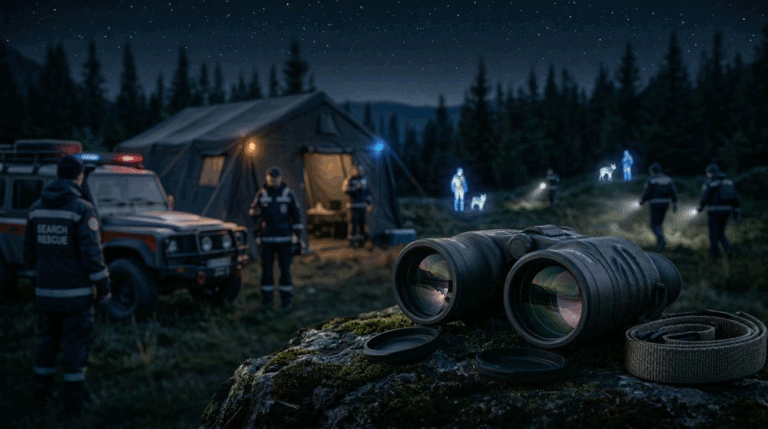

A strong thermal binocular product line can still perform weakly in the market if dealers are not trained well enough to present it, compare it, and support it. In B2B channels, product knowledge does not move automatically from the supplier to the distributor and then to the retail-facing team. If the training layer is weak, the product enters the market with hesitation.
Table of Contents
ToggleThat is why a dealer training pack matters. For thermal binocular products, a good training pack helps channel partners understand the product faster, explain it more accurately, and reduce avoidable mistakes in demos, quoting, onboarding, and first-line support.
Why Training Matters
Dealer training matters because product quality alone does not guarantee channel performance. A dealer may like the product, but still fail to sell it well if the team does not understand how to position it, what the standard package includes, how the product should be demonstrated, or how after-sales questions should be handled.
For thermal binocular products, this matters even more because buyers often ask practical questions early. They want to understand image presentation, viewing comfort, runtime expectations, included accessories, packaging logic, and how the product compares with nearby options. If the dealer cannot answer these points clearly, the product feels less ready than it really is.
A strong training pack reduces that gap. It gives the dealer one structured set of files that supports learning, presentation, and support. That helps the supplier build a more stable channel and helps the dealer work with more confidence.
What the Training Pack Should Do
A useful dealer training pack should do four things.
First, it should explain the product clearly.
Second, it should support internal onboarding inside the dealer organization.
Third, it should help the dealer present the binocular consistently to customers.
Fourth, it should reduce avoidable confusion after the first shipment or first sale.
This means the pack should not be treated as a simple marketing folder. It is a practical channel tool. It should help sales, warehouse, and support teams understand the same product from the parts of the workflow they actually touch.
For thermal binocular products, a strong training pack gives the dealer a cleaner starting point. Instead of building product knowledge from scattered PDFs and email notes, the dealer begins with one controlled structure.
What Belongs in the Pack
A thermal binocular dealer training pack usually includes several layers of content. These often include product identity files, product overview material, specification references, feature explanation, bundle and packaging references, demo guidance, support guidance, and basic ordering references.
The exact depth depends on the account. A distributor building a full regional line usually needs a broader pack. A smaller dealer may need a lighter one. But both still benefit from the same logic: the files should be organized around actual work, not only around presentation.
The goal is not to send more documents. The goal is to send the right documents in a way the dealer can actually use.
Product Identity
The pack should begin with a clear product identity section. This should explain what the thermal binocular is, where it sits in the product family, which model names are active, and which commercial versions matter to the channel.
This is important because confusion often starts with naming. A sales team may use one model name, the warehouse may see only a carton code, and the customer may be shown a slightly different product label. If the training pack does not stabilize identity early, the dealer may create its own naming habits and later struggle to align quotes, stock, and support.
For thermal binocular products, the identity section should stay simple. It should define the official model name, the sales version where relevant, and any difference between standard and customer-specific versions. If multiple bundle forms exist, the dealer should see that early, not later.
Product Positioning
A dealer also needs to know how the product should be positioned. A positioning sheet helps explain where the binocular sits commercially, what kind of customer conversation it belongs in, and how it should be introduced inside the dealer portfolio.
For thermal binocular products, this is especially useful because the product often enters a channel alongside monoculars, handhelds, or other thermal devices. The dealer needs help explaining why this binocular exists, what sort of user it suits, and how it should be presented without turning the conversation into a technical lecture.
A good positioning sheet is not long. It simply helps the dealer avoid vague sales language and gives the channel a more stable product story.
Specification Files
The training pack should include one controlled specification reference for the active product version. This gives the dealer a stable technical-commercial baseline and prevents the team from relying on outdated PDFs or mixed notes.
For thermal binocular products, the specification file should be commercially readable. It should support sales discussions, internal forwarding, and product training without becoming too dense for normal dealer use. If several versions are involved, each version should be clearly separated or compared in an easy structure.
What matters most is version clarity. One current spec sheet is more useful than several old files that look similar but are not clearly active.
Feature Explanation
A feature explanation guide is different from the specification sheet. The specification file tells the dealer what the product is. The feature guide helps explain why that matters in a sales conversation.
For thermal binocular products, this guide should translate the product into practical customer language. It should explain the main value points, what the dealer should emphasize first, and how to describe the binocular in a way that stays accurate without sounding overtechnical.
This is useful because not every salesperson naturally converts technical features into commercial explanation. A strong feature guide helps the dealer team stay consistent and helps newer staff speak with more confidence.
Viewing and Ergonomics Notes
Thermal binocular products often create channel questions that go beyond raw specifications. Buyers care about handling comfort, viewing balance, neck-strap comfort, long-session usability, and the practical experience of binocular use compared with other observation formats.
That is why the training pack should usually include a short ergonomics and viewing note. This does not need to be a long article. It should simply help the dealer explain what sort of user experience the binocular is designed to support and which practical points matter during a live presentation.
For thermal binocular products, this is one of the most useful training sections because channel partners often need help explaining not just what the unit does, but how it feels to use.
Demo Guidance
A dealer training pack should include demo guidance. This is the part that helps the dealer present the binocular in a repeatable, professional way. Without it, demos often become inconsistent across salespeople and locations.
For thermal binocular products, demo guidance should cover basic setup, battery readiness, lens and display cleanliness, what to show first, and how to guide a customer through the product without creating confusion. It should also help the dealer avoid common mistakes such as showing the unit with low battery, incomplete accessories, incorrect menu state, or poor handling preparation.
This matters because the demo is often the first real product experience. A strong demo makes the line feel credible. A weak one can slow the entire sales path.
Demo Talking Points
Beyond general demo guidance, the dealer pack should also include a short talking-points sheet. This helps the sales team know which points to introduce during the demo and in what order.
For thermal binocular products, useful talking points often include product identity, viewing comfort, core operation flow, standard package contents, runtime expectation, and what sort of user or channel need the binocular is best suited for. The point is not to script every word. The point is to make the demo more consistent and more commercially useful.
A talking-points sheet is especially helpful for dealer teams that are new to the line and need a stable presentation structure.
Package and Bundle Reference
The dealer should also know exactly what the customer receives. That is why a package and bundle reference belongs in the training pack.
For thermal binocular products, this file should show the included accessories, standard packout, charging or battery support, neck strap or carry items, case where relevant, and any difference between standard and optional bundle forms. If multiple packages exist, the differences should be obvious.
This is important because many avoidable support questions come from weak bundle clarity. A dealer that understands the bundle correctly is less likely to overpromise or underexplain the offer.
Packaging and Carton Reference
A training pack should also include a short packaging and carton section. This is especially useful for distributors and stocking dealers who need to receive, store, and reallocate product correctly.
For thermal binocular products, this section should show the sales box, master carton, carton quantity logic, and any visible carton identity points that help warehouse teams separate versions. It does not need to become a full packaging-control document, but it should be enough to reduce early receiving confusion.
This matters because many channel problems start in the warehouse, not in the sales meeting. A dealer team can be well trained on product features while still making avoidable stock errors if packaging references are weak.
SKU and Barcode Reference
The pack should include a short SKU and barcode reference. This helps the dealer understand how the product is identified in quoting, ordering, receiving, and support.
For thermal binocular products, this is especially useful where multiple models or bundle versions exist. The dealer should know which code matters for commercial ordering, which code appears on the carton, and how those identities connect in practice. If the channel handles both standard and customer-specific versions, that relationship should also be visible.
A short reference here helps reduce later mistakes in replenishment and support.
Quick Operation Guide
A dealer training pack is stronger when it includes a short operation guide. This is not the full manual. It is a quick internal-use summary that helps the dealer’s sales and support teams understand the essential operating flow.
For thermal binocular products, that may include startup, basic control navigation, charging or battery notes, common viewing adjustments, and first-use orientation. The purpose is to help the dealer become comfortable enough to speak clearly and solve simple questions without hesitation.
This is especially useful where the dealer needs several staff members to gain working familiarity quickly.
User Manual and Quick Guide
The training pack should also include the current manual and any quick-start guide tied to the active release. These are useful not only for end users, but also for the dealer’s internal teams.
For thermal binocular products, this helps keep the dealer’s explanations aligned with the actual shipped product. If the dealer relies on memory or old manuals, the quality of customer-facing guidance usually drops. A controlled file pack prevents that.
Version discipline matters here. The dealer should know which manual is current and which files are no longer active.
Warranty and Support Guide
The dealer training pack should include a short warranty and support guide. This should explain the basic support path, what information is needed when an issue is reported, and how the dealer should separate simple bundled-content issues from cases that may need return or deeper review.
For thermal binocular products, the guide should also help the dealer understand serial or product identity capture, how to report a visible issue clearly, and what first-line questions matter before escalating the case. The aim is not to make the dealer diagnose everything. It is to improve case quality at the start.
A strong support guide makes the dealer feel more capable and also saves the supplier time later.
Training for Sales Teams
Sales teams need a slightly different slice of the training pack from warehouse or support teams. They usually need product positioning, feature explanation, demo guidance, bundle clarity, and the right language for introducing the product.
For thermal binocular products, the sales section should help the dealer explain the line confidently without depending on overly technical detail. This is especially useful in multi-person dealer teams where product understanding can otherwise vary a lot from one salesperson to another.
A structured sales section makes the product easier to sell consistently across the channel.
Training for Warehouse Teams
Warehouse teams need something different. They usually care more about cartons, barcodes, SKU clarity, package structure, and receiving accuracy than about feature explanation.
For thermal binocular products, a short warehouse-focused section can prevent a surprising amount of downstream friction. If the warehouse knows what to receive, how to separate versions, and what visible differences matter, the dealer’s stock control becomes much cleaner.
This section should stay practical and brief. Its purpose is operational accuracy, not product storytelling.
Training for Support Teams
Support teams need product identity, basic operation logic, serial and SKU awareness, and first-line issue handling guidance. They do not need every sales message, but they do need enough structure to handle early customer questions and first-level support cleanly.
For thermal binocular products, this section is valuable because channel partners are often judged by how they handle the first small issue. If the dealer’s support team can identify the product clearly, understand the bundle correctly, and start the case with usable information, the whole channel feels more professional.
Distributor-Level Pack Needs
If the partner is a distributor rather than a simple dealer, the training pack usually needs a broader structure. In addition to sales and product files, the distributor may also need stronger packaging references, barcode guidance, stock handling notes, and first-line support expectations.
For thermal binocular products, distributor training often needs to support local onboarding across several downstream dealers. That means the file pack should be organized in a way the distributor can also reuse internally with its own channel network.
A distributor pack should therefore feel slightly more operational than a lighter dealer pack.
File Structure
The pack is only useful if people can find what they need. That is why file structure matters. Product identity, specs, demo guidance, packaging, support, and ordering references should be grouped clearly instead of buried in one unstructured folder.
For thermal binocular products, this is especially important when the dealer is onboarding several related products over time. A clear file structure makes later updates easier and reduces the chance that teams keep using outdated material simply because it was easier to find.
A well-organized pack feels lighter and more usable even if it contains the same number of files.
Version Control
Training packs need maintenance. A good pack becomes weak quickly if the product identity, packaging references, manuals, or support logic change while the dealer keeps using older files.
That is why the supplier should define which files are active, how updates are communicated, and which older files should be removed or clearly marked obsolete. For thermal binocular products, where bundles, packaging, or barcode logic may evolve, version control is especially important.
A dealer should not have to guess whether the file pack is current.
Training Pack Matrix
A simple matrix helps keep the pack practical.
| File group | Main purpose | Main users |
|---|---|---|
| Product identity | Clarify model and SKU logic | Sales, purchasing, warehouse |
| Positioning and features | Improve product explanation | Sales |
| Demo guidance | Support live presentation | Sales, product team |
| Packaging and barcode refs | Improve receiving and stock accuracy | Warehouse, operations |
| Manual and quick guide | Support onboarding and product use | Sales, support |
| Warranty and support | Improve issue handling | Support, account team |
This structure helps the supplier build a pack that is easier to use and easier to update.
Common Training Pack Mistakes
Several mistakes appear repeatedly. One is sending only marketing material and calling it training. Another is sending too many scattered files with no logic. Another is omitting packaging, SKU, and support material even though these are exactly the parts the dealer needs after the first stock arrives.
A further mistake is failing to update the pack as the product changes. Even a strong initial training pack becomes weak if bundles, packaging, manuals, or barcode rules shift while the dealer keeps working from older files.
The best dealer training packs are not the largest. They are the ones that make the dealer more confident, more accurate, and easier to work with.
Conclusion
A thermal binocular dealer training pack checklist is a practical B2B channel tool. It helps the dealer understand the product, receive it correctly, demonstrate it more consistently, and support it with fewer avoidable mistakes. That improves early channel quality and makes future sales work more stable.
For suppliers, a strong training pack reduces repeated explanation and improves dealer readiness. For distributors and dealers, it shortens onboarding time and makes product handling more professional. For both sides, it helps the binocular line enter the channel in a more controlled way.
The most useful principle is simple: train the channel with one structured, current, and practical file pack instead of scattered documents and verbal explanation. That is what makes dealer training valuable.
FAQ
Why does a thermal binocular dealer training pack matter?
Because it helps the dealer learn the product faster, present it more clearly, and handle receiving and first-line support with fewer mistakes.
What should be included in the pack?
Usually product identity files, specifications, feature explanation, demo guidance, packaging and barcode references, manuals, and warranty/support guidance.
Is a brochure enough for dealer training?
No. A brochure may help with first presentation, but dealers also need operational and support files to work with the product properly.
Why is version control important in the pack?
Because old specs, old packaging references, or old manuals quickly create confusion once live stock and customer cases start moving.
How does this help distributor channels?
It gives distributors a cleaner structure for local onboarding, internal training, receiving, and first-line support across their own channel network.
CTA
If you are building a thermal binocular product program for OEM, distribution, or dealer channels, a strong dealer training pack will improve channel readiness and reduce early-stage confusion. For project discussion, please visit CONTACT.