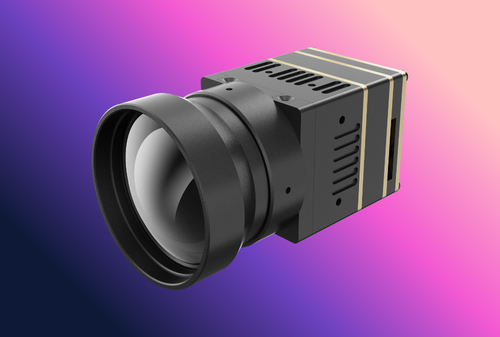
In thermal camera module projects, many image and integration problems are first blamed on the sensor, firmware, or optics. Later, the real cause turns out to be much less visible: unstable power design, grounding weakness, layout coupling, or electromagnetic interference entering the module through the host system. The module may be technically sound, but the system around it is not clean enough to let it perform consistently.
Table of Contents
ToggleThat is why EMI and power-noise design rules matter. For OEM buyers and integrators, a thermal camera module is not only an imaging component. It is also a sensitive electronic subsystem that depends on stable power, clean signal behavior, and controlled electromagnetic conditions to behave predictably in real products.
Why EMI and Power Noise Matter
A thermal camera module often works well during early bench evaluation because the setup is simple, short, and relatively clean. The power supply may be stable, the cables may be short, the host board may still be separate, and the environment may not yet resemble the final product. As the project moves toward real integration, the conditions change. Power converters, wireless modules, displays, processors, storage, motors, radios, or other high-speed subsystems may now sit close to the thermal module. That is where hidden problems begin to appear.
For thermal camera modules, these problems may show up in several ways. Startup may become less consistent. Communication may become unstable. The image path may show flicker, banding, intermittent artifacts, or noise that appears only in certain operating states. The buyer may first suspect firmware or image tuning, but the underlying cause may actually be electrical noise or poor system-level grounding.
This matters because EMI and power-noise problems are expensive to solve late. Once the enclosure, PCB architecture, connector location, and supply topology are already fixed, correction usually becomes slower and more disruptive. Strong design rules reduce that risk much earlier.
What These Design Rules Should Do
A good EMI and power-noise design guide should do four things.
First, it should explain where thermal camera modules are electrically vulnerable.
Second, it should help the OEM team avoid common system-level noise mistakes.
Third, it should support cleaner module startup, communication, and image behavior.
Fourth, it should make later validation and troubleshooting easier.
The goal is not to turn every integrator into an EMC specialist. The goal is to help the team build a cleaner system around the module so that the module can behave like the approved baseline rather than like a moving electrical target.
What EMI Means in This Context
EMI means electromagnetic interference. In practical OEM integration, this refers to unwanted electrical or electromagnetic energy that couples into the module or its supporting paths strongly enough to affect performance, communication, stability, or image behavior.
For thermal camera modules, EMI does not always arrive through one dramatic failure. It may be subtle. One switching regulator may inject noise into the power rail. One poorly routed high-speed line may couple into the module area. One shared ground return may create unstable reference behavior. One cable path may act like an antenna. The system may still run, but the module no longer behaves as cleanly as it did in the evaluation environment.
That is why EMI should not be thought of only as a compliance topic. It is also a product-stability topic.
What Power Noise Means
Power noise refers to unwanted ripple, spikes, instability, or transient behavior on the supply path feeding the module. In many thermal camera module projects, power noise is one of the earliest and most common hidden causes of unstable behavior.
This matters because a module does not only need nominal voltage. It also needs a supply environment clean enough for stable startup, communication, and image processing. A power rail that looks acceptable on paper may still create integration trouble if the ripple profile, transient response, or shared return behavior are poor.
For thermal camera modules, power quality is often one of the fastest ways to separate “good module, weak host design” from “real module issue.”
Why Thermal Modules Are Sensitive
A thermal camera module often combines sensing, signal processing, interface behavior, and image output inside a compact electrical structure. That means it can be sensitive to both conducted and radiated noise from the host environment.
The module may contain analog-sensitive regions, clock-dependent logic, interface circuits, and image-processing paths that all rely on stable electrical conditions. Even when the core sensor is good, surrounding noise can still affect what the host system sees. In some projects, the effect shows up directly in image behavior. In others, it appears as communication instability, startup inconsistency, or intermittent control failures.
For OEM buyers, the practical lesson is simple: if the thermal module is integrated into a noisy platform, the platform can make a good module look inconsistent.
Start With the Power Architecture
The best EMI and noise control usually begins with power architecture, not with late-stage fixes. If the host system powers the module through an unstable, overloaded, or noisy path, many later problems become much harder to diagnose.
For thermal camera modules, the OEM team should define early where the module power comes from, how many conversion stages feed it, whether the path is shared with noisy loads, what startup conditions apply, and how close the final supply filtering sits to the module. If these questions remain vague until late integration, the project may spend too much time blaming image behavior instead of cleaning the real power structure.
A good rule is simple: the module power path should be designed intentionally, not inherited passively from whatever system rail is nearby.
Separate Clean Rails From Noisy Loads
One of the most common mistakes is letting the thermal module share supply conditions too closely with noisy loads such as motors, radio sections, displays, backlights, high-power processors, or switching paths that create strong transient activity.
For thermal camera modules, the module supply should be isolated enough that these system events do not repeatedly disturb startup, communication, or image behavior. That does not always require a dedicated battery rail or a completely separate power tree, but it does require thoughtful segregation, filtering, and return-path planning.
When a module shares too much electrical behavior with noisy subsystems, the result is often intermittent and hard to reproduce. That is exactly why this design rule should be addressed early.
Use Stable Local Decoupling
Local decoupling near the module is one of the most practical and most frequently underestimated protections against power-noise problems. If the supply looks clean only at the source but not at the module entry point, the module still sees a weak environment.
For thermal camera modules, local decoupling should be planned with real operating behavior in mind. The design should support startup transients, local switching effects, and fast demand changes without letting the supply path become unstable. The exact values depend on the module and system, but the principle is consistent: place energy support where the module actually needs it, not only where it is convenient on the host board.
Good local decoupling does not solve every EMI issue, but poor local decoupling makes many noise problems worse.
Control Ripple and Transient Response
A power rail can meet nominal voltage targets and still be a bad rail if ripple and transient behavior are weak. That is especially relevant in thermal camera module integration, where the buyer may only notice the result indirectly through module performance.
For thermal camera modules, the supply should be evaluated not only in static conditions, but also during startup, command activity, image output changes, and nearby system events. If ripple rises, if the rail dips during system transitions, or if one converter injects switching behavior into the module supply, the module may react in ways that look like deeper functional issues.
That is why a clean power design should include both steady-state thinking and dynamic thinking.
Keep Return Paths Clean
Grounding and return-path design are central to noise control. Many integration problems begin because the supply path was designed, but the return path was treated as a generic afterthought.
For thermal camera modules, the return path should be short, controlled, and appropriate to the interface and current behavior of the module. Shared returns with noisy loads, poor plane continuity, weak reference transitions, or careless connector return assignment can all create instability. The module may still run, but its electrical reference environment becomes less stable than intended.
A strong return path often improves system behavior more than adding last-minute shielding or software workarounds.
Avoid Shared Ground Noise
Not all ground is equally quiet. One of the most common integration mistakes is assuming that any large ground region automatically creates a good environment. In reality, noisy return currents from switching regulators, displays, wireless paths, processors, or power stages may still disturb the module’s effective ground reference.
For thermal camera modules, this matters because the module often depends on stable reference behavior for communication and image output. If the ground structure allows too much shared noise, the problem may appear intermittently and may vary depending on overall system load.
That is why the module ground strategy should be deliberate. The design should consider where noisy currents actually flow, not only where copper exists.
Place Switching Converters Carefully
Switching regulators are common in OEM systems, but they are also common noise sources. Their location, routing, and proximity to the module can strongly affect the module environment.
For thermal camera modules, high-noise switching stages should not sit carelessly near sensitive module areas, module connectors, or image-interface paths. Even if the converter is electrically “working,” its switching field and current behavior can still worsen nearby module conditions. The project should therefore consider placement, shielding if justified, loop control, and how switching energy couples into the surrounding structure.
A switching converter that is acceptable for a less sensitive subsystem may still be a bad neighbor for a thermal module.
Minimize High-Speed Coupling
If the host platform includes high-speed digital lines, display interfaces, processor buses, or memory activity near the thermal module, layout discipline becomes even more important. High-speed paths can couple noise into nearby module areas through routing proximity, poor reference control, or connector behavior.
For thermal camera modules, this is particularly important where the module sits on the same carrier or close to a dense host board. The team should pay attention to layer transitions, return continuity, spacing, and whether high-speed activity is forced too close to module-sensitive regions. The module may not fail completely, but image or communication stability can degrade enough to create confusing behavior.
The practical rule is clear: if a path is fast and noisy, it should not be treated as electrically invisible.
Cable Paths Matter
Noise problems are not only on the PCB. Cables, harnesses, and interconnects can also introduce or collect interference. Poor cable routing, insufficient separation, weak shielding strategy, or loose return control can all affect the module.
For thermal camera modules, this matters in systems where the module is not mounted directly on the main host board, or where interface boards and adapter cables are used during development. A clean bench setup may hide the future cable problem. Once the cable path becomes longer or sits near noisier sections of the real product, the module behavior can change.
That is why cable routing and interface harness planning should be part of EMI thinking, not a separate packaging topic.
Protect the Module Interface Entry
The point where power and signals enter the module is often one of the most vulnerable areas in the whole design. If the entry path is noisy, weakly filtered, or routed through a bad reference environment, the module may be exposed before any internal protection can help.
For thermal camera modules, the integrator should pay attention to connector design, local filtering, cable impedance, routing discipline, and whether the interface path preserves the cleanliness of the approved evaluation setup. This is especially important when moving from lab adapters to actual product hardware, because that transition often changes the entry behavior more than teams expect.
A clean interface entry can prevent many late-stage debugging sessions.
Watch Startup Sequencing
Power quality is not the only issue. Startup sequence can also matter. A module may behave differently if the host applies power, clocks, commands, or interface initialization in the wrong order or under unstable conditions.
For thermal camera modules, this means the OEM team should understand whether the module expects a certain startup sequence, delay structure, or command timing pattern. If the host platform is noisy exactly during startup or if multiple subsystems come alive in a conflicting order, the module may look unreliable even though the underlying issue is sequence control rather than hardware failure.
Good sequence discipline often improves “mystery stability” far more than people expect.
EMI Around the Lens and Enclosure Area
The optical zone is not an electrical subsystem, but enclosure design around the module can still affect EMI behavior. Mechanical parts, shielding strategy, enclosure openings, and cable exits all influence how the system behaves electromagnetically.
For thermal camera modules, enclosure planning should consider whether noisy sections are placed too close to the module, whether shield continuity is broken, and whether the module sits in a cavity that unintentionally worsens coupling or radiated sensitivity. This is especially important in compact products where the module is forced to coexist with high-density electronics in very limited space.
Mechanical design and EMI design should therefore not be treated as separate conversations.
Shielding Is Not the First Fix
Teams sometimes treat shielding as the default solution to any EMI concern. In reality, shielding can help, but it is usually not the best first fix if the underlying power path, layout, grounding, or cable behavior is still poor.
For thermal camera modules, shielding should usually be considered after the basic electrical architecture is already clean enough. Otherwise, the project risks hiding some symptoms while leaving the actual noise path uncontrolled. Shielding also adds cost, space, and integration complexity, so it should be justified by the real problem.
A cleaner design is almost always better than a noisy design wrapped in extra metal.
Layout Rules Matter Early
Layout decisions often determine whether later EMI work is easy or painful. Once the host board is fixed, the team loses many of the easiest correction options.
For thermal camera modules, layout planning should consider supply separation, return continuity, converter placement, sensitive-path protection, connector entry routing, and the physical relationship between noisy host circuits and module-sensitive zones. The module area should not be treated like generic board space. It should be treated like a controlled integration zone.
That is why the best noise-control work often happens before the first board release, not after the first complaint.
Test Early in Realistic Conditions
A module can look perfectly stable on the bench and still become noisy inside the real product. That is why early testing should move as soon as practical from ideal lab conditions toward realistic system conditions.
For thermal camera modules, the team should test not only in a clean development setup, but also in a configuration that resembles the final host, power architecture, cable routing, and neighboring electrical activity. This often reveals whether the platform is genuinely robust or only temporarily clean.
The earlier these tests happen, the easier the correction path usually is.
Distinguish Module Problems From Host Problems
One of the biggest practical benefits of good EMI thinking is that it helps the team separate module-side issues from host-side issues. Without that discipline, every unstable image or communication problem gets thrown back at the module supplier, even when the root cause lives in the system around it.
For thermal camera modules, this distinction is critical. A host board with poor power design can make a good module appear unstable. A bad cable layout can make a known-good interface seem unreliable. A noisy shared ground can create image behavior that looks like a module defect but is really a system problem.
A stronger design process therefore includes structured troubleshooting logic rather than assuming the module is always the first suspect.
Validation for Noise Robustness
The OEM team should also think about how it will validate the module under realistic electrical stress. If the only test is “does image appear,” noise robustness remains poorly understood.
For thermal camera modules, useful validation may include observing startup under realistic system power events, checking communication while neighboring loads switch, looking for image instability during high system activity, and confirming that the module behaves consistently across multiple units and multiple operating states. The exact tests depend on the product, but the principle is stable: validate under the conditions the real product will create.
This is where many projects first discover that an apparently clean design is not yet clean enough.
EMI and Production Readiness
EMI and power-noise design are not only prototype concerns. They also affect production readiness. A system that only works in the best-case bench setup is not yet ready for real OEM deployment.
For thermal camera modules, production readiness means the module should remain stable across normal variation in host boards, assembly, cabling, and operating conditions. If the electrical margin is too weak, normal production spread can start exposing failures that were not obvious in the first hand-built prototypes.
That is why EMI and noise control belong in DVT, pilot build, and production planning, not only in early board design.
Design Rules Matrix
A simple matrix helps keep the rules practical.
| Design area | Main question | Main goal |
|---|---|---|
| Power source | Is the module fed from a clean path? | Stable startup and operation |
| Decoupling | Is local supply support strong enough? | Better transient control |
| Ground and return | Are noisy currents kept away from sensitive paths? | Cleaner reference behavior |
| Switching converters | Are major noise sources placed and routed carefully? | Lower conducted and radiated coupling |
| High-speed routing | Are fast digital paths kept under control near the module? | Reduced interface and image disturbance |
| Cable and connector entry | Is the module entry path protected from system noise? | Cleaner real-world integration |
This kind of structure helps the team think about EMI as a system design topic rather than as a late-stage troubleshooting category.
Common Mistakes
Several mistakes appear repeatedly in thermal camera module integration. One is assuming nominal voltage is enough and ignoring ripple or transient behavior. Another is letting the module share noisy rails and return paths with unrelated subsystems. Another is placing switching converters too close to sensitive module areas. Another is blaming image instability on software before checking the host electrical environment.
A further mistake is waiting too long to test under realistic system conditions. By then, the most efficient fixes are often already closed off by layout and enclosure decisions.
The strongest designs are not the ones with the most defensive hardware added late. They are the ones that keep the module electrically clean from the start.
Conclusion
Thermal camera module EMI and power-noise design rules are essential for stable OEM integration. They help the host system provide the module with a cleaner electrical environment, support more consistent startup and interface behavior, and reduce the risk that system noise will be mistaken for module weakness.
For OEM buyers, this improves integration confidence and reduces late-stage debugging. For suppliers, it reduces avoidable support loops and helps the module perform more like its approved baseline in real customer designs. For both sides, it turns noise control from a reactive troubleshooting task into a more deliberate part of system design.
The most useful principle is simple: do not ask only whether the module works on the bench. Ask whether the system around it is clean enough to let it keep working the same way in the real product.
FAQ
Why is EMI important for a thermal camera module?
Because interference from the host system can affect startup, communication, and image behavior even when the module itself is technically sound.
Is stable voltage enough for good module power design?
No. The module also needs acceptable ripple, transient behavior, grounding, and local decoupling to behave consistently in real use.
Can host-board noise affect image output?
Yes. Poor power quality, weak return-path design, or high-speed coupling can create behavior that looks like an image or interface problem.
Should shielding be the first solution?
Usually no. Shielding can help, but clean power architecture, layout, grounding, and routing are usually more important first steps.
What is the biggest EMI integration mistake?
A common mistake is treating the module area like ordinary board space and only investigating noise after the first integrated prototype becomes unstable.
CTA
If you are building an OEM or integration program around a thermal camera module, stronger EMI and power-noise design will reduce integration risk and improve real-product stability. For project discussion, please visit CONTACT.