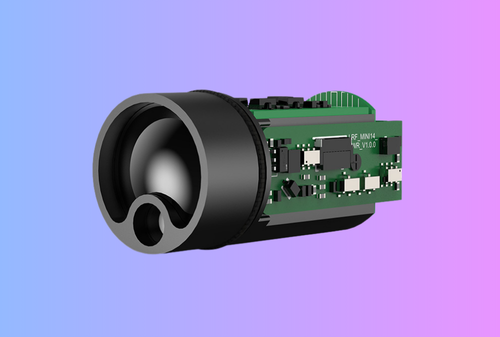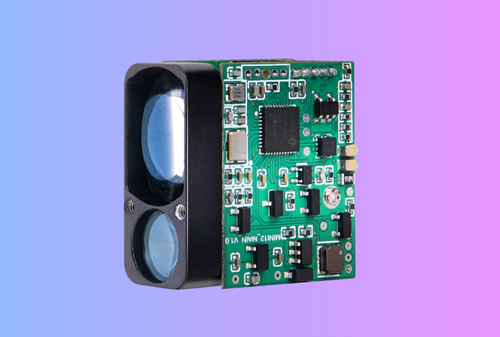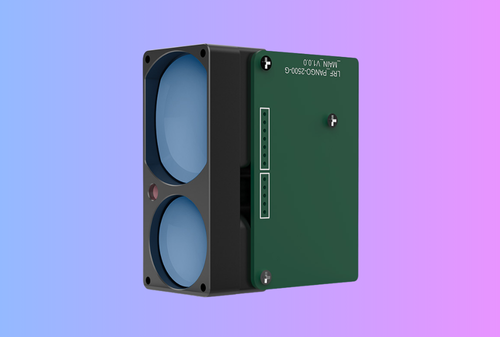
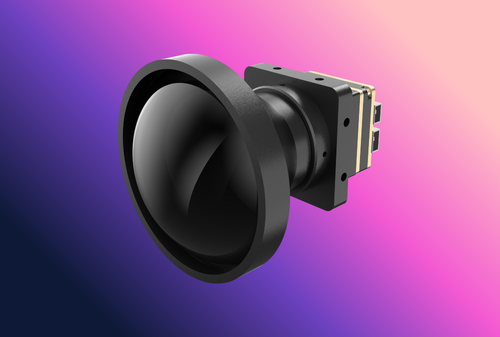
Thermal camera module integration is where many OEM projects succeed or fail. Buying a module is relatively easy. Making that module work reliably inside a real product is much harder. For B2B teams, the challenge is not only to get a thermal image on a screen. The challenge is to integrate optics, interface, power, software, enclosure design, and production control into one repeatable product architecture.
Table of Contents
ToggleThat is why thermal camera module integration should be treated as a system task rather than a component task. A module that performs well on a bench can still create delays, redesign cost, and field issues if the host platform, optical path, internal heat, command structure, or validation process are not handled correctly. For OEM buyers, the real goal is not sample success. The real goal is stable integration from prototype to mass production.
Why integration matters more than sample image quality
At the sample stage, many modules look acceptable. They power on, show a thermal scene, and appear ready for development. That early success can be misleading. In real product development, thermal camera module integration is affected by far more than image output alone. The module has to work inside the electrical architecture, thermal architecture, mechanical layout, and software framework of the final device. Once those layers are involved, weaknesses that were invisible in basic testing often become expensive.
This is why experienced OEM teams do not ask only whether a thermal camera module can produce an image. They ask whether it can do so under real operating conditions, with the intended lens, through the intended front window, inside the intended enclosure, under the intended power conditions, while communicating reliably with the host system. That is the difference between evaluating a sample and integrating a product.
A thermal camera module is not just a sensor board. In practical integration work, it behaves like a subsystem. It has startup logic, communication behavior, image processing characteristics, thermal sensitivity, power requirements, and mechanical dependencies. If those factors are understood early, integration becomes more predictable. If they are ignored, the project may move fast at the beginning and slow down sharply later.
Start with the final product architecture
The first step in thermal camera module integration is not selecting a connector or writing software. It is defining the product architecture. Before a module is chosen, the OEM team should already understand the product’s use case, the operating environment, the target viewing distance, the expected display or data output, and the commercial positioning of the finished device.
This matters because different products place very different demands on the same module category. A handheld imager, a UAV payload, an industrial monitoring node, and a perimeter security device may all use a thermal camera module, but they do not integrate it in the same way. The host processor is different. The power profile is different. The enclosure constraints are different. The lens priorities are different. Even the definition of success is different.
A strong integration process begins by answering a few architectural questions clearly. Will the host device only display thermal video, or will it also record data and run analytics? Is the product primarily for thermal awareness, or does it also need temperature-related output? Is the device battery powered or externally powered? Will it run in a thermally crowded enclosure? Does it need a compact wide-angle thermal view, or a narrower field for more target detail? The answers to those questions should guide module choice and integration planning from the beginning.
Optical integration comes before interface integration
One of the most common mistakes in thermal camera module projects is allowing electrical integration to dominate early discussions while optics are treated as a secondary issue. In reality, optical integration is often more decisive. The end user never experiences the bare module. The user experiences the module through the optical system, the front window, and the final product geometry.
Lens selection directly affects the usefulness of the product. A wide field of view may work well for scanning, navigation, or general situational awareness, but it can reduce useful detail at distance. A narrower field of view may improve target interpretation, but make the product less flexible in close or dynamic scenes. This is why thermal camera module integration should always be discussed together with lens strategy. A good module paired with the wrong optical path can still produce a weak product.
The front window is another critical factor. In many products, the thermal module is mounted behind a protective window or outer shield. If the window material is poorly chosen, thermal transmission drops and image quality suffers. If the mounting geometry adds reflection, contamination risk, or mechanical strain, the product can lose stability or consistency. These are not small details. They are core integration issues.
For OEM teams, the practical lesson is simple. Do not validate the module only as an open-core sample and assume the final product will behave the same way. Test as early as possible with the intended optical path, or at least a close approximation of it. A module that looks strong on a naked bench setup may behave differently when placed behind the real front element and inside the real enclosure.
Choose the right host interface for the product, not just the lab
Interface selection is one of the most visible parts of thermal camera module integration, but it is often misunderstood. The question is not simply which interface the module supports. The more important question is which interface fits the host architecture, the software team, the product timeline, and the production plan.
In many OEM projects, teams are attracted to whatever seems easiest in the lab. A USB-connected setup may bring up quickly during development, but if the final product uses an embedded processor with a different video pathway, that early convenience may not translate into the best commercial design. Likewise, a low-level interface may look efficient on paper, but if it increases firmware complexity and slows the engineering team, it may raise the true cost of the program.
A practical interface decision should consider a few things together. First, how will video be handled in the final product? Second, how will command and control be managed? Third, what software resources does the team actually have? Fourth, how much latency is acceptable? Fifth, how much custom development is realistic inside the project schedule? Once those questions are answered, the right interface path becomes easier to defend.
In many thermal projects, command and control are just as important as video output. The host may need to change palettes, adjust gain behavior, trigger calibration events, manage operating modes, or read status information. If the interface choice makes those tasks unstable or difficult, the problem is not purely technical. It becomes a project-management issue because every unclear command behavior can slow development and testing.
Power integration is more important than many teams expect
Power is often treated as a basic engineering topic, but in thermal camera module integration it has deeper consequences. A module that receives unstable power or poor sequencing may show intermittent startup problems, communication issues, or inconsistent behavior that looks like a software bug but is actually electrical in origin.
Battery-powered products must pay special attention to this. If the thermal module shares power space with processors, displays, storage, wireless subsystems, or other dynamic loads, the behavior during startup and peak demand can become harder to predict. A module that works correctly on a bench power supply may become unreliable when exposed to the real power conditions of the product.
The integration team should therefore define the power architecture early. That includes voltage range, sequencing behavior, transient tolerance, expected noise conditions, thermal load contribution, and what the module does during boot, standby, wake-up, and shutdown. The goal is not only to make the module run. The goal is to make its behavior repeatable under all expected product conditions.
This is also why incoming evaluation should include more than simple image checks. OEM teams should observe how the thermal camera module behaves during repeated startup cycles, low-battery conditions, host resets, and different thermal states of the enclosure. Those tests often reveal risks much earlier than software bring-up alone.
Software integration determines how fast the project moves
Many OEM buyers underestimate how much of thermal camera module integration is actually software work. The module may already produce video, but the finished product still needs a controlled way to manage image behavior, system states, and user-facing functions. That requires clear documentation, reliable command structure, and an integration path the host team can actually support.
Software integration usually covers several layers. One layer is device communication, where the host must initialize the module, control settings, and receive status or configuration information. Another layer is video handling, where the host displays, records, streams, or further processes the thermal image. A third layer is product logic, where the module becomes part of the user experience, alarm system, data workflow, or operating mode structure of the final device.
This is why SDK quality matters. A thermal camera module with unclear control behavior or weak example support may still be technically usable, but it often costs more to integrate than the purchase price suggests. The hidden cost appears in slow debugging, unclear ownership between hardware and software teams, repeated manual testing, and delayed UI development.
For B2B buyers, the key question is not whether the supplier says an SDK exists. The real question is whether the SDK, documentation, and command model reduce engineering effort in a meaningful way. A strong supplier shortens development not just by shipping a module, but by reducing ambiguity in how the host team works with it.
Mechanical integration is part of imaging performance
Thermal camera modules do not live in isolation. Once they are mounted into a final product, mechanical decisions begin to influence image consistency and long-term reliability. Mounting stability, structural stress, vibration exposure, contamination paths, and positional tolerance all affect the final performance of the integrated product.
This matters because thermal systems are sensitive to alignment and environmental interaction. If the module is mounted in a way that introduces stress or inconsistent position, the optical path can become less predictable. If the enclosure design allows dust, condensation, or internal contamination to affect the front element or protective window, the end user may see degraded image quality that appears to be a module issue even when the real cause is mechanical design.
Mechanical integration should therefore begin with the assumption that the thermal module is part of a precision optical system, not merely an electronic board. The mounting reference, optical axis, spacing, sealing concept, and serviceability approach all deserve early attention. A clean mounting strategy reduces variation between units and lowers the risk of field complaints later.
For this reason, prototype evaluation should not stop at “the image looks good.” Teams should also examine whether the module remains stable after assembly, after vibration exposure, after enclosure closure, and after repeated thermal cycling. Those are integration questions, not just reliability questions.
Thermal management inside the enclosure can change module behavior
Thermal camera modules are especially sensitive to enclosure heat because the final product environment can change the way the module behaves. Internal processors, batteries, displays, and wireless components all add heat to the same mechanical volume. If that heat is not managed properly, the thermal module may face drift, inconsistent image behavior, or reduced stability compared with open-bench evaluation.
This is a critical point for OEM buyers because thermal issues often appear late. In early development, the module is usually tested in an open environment or low-density mock-up. Later, once the industrial design is more complete and the enclosure fills with real electronics, the heat picture changes. At that point, a module that once looked stable may begin to show new behavior.
Thermal management is therefore not a separate downstream task. It is part of integration planning from the start. The product team should consider where the module sits relative to heat sources, how airflow or passive dissipation works, how much soak occurs during extended operation, and how the product behaves at both low and high ambient temperatures.
The point is not that every product needs a complex cooling solution. Many do not. The point is that thermal camera module integration must account for the enclosure as a thermal system. When teams ignore that early, they often end up trying to solve image stability problems after the mechanical design has already hardened.
Calibration behavior and system stability should be understood early
In thermal products, calibration-related behavior often becomes visible to the user. If the module performs image correction at certain intervals or under certain conditions, the host system and user interface need to account for that. Otherwise, the product may appear inconsistent or unfinished even if the module is functioning normally.
This is why OEM teams should understand not only the imaging performance of the module, but also its operating behavior over time. How does it behave after startup? How does it react after prolonged operation? How often does correction or recalibration affect the image? What happens when ambient temperature changes quickly? How will the host product manage or explain those events if they are user-visible?
A well-integrated product turns module behavior into a controlled experience. A poorly integrated product leaves those behaviors exposed and confusing. The module itself may be fine, but the customer experiences the total system. That is what the integration team must manage.
In projects that need temperature-related output rather than only thermal awareness, this becomes even more important. The team must understand not only image behavior, but also the conditions under which the thermal output is meaningful, stable, and repeatable. That requires tighter integration discipline, not looser.
Validation should follow the integration stages
A good thermal camera module integration plan separates evaluation into stages. The first stage is feasibility. At this point, the question is whether the module broadly fits the use case. The second stage is host integration. Here, the team checks interface behavior, video pathway, command stability, and power interaction. The third stage is optical and enclosure validation. This stage examines whether the module still performs well in the intended mechanical and thermal environment. The fourth stage is design validation, where settings, documents, and hardware baselines should become controlled. The fifth stage is pilot validation, which confirms that the integrated solution is repeatable before scale-up.
This staged approach helps teams avoid a common mistake: believing that early success means full readiness. It also improves communication with suppliers because issues can be described by integration phase rather than by generic complaint. Instead of saying that the module “does not work well,” the team can identify whether the problem is electrical, optical, software-related, enclosure-related, or production-related.
Validation should also reflect the actual product mission. A security device should be tested for long operating periods, realistic scene conditions, and enclosure weather exposure. A handheld device should be tested for startup time, battery behavior, and user-facing image consistency. An industrial product should be tested for environmental stability, host communication, and performance over extended operation. The module does not exist in abstract form. It exists inside a mission-specific product.
Common integration mistakes OEM teams should avoid
One common mistake is treating the sample stage like a proof of final integration. A sample can prove basic feasibility, but it cannot prove final product readiness. Teams that move too quickly from bench demo to procurement decision often discover integration problems only after mechanical or software investment has already become expensive.
Another frequent mistake is separating teams too much. Optical choices, software behavior, host interface decisions, and enclosure design are interconnected. If those decisions are made in isolated tracks, the product may accumulate hidden conflicts. For example, an optical path may be approved before the enclosure heat profile is understood, or the software team may commit to a control workflow before command behavior is fully validated.
A third mistake is choosing an interface based only on short-term convenience. Fast bring-up in a lab environment is useful, but the final product should dictate the architecture. If the lab setup and the product architecture are too different, the team may effectively build the system twice.
A fourth mistake is underestimating documentation quality. In thermal camera module integration, unclear documents create disproportionate delay. If power sequencing is vague, if control behavior is incomplete, or if revision changes are not tracked carefully, the engineering team loses time in avoidable debugging.
A fifth mistake is ignoring production transition. Integration is not complete when the engineering sample works once. It is complete when the integrated design is stable enough to survive documentation handoff, pilot build, and mass-production control.
How B2B buyers should work with suppliers during integration
The supplier relationship matters throughout the integration process. A useful supplier does more than ship hardware. The supplier should help the OEM team understand the module’s operating conditions, interface logic, integration constraints, and production transition requirements. If communication remains shallow, the buyer carries more integration risk than expected.
This is why buyers should ask for more than a datasheet. They should request integration documentation, interface notes, command descriptions, startup guidance, mechanical recommendations, revision identification, and any known design cautions. The earlier this material is reviewed, the easier it is to prevent avoidable redesign.
Buyers should also communicate their product architecture clearly. If the supplier does not understand whether the product is battery powered, industrial, compact handheld, UAV-based, or temperature-oriented, the integration advice may remain too generic to be useful. The best supplier support happens when the module is discussed in the context of the final product rather than in abstract specification language.
A strong OEM collaboration also includes structured checkpoints. Early sample review, interface review, optical review, enclosure review, and pilot readiness review all make the project more predictable. These checkpoints do not slow the process. They reduce the risk of discovering major problems only after tooling, software, or supply commitments have advanced too far.
From prototype to mass production
Thermal camera module integration is often judged by how quickly a prototype can be shown. That is understandable, but it is incomplete. The stronger measure is whether the same integration architecture can move from prototype to pilot and from pilot to production without fundamental rework.
This is why repeatability matters so much. The module should not only work in one engineering sample. It should work under controlled settings, with documented assumptions, stable communication, predictable startup, and an enclosure design that does not introduce hidden instability. When those conditions are in place, pilot production becomes a confirmation stage rather than a rescue stage.
For B2B buyers, this is the real commercial value of good integration. It reduces redesign risk, shortens the path to launch, improves supplier communication, and lowers the chance that a promising sample turns into a problematic product. A thermal camera module becomes valuable not when it shows a thermal image once, but when it supports a repeatable OEM product architecture.
FAQ
What is thermal camera module integration?
Thermal camera module integration is the process of incorporating a thermal imaging module into a finished OEM product. It includes optics, interface, power, software, mechanical design, thermal management, and validation.
Why is integration harder than sample evaluation?
A sample is usually tested in simplified conditions. Real integration must account for the host processor, enclosure heat, lens setup, front window, power architecture, communication control, and repeatable production behavior.
What should be defined before selecting a thermal camera module?
The OEM team should define the use case, target distance, product type, power source, host architecture, optical requirements, environmental conditions, and whether the product needs thermal imaging only or temperature-related output.
What is the biggest integration risk?
The biggest risk is assuming that a module that looks good on a bench will behave the same way inside the final enclosure and production architecture.
Which matters more, optics or interface?
Both matter, but many teams underestimate optics. A strong electrical integration cannot rescue a weak optical path, poor front-window design, or unsuitable field of view.
When is integration complete?
Integration is complete when the module works reliably in the final product architecture, with controlled settings, repeatable behavior, validated enclosure performance, and a production-ready documentation baseline.
CTA
Successful thermal camera module integration depends on more than image output. For OEM buyers, the real challenge is matching the module to the host architecture, optics, enclosure, power design, and long-term production plan. A structured integration process early in development will reduce delay, redesign cost, and scale-up risk later.