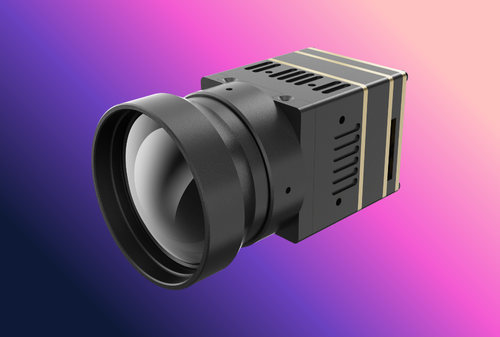
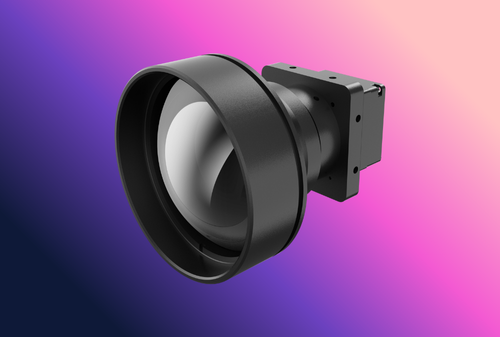
In thermal camera module projects, many teams think the hard part ends once the module powers on and outputs image. In reality, another critical stage begins there: making sure the lens state, focus condition, and calibration baseline are controlled well enough for the OEM buyer to integrate the module with confidence.
Table of Contents
ToggleThat is why lens focus and calibration workflow matter. For a thermal camera module supplier, optics setup is not only an engineering detail. It is part of the delivery baseline, part of image consistency, and part of what determines whether the customer receives a module that is truly ready for integration instead of only technically alive.
Why Focus and Calibration Matter
A thermal camera module can be electrically correct and still create integration friction if the optical state is not controlled. One sample may look strong in lab review, while the next looks softer, behaves differently under the same target, or leaves the customer unsure whether the difference is in the lens, the calibration, the host setup, or the scene itself. Once that uncertainty appears, the buyer’s engineering team loses time and confidence.
For thermal camera modules, this matters even more because the module is usually being built into a larger OEM system. The customer may already be moving on enclosure design, software integration, or test-fixture planning. If lens focus and calibration are still drifting, the project starts building around an unstable imaging baseline. That usually creates more work later, not less.
A strong workflow prevents that. It helps the supplier define what the optical baseline is, how it was set, how it is protected, and how the buyer should interpret the delivered module state.
What the Workflow Should Do
A useful lens focus and calibration workflow should do four things.
First, it should define the intended optical baseline clearly.
Second, it should control how the module is focused and verified.
Third, it should connect focus status to calibration and delivery status.
Fourth, it should reduce variation between engineering samples, pilot units, and production units.
The goal is not to create unnecessary process around one adjustment step. The goal is to make the optical condition of the module visible, repeatable, and supportable across the OEM project.
Focus and Calibration Are Not the Same
Focus and calibration are related, but they are not the same. Focus is about how the optical path is set to deliver the intended image sharpness or target imaging condition. Calibration is broader. It involves the controlled image baseline and the methods used to keep module output stable and interpretable under defined conditions.
This distinction matters because many teams use the words loosely. A customer may say the image “needs calibration” when the real issue is lens focus. A supplier may say the module is “focused” when the customer is actually worried about image consistency and output baseline. If those two layers are not separated, discussions become vague quickly.
For thermal camera modules, the safest approach is simple: define the focus state clearly, define the calibration baseline clearly, and show how the two interact in the delivered product.
Why OEM Buyers Care About Focus Control
OEM buyers usually do not care about focus control as a manufacturing ritual. They care because it affects integration confidence. If the delivered module does not have a stable, defined optical state, the buyer cannot tell whether future image differences come from the module, from the host environment, or from project drift.
For thermal camera modules, this becomes especially important when the buyer is comparing multiple samples, validating one golden sample, or moving from sample approval into pilot build. If optical setup varies too much between units or between stages, every later decision becomes harder. Mechanical acceptance becomes less certain. Test-target results become less comparable. Software tuning may be done against the wrong image baseline.
That is why focus control is not only a factory issue. It is an OEM project-control issue.
Define the Optical Delivery State
The first step in the workflow is to define the optical delivery state. The supplier should be able to answer a simple question: in what optical condition is the module being delivered to the customer?
For thermal camera modules, the answer may vary by project. Some modules are delivered with fixed focus set and locked. Some are delivered with the lens mechanically adjusted and verified under supplier control. Some may be delivered in a semi-open engineering state for customer-side evaluation. Others may require customer-specific focus conditions because the application differs. Whatever the answer is, it should be explicit.
This matters because many support problems begin when the supplier assumes the optical state is obvious while the buyer assumes something slightly different.
Define the Focus Target Before the Adjustment
A useful workflow starts with a defined focus target or focus condition before the physical adjustment begins. Without that, “focused” becomes subjective.
For thermal camera modules, the focus target may be tied to a defined distance condition, a controlled imaging setup, a specific application requirement, or a standard supplier-side reference condition. The exact method depends on the module and application, but the principle is stable: the module should be focused against a known objective, not against operator preference alone.
This is especially important in OEM work because the delivered module will later be compared against future units. If the original focus decision was subjective, repeatability becomes weak very quickly.
Focus Method Should Be Controlled
The workflow should also define how focus is actually adjusted. Even if the physical adjustment method is simple, the process around it should still be controlled enough to reduce operator-to-operator variation.
For thermal camera modules, this may include the adjustment sequence, the target setup, the viewing tool or output path used during adjustment, and the point at which the focus state is accepted. The exact station can vary. Some projects may use simpler engineering alignment methods at early stages and more controlled station methods later. What matters is that the process becomes more repeatable as the project matures.
A controlled method makes future troubleshooting much easier because the supplier can explain not only that the module was focused, but how it was focused.
Engineering Focus vs Production Focus
An engineering focus method is not always the same as a production focus method. In early development, a skilled engineer may adjust one sample using flexible tools and broader judgment. In pilot build or production, that same approach often becomes too dependent on individual experience.
For thermal camera modules, this distinction matters because many projects accidentally carry an engineering habit into later stages. A few early samples look good, so everyone assumes the optical process is stable enough. Later, when more units are built, the variation becomes more obvious. That is usually not because the optics became worse. It is because the workflow never moved from engineering focus to production-capable focus control.
A strong project recognizes this transition early and plans for it.
Focus Verification Must Be Separate From Focus Adjustment
One common weakness is using the adjustment step itself as the only proof that focus is acceptable. A stronger workflow separates adjustment from verification.
For thermal camera modules, this means the module should not only be adjusted and then assumed good. It should be checked against a defined verification condition after adjustment. This could be the same target environment or a follow-up verification state, depending on the workflow. The important point is that acceptance should not depend only on the operator feeling that the image looks right during adjustment.
Verification creates confidence. It also creates a more usable production and quality record.
Calibration Baseline Must Match the Optical Baseline
Calibration becomes much stronger when it is aligned with the approved optical state. If the module is focused one way and the image baseline is interpreted another way, later comparison becomes unreliable.
For thermal camera modules, this is especially relevant when the buyer is validating a golden sample, documenting acceptance, or preparing pilot build criteria. The project should know that the module’s calibration-related behavior is being judged from the intended focus state, not from a temporary or drifting one. Otherwise, image-performance judgments can become mixed with avoidable optics variance.
A clean rule helps here: calibration should be evaluated against the same defined optical baseline the project intends to deliver.
Locking the Focus State
Once the focus state has been approved, the workflow should define how that state is protected. In some module designs, that may involve a physical lock method, controlled mechanical retention, or another process that keeps the lens state from drifting through handling and shipment.
For thermal camera modules, this matters because a perfectly adjusted module is still a weak delivery unit if the focus state can shift easily during normal handling, transport, or assembly. The customer then receives a unit that was once correct but is no longer reliably in that condition.
The right lock method depends on module design, but the principle is stable: approved focus should not depend on hope alone.
Focus and Mechanical Tolerance
The workflow should also acknowledge that optics behavior and mechanical tolerance are connected. A focus method that works on one perfectly handled engineering unit may not remain stable if thread engagement, lens retention, bracket pressure, or assembly variation are not controlled well enough.
For thermal camera modules, this is one reason why optics cannot be treated as an isolated lab topic. If the module design allows too much variation in the parts that support optical alignment, focus consistency will remain weaker than the supplier expects. In these cases, the problem is not only in the station. It is in the design-to-process connection.
A stronger workflow therefore checks not only the focus result, but whether the mechanical structure is helping that result stay repeatable.
Focus by Project Stage
Like many other module controls, focus and calibration workflow should evolve by stage. EVT may allow a more flexible setup because the main goal is engineering learning. DVT should usually tighten the focus method and the verification conditions. PVT and production should move toward more controlled station logic, stronger locking, and cleaner records.
For thermal camera modules, this matters because OEM buyers often compare units across project stages. If the optical workflow does not mature alongside the rest of the project, later validation becomes less trustworthy. The customer may assume DVT or pilot units represent a stable production-like state when the optics process is still operating like an early engineering adjustment.
A staged workflow prevents that mismatch.
Golden Sample Focus Control
If a golden sample is part of the project, the golden sample’s focus state should be especially well controlled and documented. The module is not only a good-looking unit. It is the reference the buyer and supplier will later compare against.
For thermal camera modules, this means the golden sample should have a clear optics status, a known focus method, and enough supporting notes that future units can be judged against it meaningfully. If the golden sample image looked strong only because one engineer adjusted it carefully by feel, but the process cannot be repeated later, the golden sample is less valuable than it appears.
A strong golden sample is not only well focused. It is reproducibly focused.
Focus Records
A useful workflow leaves records. These records do not need to become burdensome, but they should show enough to support traceability and later review.
For thermal camera modules, a focus record may include module ID, optics configuration, focus stage, operator or station reference where appropriate, verification result, and the revision of the method or station used. In some cases, the project may also want a golden-sample linkage or pilot-build trace. The exact detail depends on the account and volume, but the main point is that “focused” should be more than an untraceable claim.
This is especially useful when a customer later compares units or when one lot seems to behave differently from another.
Calibration Workflow and Image Consistency
Calibration workflow matters because buyers usually care about more than raw focus. They care about whether image output remains consistent enough that integration decisions can be trusted.
For thermal camera modules, the calibration layer may include controlled image-baseline checks, operational consistency under defined conditions, and verification that the module output stays within the intended project logic after optics setup is complete. The supplier does not always need to expose every internal calibration detail. But it should make clear how the delivered module reaches a controlled imaging baseline and how that baseline is preserved across units.
A module that is sharply focused but poorly controlled in image consistency is still a weak OEM delivery.
Distinguish Supplier Calibration From Customer System Tuning
It is also important to separate supplier-side module calibration from customer-side system tuning. These are not the same activity.
For thermal camera modules, the supplier is usually responsible for delivering a module that meets the agreed baseline as a module. The customer may still apply host-level image processing, system-level configuration, or application-specific tuning inside its own final product. If those two layers are mixed together, later support becomes confusing. The customer may blame module calibration for behavior that actually belongs to host-side processing, or the supplier may assume a host-side adjustment will cover a module-level inconsistency.
Clear boundaries improve both technical communication and support speed.
Focus and Test Fixture Planning
If the project is moving toward pilot build or production, the focus workflow should connect to fixture planning. A module cannot be considered production-ready if the focus method still depends on one-off manual behavior that the future line cannot reproduce or verify.
For thermal camera modules, this may mean designing a focus-adjustment station, a verification fixture, a target setup, or a controlled image-check environment that supports the intended production volume and repeatability level. The exact depth depends on the business model, but the project should think about it early.
A strong optics workflow therefore does not end at engineering approval. It continues into how later units will be checked and released consistently.
Incoming Quality and OEM Receiving Checks
The supplier should also think about how the OEM buyer will interpret the delivered optics state during incoming quality or receiving evaluation. If the buyer has no clear reference for what “correctly focused and calibrated” means for that project stage, unnecessary disputes become more likely.
For thermal camera modules, this is especially important in projects where the customer performs its own incoming checks or compares units against a golden sample. The supplier should provide enough guidance that the buyer knows what level of image or optical behavior is normal, what baseline was delivered, and whether the module is intended for immediate integration or for further customer-side optics work.
This reduces the risk that good units are questioned simply because the optics state was never explained clearly.
Rework Rules
A mature workflow should define what happens if a module fails focus or calibration verification. Without that, the project often falls into inconsistent rework behavior.
For thermal camera modules, rework rules may include whether the unit can be refocused, whether it must be reverified from the beginning, whether the lock condition must be reset, and whether repeated failure suggests a broader mechanical or process issue. The point is not only to fix the unit. It is to keep the workflow controlled enough that repeated adjustments do not create hidden quality risk.
A strong process therefore defines failure handling, not only success handling.
Environmental and Handling Effects
The workflow should also consider how handling and environment affect optics stability. A module that is optically correct in one careful lab condition may still become less stable after transport, vibration, assembly stress, or repeated handling if the design and process do not protect it well enough.
For thermal camera modules, this is one reason why optics workflow should not live only in the calibration corner of engineering. It should connect to packaging, handling, pilot build, and transport logic as well. If the focus state can shift after the calibration station, the project still has a control problem.
Good optical delivery means the module stays in the intended state, not only that it once reached it.
Workflow by Supplier Maturity and Volume
The exact form of the focus and calibration workflow may vary depending on volume and project maturity. A low-volume engineering program may use a lighter but still controlled method. A stable OEM production program may require more formal stations, stronger locking, clearer acceptance limits, and tighter records.
For thermal camera modules, this variation is normal. What should not vary is the principle of control. The supplier should always be able to explain the optical baseline, the adjustment method, the verification step, and the delivered state. The sophistication of the station may grow with volume, but the discipline should already exist earlier.
A low-volume project still benefits from a high-clarity process.
Focus and Calibration Matrix
A simple matrix helps keep the workflow practical.
| Workflow area | Main question | Main output |
|---|---|---|
| Optical baseline | What focus condition is the module supposed to ship in? | Defined delivery state |
| Focus method | How is the lens adjusted? | Controlled process |
| Verification | How is correct focus confirmed? | Acceptance confidence |
| Locking | How is the approved focus protected? | Reduced drift risk |
| Calibration baseline | Does image consistency align with the approved optics state? | Stronger imaging control |
| Records | Can the optical state be traced later? | Better project visibility |
| Rework | What happens if the module fails verification? | Controlled correction path |
This kind of structure helps teams treat optics as a real project workflow instead of a one-time adjustment event.
Common Mistakes
Several mistakes appear repeatedly in thermal camera module projects. One is treating focus as a purely subjective adjustment. Another is adjusting the lens but skipping a separate verification step. Another is assuming the approved focus state will remain stable without a defined lock method. Another is letting engineering-style optics handling continue too late into pilot or production stages.
A further mistake is failing to link focus state to the calibration and delivery baseline. In those cases, the module may look acceptable in isolation but still create too much uncertainty across units or across project stages.
The strongest optics workflows are not necessarily the most complex. They are the ones that make the delivered module’s optical state clear, repeatable, and supportable.
Conclusion
Thermal camera module lens focus and calibration workflow is a practical OEM control tool. It helps the supplier turn optics setup into a defined delivery condition by controlling how focus is set, how it is verified, how it is protected, and how it aligns with the module’s imaging baseline.
For OEM buyers, this reduces ambiguity and makes sample, pilot, and production comparisons more meaningful. For suppliers, it reduces support friction and helps the module perform more like the approved reference across future units. For both sides, it turns “the image looks good” into a stronger statement: “this optical state is defined, verified, and controlled.”
The most useful principle is simple: do not let optics quality depend on memory, feel, or one good engineering sample. Build a workflow that makes the module’s focus and calibration state visible enough to trust.
FAQ
Why is focus control important for a thermal camera module?
Because weak focus control creates uncertainty in image evaluation, sample comparison, pilot build, and OEM integration confidence.
Is focus the same as calibration?
No. Focus defines the optical sharpness state. Calibration is broader and relates to the controlled image baseline and consistency of the delivered module.
Should focus be verified separately after adjustment?
Yes. A stronger workflow separates adjustment from verification so that “focused” is not only a subjective operator conclusion.
Why does the golden sample need special optics control?
Because the golden sample becomes the reference baseline for later units. If its focus state is not clearly controlled, later comparison becomes weaker.
What is the biggest optics workflow mistake?
A common mistake is treating focus as a one-time manual adjustment without clear target conditions, verification, locking, or records.
CTA
If you are building an OEM or integration project around a thermal camera module, a stronger lens focus and calibration workflow will improve image consistency and make module delivery more trustworthy. For project discussion, please visit CONTACT.