Table of Contents
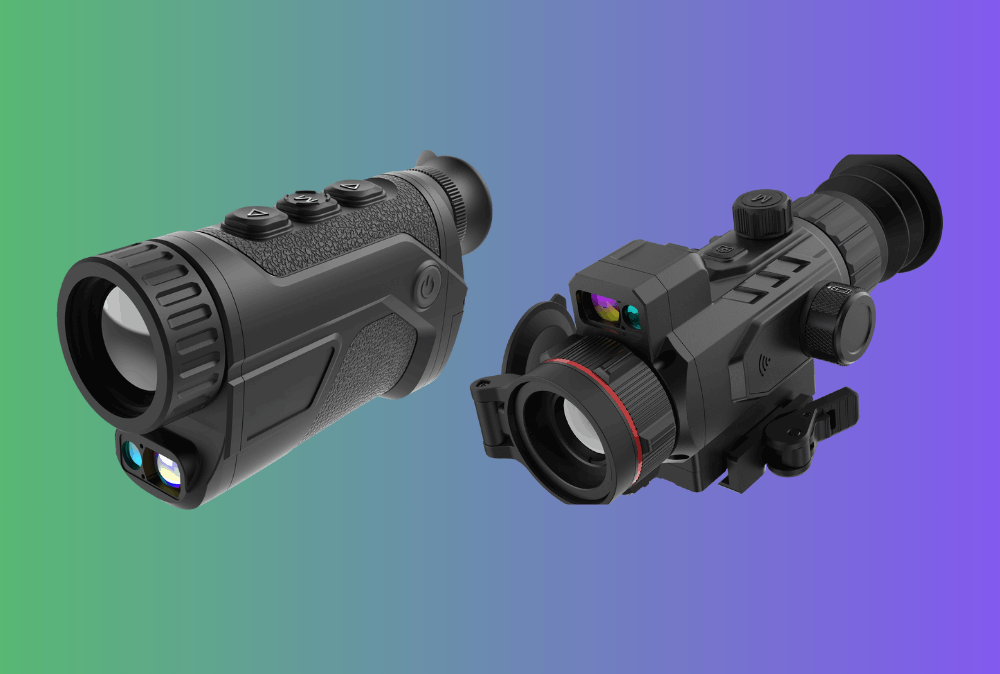
ToggleThermal monoculars are “simple” only on the surface. For B2B buyers, they are one of the easiest thermal products to overspec and one of the easiest to mis-position in channel—because the monocular sits at the intersection of scanning workflow, handheld ergonomics, battery expectations, and “range” claims that customers routinely misunderstand.
A strong B2B selection playbook does not start with sensor resolution. It starts with who will use it, how they will scan, and what the channel must be able to demo and support without creating regret returns. If your monocular program is meant for distributors and dealers, the product you should choose is the one that can be explained in 60 seconds, used one-handed in darkness, and delivers predictable experience across batches and firmware.
This pillar article gives a practical selection framework for thermal monocular programs: how to define the spec without writing an un-executable RFQ, how to choose lens/FOV and sensor tier based on real scanning behavior, how to avoid “range claim” traps, and how to build a channel-ready package that reduces returns.
For product category context, reference your landing page Thermal Monoculars. For consistency and QC discipline that protects batch-to-batch experience, keep Manufacturing & Quality as your operational anchor. If you distribute internationally, it also helps to keep documentation centralized via Downloads and certifications via Certificates.
Why B2B thermal monocular selection is different from “consumer picking”
Consumer buyers typically optimize for one emotional outcome: “I want the clearest image at the farthest distance.” B2B programs have to optimize for a tighter system:
- Dealers need a product that demos well in-store and outdoors.
- Distributors need predictable return rates and stable SKUs.
- End users need a scanning tool that is comfortable, quick to operate, and doesn’t surprise them with battery or UI quirks.
- Your brand needs a spec that can be repeated across batches without drifting.
The monocular is often used for search and scan, not for precise aiming. That shifts priorities. Wide FOV and fast acquisition usually beat “maximum magnification.” One-hand control and fast palette switching often beat “more features.” Stable long-run behavior often beats “best-case NETD number.”
If you align the product to scanning reality, you get sell-through and fewer “not as expected” returns. If you align the product to spec-sheet fantasies, you get early hype followed by early returns.
Define the use-case first: the monocular job-to-be-done
Before selecting specs, define the job in one sentence. Most monocular programs fit one of these jobs:
A scanning-first monocular is used to detect and locate heat signatures quickly while moving. Comfort and wide FOV matter most.
A balanced monocular is used for scanning plus occasional recognition at moderate distances. It must feel usable at both ends without feeling specialized.
A long-range observation monocular is used more like a spotter. Narrower FOV is acceptable, but the product must remain stable under higher digital zoom expectations and must manage hand shake and fatigue.
This “job definition” drives everything downstream: lens choice, UI control mapping, battery strategy, and what range language you can defend. It also drives channel messaging: dealers can sell the job, not the part number.
Lens and FOV are the real tier system
In thermal monoculars, lens/FOV choice is often a bigger user experience driver than resolution tier. A buyer can forgive slightly more noise if the scanning experience is fast and comfortable. They won’t forgive a monocular that feels like a tunnel while scanning.
For B2B programs, you want to decide your tier ladder using FOV first, then choose the sensor tier that makes that FOV effective.
A wide-FOV monocular sells because it feels “easy.” A narrow-FOV monocular sells because it feels “reach.” The channel problem occurs when you sell “reach” to a customer who actually needs “easy,” because they will discover scanning fatigue and return.
So your selection playbook should force you to pick a primary scanning story per SKU. If you try to make one SKU do everything, you create confusion and inventory drag.
Sensor tier, NETD, and “image feel” without spec-sheet games
B2B teams should treat NETD and “image quality” as comparability problems, not marketing problems. Suppliers can quote NETD under different conditions; the number alone is not a reliable product identity.
Instead, define what “image feel” must support in real scanning:
Low-contrast detection in typical ambient conditions.
Stable long-run behavior after the device warms up.
Predictable NUC behavior that doesn’t interrupt scanning too frequently.
A processing default that doesn’t over-sharpen edges into a “harsh” feel or over-smooth into a “flat” feel.
If you define these as behaviors, you can validate them with repeatable scenes. That is more useful to channel success than chasing a single NETD number.
UI and one-hand control: monoculars are operated like tools
Monocular buyers expect one-hand operation. If the UI requires deep menus, confusing long presses, or unclear state indication, the product feels “techy” and regret returns increase.
A B2B-friendly monocular UI typically wins on:
Fast boot or fast standby wake.
Palette switching that is easy and doesn’t require menu navigation.
Clear brightness control.
Simple NUC control policy (manual option plus predictable auto behavior if used).
Recording/album access that doesn’t disrupt scanning.
The practical test is a dealer demo: can a salesperson hand the monocular to a customer and have them do basic actions within 30–60 seconds? If not, channel friction rises.
Battery strategy and runtime truth
Monocular customers often use the product continuously for scanning. If runtime is disappointing, dissatisfaction becomes immediate. In B2B, runtime complaints are expensive because they feel like “false advertising.”
Your selection playbook should define runtime in a single standardized mode (brightness, Wi-Fi off/on, recording off/on, refresh rate) and treat that mode as the reference for claims. You don’t need to publish everything, but you must keep internal truth consistent.
Battery access is part of experience. A battery that is hard to replace with gloves or that compromises sealing will create support load. A program that wants dealer adoption should avoid battery friction because dealers need demos that stay ready.
Durability and IP: what dealers actually care about
Monoculars are often used outdoors in bad conditions. Most dealers don’t ask about the test standard. They ask: “Will it survive rain, drops, and rough handling?”
Your selection framework should define durability in dealer language:
Rain and wet-hand use without failure.
Drop resistance that survives normal accidents.
Button and focus durability.
No fogging surprises.
You can map these into formal tests later, but selection should be guided by “what will create an RMA story” in the channel.
A procurement-friendly selection matrix
This is the only table in this article. It’s designed to help B2B buyers turn the monocular job-to-be-done into a repeatable selection decision.
| Selection driver | Scanning-first monocular | Balanced monocular | Long-range observation monocular |
|---|---|---|---|
| Primary value | fast scan, comfort | versatile use | reach and recognition |
| Lens/FOV bias | wider FOV | mid FOV | narrower FOV |
| UI priority | one-hand speed | one-hand + options | stability at zoom |
| Runtime priority | high | high | high |
| Common return risk | “can’t see far enough” | “expected more clarity” | “hard to scan / shaky” |
| Dealer demo story | “find targets fast” | “best all-round” | “see farther” |
| What to validate hardest | ergonomics + NUC feel | balance of scenes | long-run stability + zoom usability |
Use this table to keep your SKU ladder honest. It helps you avoid a mismatch between what the channel sells and what the user actually experiences.
How to build the B2B deliverable pack for monocular programs
Selection is not complete until your channel pack is defined, because the monocular is sold by demonstration and supported by clarity.
A B2B monocular pack should include:
A one-page “what this SKU is for” positioning sheet.
A short “range language” guide that prevents over-promising and teaches detection vs recognition language.
A one-page quick-start with one-hand controls and a “what’s normal” section (NUC, palette switching, standby).
A runtime reference mode statement for internal consistency.
A basic durability guidance statement and warranty/RMA routing.
Centralize these assets via Downloads so dealers always pull the latest version, and keep compliance documents in Certificates where relevant.
FAQ
What is the most common reason thermal monoculars get returned?
Expectation mismatch: buyers choose a narrow-FOV “reach” monocular when they actually needed fast scanning, or they expect rifle-scope-like clarity at extreme zoom. Clear tier positioning and dealer demo scripts reduce this sharply.
Should B2B programs prioritize sensor resolution first?
Not first. Start with the scanning job-to-be-done and lens/FOV direction, then choose the sensor tier that makes that experience credible. A great sensor in the wrong FOV is still a bad product for the buyer.
How should I handle “range” claims for monoculars?
Use validated, scenario-based language internally and train dealers to speak in detection/recognition terms rather than absolute “ID distance” promises. Consistency reduces return disputes.
What UI features matter most for monocular sell-through?
Fast one-hand operation: boot/wake speed, palette switching, clear state indicators, predictable NUC policy, and a simple control mapping that dealers can teach quickly.
What should I demand from OEM suppliers to avoid batch drift?
Stable defaults, version visibility, and repeatable QC/traceability on the elements that change experience: calibration/NUC policy behavior and UI workflow consistency. Operational discipline is outlined on Manufacturing & Quality.
If you tell us your target buyer segment (hunting scan, security patrol, wildlife observation), your preferred tier ladder (scanning-first vs long-range), and your channel model (dealer-heavy vs e-commerce-heavy), we can translate this playbook into a ready-to-send RFQ + acceptance outline and a dealer demo pack that reduces returns.
For program discussions, use CONTACT.