Table of Contents
ToggleThermal pistol sights don’t lose sales because the thermal image isn’t strong enough. They lose sales because the product feels wrong in the hand.
“Feels wrong” is usually not about aesthetics. It’s about height, balance, and presentation.
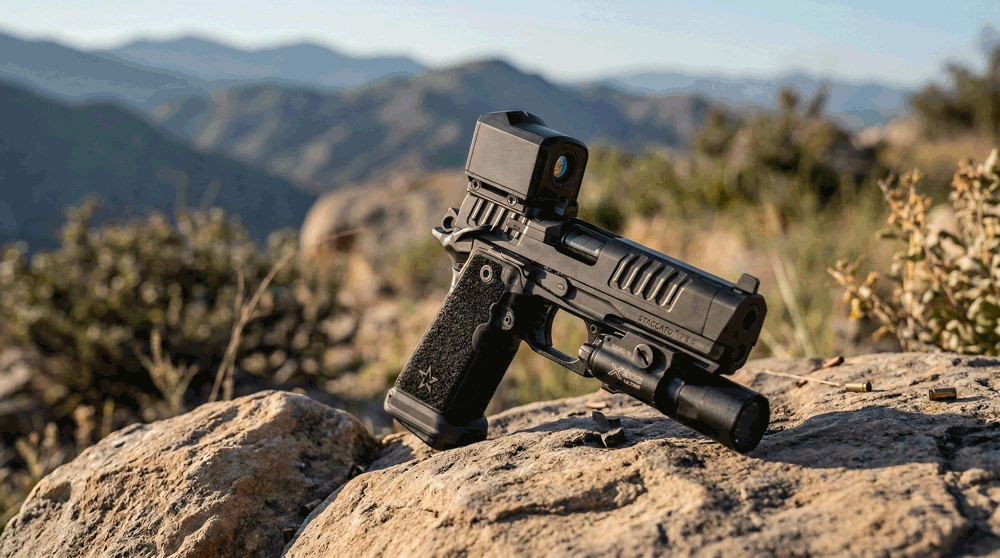
If the sight sits too high, users struggle to acquire the image quickly. If the optic is too bulky or too heavy, it changes the pistol’s handling and recoil recovery. If the control layout forces the user to break grip, the product feels like a gadget instead of a serious tool. If the unit doesn’t work with common holsters (even loosely), dealers hesitate to recommend it because they know the customer will discover that friction after purchase.
This is why sight height and ergonomics are not secondary industrial design topics. They are B2B commercialization topics. They decide whether dealers can demo confidently, whether customers adopt without regret, and whether your RMA queue fills with “not as expected” returns.
This article gives an OEM/ODM framework for designing and sourcing thermal pistol sights with ergonomic discipline. It follows the platform and mounting strategy logic from Thermal Pistol Sight OEM Platform Selection and Thermal Pistol Sight Mounts: RMR vs Picatinny, because height and ergonomics are inseparable from footprint and base design. It also connects to robustness, because “ergonomic choices” often affect slide shock survivability, discussed in Slide Shock Validation for Thermal Pistol Sights.
Why height is the hidden adoption barrier
Users don’t buy pistol optics to admire them. They buy them to acquire a sight picture quickly and repeatably.
As height over bore increases, a pistol optic becomes harder to present because the shooter’s natural presentation angle may no longer align with the optic window. That mismatch forces micro-adjustments in wrist angle and head position. In a rifle optic, this is manageable. In a pistol optic, it feels slow and awkward—especially for users trained on standard red dots.
Thermal sights amplify this problem because many have a smaller “visual window feel” than typical red dots and may require more consistent eye alignment to see the thermal scene clearly. When height is high and window feel is tight, customers describe the product as “hard to find,” and dealers describe it as “hard to demo.”
This is why platform selection must include height as a first-order requirement, not as something you “optimize later.”
Height is not one number; it’s three numbers that create the experience
Brands often treat height as “sight height” and stop there. In reality, the user experience is shaped by three related dimensions:
First is deck height: the distance from mounting surface to the optical centerline. This affects presentation and the amount of holdover users need at close range.
Second is overall vertical bulk: how tall the housing feels above the slide. Even if the optical centerline is acceptable, a tall housing can feel top-heavy and can interfere with holsters and handling.
Third is window geometry and eye box feel: how forgiving the view is during presentation. A slightly higher optic can still feel fast if the window is forgiving; a lower optic can still feel awkward if the window is small and the UI overlays clutter the view.
These dimensions interact. The OEM platform you choose should optimize the combined experience, not just the centerline number.
Ergonomics starts with use-case honesty
Before you can define ergonomic targets, you must decide what the product is primarily for.
A pistol-first thermal sight is expected to behave like a pistol optic: fast presentation, minimal disruption to grip, and at least partial holster practicality. That pushes you toward lower height, lower mass, and a control layout that can be operated with the support hand without breaking shooting grip.
A rail-first thermal sight (for PDWs or carbines) can tolerate more height and mass because presentation dynamics are different and holsters are not the driver. That is why Picatinny-first products can be larger and still be commercially successful—if they are positioned honestly.
A dual-use product can work, but it often requires compromises. If the product becomes too tall and too heavy for pistol use, the pistol buyer regrets it. If the product becomes too limited for rail use, the PDW buyer dismisses it. That’s why dual-use must be chosen intentionally, not as an accidental byproduct of “supporting more mounts.”
Weight and balance: the most underestimated return driver
Thermal pistol sights are heavier than standard red dots. This is not optional; thermal modules, displays, and batteries carry mass. But the distribution of mass is a design choice, and it determines whether the optic feels acceptable.
Top-heavy optics change recoil recovery. They also change how the pistol feels during transitions and presentation. Some users adapt. Many users interpret it as “this doesn’t feel right,” and that becomes a return if the product is expensive.
From a B2B standpoint, weight is also a mechanical risk because higher mass increases slide shock stress. A heavier unit increases the loads on mounting screws and bosses. That directly connects to the robustness concerns in Slide Shock Validation for Thermal Pistol Sights. Ergonomics and survivability are linked: the more mass you add, the stronger your base design must be.
This is why OEM platform selection should include mass targets and not only “features.”
Control layout: “can I operate it without breaking grip”
In real use, pistol optics are operated under stress and time pressure. Users don’t want to break their grip to change modes. They don’t want to hunt for buttons. They don’t want long-press logic that is inconsistent.
A strong thermal pistol sight UI is tactile and predictable, but the ergonomic question is even more specific: are the controls placed where the shooter can operate them with the support hand without shifting the firing grip? If the controls require awkward reach or require the shooter to change grip, the product feels slow.
Control ergonomics also affects dealer demos. If a salesperson can’t switch palettes and brightness quickly while holding the pistol safely, the demo becomes awkward and the customer loses confidence.
So when you evaluate platforms, treat control layout as part of the physical design, not as a software discussion.
Holster reality: you don’t need perfection, you need boundaries
Many thermal pistol sight programs fail because they ignore holsters. Users discover the holster mismatch after purchase and feel regret.
You do not need to guarantee universal holster compatibility. That would be unrealistic. But you do need a holster strategy.
A practical holster strategy has two parts.
One part is physical: keep housing geometry and protrusions disciplined, avoid unnecessary sharp edges, and keep height reasonable so at least some open holsters or optics-ready holsters can accommodate the unit.
The other part is communication: define what holster types are likely to work and what are not. Dealers can then set expectations. If you leave this vague, customers will assume it works like a red dot. When it doesn’t, returns rise.
Holster strategy is also a reason why RMR footprint mounting often wins for pistol-first programs. Slide mounting generally supports more holster paths than rail mounting.
Aiming and presentation: why “window feel” matters more than you think
Even if the image quality is excellent, users will reject a pistol sight that is slow to present.
Window feel is influenced by the visible screen area, the UI overlay design, the brightness/contrast of the display, and how forgiving the sight is to eye position changes. Thermal displays can be visually dense, and overlays can clutter the view. If the user feels like they must “hunt for the image,” they won’t trust the product.
This is why many successful pistol optics products are not the ones with the most features—they are the ones that feel intuitive under presentation.
A B2B program should therefore validate presentation speed and learnability as part of platform selection. If dealers can’t present and acquire quickly, your sell-through suffers no matter how good your datasheet looks.
The OEM spec: translate ergonomics into measurable constraints
“Ergonomics” can be subjective unless you translate it into constraints.
Constraints that are useful in an OEM spec include height envelope, weight envelope, control placement boundaries, and required “no-snag” geometry rules around edges and protrusions. You can also include a requirement that the product must be operable with gloves and that key controls can be used without changing grip.
These constraints are not meant to dictate industrial design creativity. They are meant to prevent a platform from drifting into a size class that your channel can’t sell.
One procurement-friendly ergonomics checklist
Below is the only table in this article. It’s an ergonomics checklist that procurement can use during platform selection and that engineering can translate into design constraints. It is intentionally short and focused on what drives adoption and returns.
| Ergonomics factor | What “good” looks like | Channel impact if ignored |
|---|---|---|
| Deck height | low enough for fast presentation | “hard to find the image” returns |
| Overall bulk | compact, no unnecessary protrusions | holster friction and regret returns |
| Weight and balance | controlled mass, not top-heavy | “feels wrong” and shock stress complaints |
| Control accessibility | operable without breaking grip | slow demos and user frustration |
| Button tactile feel | glove-friendly, distinct | accidental presses and confusion |
| Window feel | forgiving view, uncluttered overlay | slow acquisition and low confidence |
| Low-battery behavior | predictable, no surprise shutdown | trust collapse and RMAs |
| Mounting and torque simplicity | installable correctly by typical users | “zero drift” and fit disputes |
This checklist helps you avoid the common trap where platform selection becomes a spec comparison rather than a user-experience and channel-risk comparison.
Validation: how to test ergonomics without pretending to be a lab
You don’t need a full human factors lab to validate pistol sight ergonomics. You need realistic evaluation conditions.
A good validation includes dealer-style demos: can a salesperson mount it, present it, switch modes, and explain it quickly without unsafe handling. It also includes shooter trials: a small group of typical users should be able to acquire the view and operate basic controls without deep instruction.
You should also test under glove conditions and low light because that’s when ergonomic weaknesses become painful.
The point is not to produce a scientific paper. The point is to discover whether your platform will generate “awkward product” conversations in the channel.
Ergonomics choices can reduce warranty cost
There is a direct connection between ergonomics and warranty.
A product that is hard to operate generates confusion returns. A product that is heavy and tall increases slide stress and mount loosening risk. A product with awkward battery access generates contact problems and sealing issues. A product that requires complex button sequences generates “it’s buggy” complaints.
When you design ergonomics well, you reduce these failure pathways. That reduces RMAs, which stabilizes your service reserve, which protects pricing discipline, which increases dealer confidence.
That’s why ergonomics is not a “nice to have.” It’s an economics lever.
FAQ
Why do thermal pistol sights get returned as “hard to use”?
Often because height and window feel make presentation slow, and controls are not intuitive under stress. Buyers expect a red dot-like experience; if the product feels gadget-like, regret returns increase.
Is lower height always better?
Not always. Lower height helps presentation, but you must balance it with mechanical robustness, battery access, and thermal module packaging. The goal is a disciplined envelope, not a single number.
Does weight matter as much as height?
Yes. Weight affects balance and recoil recovery and increases slide shock stress. A heavier unit needs stronger mounting and internal retention to maintain zero and reliability.
How can I improve holster compatibility?
Control overall bulk and protrusions, avoid unnecessary sharp edges, and communicate clear boundaries. You don’t need universal compatibility, but you need a realistic holster strategy.
What should procurement look for in platform selection?
Not just sensor specs. Look for a platform that is mount-friendly, height-disciplined, controllable by feel, and validated for slide shock with post-test zero stability.
If you share your target buyer (pistol-first hunting, duty/LE, or rail-first PDW), your footprint strategy, and your desired price tier, we can convert this into an OEM ergonomics appendix: height and weight envelopes, control layout principles, holster boundary language, and a simple validation script dealers can replicate in demos.