For many brands, a golf or hunting rangefinder is the customer’s first serious piece of electronics from that brand. If it fails early, fogs up, or feels “cheap” after a season, it is not only a warranty cost—it is a hit to the brand’s long-term reputation in a niche where word of mouth matters.
Table of Contents
ToggleAt the same time, higher-end rangefinders are no longer disposable. B2B buyers, distributors and pro shops expect clear refurbishment and after-sales strategies: what happens to returns, how quickly units can be repaired, and whether there is a sustainable process behind the product rather than hidden e-waste.
This article looks at how to design and operate refurbishment programmes for golf and hunting rangefinders built around modular laser rangefinder cores. It is written from the viewpoint of a China-based OEM/ODM manufacturer that supplies configurable golf rangefinder modules and supports brands in building full product and service ecosystems.
1. Why refurbishment matters for B2B rangefinder brands
For consumer electronics, many companies still think only in terms of “sell new units” and “replace or refund when they break.” In the golf and hunting optics market, this is increasingly shortsighted.
Distributors, pro shops and online dealers care about:
- Margin protection – refurbishment allows them to turn returns and demo units into revenue instead of pure loss.
- Customer retention – a smooth repair or replacement experience often turns a problem into a loyalty story.
- Sustainability – especially in the EU, brands are asked how they handle e-waste and product lifecycle.
For OEM brands selling to B2B partners, a structured after-sales strategy is a competitive advantage. It lets them promise clear service levels to dealers (“swap within X days, refurbish within Y days”) and back those promises with real processes.
Under the surface, the key enabler is designing the rangefinder for serviceability—starting at module level.
2. Designing rangefinders with refurbishment in mind
A typical consumer rangefinder is built to minimise assembly cost: soldered wires, glued lenses, single-piece housings. That approach makes sense for very low price points, but it is unfriendly to refurbishment.
For brands that want a sustainable after-sales model, the design should aim for:
- Modularity – a clearly defined laser rangefinder engine (optics + PCB) that can be swapped as a unit;
- Non-destructive disassembly – screws and clips instead of permanent glue, especially for outer shells;
- Stable calibration points – mechanical references that allow quick optical alignment verification after repair;
- Part re-use – standardised eyecups, battery doors and buttons across models.
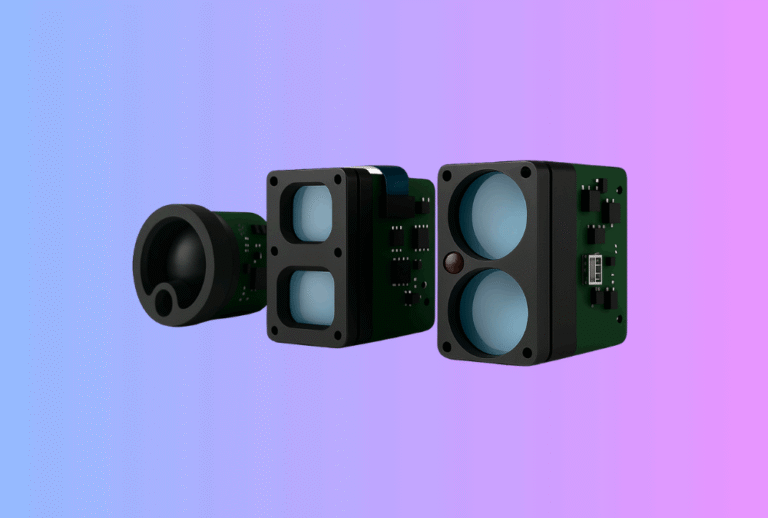
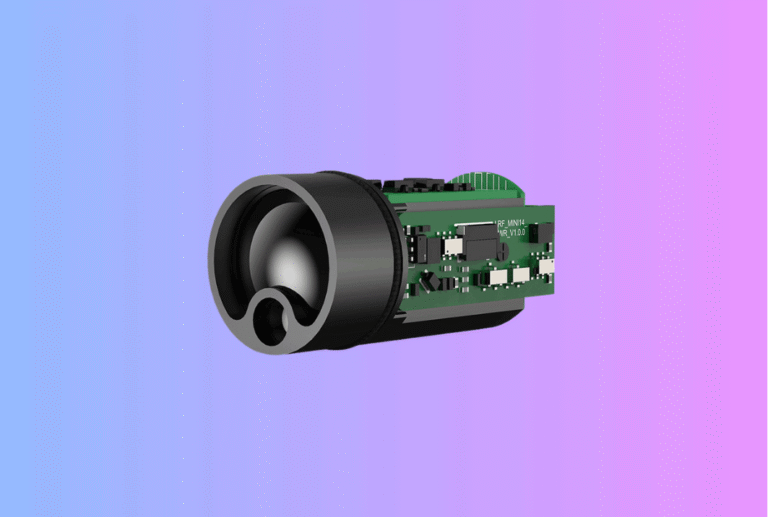
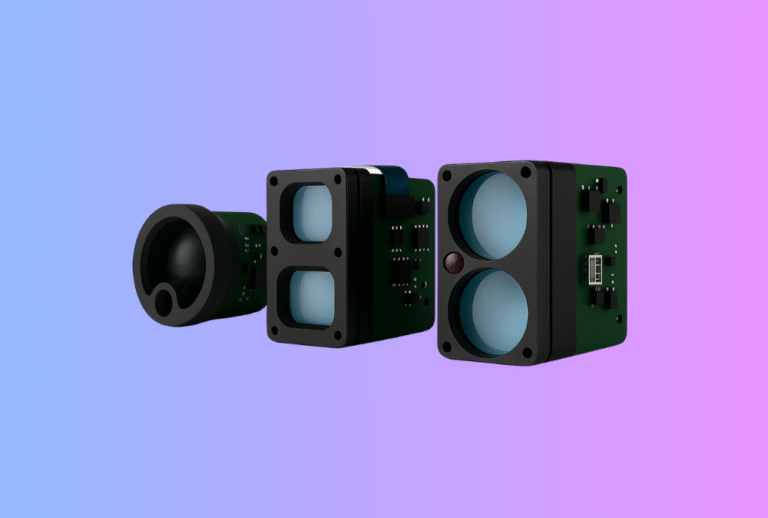
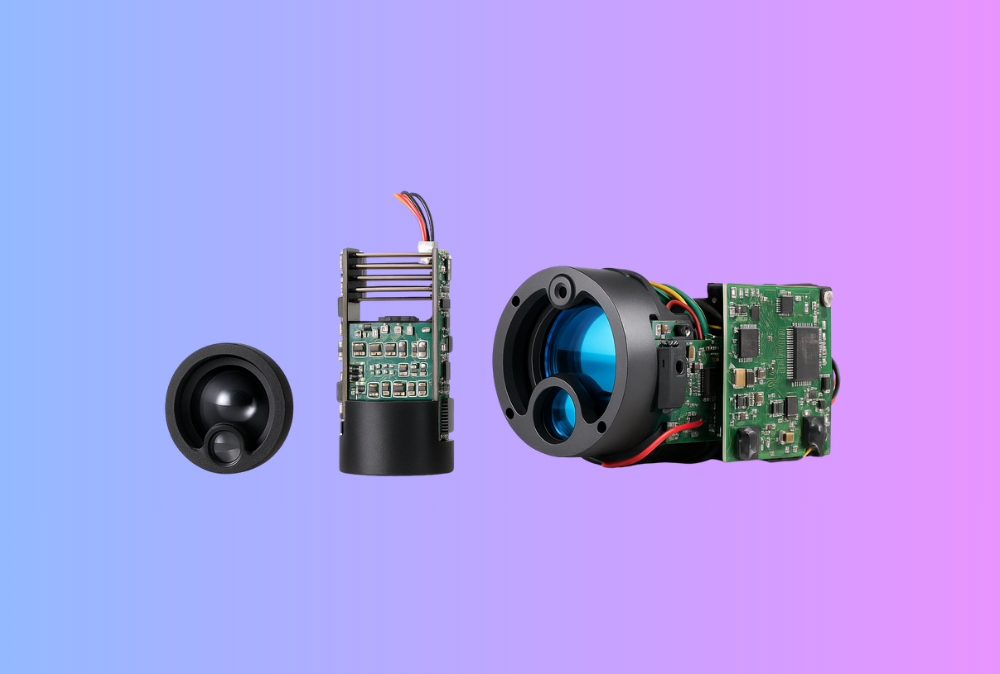
Working with an OEM supplier that provides modular laser rangefinder modules and integration guidelines makes it much easier to achieve this. When the core module is a defined unit with robust connectors and mounting, service centres can replace it in minutes, turning complex board-level work into a simple mechanical task.
3. Defining refurbishment levels: from cosmetic to core replacement
Not every returned rangefinder needs the same treatment. A smart refurbishment programme defines grades or levels, each with clear technical and cosmetic criteria.
A typical structure might be:
- Level 1 – Cosmetic refresh
- Device is fully functional; issues are limited to scuffs, minor scratches or worn labels.
- Actions: clean housing and optics, update firmware, replace eyecup or battery door if needed, rebox as “open-box” or “A-grade refurb.”
- Level 2 – Functional repair, no module replacement
- Minor electrical or mechanical faults that do not involve the core module (e.g., button failure, battery contact issues).
- Actions: replace small parts, verify alignment and measurement accuracy, assign “B-grade refurb” label with adjusted warranty.
- Level 3 – Module-level replacement
- Range or accuracy failures traceable to the laser engine, or water ingress affecting internal electronics.
- Actions: swap the complete module for a tested unit, reseal housing, run full QA; resell as “factory-refurbished unit.”
- Level 4 – Scrapped / parted out
- Severe damage (cracked optics, crushed housings, heavy corrosion) where repair cost exceeds recovery value.
- Actions: harvest usable components (battery covers, screws, lenses), recycle the rest.
Clear thresholds between levels (for example, maximum allowed housing deformation, moisture traces, or corrosion area) keep refurbishment decisions consistent across facilities and partners.
4. Service workflows: from RMA to refurbished stock
A refurbishment system only works if your workflow is organised. For B2B brands working with distributors and OEM factories, the flow often looks like this:
- RMA intake – Distributor or dealer logs a return in a simple portal, capturing reason codes and photos. This pre-triage sometimes lets you authorise a straight swap without waiting for diagnosis.
- Incoming inspection – At the service centre or OEM factory, technicians verify the issue, classify damage level, and decide whether to repair, refurbish or scrap.
- Repair/refurbishment – Using standard test and calibration jigs, technicians perform the necessary actions and verify against a checklist.
- Re-grading and packaging – Repaired units are graded (A/B/C or similar), labelled clearly, and either shipped back to the customer or added to refurbished stock for future sales.
- Data capture – All actions are logged in a database, tied to serial numbers or module IDs, creating a history that can inform future design improvements.
OEM partners who provide rangefinder module integration services can often supply not only the hardware but also recommended diagnostics and calibration procedures, making it easier for your brand or distributors to operate refurbishment centres in multiple regions.
5. Module vs. device replacement: cost and brand impact
When a rangefinder fails in the field, you must decide whether to:
- simply replace the whole device and refurbish later;
- repair or replace at module level and return the same unit;
- or, for lower-priced ranges, scrap and credit.
From a pure cost perspective, module-level replacement tends to be attractive once your volume is high enough:
- the laser module itself is a known-cost, tested part;
- housing, lenses and mechanicals hold much of the aesthetic value;
- swapping a module is faster than diagnosing individual components.
From a brand perspective, there is also a psychological angle. Many customers feel more confident when told that the “engine” has been replaced with a new factory-tested core, even if the housing shows minor cosmetic wear.
That said, not every price segment justifies a full repair loop. Entry-level golf models may still be treated as swap-and-scrap products, while mid-range and premium hunting scopes receive module swaps and full refurbishment. A tiered strategy with clear rules is usually best.
6. Designing diagnostics and test jigs for service centres
Efficient refurbishment depends on simple, repeatable tests. Service centres—whether in your own facilities or at distributors—are not R&D labs. They need tools that:
- quickly verify basic functions (power, measurement, display, buttons);
- check range and accuracy at 2–3 reference distances;
- detect obvious misalignment or beam issues;
- confirm firmware and configuration.
A typical test setup might include:
- a stable reflective target at a short distance (e.g., 10 m);
- one or two longer paths (for example, 100 m and 400 m indoors or at a test range);
- fixtures to ensure consistent aiming;
- a PC or tablet running diagnostic software via USB or UART.
The diagnostic app can read internal status from the module—signal strength, error codes, shot count—helping technicians decide whether to clean optics, reseat connectors or replace the entire module.
When Gemin Optics designs OEM projects, these service tools are often developed alongside the product, so that the same laser rangefinder modules can be tested consistently in production and after-sales environments.
7. Managing spare parts, warranties and regional hubs
A solid refurbishment strategy also needs a spares and warranty plan. Key decisions include:
- Which parts to stock regionally (modules, housing halves, eyecups, buttons, battery doors).
- Target turnaround time for repairs vs. replacements.
- Standard warranty lengths for new vs. refurbished units (for example, 2 years new, 1 year refurb).
- Whether refurbished units can be used as official replacements under warranty.
For mid-size brands, it often makes sense to establish regional refurbishment hubs: one in North America, one in Europe, one in Asia-Pacific. These hubs receive RMAs from local distributors, perform Level 1–3 repairs, and coordinate with the OEM factory for deeper analysis when needed.
Centralising module supply and high-level diagnostics at the OEM factory keeps specialised equipment in one place, while regional hubs handle the bulk of quick refurbishments and resales.
8. Sustainability and brand storytelling
Refurbishment is not only about cost; it is also about brand story. Golfers and hunters increasingly care about sustainability and responsible manufacturing, especially in higher-end segments.
By operating a refurbishment programme, you can communicate that:
- products are designed for long life, not disposability;
- returned units are assessed, repaired and reused where safe;
- only truly irreparable devices become e-waste, often after component harvesting and recycling.
This narrative aligns well with ethical and sustainable production messages across your broader product line. If your rangefinders also integrate with other optics—such as thermal scopes or thermal camera modules—a consistent life-cycle and service philosophy strengthens the overall brand.
9. Using after-sales data to improve future designs
Every RMA and refurbishment event is a data point. Brands that capture and analyse this data can systematically improve their next-generation products.
Track, at minimum:
- failure modes (fogging, ranging error, battery issues, button failures, cracked housings);
- environment of use (temperature, humidity, region);
- time-since-purchase;
- whether the issue was resolved with cosmetic work, minor repair, module replacement or scrapping.
This information can feed back into:
- better sealing and materials for housings;
- revised derating for laser drivers and batteries;
- improved mechanical design around eyecups and lenses;
- enhanced self-diagnostics in firmware.
Over several product cycles, you can see clear reductions in RMA rates and refurbishment complexity, which in turn lowers cost and raises distributor confidence.
10. Working with Gemin Optics on refurbishment-friendly designs
Refurbishment and after-sales performance are easier to achieve when they are built into the product from the beginning. As a China-based laser rangefinder module and device manufacturer, Gemin Optics supports brands with:
- modular golf rangefinder modules and general laser cores designed for easy replacement;
- mechanical and optical designs that balance IP rating, robustness and serviceability;
- shared calibration and diagnostic procedures that can be used in production and refurbishment hubs;
- guidance on spare-part lists, service manuals and grading criteria.
By treating each rangefinder project as part of a multi-year service and refurbishment plan, we help B2B partners create products that protect both their margin and their reputation in competitive golf and hunting markets.
CTA – Turn Your Golf and Hunting Rangefinders into Long-Lived, Refurbishable Assets
In a market where many devices still end up as e-waste after the first failure, brands that offer refurbishable golf and hunting rangefinders stand out. With a modular laser engine, clear refurbishment levels, and efficient service workflows, you can support distributors with fast resolutions, create new revenue from factory-refurbished stock, and tell a compelling sustainability story.
If you are planning your next rangefinder line—or rethinking after-sales for an existing one—consider working with an OEM partner that designs for serviceability from day one. Explore Gemin Optics’ configurable golf rangefinder modules and discuss with our engineering team how to build a refurbishment-ready product platform that supports your brand and your dealers for years to come.