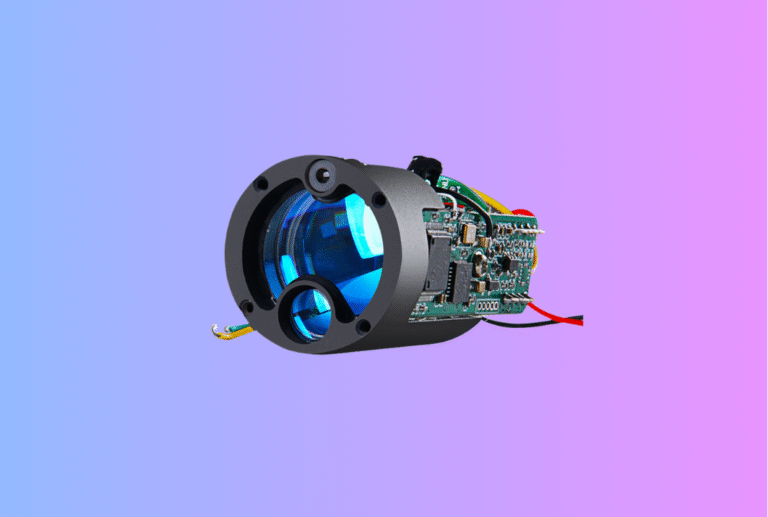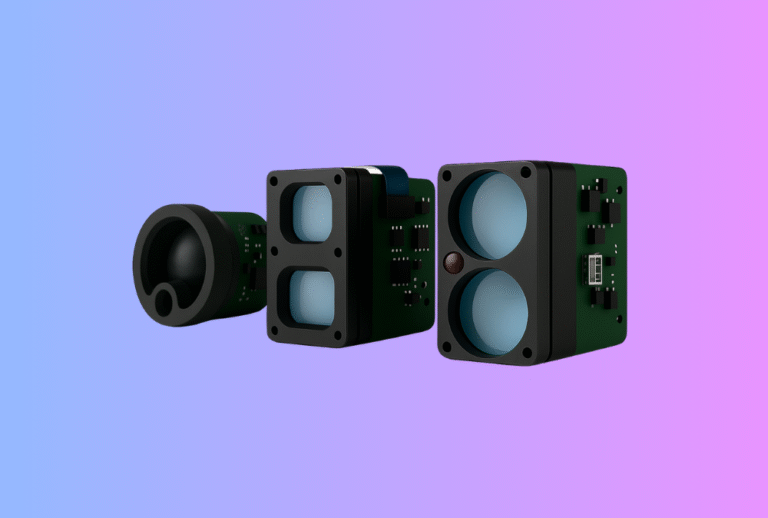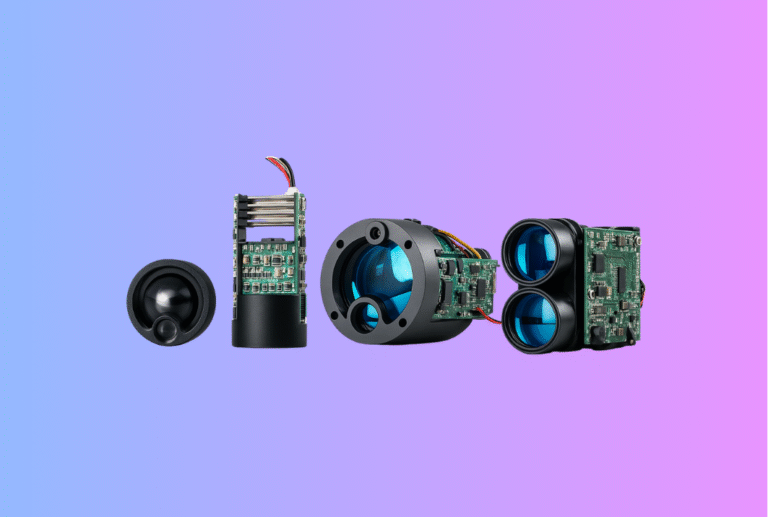
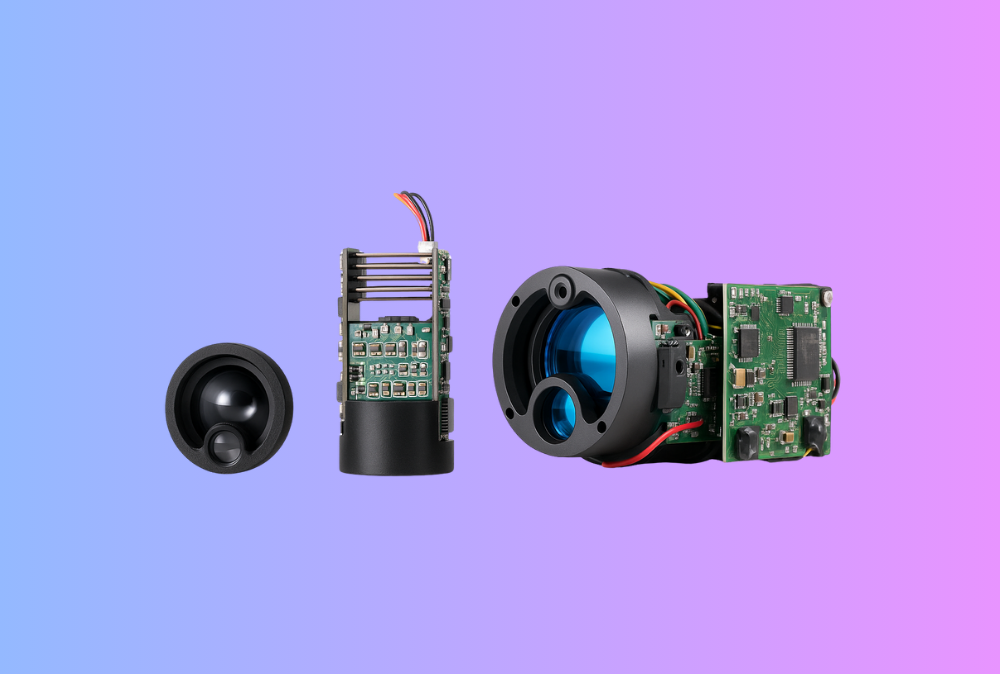
A laser rangefinder module production handover package for contract manufacturers is one of the most important but most underestimated deliverables in an OEM program. Many teams assume that once the module design is stable, the supplier or contract manufacturer can simply “start building.” In reality, that is where some of the most expensive mistakes begin. A laser rangefinder module that performs well in engineering samples can still become inconsistent, fragile, or difficult to support once production moves into a contract manufacturing environment if the handover package is incomplete, ambiguous, or too dependent on tribal knowledge.
Table of Contents
ToggleThis matters because a contract manufacturer, or CM, does not inherit engineering intent automatically. The CM inherits only what has been transferred clearly enough to execute repeatedly. If that transfer is weak, the product may still look acceptable on a superficial line check while quietly losing control in the places that matter most: alignment, front-end cleanliness, cable handling, interface readiness, traceability, process boundaries, or outgoing test discipline. In B2B OEM programs, those small losses of control rarely stay small. They show up later as field inconsistency, pilot instability, poor yield learning, noisy service returns, or repeated arguments over whether the product is “the same as the approved sample.”
That is why a production handover package should not be treated as a folder of files sent before trial build. It is a structured transfer of manufacturing intent. It tells the CM not only what the module is, but how the module is supposed to be built, protected, verified, identified, and escalated when something unusual appears. A strong handover package is one of the clearest signals that the OEM team is ready to move from engineering confidence to manufacturing confidence.
Why production handover is so often weaker than engineering handover
In many product organizations, engineering handover is given far more attention than manufacturing handover. Teams spend a great deal of time on design review, sample evaluation, and performance discussion, but much less time on the question that determines whether the product can survive scale: what exactly does the CM need to know, control, and never improvise?
This gap exists because engineering samples can succeed under highly protected conditions. The people building them often sit close to the design team, understand unspoken context, and make small corrections based on experience rather than formal instruction. In those circumstances, the product may look stable long before it is actually transferable. Once the same build is moved into a contract manufacturing environment, those invisible assumptions become dangerous. The CM may follow the available documents faithfully and still miss the engineering intent simply because the handover package never expressed that intent clearly.
Laser rangefinder modules are especially vulnerable to this problem because they often sit at the boundary of optics, mechanics, electronics, firmware behavior, and field reliability. A module may be dimensionally correct but assembled with weaker front-end cleanliness discipline. It may be electrically functional but built with poor cable strain relief. It may pass basic function while silently losing boresight repeatability or test integrity. These are exactly the types of issues that emerge when handover is shallow.
A production handover package is not just documentation, but controlled manufacturing logic
A common mistake is to treat the production handover package as if it were simply a document set. Documents are essential, but the real purpose of the package is broader. It should transfer manufacturing logic. In other words, it should tell the CM not only what files to read, but how to think about building and releasing the module correctly.
A mature handover package answers questions like these. What are the controlled product states? Which build characteristics are critical to quality? Which process steps may look simple but are actually sensitive? What can the CM adjust and what must remain frozen? What checks must happen before a unit can move forward? Which defects are cosmetic, and which are yield-critical or field-critical? Which anomalies require engineering review rather than local improvisation? How should test assets, reference units, and revision labels be managed? These questions are manufacturing questions, but they are also quality and lifecycle questions.
That is why the handover package should be seen as an operational control package rather than a passive archive. If the CM only receives information without decision boundaries, it will still be forced to improvise later. And in production, uncontrolled improvisation is where variation begins.
The first function of the handover package is to define the build baseline
Before the CM can build consistently, it must know exactly what baseline it is being asked to produce. That means the handover package should clearly define the product configuration state being transferred. At minimum, this usually includes the applicable hardware revision, firmware or software state where relevant, drawing revision, approved material or part-state boundaries, and any process-specific conditions tied to release.
This sounds obvious, but many projects still transfer “the module” as a concept rather than as a fully identified baseline. The CM then receives a commercial part name, a few drawings, and a trial build target, but no real clarity on what version is authoritative. In laser rangefinder module programs, that is especially risky because subtle differences in hardware state, firmware timing, optical assumptions, or mechanical stack condition may have meaningful downstream effects even when the part name remains unchanged.
This is one reason the current topic is closely linked to the Laser Rangefinder Module Documentation Pack for OEM Projects and the Laser Rangefinder Module Change Control and PCN Guide. A production handover is only as good as the baseline clarity behind it.
Contract manufacturers need more than drawings
Another frequent weakness in production transfer is overreliance on drawings. Drawings are necessary, but they do not tell the whole manufacturing story. A CM can receive the correct mechanical drawings, BOM, and general electrical information and still build the product in a way that is technically compliant yet operationally weaker than intended.
That happens because many of the most important production sensitivities are not captured fully in drawings. Front-end cleanliness discipline, torque sequence sensitivity, cable-routing intent, connector handling precautions, strain-relief logic, optical contamination boundaries, test setup discipline, golden sample comparison rules, and prohibited rework conditions often live outside the drawing itself. If these are not transferred explicitly, the CM will fill the gaps with its own habits.
This is especially dangerous for laser rangefinder modules because the product can appear fine after build even when hidden manufacturing variation is already being introduced. The unit may power on, communicate, and pass a basic test, yet be less stable in difficult target conditions, more sensitive to moisture, or less repeatable in multi-sensor alignment. In other words, drawings support build, but they do not by themselves guarantee controlled build.
The handover package should define process-sensitive characteristics
One of the strongest features of a mature production handover package is that it identifies process-sensitive characteristics clearly. These are the aspects of build and handling that may not always look dramatic, but which strongly influence final product behavior, yield stability, or field reliability.
For a laser rangefinder module, process-sensitive characteristics may include front-window handling, optical-path cleanliness, cable routing and strain relief, mounting datum preservation, torque order, adhesive cure control, connector mating discipline, ESD precautions, software load confirmation, label control, or test fixture seating. The exact list depends on the product, but the principle remains the same: the CM should know which parts of the process deserve extra discipline because those are the parts most likely to create invisible drift if handled casually.
This matters because many production escapes do not begin as gross mistakes. They begin as “small reasonable choices” made by well-meaning factory teams in the absence of clear instruction. A process-sensitive handover package reduces the need for local guesswork.
Incoming material control and subassembly assumptions should be explicit
A contract manufacturer cannot build a stable module if the assumptions about incoming material and subassembly state remain vague. If certain materials must be clean, moisture-managed, revision-segregated, or visually screened before use, the handover package should say so. If certain purchased subassemblies arrive already controlled by the module supplier, that boundary should also be clear.
This is especially important when the module includes optics-adjacent parts, front-end covers, cable assemblies, fasteners with specific retention behavior, or any materials whose wrong variant can affect alignment, EMC, or field durability. The CM needs to know what to trust, what to verify, and what to quarantine when in doubt.
In many programs, a surprising amount of variation enters not during assembly but during the interpretation of what incoming material is considered “acceptable enough.” That is why the handover package should help the CM understand not only what to assemble, but what must not enter the process unchecked.
Test logic is one of the most important parts of the handover
A contract manufacturer may be able to assemble the product reasonably well and still fail to control it if the test logic is incomplete. For laser rangefinder modules, the outgoing test path often determines whether subtle variation is caught early or escapes into production shipments.
That is why the production handover package should explain the intended manufacturing test logic clearly. Which tests are required at which stage? Which checks are screening checks and which are release checks? What test equipment and fixtures are approved? What environmental or warm-up assumptions matter? What counts as pass, fail, rework, or escalation? Which abnormalities should stop the line for review? Which results require comparison to a controlled reference unit rather than immediate judgment?
This connects directly to the Laser Rangefinder Module End-of-Line Test Strategy and the Laser Rangefinder Module Golden Sample Guide. A CM does not only need “a test.” It needs a controlled way to understand what the test is protecting and how to react when the result is not straightforward.
Golden samples and reference units should be part of CM onboarding
Many production transfers mention golden samples casually but do not integrate them properly into CM onboarding. That is a missed opportunity. A well-controlled reference unit system can dramatically improve how quickly the CM learns what the approved baseline really looks like.
In practical terms, the handover package should explain which golden sample or reference unit is relevant, what revision it belongs to, what role it serves, how it should be stored, and under what circumstances it should be used. A production reference unit is not a decorative item for the line. It is a controlled comparison anchor for training, process confirmation, troubleshooting, and sometimes test-fixture validation.
This is important because production issues are often first noticed as “this lot feels a little different” rather than as explicit failure. Without a controlled reference, those observations remain vague. With a controlled reference, the line has a much better chance of turning a subjective concern into a disciplined escalation.
Build instructions should say what not to do, not only what to do
Many work instructions are too optimistic. They explain the intended sequence, but they do not explain what actions are forbidden, which shortcuts are unsafe, or which rework behaviors may damage product confidence. In precision OEM manufacturing, that silence can be costly.
A stronger production handover package includes negative rules as well as positive steps. It may specify that certain optical surfaces must not be touched or cleaned with unapproved methods. It may define that a disturbed front-end stack cannot be casually reassembled without revalidation. It may prohibit uncontrolled firmware reflashing on the line. It may state that certain cables must not be rerouted for convenience. It may define that once a specific adhesive or seal feature is broken, the unit must move to a controlled review path rather than ad hoc repair.
These “do not” rules are especially important for laser rangefinder modules because many damaging actions do not produce immediate obvious failure. They produce later instability, degraded retention, or loss of field confidence. The CM needs to know which actions fall into that category.
Traceability requirements should be transferred before scale, not after problems
Traceability is often discussed only after a quality issue appears. That is too late. A production handover package should tell the contract manufacturer what level of traceability is expected from the beginning.
For laser rangefinder modules, traceability may involve serial identity, lot identity, revision identity, firmware or software load state where relevant, calibration or test history linkage, and in some cases process-event traceability for critical steps. The appropriate depth depends on the product and customer requirement, but the important point is that the expectation should be defined before production grows.
This matters because once field issues arise, weak traceability greatly slows root-cause analysis. If the organization cannot tell which revision was built when, which process state was active, or which line conditions applied to a suspect lot, the investigation becomes broad, political, and expensive. Stronger traceability does not eliminate every quality issue, but it turns future analysis from guesswork into evidence-based work.
The CM must know when it is allowed to act locally and when it must escalate
A weak production handover leaves too much ambiguity around decision rights. The CM sees something unusual and is unsure whether it should continue, rework locally, substitute a material, modify a work instruction, or stop for engineering review. Under schedule pressure, local decisions then become more likely, especially if the package does not define clear escalation boundaries.
This is one of the most important reasons a production handover package should include escalation logic. Which anomalies are within local factory authority? Which are hold points? Which require supplier engineering input? Which require OEM approval? Which require change-control treatment rather than ordinary line correction? These are not merely management questions. They protect the product from silent drift.
For laser rangefinder modules, escalation discipline is particularly important because many seemingly small factory adjustments can change retained geometry, front-end behavior, host compatibility, or service assumptions later. A mature handover package helps the CM recognize where not to improvise.
Training and line readiness belong in the package too
Many teams think of production transfer as a file handoff followed by a build. In reality, CM readiness also depends on people. The operators, technicians, test engineers, and production supervisors need enough understanding of the product’s sensitive characteristics to execute the package correctly.
That is why training and line readiness should be considered part of the handover package, not separate from it. The package should support training on product purpose, critical handling rules, visual defect boundaries, fixture usage, golden-sample logic, traceability steps, and escalation triggers. In some projects, this may be a formal training module. In others, it may be a structured onboarding deck and line audit checklist. The exact format can vary, but the need is real.
A production line that has documents but not understanding is still vulnerable. The handover package should therefore aim not only to inform, but to create repeatable execution competence at the CM site.
Pilot transfer should prove manufacturability, not only assembly completion
Pilot builds are often treated as early production, but their deeper purpose is to verify that the product can be transferred into repeatable manufacturing control. That means the handover package should help the pilot phase answer more than “can the CM build units?” It should help answer “can the CM build units in the intended controlled way?”
This is where the Laser Rangefinder Module Pilot Build Readiness Checklist becomes especially relevant. Pilot is the right moment to discover whether the work instructions are too vague, whether the traceability model is too weak, whether the line misinterprets sensitive handling points, whether the test logic catches the right variation, and whether escalation paths are actually used correctly. If those lessons are not built into the handover package early, they tend to return later as repetitive production pain.
A mature OEM team uses pilot not only to build product, but to harden the production handover package itself.
The handover package should connect engineering intent to service reality
Another sign of maturity is whether the production handover package considers downstream service reality. Many manufacturing packages stop at shipment, but for OEM products that is not enough. How the module is built, labeled, traced, and tested affects later service diagnosis directly.
If serial and revision traceability are weak, service later struggles. If golden-sample logic was never established, troubleshooting becomes subjective. If process-sensitive steps were not transferred correctly, field behavior may vary by lot. If build-state clarity is weak, revision transition becomes harder. All of this means that production handover is not only about making parts. It is about preserving future service clarity.
This is one reason the topic naturally links to the Laser Rangefinder Module Service Spares Guide and the Laser Rangefinder Module Failure Analysis Guide. Manufacturing transfer quality and after-sales clarity are deeply connected.
What OEM buyers should ask suppliers and CMs
An OEM buyer managing production transfer for a laser rangefinder module should ask more than whether the CM has the drawings. Useful questions include these. Is the released baseline fully identified? What process-sensitive characteristics are defined explicitly? What golden sample or reference units are used in training and troubleshooting? What traceability level is expected? What rework is prohibited? What anomalies require escalation? How are test logic and pass/fail boundaries transferred? How is pilot learning fed back into the package before mass production? What part of the control system stays with the module supplier and what part transfers to the CM?
These questions are powerful because they reveal whether the transfer is truly production-ready or still too dependent on informal engineering memory.
A practical review framework for OEM teams
Many teams manage production transfer much better when the handover package is reviewed in a structured way.
| Review area | What the OEM team should confirm | Why it matters |
|---|---|---|
| Baseline definition | Hardware, firmware, drawings, and release state are clearly identified | The CM cannot build a stable product from a vague baseline |
| Process-sensitive controls | Critical handling and build characteristics are explicitly highlighted | Hidden sensitivity creates later variation |
| Test and reference logic | EOL logic, fixtures, golden samples, and escalation rules are defined | Testing only works when interpretation is controlled |
| Traceability | Serial, revision, and critical process linkage are preserved | Future field analysis depends on build visibility |
| Work instruction boundaries | Allowed actions, prohibited actions, and rework limits are clear | Local improvisation is a major source of drift |
| Training and readiness | The CM has been trained to execute, not only to read | Documents alone do not guarantee repeatable behavior |
| Pilot feedback loop | Pilot learning is used to harden the package before scale | Transfer maturity should improve before MP, not after |
This kind of framework helps the organization treat the handover package as a manufacturing-control system rather than a static set of attachments.
Final thought
A laser rangefinder module production handover package for contract manufacturers is really a package of transferable manufacturing intent. It explains not only what the product is, but how it must be built, protected, tested, traced, and escalated so that the approved engineering state survives scale.
For suppliers, this is a chance to show that they can support manufacturing maturity, not only design capability. For OEM buyers, it is a practical way to reduce variation, shorten troubleshooting, and improve trust as production moves outward from the engineering team to the CM. And for the project as a whole, it is one of the clearest reminders that production readiness is not only about whether the line can assemble the product. It is about whether the line can preserve the product state everyone approved.
FAQ
Is a production handover package just a folder of drawings and BOM files?
No. Those are part of it, but a real handover package also transfers process-sensitive rules, test logic, traceability, reference-unit use, escalation boundaries, and training support.
Why do products often become less stable after transfer to a contract manufacturer?
Because engineering samples are often built with implicit knowledge that is never fully transferred. Once the CM takes over, those hidden assumptions turn into variation.
Should the CM be allowed to make local build adjustments if output still looks acceptable?
Not automatically. For laser rangefinder modules, small local adjustments can affect alignment, front-end behavior, interface stability, or service compatibility later. Escalation boundaries should be clear.
Why is pilot so important for production handover maturity?
Because pilot is the stage where the team can still discover gaps in instructions, traceability, training, and test logic before those weaknesses become mass-production problems.
CTA
If your OEM project needs a stronger production handover package for laser rangefinder modules before transfer to a contract manufacturer, you can discuss your application with our team through our contact page.
Related articles
You may also want to read:
- Laser Rangefinder Module Documentation Pack for OEM Projects
- Laser Rangefinder Module Golden Sample Guide
- Laser Rangefinder Module Service Spares Guide
- Laser Rangefinder Module Pilot Build Readiness Checklist