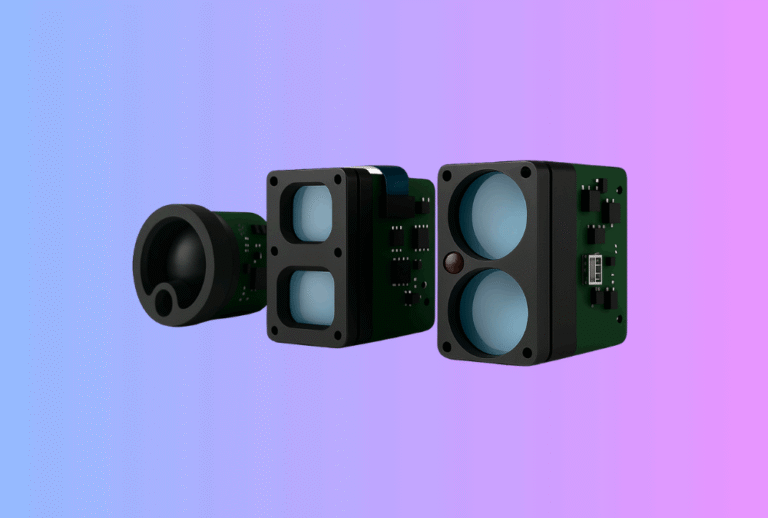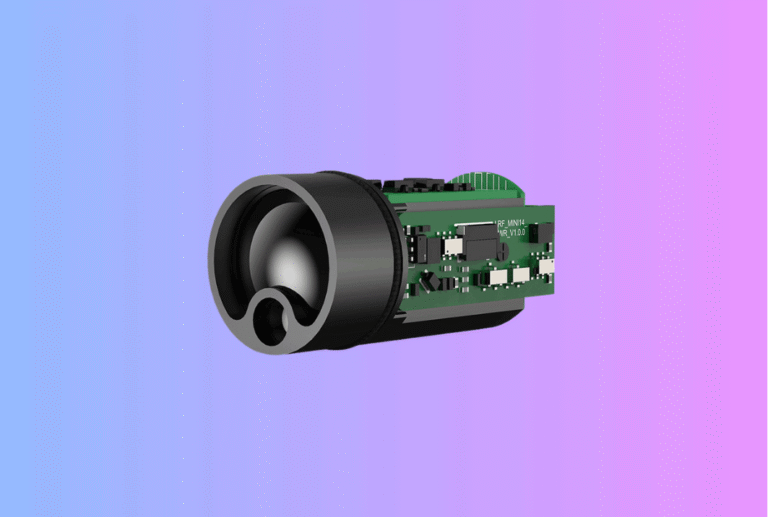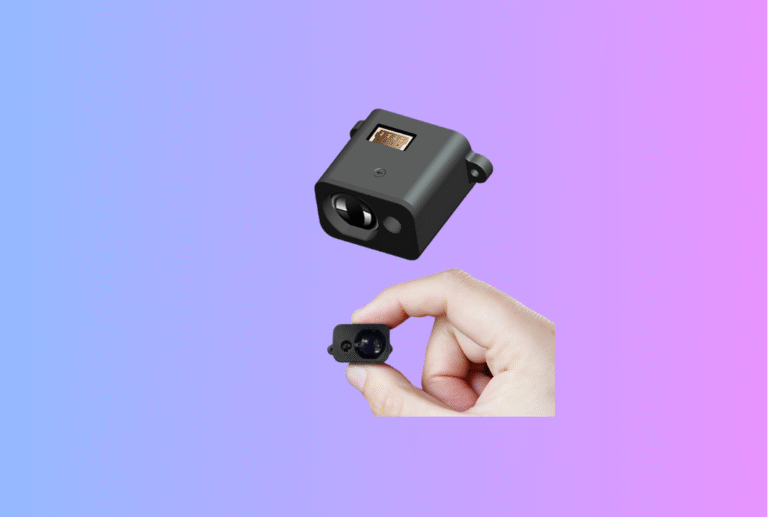
A laser rangefinder module incoming inspection checklist is one of the most useful control tools an OEM factory can build, because incoming inspection is the first point where the customer can stop silent variation before it enters production. Many teams think incoming inspection is mainly about finding damaged goods, wrong quantity, or obvious shipping errors. That is only a small part of its real value. In a serious OEM program, incoming inspection is where the factory confirms that the modules arriving today are still the same controlled baseline that engineering, quality, and manufacturing believe they are building around.
Table of Contents
ToggleThis matters because a laser rangefinder module can arrive looking normal and still introduce project risk. The carton may be clean, the label may match the purchase order, the unit may power on, and yet the delivered state may still differ in a way that matters later. Revision could have changed. Firmware could differ from the expected host baseline. The connector state could be right on paper but less stable in practice. Front-end cleanliness could be weaker than the assembly process can tolerate. The module may even pass a basic function check while no longer matching the assumptions built into boresight, environmental, or service workflows.
That is why incoming inspection should not be treated as a warehouse formality. For laser rangefinder modules, it is a configuration-control gate. It protects engineering intent before the product is mixed into production lots, before the wrong revision is mounted behind a front window, before line operators lose time on avoidable anomalies, and before service teams inherit future confusion. A strong incoming inspection process does not try to retest the entire module at the factory gate. It does something more valuable. It confirms that the delivered modules are the right state, the right condition, and the right risk profile to enter the OEM build flow.
Why incoming matters
Incoming inspection matters because once a questionable module is released into production, the cost of uncertainty increases rapidly. If the issue is caught at receiving, the organization can quarantine a lot, clarify revision, ask the supplier for records, or screen more deeply before the modules are mixed into work-in-process. If the issue is caught only after final assembly, then the cost is no longer only inspection cost. It becomes line disruption, rework risk, traceability confusion, and sometimes customer-facing instability.
This is especially true for laser rangefinder modules because they are often integrated into systems that are already sensitive to alignment, front-end optics, host timing, and environmental behavior. A questionable incoming lot may not fail immediately, but it can still shift process confidence. The product may later appear harder to align, more variable in startup behavior, more sensitive in difficult scenes, or less repeatable in outgoing checks. At that point, the organization is no longer solving a receiving problem. It is solving a production problem that should have been blocked earlier.
So incoming inspection should be viewed as a preventive control, not a reactive one. It is the first serious chance to ask, “Should this lot really be allowed to join the product population we are about to build?”
What incoming should do
A good incoming process does not try to do everything. That would be slow, expensive, and often redundant. Instead, it should do a few critical things well.
First, it should confirm identity. The factory must know what revision state has actually arrived. Second, it should confirm condition. The modules must be physically suitable for controlled assembly. Third, it should confirm documentation alignment. The delivered lot should still match the expected technical and revision baseline. Fourth, it should screen for obvious release blockers such as labeling mismatch, damage, contamination, or interface abnormality. Fifth, it should decide correctly when to accept, when to quarantine, and when to escalate.
That is the real purpose of the checklist. It is not there to replace supplier validation or end-of-line testing. It is there to stop avoidable surprises at the gate.
Start with identity
The first task in incoming inspection is not powering on the unit. It is establishing identity. The factory should confirm that the received module matches the expected part number, revision state, quantity, lot identity, and where relevant firmware or software baseline that the build plan assumes.
This sounds basic, but it is one of the highest-value checks in the entire process. Many downstream problems begin because the receiving team verifies quantity and shipping condition, then assumes identity is also fine. In a stable commodity flow that might be enough. In a laser rangefinder module program, it is not. The part name may look the same while the meaningful internal state has changed. If that happens and the lot enters line build, the organization may later compare unlike modules as if they were the same baseline.
This is why incoming inspection should connect directly to the revision logic defined in the Laser Rangefinder Module Change Control and PCN Guide and the Laser Rangefinder Module Documentation Pack for OEM Projects. Receiving is the place where those revision rules become operational, not theoretical.
Check labels
After confirming the broad identity, the next step is label control. Module labels, carton labels, inner-pack labels, and lot references should all be checked for consistency. A strong receiving checklist asks not only whether labels exist, but whether they are complete, legible, and traceable enough to support later manufacturing and service work.
For laser rangefinder modules, label quality matters because later troubleshooting often depends on knowing exactly which lot, revision, and sometimes firmware-linked state entered the build. If receiving allows weak or inconsistent labeling into stock, then even a technically good lot may become operationally weaker because traceability is damaged before production begins.
This is also where the factory should confirm whether the delivered packaging state preserves the module condition properly. A correct label on a poorly protected module is not enough. Identity and protection should be reviewed together.
Check documents
A receiving lot should not be judged only by what arrived physically. It should also be judged against the documents the factory expected to receive or already hold as the active baseline. The incoming inspection team should confirm that the delivery aligns with the active drawing revision, approved baseline, and any related change notices or release notes that apply.
This matters because incoming mismatch is not always a physical problem. Sometimes it is a control mismatch. The supplier may have shipped a newer revision correctly from their side, but the factory may still be planning against an older baseline. Or the factory may have received a PCN but not yet synchronized the receiving rules. In both cases, the modules themselves may be functional. The risk is that the organization is about to build from mismatched assumptions.
A strong incoming process therefore includes a document alignment check, not only a material check. If the paper baseline and the physical lot disagree, the lot should pause before it reaches the line.
Check packaging
Packaging is not just a logistics concern. For laser rangefinder modules, packaging condition can indicate whether the module has been protected adequately from mechanical shock, contamination, ESD exposure, or handling damage before arrival. Receiving should therefore check outer and inner packaging condition with more purpose than simply noting whether boxes are crushed.
The team should ask practical questions. Was the module protected in a way consistent with its front-end sensitivity? Are antistatic and cushioning methods appropriate? Is there any sign of moisture exposure, rough transport, loose movement, broken separators, or direct contact risk between units? Are protective caps, covers, or films present where they are expected?
This matters because some packaging problems do not create obvious visible damage right away. Instead, they create a higher probability of later optical contamination, connector stress, handling error, or subtle retention issues. Receiving may be the only stage where that early warning is still visible.
Check appearance
A structured visual check remains essential, but it should be intelligent rather than generic. The inspection team should know which appearance issues are merely cosmetic and which indicate real process or field risk. On a laser rangefinder module, that difference matters.
The visual inspection should review housing condition, connector condition, fastener state where visible, cable strain condition, sealing or cover integrity where applicable, signs of rework, contamination risk around sensitive surfaces, and any front-end optical exposure condition that should not be present on arrival. The purpose is not to reject every minor mark. The purpose is to detect evidence that the delivered module may not be in the same controlled state as the approved baseline.
A useful incoming checklist therefore avoids two weak extremes. One is overreacting to harmless cosmetic noise. The other is ignoring appearance anomalies that actually predict larger downstream problems.
Protect optics
If the module includes any front-end optical exposure, protective surface, optical exit window, or contamination-sensitive area, then incoming inspection should explicitly address optical cleanliness and protection. This should not be left buried inside general appearance review.
Laser rangefinder products are especially sensitive to this because optical-path quality can be damaged long before a formal optical failure is visible. Dust, smear, cleaning residue, packaging debris, weak cap retention, or poorly handled protective films can all introduce unnecessary risk. Even if the module still powers on and communicates, the receiving team should avoid releasing units that are already compromised at the optical level.
This is one reason incoming inspection should be linked to the logic from the Laser Rangefinder Module Window Cleaning Guide and the anti-fog / contamination articles. The receiving team does not need to become an optics lab, but it does need to know that optical-path condition is a release issue, not just a cosmetic detail.
Check mechanics
Mechanical incoming checks should focus on the characteristics most likely to affect later fit, mounting, and retention rather than trying to remeasure the entire module at the gate. For most OEM factories, a practical incoming approach is to confirm key physical features and look for signs that the module has drifted away from the approved mechanical baseline.
That may include selective dimensional verification, mount-surface sanity checks, connector seating geometry, cable exit direction, and visible build-state consistency. The exact checklist depends on the product, but the principle is stable: receiving should confirm that the modules can enter line assembly without silently introducing geometry or handling risk.
This is especially important for projects that depend on controlled boresight or multi-sensor positioning. If the incoming lot already varies in ways that affect mounting repeatability, the cost of that drift will not stay at receiving. It will show up later in alignment work, fixture instability, or field complaints.
Check connectors
Connector condition deserves its own place in the checklist. A connector can look acceptable at a glance and still create trouble later if pin condition, retention quality, seating integrity, or handling damage are not screened early. For laser rangefinder modules, this matters because interface behavior often sits close to the heart of system confidence.
The receiving team should confirm that connector type, visual condition, protective state, and mechanical integrity match the approved baseline. If the module is sensitive to cable strain or mating wear, that should be reflected in handling rules during inspection as well. Incoming inspection should not create the very damage it is supposed to detect.
This check also supports later host integration reliability. A poor connector that slips into stock can quickly become a ghost problem in production, where the symptom looks like communication instability rather than receiving weakness.
Check power-up
A limited controlled power-up check can be very valuable when used properly. The key word is limited. Receiving should not try to duplicate full supplier validation or production EOL. But for many laser rangefinder modules, a basic known-good power-up behavior check helps confirm that the delivered lot has not entered the factory in an obviously abnormal electrical or interface state.
This may include confirming that the module powers correctly, reaches expected ready behavior, and does not show immediate abnormal signs such as repeated resets, no-response behavior, or clearly wrong startup state. The exact scope depends on the OEM plan, but the point is to confirm health at the receiving gate without turning receiving into a full engineering bench.
A good receiving process keeps this check proportional. If it becomes too heavy, it slows flow unnecessarily. If it is absent entirely, the factory may miss early warning signs that should never have entered stock.
Check interface
For projects where the host-side behavior is sensitive, incoming inspection should include at least a basic interface sanity check on a defined sample basis or at a defined control level. This is particularly useful when the module’s startup timing, response pattern, or command-state behavior matters strongly to the OEM platform.
The goal is not to rerun full communication characterization. It is to confirm that the received module still behaves like the expected baseline at a basic operational level. If the factory has already experienced revision drift or timing-sensitive issues before, this check becomes even more valuable.
This naturally links to the Laser Rangefinder Module Host Interface Error Handling Guide. A receiving check is not the same as full host validation, but it can stop obviously wrong interface states from contaminating production.
Check function
A basic function check is often appropriate, but it should be chosen carefully. For some factories, that means a limited ranging sanity check against a known setup. For others, it may mean only a controlled readiness and response check, with deeper function reserved for later stations. The right answer depends on the product and the division of validation responsibilities between supplier and OEM.
The important point is that incoming function checks should be designed to detect meaningful incoming risk, not just to create the feeling that “something was tested.” If the check is too shallow, it may add little value. If it is too broad, it may waste time and consume fixtures better used elsewhere.
In a strong process, receiving function checks are scoped to the real incoming risks the factory wants to block early.
Don’t overtest
One of the most important principles in incoming inspection is restraint. Many factories respond to uncertainty by expanding receiving tests until incoming inspection starts duplicating supplier qualification, engineering validation, and production release checks. That usually creates cost without equivalent control benefit.
The better approach is to ask what receiving uniquely needs to protect. Revision identity, packaging condition, contamination risk, obvious mechanical or connector issues, basic startup sanity, and defined sample-based function or interface checks usually create more value than trying to retest the full module at the dock.
For laser rangefinder modules, this balance is especially important because overtesting at receiving can also create unnecessary handling exposure, connector wear, optical contamination risk, or confusion about where real acceptance responsibility sits. Incoming should be strong, but it should also be disciplined.
Use references
Incoming inspection becomes much stronger when it is anchored to controlled reference materials. That may include golden samples, approved reference units, known-good startup traces, baseline inspection photos, or controlled acceptance examples. These references help the receiving team compare what arrived today against what the organization actually means by “approved baseline.”
This is especially helpful when incoming differences are subtle rather than catastrophic. A receiving inspector may notice that labeling looks different, startup behavior feels slightly changed, or front-end appearance is not quite what the line is used to seeing. Without a controlled reference, that observation may remain subjective. With a controlled reference, it becomes easier to decide whether the lot is normal, questionable, or escalation-worthy.
That is why incoming inspection should connect naturally to the Laser Rangefinder Module Golden Sample Guide. Receiving is one of the places where reference-unit discipline has immediate practical value.
Quarantine rules
A strong incoming process does not only define what to inspect. It also defines what to do when something is not right. Quarantine logic is therefore just as important as the checklist itself.
The team should know which findings justify immediate hold, which require deeper engineering review, which allow limited segregation pending clarification, and which are minor enough to record without stopping the lot. If this logic is missing, the organization falls back into improvisation. Some questionable lots move forward too early. Others are blocked unnecessarily. Both outcomes are expensive.
For laser rangefinder modules, quarantine should be especially clear around revision mismatch, label inconsistency, optical contamination, connector abnormality, packaging damage tied to module sensitivity, and any interface or startup behavior that departs from the approved baseline. Those are not receiving details. They are project-control signals.
Traceability
Incoming inspection should reinforce traceability, not weaken it. Once the lot passes receiving, the factory should still be able to connect the modules to their lot identity, revision state, and any incoming inspection record or segregation decision that mattered.
This is essential because later production or field questions may rely on that visibility. If a later issue emerges, the organization needs to know which incoming lot entered which build window, whether that lot had any warnings at receiving, and how it differed from other accepted lots. Without that information, root-cause analysis becomes slower and much less certain.
This is also why incoming inspection belongs inside the broader traceability and documentation system rather than being treated as a local warehouse task.
Link to quality
Incoming inspection is most effective when it is connected tightly to supplier quality and internal quality loops. If the factory sees repeated packaging weakness, recurring label mismatch, frequent connector anomalies, or growing variation in startup behavior, those observations should not remain trapped at receiving. They should feed supplier management, change review, and process correction.
A strong incoming checklist therefore also acts as a quality sensor. It helps the organization see whether the incoming module population is getting more stable, less stable, or simply changing in ways that need formal explanation. When receiving and supplier quality work together, incoming inspection becomes a learning function rather than only a gate.
That is one of the clearest signs of a mature OEM factory. It does not only check boxes. It uses incoming evidence to improve the program.
Link to production
Incoming inspection should also be aligned with how the module will be used in production. There is little value in checking only what is easy at the dock while ignoring the characteristics that matter most once the module reaches the build line.
If the product is sensitive to front-end cleanliness, the receiving flow should protect that. If the line depends heavily on host timing stability, receiving may need a sample-level startup or interface sanity check. If alignment repeatability is critical, the receiving team may need to pay closer attention to packaging, visible mechanical condition, or key geometry checks. In other words, incoming should not be generic. It should be production-aware.
This is why the topic fits naturally after the Laser Rangefinder Module Production Handover Guide. Receiving is one of the first places where the transferred manufacturing logic becomes real.
Pilot first
Incoming inspection logic should be hardened during pilot, not only after mass production starts. Pilot is the right stage to discover which receiving checks truly catch risk, which are unnecessary, and which conditions create too much false alarm or too little protection.
During pilot, the organization can learn whether label control is strong enough, whether revision visibility is clear enough, whether the basic startup check is meaningful, whether optical handling at receiving is safe, and whether quarantine thresholds need refinement. Those lessons are much cheaper to learn during pilot than during full-rate production.
This is why incoming inspection should be treated as part of pilot readiness rather than as a late warehouse SOP. A product is not fully ready for scale if the receiving gate that protects it is still vague.
What buyers should ask
An OEM buyer or factory quality team evaluating a laser rangefinder module supply program should ask more than whether the supplier has passed outgoing test. Useful questions include these. Which revision fields should receiving check? What incoming risks are most important to screen? What startup or interface sanity check is recommended at receiving, if any? Which packaging conditions are unacceptable? What optical or connector conditions justify hold? How should receiving handle mixed-lot or mixed-revision situations? What reference units or baseline records should the factory keep? Which findings should trigger immediate supplier escalation?
These questions are valuable because they force incoming inspection to become a real control process instead of a generic receiving ritual.
Review table
| Review area | What the OEM factory should confirm | Why it matters |
|---|---|---|
| Identity | Part number, revision, lot, and baseline state are correct | Wrong state entering stock creates downstream confusion |
| Labels and docs | Label content and document baseline match the expected release | Control mismatch is often an early warning |
| Packaging and condition | Transport and protective state are acceptable | Hidden handling damage starts at receiving |
| Optics and connectors | Sensitive surfaces and interfaces are clean and intact | Small defects can create later instability |
| Startup and interface sanity | Basic controlled behavior matches the expected baseline | Receiving should block obvious abnormal lots early |
| Quarantine logic | Hold and escalation rules are clear | Weak decisions at receiving amplify cost later |
| Traceability | Accepted lots remain identifiable after release to stock | Field and production analysis depend on receiving visibility |
This kind of structure helps the factory use incoming inspection as a real quality gate rather than a simple receipt confirmation.
Final thought
A laser rangefinder module incoming inspection checklist is really a checklist for protecting the production baseline before it is diluted by time, volume, and assumption. It explains why receiving should confirm more than quantity, why revision and condition matter as much as basic function, and why a disciplined incoming gate is one of the cheapest places to stop expensive downstream confusion.
For suppliers, this is a chance to align their outgoing assumptions with the customer’s receiving reality. For OEM factories, it is a practical way to reduce avoidable line variation, quarantine the wrong risks early, and strengthen traceability before production consumes the lot. And for the program as a whole, it is one of the clearest reminders that quality control does not begin at final test. It begins the moment the module enters the factory.
FAQ
Should incoming inspection retest the full laser rangefinder module?
Usually not. Incoming inspection should focus on identity, condition, baseline alignment, and selected sanity checks rather than duplicating full supplier validation or full EOL logic.
Why is revision checking so important at receiving?
Because the wrong revision can enter production looking normal and only create problems later in host behavior, alignment, service, or validation consistency.
Is packaging really part of incoming quality for laser rangefinder modules?
Yes. Packaging condition can reveal handling, contamination, moisture, or shock risk before those issues appear later in production or field use.
When should a receiving lot be quarantined?
When revision, documentation, optical condition, connector state, packaging damage, or startup/interface sanity depart meaningfully from the approved baseline.
CTA
If your OEM factory needs a stronger incoming inspection checklist for laser rangefinder modules before lots are released into production, you can discuss your application with our team through our contact page.
Related articles
You may also want to read:
- Laser Rangefinder Module Production Handover Guide
- Laser Rangefinder Module Golden Sample Guide
- Laser Rangefinder Module End-of-Line Test Strategy
- Laser Rangefinder Module Documentation Pack for OEM Projects