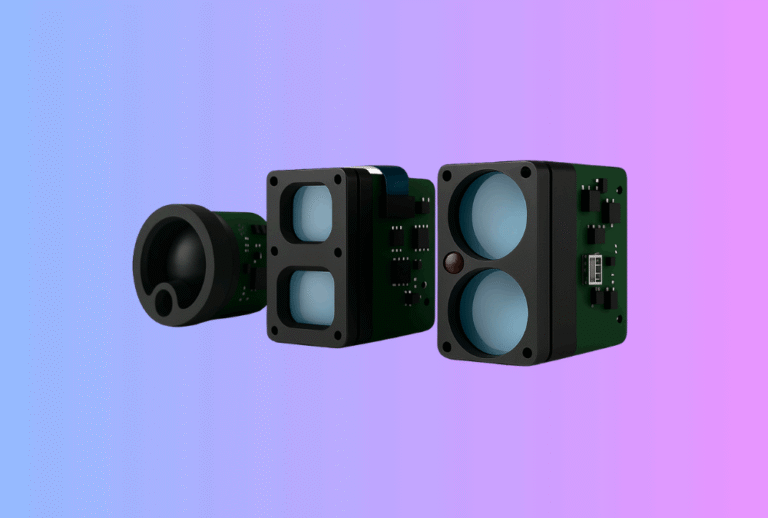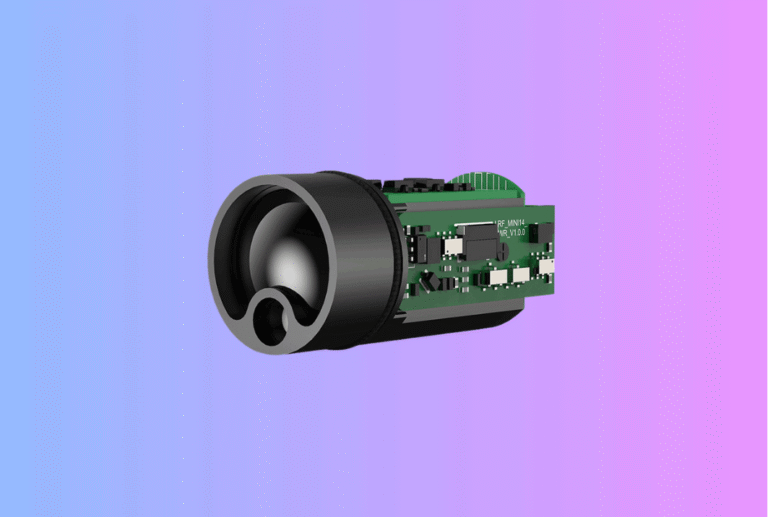
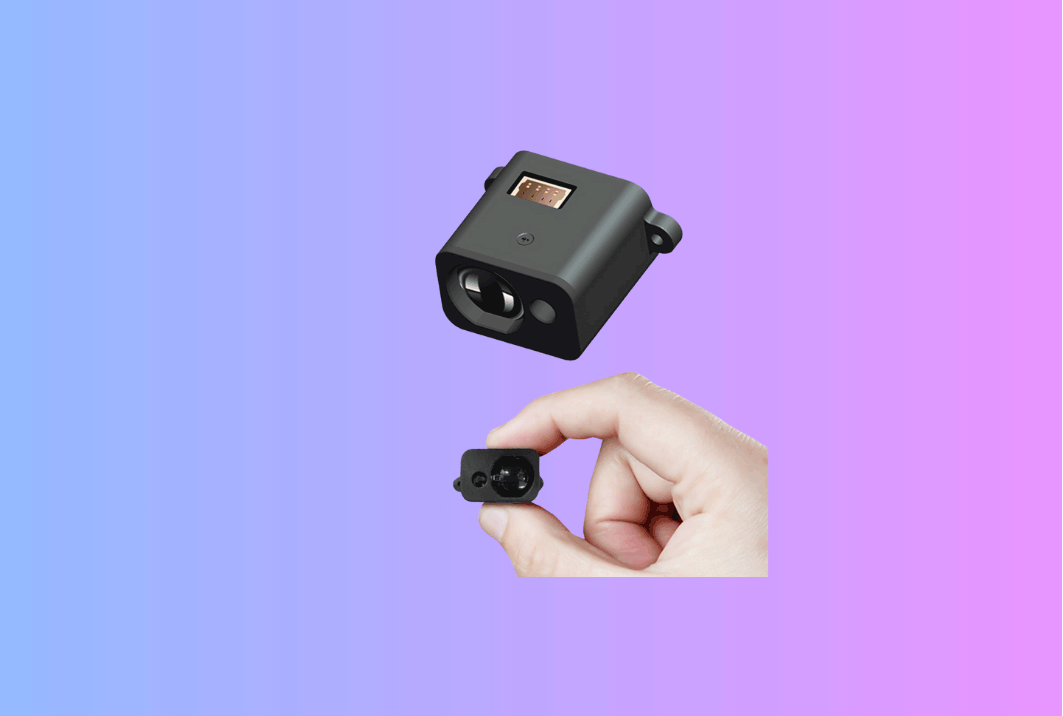
For many brands, the first instinct is to design three different laser rangefinders: one for golf, one for hunting, one for construction. Each has its own housing, firmware and supply chain. That approach works at small scale, but as volumes grow it becomes expensive to maintain and hard to evolve.
Table of Contents
ToggleA smarter strategy is to build a multi-mode laser rangefinder platform: one core engine that can be tuned by firmware, optics and UI to serve golf, hunting and construction markets. B2B buyers get faster time-to-market and lower engineering risk. Distributors get coherent product lines built on proven hardware.
This article explains how OEM brands and system integrators can design such a platform around a robust laser rangefinder module, using our experience as a China-based manufacturer of configurable laser rangefinder modules and specialised golf rangefinder modules.
1. Why a multi-mode platform is attractive for B2B brands
From a business perspective, the argument for a multi-mode platform is straightforward.
Lower development cost. Instead of three separate designs, you invest once in a solid core: optics, laser driver, receiver, MCU and power system. Mode-specific features are implemented in firmware and UI, plus a few peripheral components (tilt sensor, Bluetooth, different displays).
Faster roadmap execution. When you introduce a new sensor or improve the laser engine, you update one platform and roll the benefits into golf, hunting and construction variants simultaneously.
Simpler supply chain. Common modules, housings and accessories can be shared across models. This reduces minimum order quantities, simplifies forecasting and improves component availability.
Consistent quality. A single, well-validated platform is easier to keep reliable than multiple unrelated designs. You can apply lessons from one market (for example, long-term reliability in hunting) to others (such as ruggedised construction tools).
For OEM/ODM collaborations, the multi-mode approach also means that the same laser rangefinder module can be offered to different brand partners with customised firmware and housings, reducing per-project engineering effort.
2. What “multi-mode” actually means in rangefinder products
Multi-mode does not only mean “several measurement modes in one device.” It means a platform that can be configured to feel like a dedicated golf, hunting or construction product, even if the hardware core is shared.
At a minimum, each segment expects different priorities:
- Golf – fast lock on the flag, slope compensation (where allowed), easy-to-read display, tournament-legal mode, comfortable ergonomics.
- Hunting – reliable ranging on animals and background targets, first/last target logic, low-light usability, recoil resistance, simple controls usable with gloves.
- Construction / surveying – high repeatability on hard surfaces, tilt and height calculations, data logging, Bluetooth or USB, robust housings.
A multi-mode platform must satisfy these without confusing the user. A golfer should never be forced through “beam divergence” menus, and a job-site contractor should not see “golf slope mode” in his daily tool.
The core idea is: one hardware family, multiple personalities, each carefully tailored by optics selection, firmware parameters and UI design.
3. Core platform architecture: module + controller + peripherals
A practical multi-mode platform typically has three layers.
3.1 Laser rangefinder engine
At the heart lies the laser rangefinder module:
- laser diode and driver;
- receiver optics and detector;
- analog front-end and time-measurement circuitry;
- embedded MCU or interface to a host controller.
This engine defines the fundamental capabilities: wavelength (usually 905 nm for consumer tools), maximum range, precision, eye safety class and basic power budget.
Choosing a stable, well-documented module—such as Gemin’s configurable laser rangefinder modules—gives you a proven basis for all segments.
3.2 Application controller
Above the engine sits an application MCU or SoC that handles:
- mode logic (golf, hunting, construction);
- user interface (buttons, rotary switches, menus);
- display driving (OLED/LCD, icons, reticles);
- connections to tilt sensor, compass, Bluetooth or Wi-Fi;
- data logging and communication with apps or PCs.
Sometimes the engine MCU and application MCU are combined, but separating them often makes mode customisation easier: the engine does measurement, the application controller handles “personality.”
3.3 Peripherals and mechanical platform
Finally, the mechanical and peripheral layer includes:
- housings and eyecups tailored to each market;
- battery compartments (CR2, 18650, integrated Li-ion, etc.);
- displays and optical viewfinders;
- mounting provisions (tripod threads, weapon mounts).
By designing this layer with shared interfaces—for example, the same module mounting points and display connector across casings—you can reuse many parts while still shaping different external appearances.
4. Comparing golf, hunting and construction requirements
Before designing the platform, it helps to compare needs systematically.
| Aspect | Golf Rangefinder | Hunting Rangefinder | Construction / Survey Tool |
|---|---|---|---|
| Typical targets | Flags, reflectors | Animals, vegetation, terrain | Walls, poles, ground, ceilings |
| Range emphasis | 200–400 m | 300–800+ m | 0.5–200+ m, high repeatability |
| Modes | Flag lock, slope, scan | First/last, scan, ballistic | Continuous, area/volume, indirect height |
| UI priority | Simplicity & speed | Reliability & low-light use | Precision, data entry, logging |
| Ruggedness | Weatherproof, light drops | Recoil, weather, cold | Drops, dust, moisture |
| Connectivity | Optional BLE to golf app | Optional app, mostly stand-alone | Often BLE/USB for reports |
A multi-mode platform should support all of these through parameter sets rather than completely different code paths.
5. Optical and electrical trade-offs in a shared platform
Using a shared engine for very different products requires careful trade-offs.
5.1 Optics and beam divergence
Golfers need a beam narrow enough to distinguish the flag from background trees; hunters need enough energy on target at longer distances; construction users want consistent readings on dull surfaces.
One solution is to define two or three lens options around the same module:
- a slightly tighter beam and smaller FOV for golf and hunting;
- a wider beam and focus tuned for near to mid-range for construction tools.
Because the engine is the same, changing lens assemblies becomes a SKU-level configuration rather than a new design.
5.2 Eye safety and output power
All consumer products must respect IEC 60825-1 laser safety classes. Within Class 1 limits, you may still choose to derate output power for near-range, high-reflectivity environments (golf) while using a somewhat more aggressive configuration for hunting or long-range surveying.
Having firmware-selectable PRF and pulse patterns allows different modes—single shot vs scan—to reuse the same hardware safely.
5.3 Power and battery strategy
Construction users may run continuous measurement all day; hunters might use the device sporadically at low temperature; golfers expect days of use between charges.
A platform can support multiple battery options (replaceable primary cells and rechargeable packs) by:
- designing flexible power-supply circuitry;
- providing battery-type configuration in firmware;
- using common charging/low-voltage protection blocks.
Derating and efficiency improvements in the core engine—already discussed in the long-term reliability article—benefit all segments.
6. Firmware design: mode profiles instead of one-off projects
The heart of a multi-mode platform is firmware architecture. Instead of hard-coding behaviour for each model, design firmware around mode profiles.
Each profile defines:
- measurement strategy (single, averaged, scan, first/last logic);
- filtering thresholds and signal-quality criteria;
- display behaviour (reticle type, units, icon sets);
- permissible configuration menus;
- connectivity options (for example, slope on/off locked by a PIN in tournament mode).
In code, this can be implemented as a configuration table or data structure loaded at startup based on product ID or region code. The same binary may support all segments, with compile-time or runtime switches controlling which profiles are exposed.
For example:
- Golf profile – emphasises fast target confirmation with algorithms tuned to moving flags, includes slope calculation and vibration feedback.
- Hunting profile – uses more conservative filters for partial returns, offers first/last target and scan modes, dims display for low light.
- Construction profile – focuses on repeatable readings, offers continuous tracking, Pythagorean calculations and a UI oriented around jobs and points.
This architecture simplifies maintenance: bug fixes and performance improvements in measurement logic automatically benefit all modes unless a special case is required.
7. User experience: different faces on the same core
Even with shared firmware underneath, the user experience should feel specific to the application.
7.1 Controls and menus
Golfers prefer minimal controls: usually a single “power/measure” button plus a mode or slope toggle. Hunters may accept a few more buttons for ballistic profiles and brightness. Construction users tolerate more complex interaction: function keys, multi-step menus, numeric entry.
Design housings and keypad overlays so that unused buttons are physically absent in simpler models, even if the underlying PCB supports them. This avoids confusing users and reduces accidental mode changes.
7.2 Display design
Reticles, icons and fonts should match expectations:
- golf – simple central cross or circle, large distance digits, slope and flag icons;
- hunting – finer reticles, ballistic hold indicators, brightness controls;
- construction – numeric emphasis, multiple measurement lines, units and job labels.
Although display hardware may be shared (for example a standard OLED), firmware should load different graphic assets and layout templates based on the mode profile.
7.3 Region-specific features
Some markets restrict slope or ballistic functions in competition. Multi-mode firmware makes it easier to create region-specific variants simply by disabling certain profiles or hiding menus, instead of maintaining separate code branches.
8. Calibration, QA and testing across modes
A multi-mode platform must pass calibration and QA in all its roles. This is easier when you treat the laser rangefinder module as a metrology device with clear, shared procedures.
Core tests—range accuracy on reference targets, repeatability, environmental tests—are common. On top of that you can add:
- golf-specific tests – flag lock on moving reflective flag simulators;
- hunting tests – targets with different reflectivity levels at medium and long ranges;
- construction tests – short-range precision on indoor surfaces, consistency for height calculations.
Using shared calibration fixtures and software linked to module serial numbers ensures that all variants, regardless of housing, trace back to a single standards framework.
OEM factories that already support diverse product families can extend their QA system to log mode profiles per unit, making it easier to trace field issues to specific firmware configurations or lens options.
9. Building a product ladder from a single platform
From a commercial standpoint, a multi-mode platform is a powerful tool for creating a product ladder:
- entry-level golf rangefinders using the basic engine, simple optics and minimal connectivity;
- mid-range hunting units with upgraded lenses, rugged housings and first/last target logic;
- professional construction meters with Bluetooth, tilt sensors and advanced calculation modes;
- special editions sharing the same core but differentiated by branding, colour and accessory sets.
Because the underlying hardware is shared, each new SKU requires less engineering investment. B2B partners can respond faster to channel requests (“a value golf model with slope off,” “a more premium hunting unit with stronger housing”) by tweaking configuration rather than starting from scratch.
For multi-brand OEMs, platform thinking also supports private label programmes: different labels and housings on top of the same tested engine, with firmware tuned to each brand’s positioning.
10. Working with Gemin Optics on a multi-mode rangefinder platform
A successful multi-mode project requires more than a good idea; it needs an experienced hardware and firmware partner.
As a China-based manufacturer, Gemin Optics offers:
- configurable laser rangefinder modules with proven performance, designed for both handheld devices and embedded systems;
- dedicated golf rangefinder modules that already implement flag-lock and slope algorithms and can be adapted to hunting and construction profiles;
- end-to-end rangefinder module integration services, covering optics selection, housing design, EMC, reliability and production testing;
- flexible firmware architectures that allow multiple modes, region codes and brand-specific feature sets within one platform.
By building on this foundation, B2B partners can focus on market strategy, branding and channel management while relying on a stable technical core that evolves over several product generations.
CTA – Build Your Next Golf, Hunting and Construction Rangefinders on One Multi-Mode Platform
Designing separate hardware for every rangefinder variant is costly, slow and hard to maintain. A multi-mode laser rangefinder platform built around a robust module lets you serve golf, hunting and construction markets with shared optics, electronics and firmware—while still delivering application-specific user experiences.
If you are planning a new product line or consolidating existing designs, consider working with a China OEM that specialises in platform thinking instead of one-off projects. Explore Gemin Optics’ configurable laser rangefinder modules, application-specific golf rangefinder modules, and full rangefinder module integration services, and talk with our engineering team about how to turn one core engine into a complete, multi-segment product family.