Thermal imaging monoculars have become indispensable tools for hunters, outdoor enthusiasts, and professionals who need to see in the dark. As this technology evolves, one feature is rapidly gaining prominence: the integration of Laser Rangefinders (LRFs) into thermal monoculars. An LRF can turn a thermal viewer into a comprehensive targeting or observation device by providing precise distance measurements to objects – a capability that’s incredibly valuable in the field. In this article, we explore why integrated LRFs in thermal monoculars are on the rise and what original equipment manufacturers (OEMs) and product designers need to consider. We will cover the basics of what LRFs are and why they matter, delve into technical and design challenges of integration, discuss use cases in outdoor and hunting scenarios, and highlight the trade-offs in features, weight, cost, and performance. By the end, OEMs and B2B stakeholders should have a clear understanding of the importance of LRF integration and how to navigate the trend.
Table of Contents
ToggleWhat is an LRF and Why Does It Matter in Thermal Monoculars?
An LRF, or Laser Rangefinder, is a device that determines the distance to a target by emitting a laser beam and measuring the time it takes for the reflection to return. Essentially, it’s a point-and-shoot way to get range distance – typically with accuracy within a meter or less. In standalone form, rangefinders have been used by golfers, hunters, and the military for years. The innovation we’re discussing here is building this capability into a thermal monocular, which is a handheld (or sometimes weapon-mountable) thermal imaging device.
Why is this a big deal? Consider what a thermal monocular does: it allows you to spot the heat signatures of animals, people, or objects, often in complete darkness. Now imagine you see a hog or deer through your thermal monocular while scouting at night – knowing how far away that animal is can be crucial information. If you’re a hunter, it tells you whether the animal is within shooting range or if you need to stalk closer. If you’re doing search and rescue, it helps you judge distance to a person who needs help. If you’re a wildlife observer or rancher monitoring predators, it helps you decide your next move. Integrated LRF gives immediate situational awareness of distance, something that previously required carrying a separate device or relying on rough estimation.
In traditional daytime optics, hunters often use separate laser rangefinder binoculars or monoculars. At night with thermal, juggling multiple devices (thermal viewer + separate rangefinder) is cumbersome. An integrated unit means one device can both detect heat and measure range, streamlining the user’s experience. The convenience factor is huge: it simplifies gear, lightens the load (one unit instead of two), and speeds up the process of target identification and rangefinding. When a wild boar steps out at the edge of a field at midnight, a hunter with a thermal monocular that has LRF can instantly know “that boar is 120 yards away” at the push of a button, rather than guessing or fumbling with another gadget.
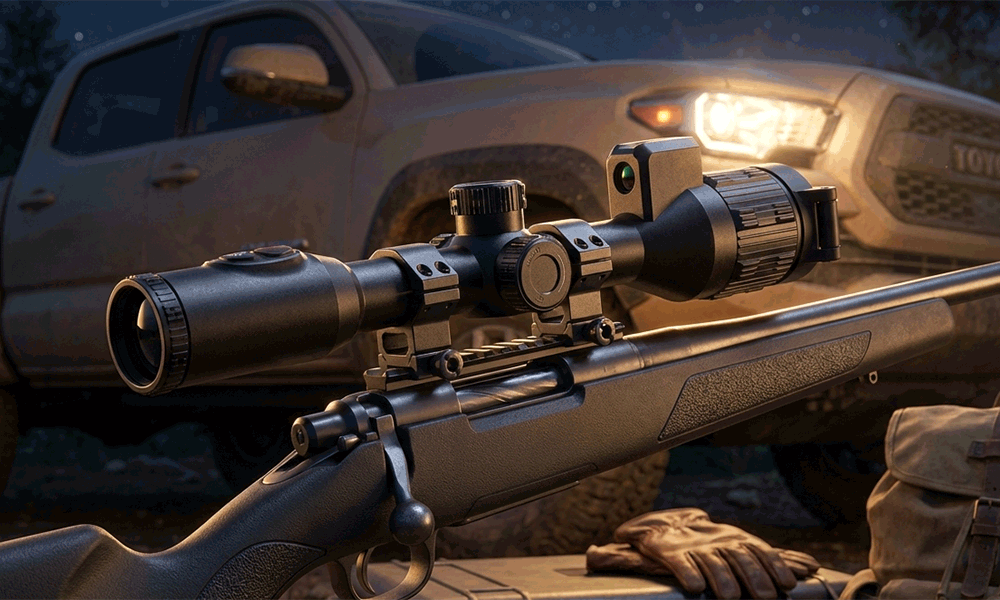
Furthermore, integrating an LRF with the thermal’s electronics can unlock additional features. Some systems overlay the range information in the thermal display (so you see a readout like “120m” right through the eyepiece). Others might use that data in computational ways – for instance, communicating with a paired riflescope or a ballistic app to adjust aiming solutions. This is edging into advanced territory, but shows how an LRF isn’t just a standalone feature; it becomes part of a “smart optics” ecosystem. As one thermal equipment provider noted, “knowing the distance is as important as seeing the target” in precision hunting.
In summary, an LRF matters in thermal monoculars because it adds a critical layer of information (distance) to what the thermal device already provides (heat vision). This combination vastly improves decision-making in the field. For OEMs, it means there is growing user demand for devices that do more than just detect heat – they want multifunctional tools that can serve as all-in-one night vision and ranging solutions.
The Trend: More Thermal Devices Featuring Integrated Rangefinders
In the past few years, the industry has seen a clear trend: more and more thermal monoculars (and scopes) are being released with built-in LRF modules. What’s driving this trend?
One driver is certainly user demand – as discussed, hunters and professionals have realized the benefits of integrated LRFs and are starting to consider it a must-have for higher-end gear. Many top thermal optics brands now include at least one LRF model in their lineup. For example, Pulsar (a leading brand) offers the Axion 2 LRF series of thermal monoculars; AGM Global Vision recently launched the ReachIR series with a 1,000-meter integrated LRF; and other brands like Guide, Infiray, ATN, and Flir have models or are introducing models with LRF capabilities. Even some fusion devices (that combine thermal + digital night vision) are coming with LRFs. This proliferation means that in the competitive market, having an LRF model is often necessary to keep up with rivals. OEMs that supply white-label products have likewise added LRF options to their portfolios, making it easier for new brands to also offer that feature.
From a technology standpoint, miniaturization and cost reduction of laser ranging modules have reached a point that integration is feasible without outrageous cost or size penalties. Modern LRF modules used in handhelds are typically Class 1 eye-safe IR lasers (often 905 nm wavelength) with compact diode and sensor assemblies. These can be a few cubic centimeters in volume and weigh only a few tens of grams. They also sip power lightly, meaning adding an LRF doesn’t drastically cut the battery life if managed properly (they fire laser pulses only when needed, not continuously). As a result, adding an LRF no longer makes a thermal device bulky or power-hungry as it might have a decade ago. For instance, in one compact monocular design, the LRF addition only increased weight by about 50 g (from ~300 g to ~350 g). The device remains pocket-sized and easily handheld. This progress in component tech is a major enabler of the trend.
Another factor is increasing use cases that value LRFs. Beyond pure hunting, think of law enforcement or border security personnel using a thermal monocular: knowing range can be crucial for coordination (e.g., “suspect is 250 meters out”). Or firefighters using a thermal to locate hotspots or people in low visibility – range could tell them how far a victim is in a smoke-filled woods, for example. Even recreational wildlife viewers can appreciate range info to understand animal behavior (distance can help infer if an animal is likely aware of your presence or not). Manufacturers are recognizing these broader applications and marketing the LRF as a feature for safety, precision, and data collection in addition to hunting.
Market feedback also indicates that LRF models often outsell non-LRF equivalents among serious users, despite higher cost. A forum discussion on whether the LRF version of a popular scope was worth ~$1000 extra found that many experienced hunters opted for it because the confidence in range estimation was so valuable, especially for longer shots or unfamiliar terrain. In essence, those who plan to use their thermal for active spotting/shooting tend to want the LRF, whereas only more casual users might forgo it to save money. This segmentation suggests that as thermal devices become more mainstream, the baseline expectation of features rises as well. What was once premium (integrated LRF) could become standard in a few years.
All these points to an overarching trend: integrated LRF is becoming a hallmark of advanced thermal optics, and OEMs should plan on incorporating this feature to stay competitive at the higher end of the market. The next sections will get into what OEMs need to consider when doing so – from technical challenges to design trade-offs.
Technical Integration Challenges for OEMs
While adding a laser rangefinder to a thermal monocular sounds straightforward conceptually, there are several technical challenges and considerations that OEMs must address:
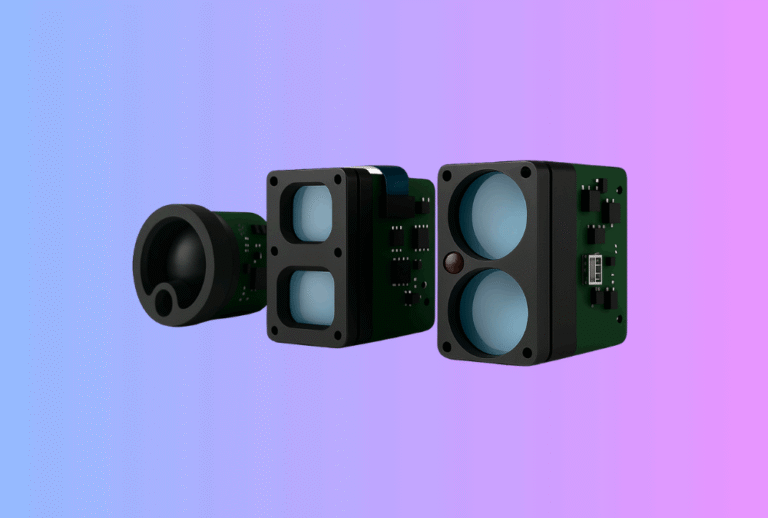
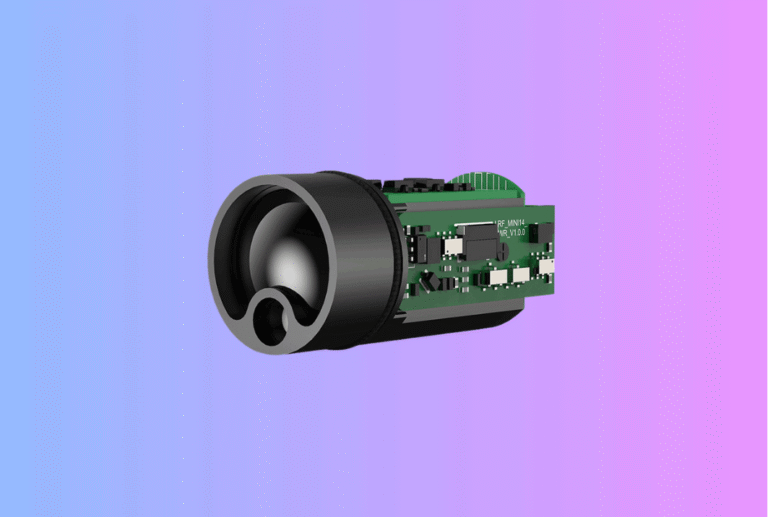
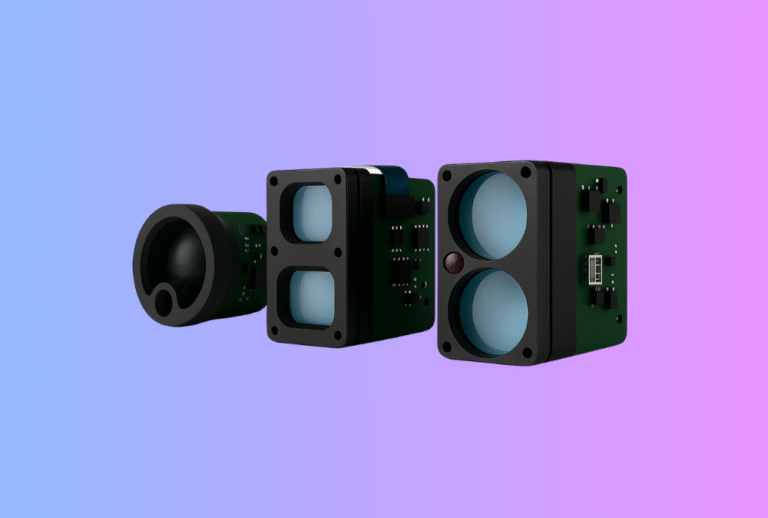
1. Optical Alignment: One of the biggest challenges is ensuring the LRF’s laser beam and sensor align with the thermal imager’s field of view. As a manufacturer put it, “this isn’t just about sticking a module on the side; it’s about ensuring the laser beam is perfectly aligned with the optical axis.”. In practical terms, the laser emitter and receiver need to be oriented such that when you aim the thermal at a target, the laser actually hits that target at typical engagement distances. Any misalignment could mean you get range readings of a bush next to the hog instead of the hog itself. OEMs often incorporate calibration procedures in production to align the LRF with the reticle or center of the thermal view. Mechanically, some designs place the LRF lenses as close to the thermal lens as possible to minimize parallax (you might notice many LRF thermal monoculars have two small lenses/windows usually above the objective lens – those are the laser emitter and receiver). Even with careful alignment, at very close ranges or very long ranges, some parallax error can occur, so manufacturers need to decide an optimal zero distance for alignment (e.g., align perfectly at 100 yards, accept minor error at 20 or 300 yards). Maintaining alignment over time is also a challenge – if the device is dropped or experiences recoil (for weapon-mounted units), the LRF and thermal optical axes should ideally remain aligned. This calls for robust mechanical design, perhaps potting or securely anchoring the LRF module inside the housing.
2. Space and Layout: Thermal monoculars are valued for being compact. Adding an LRF module means finding space for at least two additional optical elements (the laser and the receiver lens) and the electronics to drive them. This could require enlarging the housing or reconfiguring the internal PCB layout. Industrial design adjustments are often needed: for example, creating a protrusion or “bump” where the LRF sits (as seen on devices like the Pulsar Axion LRF, where there’s an evident bulge on one side for the laser components). OEMs must optimize this to keep the device ergonomic. A poorly placed LRF module could make a monocular awkward to hold or pocket. There’s also the need to prevent the LRF’s electronics from interfering with the thermal sensor or other components (electromagnetic interference and heat output considerations). Thermal devices themselves run warm (they have microbolometers and processing units); adding a laser that emits pulses might introduce some heat or noise – usually minimal, but it has to be considered in the thermal management design.
3. Power Management: Laser rangefinding consumes power in bursts when activated. OEMs have to integrate the power supply for the laser (often a high-current pulse) in a way that doesn’t brown out the system or overly drain the battery. Typically, rangefinder pulses are extremely brief, so battery impact is small, but rapid repeated use will have some effect. The device’s firmware needs to manage this – e.g., not allowing the user to spam the laser too quickly without giving time to recharge capacitors or to ensure accuracy. Additionally, designers should consider an auto-off or standby for the laser to conserve power, since the thermal imager itself might be running continuously for scanning but the LRF is only needed intermittently.
4. User Interface & Display Integration: Integrating an LRF means also integrating the user controls and display feedback for it. OEMs need to design a simple way for the user to activate the rangefinder – commonly a dedicated button. That button needs to be placed for easy operation (usually near where the index finger or top hand can press while looking through the eyepiece). On the display side, the range data should be shown clearly, usually as an overlay in the thermal image. This requires firmware work to generate on-screen text or symbology (like a small range number near the reticle or a specific part of the screen). It’s important that this readout is legible against varied thermal backgrounds; often, a contrasting text or a small black outline around white text is used. The UI may also include indicators like “Out of Range” if nothing is hit, or a targeting reticle to show where the laser is aiming if that differs from the center. OEMs have to ensure this information doesn’t clutter or confuse the user. Balancing information vs. simplicity is key – a hunter at night wants quick info, not an overload.
5. Accuracy and Range Performance: Customers will judge the integrated LRF on how well it performs relative to stand-alone rangefinders. So OEMs need to choose quality LRF components. Key specs are maximum ranging distance, accuracy, and beam divergence. Many integrated LRFs in compact thermals advertise ranging up to around 800–1000 meters on reflective targets, with somewhat shorter range on small targets like game animals (maybe 500-800m) – this is in line with devices like the AGM ReachIR which has a 1000m LRF. Accuracy is typically ±1 meter for good devices. Achieving this requires good sensor sensitivity and calibration. Beam divergence (how much the laser beam spreads) should be small enough to range small targets at distance but not so small that it’s hard to hit the target if slightly unsteady. OEMs might procure LRF modules from specialized suppliers, or develop their own. In either case, ensuring the module meets eye-safety standards (Class 1) and regulatory approvals (like FDA certification in the US, CE in Europe for laser products) is part of the challenge.
6. Cost and Component Integration: Adding an LRF inevitably increases the BOM (Bill of Materials) cost of the device. For OEMs, it’s a balance – they must source a module or components that fit the target price point of their device. This might involve trade-offs like using a module with slightly less max range to save cost, or deciding whether the inclusion of LRF bumps the product into a higher MSRP category. Also, more components means a bit more assembly complexity – aligning and testing the LRF in each unit is an extra step in production. Many manufacturers perform a range calibration at a known distance during QC to ensure the reading is accurate. This process has to be built into the production line.
In short, integrating an LRF is a multidisciplinary engineering effort – optical alignment, mechanical design, electrical and firmware integration all come into play. However, none of these challenges are insurmountable, as evidenced by the multiple products successfully offering this feature. The key for OEMs is careful design and testing. Partnering or consulting with experienced suppliers (some companies specialize in OEM rangefinder modules that offer integration support) can mitigate risk. When done right, the result is a seamless feature that greatly enhances the end-user experience.
Use Cases: How LRF-Equipped Thermal Monoculars Excel in the Field
To understand the importance of integrated LRFs, it’s helpful to envision specific outdoor and hunting scenarios where they make a difference:
- Night Hunting (Hogs and Predators): We’ve touched on hog hunting – imagine you’re in Texas on a night hunt for feral pigs. You’re scanning a pasture with a thermal monocular and spot a sounder of hogs. Distance estimation at night can be very tricky; depth perception is reduced and without familiar reference points, a group of hogs could be 50 yards away or 150 yards away and it’s hard to be sure. With an LRF monocular, you quickly range them: say 120 yards. Now you know you can approach a bit closer or, if you’re also shooting with a night-vision scope, you know what holdover to use. If you’re coordinating with someone who has a rifle, you can whisper “hogs at 120 yards.” This improves safety and efficacy. The ability to measure distance in real-time can be the difference between a successful stalk and a wasted opportunity. The same goes for predator hunting (coyotes, foxes): at night across a field, calling in a coyote, you see it circling at the edge of the brush. Rangefinding might tell you it’s hanging up at 300 yards, out of range for your shotgun or perhaps at the limit of your rifle – you might switch tactics or hold fire until it comes closer. Without LRF, hunters often have to guess, which can lead to misses or misjudgments. In essence, LRF gives confidence and precision in these scenarios.
- Spot & Stalk Deer Hunting (where legal at night or in low light): In some places, limited night culling of deer (e.g., crop protection permits in the UK or Europe) is allowed, or more commonly, thermal monoculars are used at dawn/dusk to spot game. An integrated LRF is helpful to quietly range a deer without using a separate device that might require extra movement. Even in daylight, some hunters carry a thermal monocular for finding bedded deer in thick brush (thermal can pick up the heat signature through foliage better than the naked eye). An LRF on that thermal device means once they spot the deer, they get the range immediately and can plan the stalk or shot approach. It’s about having all info in one view – the animal’s location and the distance.
- Search and Rescue (SAR): Consider a search team looking for a lost hiker at night in rough terrain. A thermal monocular can help locate the person by their heat signature even in darkness or if they’re not easily visible in brush. Once found, knowing the distance to that person is incredibly useful for directing rescue efforts. If the SAR operator has an LRF, they might report, “Subject spotted, range approximately 300 meters northwest of my position.” This helps in planning the approach or guiding others. It can also help in assessing if the person can hear them (distance too far to shout), or how long it might take to reach them. In some SAR operations, every minute counts, and an LRF saves time by giving immediate spatial info.
- Wildlife Observation and Research: Biologists or conservationists using thermal optics to monitor wildlife (say nocturnal animal movement or counts of animals at night) can benefit from integrated LRFs to estimate how far away animals are. This can aid in data collection (e.g., animal A was at X distance at this time). It also helps them maintain a safe distance from potentially dangerous wildlife – for instance, tracking a wild boar or a bear at night, they’d know if it starts closing distance. Photographers who use thermal to locate animals (then switch to thermal or IR-sensitive cameras) might also use range info to set up shots (though photography with thermal is niche, hybrid use is possible).
- Security and Perimeter Monitoring: On the professional side, someone using a thermal monocular for security (patrolling a property or border) gets dual use from an LRF: detecting an intruder and ranging them to judge if they are within a restricted zone. For example, a border patrol agent spotting a person at night can quickly determine distance which may dictate whether they need to call backup (e.g., if they’re still on the other side of a boundary or have crossed). On a personal level, a rancher hearing disturbances at night could use a thermal monocular to see if coyotes are near his livestock – an LRF would tell him “they’re 150 yards out,” maybe far enough that immediate action isn’t needed unless they come closer.
In all these use cases, the common theme is that an integrated LRF adds tactical or practical advantage. It transforms a thermal monocular from a purely observational tool into a more informative instrument. The user is not only seeing what’s out there, but understanding the spatial context instantly. It’s akin to having a sixth sense for distance in the dark.
Another subtle benefit in hunting scenarios is speed and stealth. Fewer movements and devices mean less chance of spooking game. If a hunter had to lower their thermal, pick up a separate rangefinder, try to find the target again and range it, that takes time and movement – the animal could notice or move in that gap. Integrated devices allow the hunter to maintain eyes on target continuously.
For OEMs, understanding these use cases helps in product design and marketing: e.g., knowing that hog hunters value quick ranging on multiple targets might inspire features like a scanning mode or the ability to range multiple objects quickly. Or SAR use might prioritize longer range performance. Tailoring the LRF capabilities (range, responsiveness, display) to the intended applications will make the product more successful.
OEM Concerns: Costs, Design Considerations, and Performance Trade-offs
From an OEM perspective, adding an integrated LRF to a thermal monocular brings several business and design considerations that need to be balanced:
Cost vs. Pricing: Incorporating an LRF module will increase manufacturing costs, which in turn likely raises the product’s retail price. The OEM must decide if this feature is aimed at a premium model or if it will be standard across a range. Often, companies offer two versions of the same monocular – one with LRF and one without – at different price points. As an example, a Pulsar Axion 2 XG35 might be about $2,000 while the Axion 2 LRF XG35 is around $2,600 (hypothetically), reflecting roughly a 20-30% price premium for the LRF capability. OEMs should gauge whether the target customers will accept that premium. For many serious users, as noted, the answer is yes – they find it worth paying an extra ~$1000 for integrated rangefinding. However, this can segment your market: the non-LRF version might sell more to budget-conscious buyers, while the LRF version caters to high-end users. An OEM could choose to only produce the LRF version if they want to simplify their line and focus on the high end (especially if competitors all have LRF, a non-LRF might be seen as entry-level). In any case, it’s essential to source cost-effective LRF components. Bulk purchasing of laser modules or developing a proprietary module could reduce cost over time. Still, the ROI on adding LRF should be assessed – does it allow a high enough price bump to justify the added manufacturing complexity? Often it does, because margins on high-end thermal devices are healthy, and the LRF feature is perceived as high-value by consumers (thus they’ll pay significantly more for it, protecting the margin).
Design and Weight Trade-offs: While we covered the technical aspects, from a product design philosophy perspective, OEMs need to consider how much weight or size increase is acceptable for adding LRF. There is always a trade-off: a larger aperture on the laser receiver could get longer range but may require more space; a more powerful laser might need a bigger battery. The goal is to integrate LRF without compromising the monocular’s primary purpose of being a handy, portable device. In practice, most LRF additions these days add perhaps 5-10% more weight and a slight bulk on one side. For example, the Axion LRF’s ~50g increase is modest. But if an OEM tried to put an exceptionally long-range LRF (say 2000m capable) with large optics, the device might double in size – probably not worth it for a monocular. So, there’s a conscious trade: limit the LRF’s spec to what fits the form factor and typical use (e.g., 1000m is plenty for a handheld, as seeing beyond that in thermal is often limited by the thermal sensor and lens anyway). Additionally, how the device balances in hand matters – putting the LRF module on one side could make it lopsided. Many designs mitigate this by centering heavier components or using symmetric layouts when possible. Another design consideration is weather sealing – adding two more optical windows is adding two more points of potential water ingress. OEMs must ensure the seals around the LRF windows maintain IP67+ waterproof ratings. Ruggedness must also remain high – extra components shouldn’t mean more points of failure. Testing the integrated unit for shock, vibration, and temperature extremes is necessary to ensure it meets the same standards as non-LRF variants.
Performance Trade-offs: There’s an interplay between the thermal sensor’s range and the LRF’s range. Ideally, they complement each other. For instance, if your thermal sensor and lens allow detection of a human at 1000m, having an LRF that ranges to ~1000m makes sense – it covers the whole observation range. If the LRF was only 500m in that case, it might be a limitation (you could see something at 800m but not range it). Conversely, if the LRF outranges the thermal by a lot, that might be overkill (ranging a target you can’t clearly see isn’t very useful). OEMs should match these capabilities in a balanced way. In many current devices, detection ranges for thermal are on the order of 1300-1800m for human-sized targets (with high-end sensors and optics), so a 1000m LRF covers a large portion of that. It’s a reasonable compromise given size/power limits.
Another trade-off is battery life. As mentioned, LRF pings use power, though small relative to the thermal imaging. Some heavy users might range a lot (like scanning multiple distances frequently). OEMs should consider battery capacity or including extra batteries knowing LRF users might burn a bit more power. Removable rechargeable batteries (like the popular 18650 or proprietary packs) are common; OEMs should ensure the device can handle the current draw of the LRF without voltage drop issues on the power rail.
End-User Expectations: When an OEM markets a thermal monocular with LRF, certain expectations come with that. Users expect point-and-shoot simplicity: press button, get distance near-instantly. Lag or difficulty getting a reading will frustrate them. So the firmware should be optimized for quick rangefinding – usually results are given in under half a second. Users also expect accuracy; if they find the LRF is off by 5-10 yards consistently, it will erode trust. Thus calibration and quality control are crucial. Another expectation is durability: since the LRF is meant for field use, it must handle real conditions – rain, cold, heat, being jostled. If an OEM’s integrated LRF starts failing or misreading in certain conditions (say very heavy fog or very low temperature), that will reflect poorly. Fog and rain are interesting challenges: heavy rain or fog can attenuate the laser or cause false readings (bouncing off mist). While physics limits some of this, good algorithms can filter out obvious false returns. OEMs might include notes in manuals about range reduction in such conditions, but still, the better the device handles them, the more it stands out.
From a marketing perspective, OEMs should highlight the inclusion of LRF as a major feature and justify the price by emphasizing the added utility. Often, product pages will list comparison like “with LRF vs without” to help dealers explain the difference. A comparison table, like the one requested next, is a useful way to communicate these differences clearly.
Below is an example of such a comparison, summarizing the key differences between thermal monoculars with integrated LRF and those without:
| Aspect | Thermal Monocular with LRF | Thermal Monocular without LRF |
|---|---|---|
| Rangefinding Capability | Built-in laser rangefinder provides on-demand distance measurements (often up to ~800–1000 meters). Range info is displayed in-view for instant feedback. | No rangefinder included – user must estimate distance or carry a separate rangefinder device. No distance data overlay in the monocular’s view. |
| Weight & Form Factor | Slightly heavier and bulkier due to LRF module (e.g., +50 g in some models, about 15–20% increase). May have a small protrusion for laser optics. Still designed to be handheld and portable, but marginal trade-off in compactness. | Lighter and often more compact since there’s no additional LRF hardware. Maintains the base weight of the thermal unit (no extra modules). Generally a sleeker design without the LRF housing. |
| Cost | Higher cost – typically commands a premium, often ~20–30% more in price than equivalent non-LRF model. Geared toward professionals and serious users who value the added functionality enough to pay extra. | Lower cost – avoids the added expense of LRF components. Appeals to budget-conscious users or those who don’t need ranging. Offers core thermal capability at a more accessible price point. |
| Use Case Benefits | Ideal for scenarios where distance matters: hunting (to know shooting range), safety (to gauge how far an animal or object is), and coordination (reporting target range). One device handles both spotting and rangefinding, improving speed and convenience. | Beneficial for pure observation where distance can be approximated or not critical. Relies on user’s estimation or use of a separate device for ranging. Fewer features means simpler operation for users who just need to see heat signatures. |
| Typical End-User | Tech-savvy or professional users (hunters, law enforcement, SAR, serious enthusiasts) who want an all-in-one solution. Expectation of advanced features and willing to carry a slightly larger unit for added capability. | General users or first-time thermal buyers who need basic thermal vision. Fine for shorter range use or where environmental context provides distance cues. They prioritize lighter weight and lower cost over added features. |
(Table: Comparing Thermal Monoculars with and without Integrated Laser Rangefinders in terms of features, weight, cost, and range capabilities.)
As shown in the table, OEMs can use such comparisons to guide product line decisions and to help customers decide which model suits their needs. The LRF-equipped monocular is about offering a premium, full-information experience, whereas the non-LRF is about simplicity and cost-effectiveness.
For OEMs and resellers, it’s also wise to gather user feedback on these trade-offs. Some might find that once they tried an LRF unit, they never want to go back – which could influence a brand to focus on LRF models. Others might complain about weight or price, indicating a market still exists for streamlined units. Thus, maintaining options can capture both ends of the market.
Conclusion: Designing for a Smarter, Range-Aware Future
The rise of integrated laser rangefinders in thermal monoculars is a clear response to the growing desire for multifunctional, smart optics in the outdoor industry. For OEMs and brands, acknowledging this trend is not just an option – it’s quickly becoming a necessity for staying at the cutting edge of product offerings. We’ve discussed how LRF integration enhances the end-user experience by combining two critical functions (thermal vision and ranging) into one device, and we’ve explored the technical and design challenges that come along with this integration.
To recap for OEMs and stakeholders:
- Integrated LRFs deliver real value to users in hunting, safety, and exploration scenarios by providing immediate distance data that complements thermal imaging. This added capability often justifies a price premium and can be a strong differentiator in marketing.
- The technical integration requires careful alignment, robust design, and smart power/display management, but the technology is readily available and proven in the field. Partnering with experienced component suppliers or leveraging existing module designs can streamline the development process.
- Design trade-offs in weight, size, and cost need to be balanced against user benefits. The goal is to keep the device as user-friendly as possible while packing in the extra functionality. As shown, modern devices achieve this with only marginal size/weight increases for significant gain in utility.
- Use cases underscore the importance: from a hog hunter gauging range before taking a shot to a rescue team pinpointing a lost hiker, the LRF’s advantages are tangible. These scenarios can guide product design (for example, ensuring rangefinders work with common target types and distances relevant to those uses).
- End-user expectations are that an LRF-equipped device will maintain the reliability and clarity of the thermal while adding ranging at the push of a button. Meeting those expectations means thorough testing and user-centric design of the UI and ergonomics.
In moving forward, OEMs should also keep an eye on future trends that might pair with LRF integration. For instance, coupling LRF data with ballistic calculators in weapon-mounted thermal sights (as some are already doing), or using LRF in conjunction with AI to help classify targets by size/distance. These innovations could further enhance what a thermal device can do – essentially not just seeing and measuring, but also interpreting the scene. While monoculars are usually for observation (not direct aiming), the data they gather can inform other systems or decisions by the user.
From a strategic standpoint, investing in R&D for integrated features like LRF aligns with the overall direction of the industry: towards smarter, more connected, and feature-rich optical devices. The companies that master these integrations and make them user-friendly will bolster their reputation for innovation and quality (contributing to that all-important Trustworthiness and Authoritativeness in the market). On the other hand, ignoring this trend could leave a product line looking outdated next to competitors.
In conclusion, integrated LRFs in thermal monoculars represent the natural evolution of thermal imaging tech – one that blends sensing with information. OEMs need to know how to ride this wave, executing the integration thoughtfully to deliver products that hunters and outdoor professionals can rely on. The challenge comes with its complexities, but the reward is a product that offers a unique value proposition: the power to see in the dark and know exactly how far what you see is, all in one hand. As night hunting and outdoor exploration continue to embrace high-tech solutions, those devices that can both detect and measure will stand out as the complete package, and OEMs who provide that will find themselves at the forefront of the industry.
By focusing on user needs, technical excellence, and practical design, manufacturers can ensure that the rise of LRF-equipped thermal monoculars is a success story – one where end-users gain a highly effective tool and companies earn a strong position in a growing market. In the end, the goal is clear: empower the user with more information and greater confidence in any situation the darkness presents, and do so in a reliable, easy-to-use form. That is the promise of integrating laser rangefinders into thermal optics, and it’s a promise well worth pursuing.