
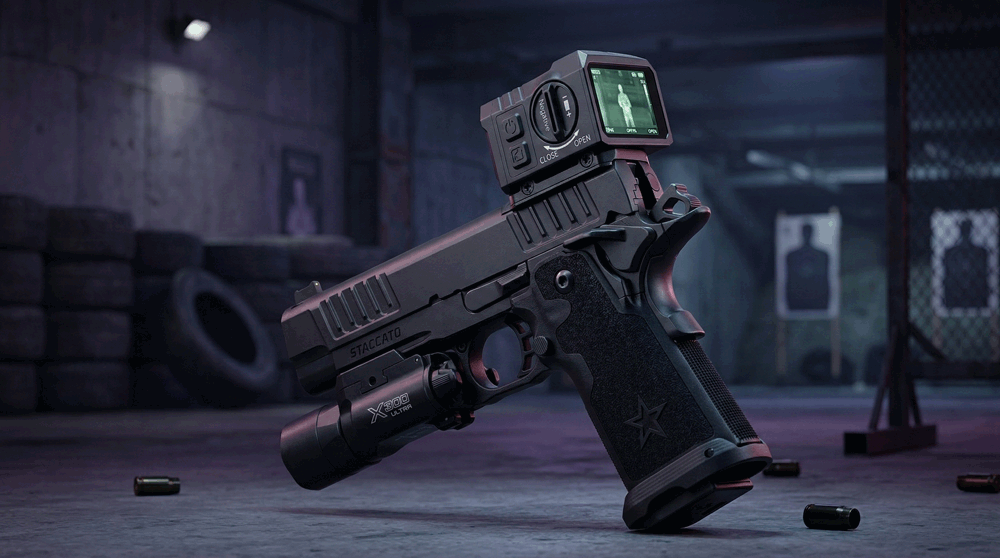
Thermal pistol sights are a category where small decisions create big commercial outcomes.
Table of Contents
ToggleIf you pick the wrong OEM platform, you don’t just get a product that is “a bit less competitive.” You get a product that is hard to mount, hard to holster, hard to demo, and hard to support. Dealers then treat it as risky inventory, distributors demand higher margin to cover returns, and your brand spends its first year fighting “doesn’t fit” and “won’t hold zero” conversations instead of building sell-through.
That’s why platform selection is the pillar decision for a thermal pistol sight program. It is not “choose a sensor and a housing.” It is a system decision that ties together footprint ecosystem, slide shock survivability, zeroing workflow, battery strategy, UI learnability, and dealer readiness.
This article gives a B2B brand framework for selecting a thermal pistol sight OEM platform that can scale through distribution and survive real use. It focuses on what matters in sourcing and product management: which platform architecture fits which channel promise, what requirements must be locked in the RFQ, and how to avoid the early mistakes that create expensive returns.
Why thermal pistol sight platform selection is uniquely unforgiving
Thermal rifle scopes can tolerate some complexity. A pistol sight cannot. The pistol sight lives at the intersection of three unforgiving constraints.
The first constraint is mounting ecosystem reality. Customers already live in footprints and adapter plates. Dealers already stock certain plates. If you choose a platform that forces exotic mounting or unclear compatibility, the product becomes friction.
The second constraint is slide shock and mechanical disturbance. Pistol-mounted optics experience fast acceleration, repeated impact, and harsh vibration. A thermal sight is heavier and more complex than a typical red dot. If the platform isn’t engineered for that, you get reliability issues that look like “quality problems” and “zero shift.”
The third constraint is user expectation. Many buyers are first-time thermal users but not first-time pistol users. They expect the sight to behave like a normal handgun optic: fast boot, clear brightness control, predictable zeroing, and stable reticle behavior. If the thermal platform behaves like a gadget, returns increase quickly.
This is why the best OEM platform is rarely the one with the most impressive spec line. It’s the one with the least operational friction for the channel.
Define the “platform” before you evaluate suppliers
When brands say “platform,” suppliers often hear “housing design” or “sensor choice.” In a B2B thermal pistol sight program, platform should be defined as a complete stack:
Mechanical stack: footprint, base height, mounting hardware, recoil interface, sealing approach.
Optical stack: lens, FOV, focus approach, distortion control, collimation stability.
Thermal stack: detector tier, NETD conditions, calibration/NUC policy, long-run behavior.
Compute/UI stack: latency feel, boot time, button mapping, zeroing workflow, profile logic, recording workflow if present.
Power stack: battery type, runtime in defined mode, battery access method, low-temperature behavior.
Service stack: traceability, version visibility, spares, repairability, swap thresholds.
If you evaluate “sensor + lens + price” without this stack view, you’ll select a product that looks good on paper but creates channel friction.
Start with the mounting ecosystem decision
The quickest way to create a failed thermal pistol sight program is to treat mounting as “accessory work.”
For pistol sights, mounting is the product. Your OEM platform selection must begin with a footprint strategy that your target channel can actually support.
Most B2B brands choose one of three strategies:
A “mainstream footprint” strategy, where your unit aligns with a widely used optic footprint ecosystem so customers can adopt easily through existing plates and dealer familiarity.
A “dual-base strategy,” where you ship a default base (for example, a common micro footprint) and optionally offer a Picatinny base for carbine/PDW use, bundles, and demo flexibility.
A “closed ecosystem strategy,” where the sight uses a proprietary mount designed for maximum rigidity but requires dedicated plates and reduces compatibility. This can work in a controlled professional market, but it increases channel friction.
The channel lesson is simple: the more proprietary your mounting, the more you must invest in dealer enablement, plate availability, and support. If you can’t commit to that investment, choose a mainstream footprint path.
Decide your primary use case: pistol, PDW, or both
Thermal pistol sights can be sold into three “actual use” patterns, and your platform choice should match the pattern you want.
A pistol-first platform is optimized for slide mounting, holster compatibility, and fast presentation. That pushes you toward compact dimensions, low mass, low height, and robust slide shock design.
A PDW-first platform is optimized for rail mounting, longer runtime, and stable operation under continuous use. That often tolerates larger size and may prioritize different UI features such as faster palette switching and recording convenience.
A dual-use platform can be powerful commercially, but it is riskier. Dual-use succeeds when the mounting interfaces are well-designed and the UI doesn’t become confusing. Dual-use fails when the product becomes “compromised”: too large for pistols and too limited for PDWs.
A B2B brand should choose the primary pattern explicitly and then allow the secondary pattern only if it doesn’t corrupt the first. If your channel is handgun-focused, don’t let the PDW story push you into a size class that makes holsters impractical.
Sensor and lens: select “enough” without overbuilding
Thermal pistol sights do not need the same optical design logic as rifle scopes. Typical engagement distances and use cases are different, and the UI experience matters more.
The main platform decision here is not “highest resolution.” It is “clarity at realistic distance with stable workflow.” That means you choose a detector tier and lens that produce usable target separation without forcing excessive magnification that amplifies wobble and slows acquisition.
Overbuilding the thermal core creates three problems: cost pressure, power pressure, and weight pressure. All three increase channel friction. Weight increases slide stress and can harm reliability. Power pressure creates runtime complaints. Cost pressure pushes you into discounting wars or weak dealer margin.
The best platform selection method is to define your positioning tier first, then select thermal components that support that tier while keeping mechanical and workflow experience strong.
UI behavior: the silent reason pistol sights get returned
A pistol sight is used under time pressure. If the UI is slow, confusing, or inconsistent, the customer interprets it as “not ready.”
In platform selection, you should insist on:
Fast boot to usable image under defined conditions, not “logo appears.”
Simple brightness and palette switching that is learnable by feel.
A zeroing workflow that prevents accidental overwrite and makes profile state clear.
Predictable NUC behavior that doesn’t interrupt at the wrong moment.
A minimal state indicator set so users know what mode they’re in without clutter.
You do not need a long feature list. You need predictable workflow.
This is especially important because many early returns are user confusion returns. A strong platform reduces those returns without changing the sensor.
Slide shock: treat it as a platform gate, not a promise
Slide shock survivability is a platform gate. If the unit isn’t designed for it, nothing else matters.
Suppliers may claim recoil ratings, but for pistols you need to specify the reality: repeated slide cycles, axis-specific shock, mounting torque behavior, and post-test zero stability. A thermal pistol sight that powers on after shock but drifts in zero is not acceptable.
A B2B platform selection process should therefore treat slide shock as an early qualification gate. If a supplier cannot provide disciplined shock validation evidence, you should assume the problem will show up after launch.
This is also why mechanical design and mounting interface must be evaluated together. A rigid mount strategy and a robust internal mechanical layout matter more than a small difference in sensor tier when your goal is channel trust.
Power strategy: battery access is part of the user experience
Battery strategy can make or break a pistol sight line.
A unit with good image quality but awkward battery access will generate annoyance, and annoyance becomes returns in a high-ticket category. A unit with good image quality but weak low-battery behavior will generate distrust. Users do not tolerate “surprise shutdown” on a defensive or duty-adjacent product.
Platform selection should include battery type decision, battery access method, runtime in defined mode, and behavior as voltage drops. If the battery door design compromises sealing or becomes a frequent failure point, your warranty costs will rise.
For B2B channels, battery strategy also affects dealer programs. Dealers need demo units that stay ready. If the product drains fast or is fiddly to maintain, demo effectiveness drops.
One platform scorecard that procurement can actually use
Below is the only table in this article. It’s a practical scorecard you can use to compare OEM platform candidates without getting trapped by brochure specs. It forces you to score what drives channel success: ecosystem fit, robustness, and workflow.
| Platform factor | What “good” looks like in B2B | Why it matters commercially |
|---|---|---|
| Footprint fit | aligns with a mainstream ecosystem or has clean dual-base plan | reduces “doesn’t fit” returns and dealer friction |
| Size and height | holster-friendly and presentation-friendly | drives adoption and reduces regret returns |
| Slide shock design | validated survivability plus post-shock zero stability | protects brand trust and reduces RMAs |
| Zeroing workflow | clear save/confirm, rollback option, profile clarity | prevents “won’t hold zero” disputes |
| Boot and switching | fast boot, simple controls by feel | enables demos and real use confidence |
| Battery access and runtime | easy access, defined runtime, safe low-battery behavior | reduces annoyance and surprise failures |
| Thermal stability | predictable NUC policy and long-run behavior | prevents “buggy” perception and drift complaints |
| Service readiness | version visibility, traceability, spares plan | reduces warranty cost and speeds resolution |
| Supplier governance | controlled revisions, change notices, stable docs | prevents “same model, different behavior” drift |
A supplier that wins this scorecard tends to win in the channel even if another supplier can quote a slightly higher resolution on a datasheet.
How to write RFQ language that protects platform choice
Once you select the platform direction, your RFQ must lock the invariants that protect channel trust.
For pistol sights, the invariants usually include: footprint and mounting hardware, height envelope, UI mapping and zeroing workflow behavior, boot-to-image expectation, NUC policy, recording behavior if present, battery access and runtime mode definition, and slide shock plus post-shock zero stability behavior.
You also want governance language: firmware build identification, release notes for workflow changes, and component substitution rules for parts that affect user experience (displays, buttons, sealing components).
This is how you prevent the most common OEM failure: the sample feels good, mass production “drifts,” and the channel experiences inconsistency.
How to stage platform validation without slowing the program
B2B brands often fail either by under-testing or by building an un-executable test plan. A practical platform validation approach stages tests around gates.
Early stage: confirm footprint fit, basic UI workflows, and initial zeroing behavior. This is where you remove obvious platform friction.
Design stage: validate slide shock survivability, environmental sealing, long-run behavior, and workflow stability. This is where you ensure the platform can survive real use.
Pilot stage: confirm reproducibility across multiple units and ensure the supplier’s process can produce stable behavior batch to batch.
This stage logic is what prevents the painful scenario where the first dealer shipments feel different from the demo units.
Service implications: pistol sights need faster, clearer RMAs
Thermal pistol sights live closer to “urgent user expectation” than many products. Even if your product is sold for hunting, many buyers psychologically place it near defensive use. That psychology changes service expectations.
A slow or unclear RMA process destroys trust. That means your platform choice must support serviceability: clear version identification, traceability, modular repair options, and a spares plan.
If you design a product that is difficult to diagnose, you will replace too many units. That becomes margin loss and partner dissatisfaction. If you design a product that is diagnosable and repairable, you can preserve trust while controlling cost.
So platform selection should include service readiness, not only performance.
Dealer implications: reduce “fit and workflow” friction first
The first dealer questions for a thermal pistol sight are predictable:
What does it fit? How does it mount? Does it hold zero? How hard is it to use? How do I explain range expectations? What happens if it fails?
A platform that answers these questions cleanly will sell. A platform that triggers uncertainty will sit. That is why mounting ecosystem fit and UI simplicity are not secondary. They are the commercial engine.
If you want a line that dealers can demo confidently, prioritize platform choices that make demos fast and predictable rather than choices that make brochures impressive.
FAQ
What is the single most important platform decision for thermal pistol sights?
Footprint ecosystem plus slide shock survivability. If it doesn’t fit easily and doesn’t hold zero through real slide cycles, the channel won’t trust it.
Should I prioritize higher resolution for thermal pistol sights?
Only if it doesn’t compromise size, weight, runtime, and shock survivability. Many B2B programs win by being more usable and more reliable rather than by overbuilding the sensor tier.
Why do pistol sights get “won’t hold zero” complaints even when hardware is fine?
Because of workflow and profile confusion, mounting torque variation, and inconsistent post-shock behavior. A strong zeroing UI and disciplined mounting strategy reduce these complaints significantly.
Do I need both RMR and Picatinny bases?
Not always. Dual-base can expand channel flexibility, but it increases SKU and inventory complexity. Choose it only if it supports a real channel strategy and doesn’t compromise pistol-first usability.
What should I require from suppliers as proof of robustness?
Evidence of slide shock validation with post-test zero stability checks, plus versioned firmware behavior documentation and change control discipline.
Call to action
If you share your target channel (pistol-first vs dual-use), preferred footprint ecosystem, price tier, and service capacity, we can convert this into a supplier-ready platform selection pack: RFQ invariants, a platform scorecard template, validation gate definitions, and the documentation deliverables that protect channel trust.
Use Contact to share your thermal pistol sight program scope.
Related posts
- Thermal Pistol Sight OEM Platform Selection
- Thermal Pistol Sight RMR vs Picatinny Mount Guide
- Thermal Pistol Sight Slide Shock Validation
- Thermal Pistol Sight Sight Height and Ergonomics
- Thermal Pistol Sight Zeroing and Multi-Gun Profiles
- Thermal Pistol Sight GTM and Warranty Pack