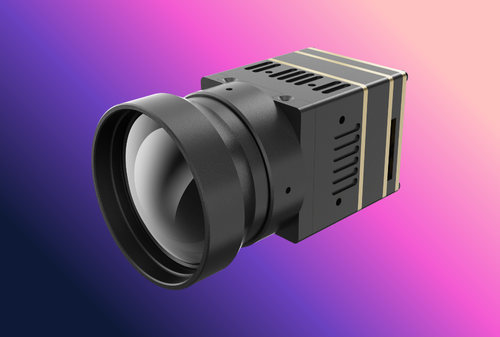
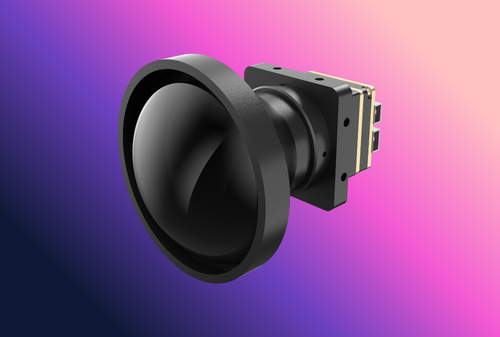
In thermal camera module projects, lens discussions often stop too early. Teams compare focal length, field of view, and lens material, then assume the optical decision is mostly finished. In reality, coating and transmission still shape a large part of the final module behavior.
Table of Contents
ToggleThat is why lens coating and transmission trade-offs matter. For OEM buyers, coating is not just a finishing detail on the lens surface. It affects how much useful energy reaches the module, how reflections behave, how the product performs in real environments, and how much cost and process complexity the final design can absorb.
Why Coating Matters
A thermal camera module can use the right sensor and the right focal length and still underperform if the optical surfaces are not handled correctly. A lens with weak coating strategy may lose useful transmission, create more reflection-related artifacts, or become harder to keep consistent across supply. On paper, the module specification may still look strong. In real product use, the buyer may notice that image behavior feels weaker or less stable than expected.
For thermal camera modules, this matters because the lens is not working alone. It sits inside a complete optical path that may include a front window, an enclosure cavity, alignment tolerances, contamination risk, and real-world temperature changes. Once those factors are present, coating performance often has more visible product impact than teams expected at the beginning.
What This Guide Should Do
A useful coating and transmission guide should do four things.
First, it should explain what coating is doing in a thermal lens system.
Second, it should help the OEM buyer understand the real trade-off between transmission, reflection control, durability, and cost.
Third, it should show why coating decisions should be linked to the full optical path instead of the lens alone.
Fourth, it should help the project choose a coating strategy that still makes sense in production and in field use.
The goal is not to say one coating is always better. The goal is to help the buyer choose the coating level that fits the product, the environment, and the business model.
What Transmission Really Means
Transmission is the percentage of useful infrared energy that passes through the optical path and reaches the sensing system. In practical terms, higher transmission usually means the module is making better use of the scene energy available to it.
For thermal camera modules, this sounds simple, but the real question is not only whether transmission is high. The real question is how much useful transmission the total product retains after lens choice, surface quality, coating, front window design, and enclosure effects are all included. A lens can have attractive nominal transmission but still lose some of its product advantage once the real optical stack is built around it.
That is why transmission should be treated as a system value, not only as a lens-spec number.
Why Coating Affects More Than Transmission
Many teams first think of coating only as a way to improve transmission. That is part of the story, but not the whole story. Coating also affects reflections, stray energy behavior, contrast stability, and sometimes surface robustness under real handling conditions.
For thermal camera modules, this broader view matters because the module is often being integrated into an OEM product with a defined front window, cavity, and usage environment. A coating that only improves nominal transmission but does little to control reflection behavior may still leave the buyer with a weaker total optical result than expected. In other words, good coating is not just about letting more energy through. It is also about letting the right energy through in a cleaner way.
Lens Material and Coating Must Be Considered Together
Coating strategy cannot be chosen intelligently in isolation from lens material. The substrate material and the coating layer work together as one optical surface behavior.
For thermal camera modules, this is especially important because different lens materials create different expectations around transmission, durability, cost, and optical finish. A coating that makes sense on one lens material may not create the same value balance on another. The project should therefore avoid discussing coating as a generic upgrade that can simply be added or removed without changing the rest of the optical trade-off.
A stronger OEM conversation always asks: on this lens material, in this product, with this optical path, what is the coating actually helping us achieve?
High Transmission Is Valuable, But Not Free
Higher transmission is often desirable. More useful infrared energy reaching the module usually supports a stronger imaging baseline. But higher transmission usually comes with design and commercial trade-offs.
For thermal camera modules, those trade-offs may include higher optical cost, tighter supplier expectations, more sensitivity to coating quality variation, and sometimes higher risk if the coating system is not well matched to the real operating environment. A project that asks for the strongest possible transmission without checking what it does to cost, lead time, or supply stability may end up choosing an optical path that is technically appealing but commercially awkward.
The best question is not “can we maximize transmission?” The better question is “how much transmission advantage is meaningful enough to justify the rest of the trade-off?”
Reflection Control Is Often Undervalued
Reflection control is one of the biggest hidden reasons coating matters. A lens may still pass a useful amount of energy, but if reflections are not controlled well enough, the final module can show weaker image cleanliness, reduced effective contrast, or scene-dependent artifacts that are hard to interpret later.
For thermal camera modules, reflection problems are especially relevant once the lens is used with a front window or in a confined enclosure cavity. Internal surfaces can begin interacting in ways that were not visible in open-bench evaluation. The OEM team may assume the module behavior changed, while the real difference comes from reflection paths inside the final optical stack.
This is why coating should be judged not only by “more transmission,” but also by “better-behaved optical energy.”
Coating Quality Affects Lot Consistency
A coating decision is not only a design decision. It is also a supply and consistency decision. If the product depends strongly on coating performance, then the quality and repeatability of coating execution become part of the OEM risk profile.
For thermal camera modules, this matters because B2B buyers usually care about lot-to-lot consistency at least as much as they care about one very strong sample. A premium-looking lens coating strategy is less valuable if it creates wider supplier variation, longer qualification cycles, or more incoming verification burden. The buyer should therefore ask not only what coating is theoretically possible, but how stable that coating quality will be in real supply.
A stronger product often comes from a coating choice that is slightly less aggressive but more controllable over time.
Surface Count Changes the Trade-Off
The number of optical surfaces in the lens system changes how important coating performance becomes. A simple optical system and a more complex one do not feel coating losses the same way.
For thermal camera modules, this matters because transmission loss and reflection risk accumulate across surfaces. The more surfaces involved, the more strongly coating quality may influence the final optical result. That does not mean every module needs the most advanced coating available. It means the OEM team should understand that coating value is often tied to the total optical structure, not to one surface in isolation.
A module lens should therefore be reviewed as a complete optical assembly, not as one abstract lens element.
Window and Lens Coating Must Work Together
If the final OEM product uses an IR window, then lens coating and window coating should not be treated as separate design topics. They interact through the full optical path.
For thermal camera modules, this is especially important because the buyer may optimize the lens coating, then lose part of the benefit through weak front-window design or a mismatched coating strategy on the window itself. The result may be more reflection, lower total transmission, or a front-end optical behavior that no longer resembles the original sample setup. That is why the module supplier and OEM team should discuss the optical stack as a whole rather than optimizing each layer independently.
The useful rule is simple: if two coated elements face each other in one optical path, they belong in the same design conversation.
Coating and Product Environment
A strong coating choice should match the product environment. A module used in controlled indoor equipment does not always need the same balance as one used in more demanding field conditions. The environment changes what “best” means.
For thermal camera modules, this matters because field products may care more about handling resilience, contamination exposure, cleaning behavior, and long-term surface stability. An indoor embedded product may care more about cost efficiency and consistent optical performance in a cleaner environment. The project should therefore choose coating in view of where the product actually lives, not only how the lens performs in ideal lab conditions.
A technically elegant coating can still be the wrong choice if it does not fit the product’s real operating profile.
Coating and Cleaning Behavior
Cleaning is one of the most underestimated parts of coating strategy. A lens or front optical surface may perform well when untouched, but the OEM product still has to survive assembly handling, inspection, service, and sometimes field cleaning.
For thermal camera modules, the coating choice should therefore consider how the surface behaves during realistic cleaning processes. If the chosen coating is too sensitive to routine wiping, residue exposure, or repeated maintenance, the buyer may inherit a product that is optically strong but operationally fragile. That can be a poor B2B trade-off, especially in field or industrial products.
A useful coating strategy is not only optically good. It is also practically maintainable.
Contamination Can Reduce Coating Value
Even a strong coating cannot create a good product if the surrounding optical path allows too much contamination. Dust, residue, adhesive haze, cavity deposits, and handling marks can all reduce the practical benefit of an otherwise good coated lens.
For thermal camera modules, this means the OEM team should never treat coating as a substitute for contamination control. A coated lens still needs a clean cavity, a clean window path, and disciplined assembly handling. If those are weak, the product may end up blaming the lens for problems that actually came from process hygiene or enclosure design.
The best results come when coating strategy and contamination control are designed together.
Coating Choice Should Reflect Market Position
An OEM buyer should also think commercially. Not every product needs the same optical ambition. Some products justify stronger optical performance and tighter surface control because the market position supports it. Others need a more balanced solution that keeps cost, sourcing, and production simpler.
For thermal camera modules, this is one of the most important B2B questions in the whole coating conversation. A premium optical stack may help one product line strongly and harm another by making the module too expensive or too supply-sensitive. A simpler coating approach may create the better total program if it still meets the product’s real optical need.
This is why coating should be chosen at the product-strategy level, not only at the optics-lab level.
Do Not Judge Coating by One Bench Image Alone
One common mistake is choosing coating preference based on one or two visual comparisons under limited conditions. That can be useful for early direction, but it is rarely enough for a serious OEM decision.
For thermal camera modules, coating should be judged in the context of the actual use case, actual front window strategy, expected enclosure geometry, and expected supply conditions. A lens that appears better in one static scene may not create the most robust product across real system conditions. The team should therefore avoid overcommitting too early based only on one engineering impression.
A stronger evaluation asks how the optical stack behaves under the conditions the final product will actually see.
Coating and Cost Should Be Discussed Honestly
In B2B module work, coating discussions often become awkward because one side speaks only in technical terms while the other side is already thinking about target price, margin, and sourcing risk. A stronger project discusses both openly from the beginning.
For thermal camera modules, that means the supplier should help the OEM team understand not only the optical gain of a stronger coating strategy, but also the realistic cost impact, supplier control implications, and any effect on qualification effort. The buyer then has a better chance to choose the coating level that still supports the total business case.
This usually produces better decisions than simply asking for “best performance” and discovering the commercial downside later.
Qualification and Incoming Control
If coating performance matters meaningfully to the product, then supplier qualification and incoming control should reflect that. The buyer should know how coating-related quality will be checked and how lot consistency will be judged.
For thermal camera modules, this may involve incoming optical inspection, cosmetic review, transmission-related verification at the right level, or at least controlled supplier qualification logic around the lens source. The exact control depth depends on the product and risk level, but the principle is clear: a coating decision becomes much more reliable when it is backed by a matching quality-control plan.
A coating strategy without a control strategy is often weaker than it first appears.
Coating and Temperature Behavior
Coating performance does not live only in room-temperature optics discussions. The real product may see temperature change, storage variation, enclosure heating, or field-condition shifts that all affect how the optical path behaves as a system.
For thermal camera modules, the OEM team should therefore avoid making coating decisions without at least asking how the total optical path behaves across realistic thermal conditions. The coating itself may not be the weak point, but its value can still change depending on how the rest of the front-end system behaves under temperature. A more temperature-sensitive optical path may need a different overall balance than a more benign one.
The product should be judged as a thermal optical system, not only as a static bench setup.
Coating and Reliability Planning
If the product will rely on a specific coating strategy, then reliability planning should include enough review to support that decision. This does not always require an overly specialized test program, but it does require the OEM buyer to ask whether the optical surface behavior remains acceptable through the relevant project stresses.
For thermal camera modules, this may include handling realism, cleaning realism, thermal exposure, storage review, or basic long-run optical consistency checks depending on the product type. A coating that looks ideal at sample receipt but becomes difficult in maintenance or field use may not be the right answer for the program.
A strong reliability view makes the coating decision more trustworthy.
One Coating Strategy May Not Fit Every SKU
In some product lines, one coating level may not make sense across every SKU. A broader-market product and a higher-spec product may need different optical trade-offs even if they share the same core module family.
For thermal camera modules, this can be a practical commercial strategy. The OEM buyer may use a more balanced optical stack in one product and a stronger premium-oriented optical path in another. This works best when the difference is intentional and well positioned, not accidental or driven only by short-term availability.
The point is not to create unnecessary variants. It is to align coating ambition with SKU logic where that creates real B2B value.
Coating and Transmission Matrix
A simple matrix helps make the trade-off clearer.
| Design factor | More aggressive coating may help by | Trade-off to review |
|---|---|---|
| Transmission | Letting more useful energy reach the module | Higher cost or tighter supply requirements |
| Reflection control | Reducing unwanted optical interference | More qualification sensitivity |
| Product image quality | Supporting a cleaner optical baseline | Higher dependence on process quality |
| Premium positioning | Differentiating the module program | Greater commercial pressure on price |
And in product terms:
| Product situation | More balanced coating tends to fit when | Stronger coating tends to fit when |
|---|---|---|
| Cost focus | The product must stay commercially efficient | The market can support higher optical value |
| Environment | Handling and maintenance simplicity matter more | Optical performance has higher priority |
| Supply model | Broader sourcing stability matters strongly | Tighter qualification is acceptable |
| Product stack | The full optical path is moderate in complexity | The optical path needs stronger reflection and transmission control |
This kind of structure helps the team discuss coating as a real product trade-off instead of as a pure optics preference.
Common Mistakes
Several mistakes appear repeatedly in coating discussions. One is focusing only on transmission and ignoring reflection behavior. Another is selecting coating ambition without considering the full optical stack, especially the IR window. Another is treating coating as a universal upgrade without checking market fit, cost, and lot consistency. Another is assuming coating can compensate for weak contamination control or weak enclosure optical design.
A further mistake is judging coating from one bench comparison and locking the decision too early. For thermal camera modules, the strongest programs are not the ones that automatically choose the most aggressive coating. They are the ones that choose the coating strategy that still works after supply, cost, cleaning, enclosure, and real optical path conditions are all included.
Conclusion
Thermal camera module lens coating and transmission trade-offs are important OEM design decisions. They shape how much useful energy reaches the module, how reflections are controlled, how robust the optical path remains in real products, and how much cost and quality burden the final system must carry. A stronger coating decision starts with the full product, not only with the lens surface in isolation. It asks how coating, material, front window, contamination control, cleaning behavior, supply stability, and market position all fit together.
For OEM buyers, this reduces the risk of choosing an optical path that looks strong in theory but becomes fragile in the real product. For suppliers, it supports better module positioning and more useful early technical discussions. For both sides, it turns coating from a narrow optical preference into a more complete product decision.
The most useful principle is simple: do not ask only whether a coating can improve transmission. Ask whether that coating helps build the right total thermal camera module product for the customer, the environment, and the business case.
FAQ
Why does lens coating matter in a thermal camera module?
Because coating affects not only transmission, but also reflection behavior, image cleanliness, product robustness, and the overall optical performance of the module in the real system.
Is higher transmission always better?
Not automatically. Higher transmission is valuable, but it may also bring cost, supply, and qualification trade-offs that do not fit every OEM product.
Why should coating be discussed with the IR window?
Because the lens and the front window belong to the same optical path. Their transmission and reflection behavior interact in the final product.
Can coating solve contamination-related problems?
No. Good coating helps optical performance, but it cannot replace strong contamination control and clean optical-path design.
What is the biggest coating-selection mistake?
A common mistake is choosing coating only from optical ambition while ignoring cost, cleaning behavior, supply stability, and the rest of the real product stack.
CTA
If you are building an OEM or integration product around a thermal camera module, a stronger coating and transmission strategy will help you balance optical performance, supply control, and final product fit more effectively. For project discussion, please visit CONTACT.