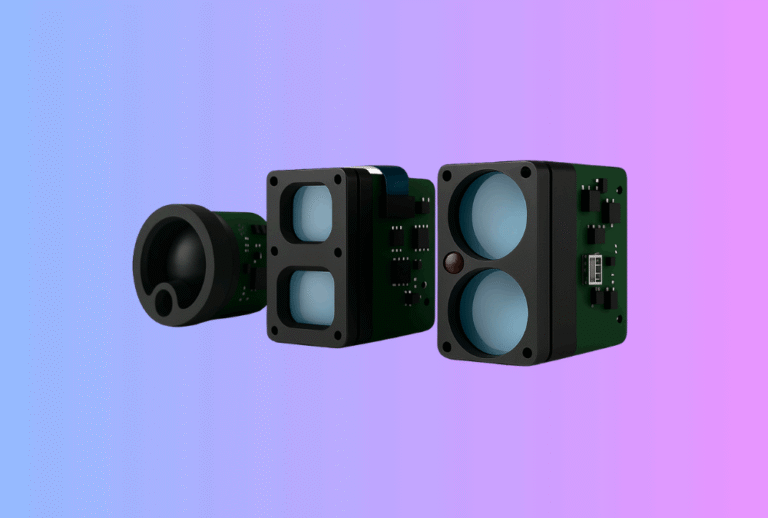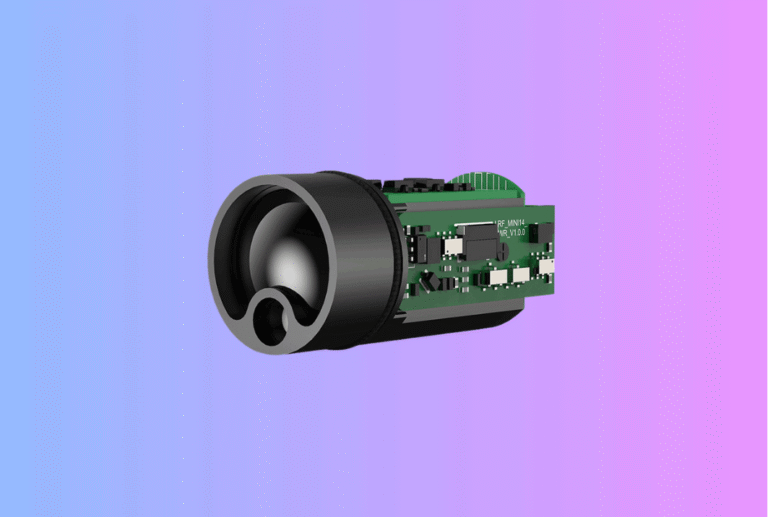
A laser rangefinder module warranty and RMA policy is often treated as a late-stage commercial detail. In a real OEM program, that is a mistake. By the time teams begin arguing about warranty responsibility, the real cost has already appeared in the form of delayed shipments, confused field returns, engineering time loss, and damaged trust between buyer and supplier. A strong policy does not exist to make legal wording look complete. It exists to keep technical and commercial responsibility clear before field issues begin.
Table of Contents
ToggleThis matters especially for laser rangefinder modules because field complaints are rarely simple. A unit may appear unstable because of contamination, poor power quality, window issues, boresight shift, difficult targets, integration mistakes, firmware mismatch, or actual module failure. If the supplier and OEM buyer have not defined how these cases will be screened, classified, and handled, even small service cases can become expensive and political. That is why warranty, Return Merchandise Authorization, or RMA, and service policy should be discussed before mass production, not after the first failure.
Why warranty policy matters earlier than many buyers think
In early sourcing and prototype stages, most teams focus on performance, size, interface, price, and lead time. That is understandable. But once the project moves into pilot build and volume supply, service logic becomes part of the product itself. A weak after-sales framework can undermine a technically sound module program, while a strong one can protect both sides when field variability appears.
For an OEM buyer, warranty policy is not only about replacing bad parts. It is about risk allocation. It defines which failures the supplier stands behind, which failures the buyer is expected to screen before return, how suspected faults are verified, how fast the service loop runs, and what data is required before a return is approved. For the supplier, the same policy protects against vague or preventable claims, especially in applications where target conditions, windows, host electronics, or environmental exposure strongly affect system behavior.
In other words, the policy is not separate from engineering. It is a continuation of engineering discipline into the after-sales phase.
Warranty should be defined around failure classes, not vague promises
One of the most common weaknesses in OEM supply agreements is that warranty is written too broadly or too vaguely. Phrases such as “defects in materials and workmanship” may be legally familiar, but they are not enough on their own for a laser rangefinder module program. They do not tell the teams what happens when ranging becomes unstable after field cleaning, when measurement inconsistency appears only behind a customer-side window, or when a low-voltage host platform causes resets that look like module defects.
A stronger policy defines warranty in terms of failure classes. At a minimum, the supplier and OEM buyer should distinguish among manufacturing defects, calibration-related defects, shipping damage, integration-induced faults, misuse or environmental abuse, and normal wear or contamination-related degradation. These categories do not need to be overly legalistic. They need to be operationally usable.
For example, a true manufacturing defect may include internal electrical failure, nonconforming assembly, incorrect programming, or a release escape that existed at shipment. Calibration-related defects may include abnormal drift under normal use within the agreed warranty period, assuming the module has not been mechanically disturbed or optically abused. Shipping damage may be handled separately if packaging and receiving procedures are defined. Integration-induced faults may include wrong supply voltage, improper grounding, bad cable routing, host-side reset behavior, window contamination, or misalignment caused by the buyer’s mechanical build. Misuse may include aggressive cleaning, chemical attack, impact, disassembly, water ingress beyond rating, or operation outside defined environmental limits.
The more clearly these classes are defined, the less ambiguity appears later.
A good warranty policy should say what is covered
Many OEM teams write exclusions more carefully than coverage. That creates an unbalanced document that protects against arguments but does not create working confidence. A better approach is to define the positive scope of coverage first.
For a laser rangefinder module OEM program, covered items often include manufacturing defects that appear under normal installation and defined use conditions during the warranty period. These may include failures in communication, power-on behavior, internal functional stability, or approved performance criteria where the module is used according to the agreed system assumptions. If the supplier’s commercial position includes calibration retention under normal use, this should also be stated explicitly rather than left implied.
This is particularly important in your kind of B2B positioning, because many buyers are not just buying a module. They are buying a supplier relationship. If the supplier truly supports controlled OEM programs, the warranty should reflect that by covering the failures the buyer cannot reasonably control after correct integration. That may include latent manufacturing defects, approved-configuration firmware problems, or abnormal functional degradation within the normal operating envelope.
It is also useful to state whether dead-on-arrival units are handled under a fast-track rule. Many projects benefit from a separate DOA response path because those cases are often easy to identify and should not be slowed down by a full RMA cycle.
A good warranty policy should also say what is not covered
Coverage becomes credible only when exclusions are equally clear. But exclusions should be technical, not defensive in tone. The purpose is not to avoid responsibility. The purpose is to separate supplier-controlled risk from buyer-controlled or field-controlled risk.
In laser rangefinder module programs, typical exclusions often include failures caused by unauthorized disassembly, incorrect input voltage, bad host-side power design, electrostatic discharge beyond normal handling control, cable or connector abuse, contamination from improper cleaning, chemically incompatible solvents, mechanical shock beyond agreed conditions, water ingress outside the specified protection concept, and optical degradation caused by customer-side windows or covers not included in validation.
Target-related complaints are another area where exclusions should be handled carefully. If a buyer or end user attempts to treat every low-return, reflective, wet, angled, cluttered, or atmospheric target as a warranty issue, the service process will break down quickly. That is why the supplier should define clearly that difficult-target behavior, background interference, or scene complexity outside the validated use condition is not the same as module failure. This point links directly to the earlier Laser Rangefinder Module Target Reflectivity and Background Interference Guide.
Exclusions should not read like excuses. They should read like boundaries created from real engineering behavior.
Warranty period should match program reality, not only sales habit
Another common problem is choosing a warranty period by habit. One supplier says twelve months because that is what they always say. Another says eighteen months because it sounds more competitive. But for OEM programs, the right warranty period should reflect product type, expected operating conditions, logistics cycle, channel structure, and field-service model.
For example, a module going into a lightly used industrial device may justify a different service expectation than one going into harsh outdoor portable equipment. A program that ships directly into the buyer’s factory may justify a different start point than a finished product sold through multiple regional channels. Even the start of the warranty clock should be discussed. Does it begin at supplier shipment, buyer receipt, final product shipment, or end-user activation? If this is not defined, disputes later are almost guaranteed.
For most OEM module programs, it is wise to define both a commercial warranty period and a practical service-review window for specific cases. This gives the policy structure without forcing every edge case into the same timeline. It also helps distinguish between standard warranty handling and goodwill support.
RMA should be a technical workflow, not just a return address
Many companies think of RMA as a simple return permission. In a disciplined OEM program, it should be much more than that. A strong RMA process is a technical screening workflow designed to reduce unnecessary returns, preserve evidence, and accelerate correct root-cause identification.
The worst RMA systems accept returns with almost no information. That sounds customer-friendly at first, but it usually creates delay, cost, and confusion. Modules come back without serial numbers, without failure descriptions, without host-side data, without environmental context, and sometimes without confirmation that the issue is repeatable. Then both parties waste time trying to reconstruct what happened.
A better laser rangefinder module RMA process starts with a structured intake. The buyer should provide unit identification, production lot or serial number, firmware version if available, symptom description, operating condition, host-side power condition, target condition, environmental exposure, and any field photos or videos that help interpret the fault. If a protective window or enclosure is part of the system, that should be documented as well. If the complaint involves unstable ranging rather than total failure, then scene condition and cleaning state may matter as much as the module itself.
This kind of intake is not bureaucracy. It is basic failure analysis discipline.
Pre-RMA screening should happen before physical return
One of the highest-value elements in an OEM service policy is the pre-RMA screening stage. Not every suspected fault should become a physical return immediately. In many cases, the fastest path is to confirm whether the issue is reproducible, whether it is clearly integration-related, or whether simple guided checks can isolate the problem before logistics start.
For a laser rangefinder module, pre-RMA screening may include verifying supply voltage under load, checking grounding and harness integrity, confirming the correct host commands, reviewing firmware and configuration status, inspecting the front window or optical opening, confirming the issue on a known target class, and checking for contamination or mechanical shift. This is especially important because many “module failures” turn out to be power issues, cable issues, window issues, or use-condition misunderstandings.
A strong supplier should provide the buyer with a screening checklist or minimum return criteria. That protects both sides. The buyer reduces unnecessary shipping and downtime. The supplier reduces avoidable no-fault-found cases. And when a unit really does need to come back, the failure evidence is usually much stronger.
This is where articles such as Laser Rangefinder Module Failure Analysis Guide for OEM Teams naturally connect to the service policy. Failure analysis should begin before the carton is closed.
Define service response stages clearly
An OEM after-sales policy works better when response stages are defined in advance. Otherwise, buyers and suppliers often expect different levels of urgency at different times. One side assumes acknowledgement means resolution is coming immediately. The other assumes acknowledgement is only administrative.
A simple service structure usually works well. First comes case acknowledgement, meaning the supplier confirms receipt of the service request and basic case information. Second comes technical triage, where the available evidence is reviewed and a preliminary classification is proposed. Third comes return authorization if the case requires physical inspection. Fourth comes failure analysis after receipt. Fifth comes commercial disposition, such as replacement, repair, credit, reject, or shared-cost handling depending on the result.
The benefit of this staged model is that expectations stay realistic. It also makes it easier to set service-level targets internally, even if those targets are not all written into the public commercial agreement.
The table below shows a practical structure.
| Service stage | Main purpose | Typical output |
|---|---|---|
| Case acknowledgement | Confirm request receipt and basic completeness | Case number or service reference |
| Technical triage | Classify likely failure direction | Guided checks or request for more data |
| RMA approval | Decide whether physical return is needed | Return authorization and shipment instructions |
| Incoming analysis | Inspect returned unit under controlled process | Failure finding or no-fault-found result |
| Disposition | Close case commercially and technically | Replace, repair, reject, credit, or report |
This kind of framework makes service easier to scale when the program grows.
No-fault-found cases need explicit handling rules
One of the most sensitive areas in any RMA program is the no-fault-found case. This is where the buyer reports a problem, but the supplier cannot reproduce a module defect under agreed conditions. If the policy does not define how these cases are handled, they tend to generate the most frustration.
For laser rangefinder modules, no-fault-found cases are common enough that they deserve explicit treatment. A buyer may see unstable results in a cluttered scene, through a dirty window, on a low-return target, or under weak host-side power. The supplier may receive the unit, test it under approved conditions, and find normal behavior. If neither side prepared for this possibility, the conversation quickly becomes emotional.
A better policy explains that no-fault-found does not automatically mean the buyer’s complaint was dishonest. It means the suspected defect was not reproduced as a supplier-controlled module failure under defined test conditions. The next step may be additional joint analysis, return of the unit, paid diagnostic service, or review of the buyer’s integration environment. If this pathway is written down early, the case becomes manageable instead of personal.
Replacement, repair, and credit rules should not be mixed casually
Another common weakness is that disposition rules are left too informal. Teams say things like “we’ll take care of it if there’s a real issue,” but do not define what “take care of it” means. In practice, different failure classes may justify different remedies, and these should be separated before service volume grows.
A true manufacturing defect within warranty may justify free replacement, repair, or credit depending on the business model. A calibration-related issue may require evaluation first, especially if the module was mechanically integrated into a larger system. A no-fault-found case may justify return of the same unit without free replacement. A misuse-related case may be outside warranty but still eligible for paid repair or goodwill support.
The policy does not need to eliminate all flexibility. But it should define the default logic. That makes both cost and expectation easier to manage. It also helps regional sales teams avoid making inconsistent promises in the field.
Service policy should link back to traceability
A laser rangefinder module service program becomes much stronger when it is tied to real traceability. This is one reason why the earlier articles on Laser Rangefinder Module End-of-Line Test Strategy and Laser Rangefinder Module Pilot Build Readiness Checklist matter so much. If the returned unit can be linked back to its release condition, firmware, calibration state, and incoming lot, the supplier is in a much better position to classify the case accurately.
Without traceability, warranty analysis becomes more guesswork than discipline. With traceability, the supplier can ask practical questions. Was this unit part of a known lot issue? Did it pass final outgoing inspection normally? Was it built with the same revision as the approved pilot run? Does the case correlate with one window supplier batch or one host-side build revision? These are exactly the questions that separate real service capability from generic after-sales wording.
This is also why OEM buyers should not evaluate warranty policy in isolation. They should evaluate whether the supplier’s production and quality systems can actually support that policy.
The OEM buyer should define obligations too
Warranty and RMA policy should never read as if only the supplier has obligations. A workable OEM agreement also defines what the buyer must do. This may include incoming inspection within a defined period, basic ESD-safe handling, correct installation, correct use of the interface and power conditions, proper documentation of suspected failures, and protection of serial number traceability.
If the buyer plans to install the module behind a protective window, inside a sealed housing, or within a more complex electro-optical system, the policy should also reflect whether those conditions were part of validation. If they were not, then service classification may require additional joint review. This is not an anti-customer position. It is an honest systems position.
The most effective agreements are the ones where both sides know what “normal responsibility” looks like before problems happen.
Service readiness is a supplier qualification signal
For OEM buyers, one of the best reasons to discuss warranty and RMA early is that it reveals supplier maturity. A strong supplier can usually explain coverage logic, exclusions, intake requirements, no-fault-found handling, response stages, and failure classification with confidence. A weaker supplier often stays vague or turns overly defensive.
This matters because the service policy often predicts the future working relationship. A supplier with disciplined service language usually also has better internal coordination among quality, engineering, and sales. A supplier with weak service structure often creates confusion later when the first complicated case appears.
That is why this topic connects naturally to the earlier Laser Rangefinder Module Supplier Scorecard. After-sales discipline is not a post-sales detail. It is a sourcing criterion.
Final thought
A laser rangefinder module warranty, RMA, and service policy is not something to draft only after the commercial deal is already closed. It should be part of the OEM program architecture. It defines how field uncertainty will be screened, how responsibility will be separated, how failures will be classified, and how both sides will move from complaint to evidence to resolution.
For buyers, this reduces risk, slows down blame, and speeds up real root-cause work. For suppliers, it protects margin, reduces no-fault-found waste, and turns after-sales support into a disciplined extension of product quality. Most importantly, it keeps technical reality inside the service conversation. And for products like laser rangefinder modules, that is exactly where it needs to stay.
FAQ
Should warranty for laser rangefinder modules include calibration drift?
It can, but only if the supplier defines the condition clearly. Coverage should normally apply to abnormal drift under normal use and approved integration conditions, not to drift caused by mechanical disturbance, contamination, or misuse.
What is the biggest mistake in RMA handling for OEM programs?
The biggest mistake is approving returns with too little technical information. That creates delay, high no-fault-found rates, and weak root-cause conclusions.
Are difficult-target ranging complaints always warranty cases?
No. Problems involving low-reflectivity targets, glass, water, cluttered backgrounds, fog, or scene complexity are not automatically module defects. They need to be screened against validated use conditions first.
Why should buyers discuss service policy before mass production?
Because once field issues begin, unclear warranty and RMA rules become expensive very quickly. Early alignment prevents avoidable disputes and improves response speed.
CTA
If your OEM project is moving toward pilot or mass production, warranty scope, RMA workflow, and service classification should be aligned before field returns begin. You can discuss your program requirements with our team through our contact page.
Related articles
You may also want to read:
- Laser Rangefinder Module Supplier Scorecard
- Laser Rangefinder Module Pilot Build Readiness Checklist
- Laser Rangefinder Module End-of-Line Test Strategy
- Laser Rangefinder Module Target Reflectivity and Background Interference Guide