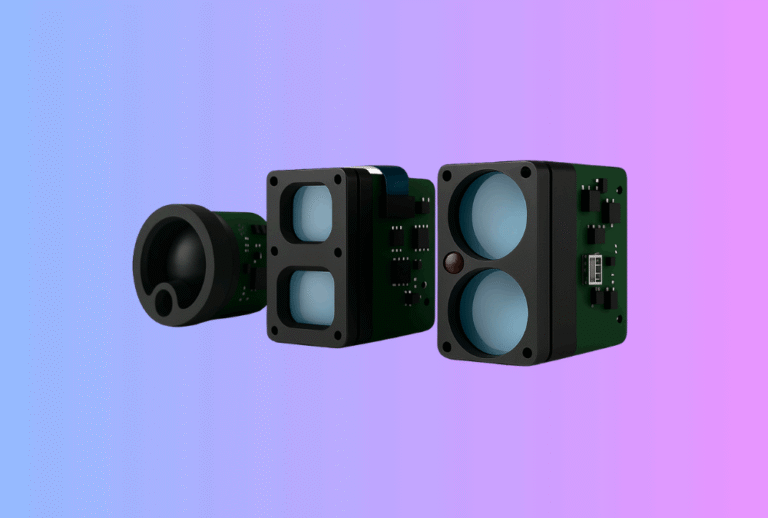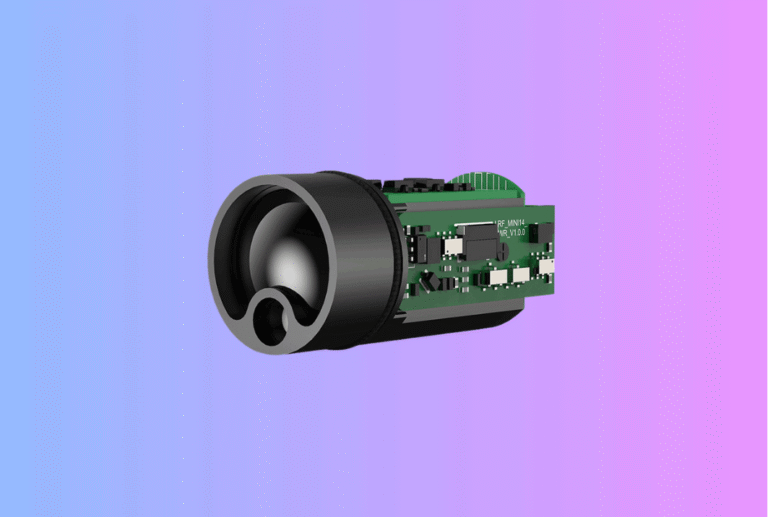
A laser rangefinder module calibration guide is one of the most important technical and commercial references in an OEM program, because calibration sits at the boundary between engineering truth and field expectation. Buyers often assume that once a laser rangefinder module has been calibrated at the factory, accuracy is permanently “solved.” Field teams often assume that if performance changes later, recalibration in the field is the obvious answer. In practice, both assumptions can be wrong. Some problems should be calibrated at the factory and never touched in the field. Some problems can be verified in the field but should not be re-adjusted there. Some issues that look like calibration drift are actually boresight shift, contamination, host-side power instability, or target-selection error. And in a smaller number of cases, controlled field recalibration may indeed be appropriate, but only if the product and service model were designed for it.
Table of Contents
ToggleThat is why factory calibration and field recalibration should never be treated as interchangeable ideas. In an OEM laser rangefinder module program, they serve different purposes, involve different risks, and require different process discipline. A factory calibration model is normally designed to create a known, traceable, repeatable release state. A field recalibration model, if it exists at all, is designed to restore or confirm intended behavior after defined change, service, or long-term operational shift. Confusing these two functions leads to unstable service decisions, weak warranty boundaries, and poor production discipline.
For B2B buyers, this topic matters because it affects more than accuracy. It influences traceability, pilot readiness, service policy, inventory strategy, and who is allowed to change what after the product ships. A supplier that cannot explain this distinction clearly is more likely to create problems later when field complaints begin.
Why calibration becomes confusing in OEM projects
Calibration is one of those terms that many teams use confidently but define differently. Engineering may use the word to describe internal parameter adjustment against controlled references. Production may use it to describe a line step that qualifies outgoing units. Service teams may use it to mean any action that improves field performance. Customers may use it to mean “make it accurate again.” When all of these meanings are mixed together, the project loses control of what calibration is actually supposed to accomplish.
For laser rangefinder modules, this confusion is especially common because several different things can influence final system behavior. The internal ranging chain may have a legitimate calibration state. The product may also need boresight alignment, which is related but not the same. The host system may apply offsets, filters, or target logic that influence the user’s interpretation of accuracy. A protective window may affect optical behavior. A mechanical disturbance may shift the effective system geometry without changing the internal calibration of the module at all.
This is why a useful OEM calibration discussion should start by separating the possible layers of correction. Which parameters are fundamentally module-level and belong in the factory? Which behaviors are really integration-level and should be addressed through assembly control, not calibration? Which field symptoms indicate actual drift, and which indicate a different failure mode altogether? Only after those boundaries are clear can the team sensibly decide whether field recalibration should exist in the product strategy.
What factory calibration is supposed to do
Factory calibration is usually the process by which the supplier establishes a controlled, validated reference state for the module before shipment or final release. Its purpose is not merely to make the module “good enough” for one moment. Its purpose is to define a repeatable baseline that can be linked to serial number, production lot, software revision, optical configuration, and outgoing verification records.
In practical terms, a well-run factory calibration process should do at least four things. First, it should place the module in a known performance state under controlled conditions. Second, it should ensure that the correct parameter set is associated with the correct hardware and firmware configuration. Third, it should create traceable records that support later quality analysis. Fourth, it should fit into the supplier’s broader release logic, so that calibration is not an isolated lab act but a controlled manufacturing function.
This is what makes factory calibration so valuable in OEM work. It is not just about parameter adjustment. It is about creating a reliable reference point for everything that comes later: pilot builds, end-of-line release, field returns, and warranty decisions. Without a disciplined factory baseline, later arguments about drift or service become much harder to resolve.
Factory calibration should be tied to configuration control
A calibration value is only meaningful if it belongs to a clearly defined product configuration. This point is often missed when projects move quickly. Teams may focus on whether the module was calibrated, but not whether it was calibrated under the exact optical, mechanical, firmware, and parameter conditions that define the approved build.
For laser rangefinder modules, this matters because calibration behavior can be affected by seemingly small changes. A firmware revision may alter internal timing or filtering logic. A window change may influence signal behavior. A different mounting condition may affect final system relationship. A new outgoing test strategy may interpret performance differently. If the project treats calibration like a floating adjustment instead of a controlled part of the configuration baseline, the results become difficult to trust.
That is why the most mature OEM suppliers treat calibration data as part of configuration management. The buyer should know which revision was calibrated, which parameter set belongs to which build, and whether any later engineering change requires calibration review. This is also why calibration belongs in the same conversation as the Laser Rangefinder Module Pilot Build Readiness Checklist and the Laser Rangefinder Module Supplier Scorecard. A supplier that manages calibration without strong version discipline is not managing calibration well enough for a serious OEM program.
Why field recalibration sounds attractive
Field recalibration is attractive because it seems to promise flexibility. If a product drifts in use, if accuracy appears off after service, or if installation conditions vary, then recalibration in the field appears to offer a quick way to restore performance without returning the unit to the factory. For OEM buyers and service teams, that promise can sound very efficient.
And in some product categories, it is indeed useful. A field recalibration model can reduce downtime, lower logistics cost, support remote service, and make controlled maintenance easier. In applications with professional technicians, predictable setups, and carefully designed service procedures, recalibration outside the factory may be entirely reasonable.
But the attraction of field recalibration often leads teams to underestimate its risks. Once recalibration moves outside the controlled production environment, the process becomes more exposed to variation in operator skill, target condition, fixture quality, environmental influence, documentation discipline, and data recording. If the product was not originally designed for safe and traceable recalibration in the field, then introducing field adjustment later can create more uncertainty than it removes.
That is why the correct first question is not “can we recalibrate this in the field?” The better question is “was this product designed to make field recalibration safe, repeatable, traceable, and commercially manageable?”
Not every field problem is a recalibration problem
One of the most expensive mistakes in after-sales support is to assume that any change in performance means calibration has drifted. In laser rangefinder module products, many field complaints that look like calibration problems are actually caused by something else.
A product may appear inaccurate because the front window is contaminated or damaged. It may appear inconsistent because the target class changed and the scene is difficult. It may behave differently because the host-side power condition is unstable. It may seem offset because boresight alignment shifted after impact or maintenance. It may show intermittent behavior because of grounding, EMI, or interface problems. None of these issues are truly solved by recalibrating the module.
This is why field recalibration should never be the default first response. The service process should first determine whether the underlying issue is actually calibration-related. Otherwise the team risks turning a mechanical, optical, electrical, or application problem into a false calibration event. That wastes service time and weakens future root-cause analysis.
This also explains why the present topic connects directly to the earlier Laser Rangefinder Module Boresight Alignment Guide, Laser Rangefinder Module Window Cleaning Guide, and the future Laser Rangefinder Module Failure Analysis Guide for OEM Teams. Good calibration policy depends on good failure separation.
What should normally remain factory-only
For most OEM laser rangefinder module programs, certain calibration activities should remain factory-only unless there is a very deliberate service architecture supporting something else. This usually includes adjustments that depend on controlled internal references, supplier-only tooling, restricted parameter access, detailed traceability, or production-specific verification systems.
A good rule of thumb is that factory-only calibration should apply wherever uncontrolled adjustment could create hidden product risk. If a parameter materially changes the module’s ranging behavior and requires controlled release logic to validate it, that parameter probably belongs in the factory. If the procedure depends on protected software tools, high-confidence references, or specialized quality records, it probably belongs in the factory. If the product’s commercial model assumes that field technicians are not trained or authorized to manage that state, then factory-only is usually the correct policy.
This is not because field teams are incapable. It is because OEM product discipline depends on consistent control. A process that is safe and repeatable in the factory may become unreliable when distributed across many service conditions.
When field recalibration can make sense
Despite all these cautions, field recalibration can make sense in the right product model. It is most reasonable when five conditions are true at the same time.
First, the product was designed with service access and recalibration logic in mind from the beginning. Second, the recalibration target is clearly defined and limited, rather than a broad rewrite of internal behavior. Third, the required tools, references, and instructions can be controlled in the field. Fourth, the service organization is trained and authorized to execute the procedure correctly. Fifth, the recalibration event is recorded in a traceable way so the product’s service history remains meaningful.
In that kind of environment, field recalibration may be appropriate after certain controlled events, such as authorized service replacement, verified boresight recovery, specific installation changes, or defined maintenance actions. It may also make sense in professional equipment where downtime cost is high and the customer expects advanced maintenance capability.
The key point is that field recalibration should be a designed service function, not an improvised troubleshooting shortcut.
Verification in the field is often safer than recalibration in the field
A very useful middle position exists between doing everything in the factory and recalibrating freely in the field. That middle position is field verification. In many OEM programs, the best service strategy is to allow field teams to verify performance against known criteria without allowing them to adjust protected calibration states unless certain escalation conditions are met.
This approach has several advantages. It helps the service team determine whether the product is still within accepted behavior. It reduces unnecessary factory returns. It preserves the integrity of supplier-controlled calibration data. And it keeps the service decision tree cleaner. If the product verifies correctly, then the problem may lie elsewhere. If the product fails verification in a way consistent with a calibration issue, the case can then be escalated under a defined rule.
For many laser rangefinder products, field verification is the most mature default model. It gives service teams a way to be effective without exposing the product to uncontrolled adjustment drift.
Factory calibration supports warranty clarity
One of the strongest reasons to preserve a controlled factory calibration baseline is that it improves warranty and RMA handling. If the supplier can point to a traceable outgoing state and the buyer can confirm whether the field unit still matches that expected behavior, service classification becomes much more reliable.
Without a strong factory baseline, almost any field issue can turn into a subjective debate. Was the unit shipped this way? Did it drift under normal use? Was it disturbed during installation? Did someone adjust it in the field? Was the problem actually caused by the host system? These questions become hard to answer if the program never established a stable reference point.
This is exactly why the current topic connects to the earlier Laser Rangefinder Module Warranty, RMA and Service Policy for OEM Programs. A disciplined factory calibration model protects both supplier and buyer because it gives both sides something objective to compare against. Once field recalibration is introduced, that objectivity must be preserved through equally strong service traceability, or the policy will become weaker rather than stronger.
Field recalibration changes traceability requirements
As soon as a product allows field recalibration, the traceability burden increases. This is not necessarily a reason to avoid it, but it is a reason to plan carefully. Every recalibration event potentially creates a new approved behavior state, and that state must be linked to the specific unit, the service event, the authorized person or station, and the procedure used.
If that information is not recorded properly, the service history becomes opaque. Later, if a complaint appears, the team will not know whether the problem belongs to the original factory state, a service change, a subsequent misuse event, or a different failure mode entirely. In other words, field recalibration without traceability is not flexibility. It is loss of control.
This is why OEM teams considering field recalibration should ask a hard question: are we prepared to track recalibration with the same seriousness that we track factory calibration? If not, then broad recalibration access may be the wrong choice.
Software access and parameter security matter
Another reason field recalibration needs discipline is that parameter access is itself a product-control issue. If critical calibration states can be changed casually in the field, then the product becomes vulnerable to inconsistent service behavior, accidental corruption, unauthorized tuning, or even commercial confusion between approved and modified configurations.
For laser rangefinder modules, parameter protection is therefore part of calibration policy. The team should decide which parameters are locked, which are viewable, which are service-adjustable under authorization, and what kind of access control is required. In many programs, it is wiser to separate diagnostic visibility from write authority. That way service teams can inspect the product state without being able to modify core calibration values except under a defined process.
This also affects commercial trust. Buyers and distributors often appreciate service flexibility, but they also value knowing that critical product behavior cannot be altered casually outside approved channels.
Calibration policy should match the service model
A practical calibration strategy has to match the real service organization that will support the product. This is where many theoretically good ideas fail. A company may imagine that distributors, dealers, or customer technicians can recalibrate products, but in practice those people may not have the right fixtures, training, target conditions, documentation, or quality-record discipline.
For OEM products, the correct policy therefore depends not only on what is technically possible, but on what is operationally realistic. A premium professional product sold into tightly managed service channels may support controlled field recalibration. A broad-market product with mixed user skill levels may be better served by factory-only calibration plus field verification. A product distributed globally through multiple partners may need a regional-service-center model instead of dealer-level adjustment.
The point is that calibration policy should reflect how the product will actually be maintained, not how the engineering team wishes it might be maintained.
A practical decision framework for OEM teams
Most teams manage this topic better when they stop treating calibration as one yes-or-no question and instead use a structured decision framework. The right question is not “factory or field?” in absolute terms. The better question is which calibration-related actions belong where, and under what control.
The table below provides a practical OEM view.
| Activity type | Best default owner | Why |
|---|---|---|
| Core module parameter setting | Factory | Requires controlled reference and release traceability |
| Final outgoing release confirmation | Factory | Must match approved production baseline |
| Routine performance check | Field or service center | Verification is lower risk than adjustment |
| Post-service functional confirmation | Field or service center | Confirms behavior after approved maintenance |
| Boresight recovery after defined service event | Controlled service environment | May be necessary if product was designed for it |
| Deep parameter rewrite or internal recalibration | Factory or highly restricted center | High risk if performed without full control |
This kind of structure helps the team avoid extreme positions. Not everything must return to the factory, but not everything should be freely adjustable either.
Pilot build should lock the calibration strategy early
Calibration policy should not be invented after launch. It should be substantially defined by pilot build stage, because pilot is where the product begins to transition from engineering concept to serviceable commercial reality.
By pilot, the team should know whether calibration is fully supplier-controlled, whether any field verification path exists, what data is recorded, what service assumptions are valid, and what future adjustments are explicitly out of scope. If these questions are still open during pilot, then the product is at risk of entering launch with weak service boundaries.
This is why the current topic is deeply connected to the Laser Rangefinder Module Pilot Build Readiness Checklist and the Laser Rangefinder Module End-of-Line Test Strategy. Pilot should prove not only that the hardware works, but that the team knows how the product will be controlled after it ships.
What OEM buyers should ask suppliers
For buyers evaluating laser rangefinder module suppliers, calibration policy is an excellent maturity filter. Useful questions include these. Which calibration actions are performed at the factory? What records are linked to each unit? What conditions would justify field verification versus field recalibration? Which parameters are protected? What service tools exist, and who is allowed to use them? If recalibration is possible, how is traceability maintained? How are warranty boundaries defined when a field-adjustable product is involved?
These questions matter because they reveal whether the supplier thinks of calibration as a disciplined product-control system or just as a technical adjustment step. A supplier that can answer clearly is more likely to support stable OEM scaling and cleaner after-sales handling.
Final thought
A laser rangefinder module factory calibration vs field recalibration guide is really a guide to control boundaries. It helps OEM teams decide what should be fixed and traceable at the factory, what may be verified in the field, what should be adjusted only under tightly managed service conditions, and what symptoms should never be treated as calibration problems in the first place.
For suppliers, this topic is a chance to demonstrate rigor in quality, service, and configuration management. For buyers, it is a chance to prevent expensive confusion after launch. And for the product itself, it is one of the clearest examples of how technical accuracy and commercial discipline need to support each other in a real OEM program.
FAQ
Does every laser rangefinder module need field recalibration capability?
No. Many OEM products are better served by strong factory calibration plus field verification, rather than broad field recalibration access.
What is the biggest risk of field recalibration?
The biggest risk is loss of control. If recalibration is performed without strong tools, authorization, and traceability, the product’s approved behavior state becomes unclear.
How can teams tell whether a field issue is really calibration drift?
They should first rule out boresight shift, contamination, power instability, interface issues, target-selection problems, and service disturbance. Many apparent drift complaints come from those causes instead.
When does field recalibration make sense?
It makes sense when the product was designed for it, the service tools and procedures are controlled, the service organization is trained, and every recalibration event is traceable.
CTA
If your OEM program needs to define which calibration actions belong in the factory and which, if any, belong in the field, the answer should be built into the product and service model before launch. You can discuss your application with our team through our contact page.
Related articles
You may also want to read:
- Laser Rangefinder Module Boresight Alignment Guide
- Laser Rangefinder Module Warranty, RMA and Service Policy for OEM Programs
- Laser Rangefinder Module Pilot Build Readiness Checklist
- Laser Rangefinder Module End-of-Line Test Strategy