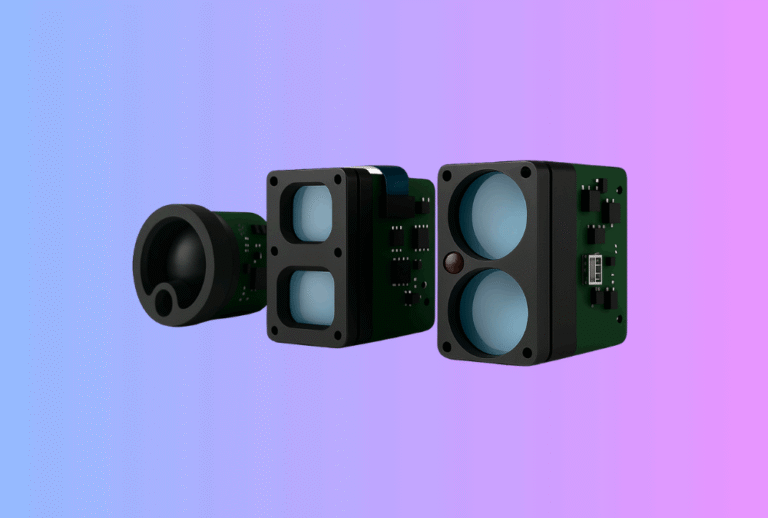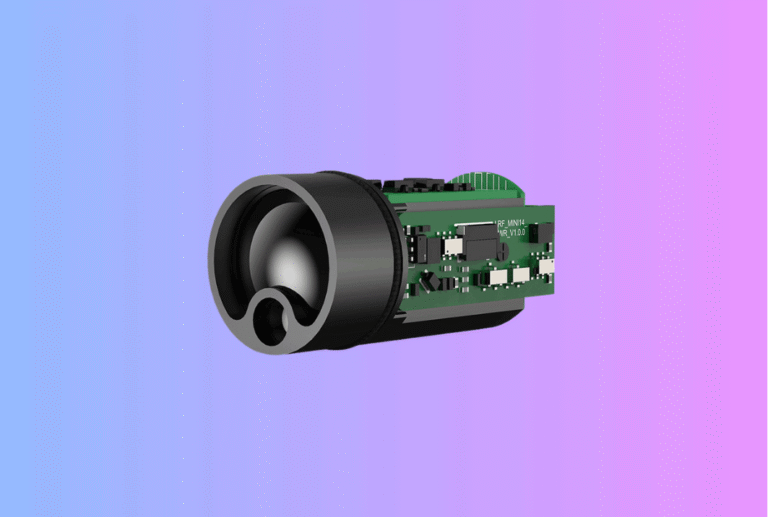
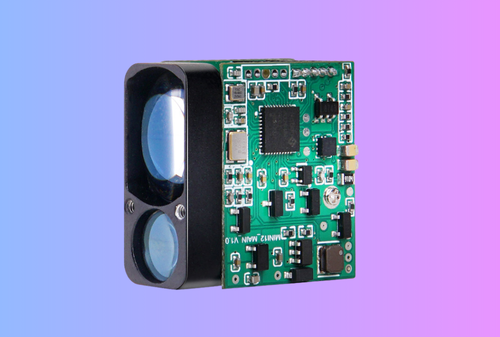
A laser rangefinder module EMI and EMC guide is one of the most useful technical resources an OEM team can have, because a surprising number of “module performance” problems are actually electromagnetic compatibility problems. A product may appear to suffer from unstable ranging, intermittent communication, random resets, timing inconsistency, or strange field behavior, while the core optical engine is functioning normally. The real issue may be noisy power rails, poor grounding structure, weak cable shielding, bad return-current paths, or emissions from nearby electronics. When that happens, the laser rangefinder module is often blamed first, because it is the visible feature under complaint. But the real cause may sit in the electrical environment around it.
Table of Contents
ToggleThis matters especially in OEM products because a laser rangefinder module is almost never operating alone. It is often installed near displays, processors, image sensors, radio modules, motors, switching power supplies, thermal cores, PTZ assemblies, battery-management electronics, or vehicle and UAV power systems. In that environment, the question is no longer only whether the module works in isolation. The question is whether it works consistently inside a noisy real product.
That is why EMI, EMC, and grounding should not be treated as late-stage compliance paperwork. They are integration disciplines. If they are ignored until the end, teams usually discover them through unstable behavior, failed validation, or field returns. If they are addressed early, they protect not only formal compliance but also product trust, repeatability, and service clarity.
Why laser rangefinder modules are sensitive to electromagnetic environment
A laser rangefinder module sits at the intersection of optics, timing, signal processing, power conversion, and digital communication. That makes it vulnerable to more than one kind of electrical disturbance. The module may need stable supply rails, accurate timing behavior, clean interface signaling, and predictable internal processing. If the surrounding system injects noise into any of those layers, the user may see symptoms that look like optical weakness even when the optics are fine.
This is one reason EMI and EMC problems are often misdiagnosed. A team sees unstable distance output and assumes the issue lies in target reflectivity, calibration, or firmware logic. Those are reasonable suspects, but in some products the actual trigger is switching noise from the host power tree, poor return-path design, ground bounce, radiated coupling from nearby electronics, or a cable harness that acts as an antenna. The symptom appears in the ranging result, but the source is electromagnetic.
This is also why a module that looks perfectly stable on a clean lab bench can behave very differently once it is integrated into a dense OEM enclosure. Bench testing often uses short clean cables, isolated power supplies, and simple physical layout. Production products do not. They compress multiple subsystems into one body, and the electrical environment becomes far more complex.
EMI, EMC, and grounding are related, but not identical
Teams often use EMI and EMC as if they were the same thing. They are closely related, but not identical, and the difference matters when planning design work. EMI usually refers to unwanted electromagnetic interference itself, meaning the noise or coupling event that disturbs a circuit or subsystem. EMC is broader. It refers to the overall ability of a product to function acceptably in its electromagnetic environment without creating unacceptable interference for other equipment. Grounding is one of the core practical tools used to control how current returns, how reference potentials behave, and how noise is managed within that environment.
For OEM teams, this distinction is useful because it changes how problems are approached. If the issue is EMI, the immediate question is where the noise is coming from and how it couples into the rangefinder path. If the issue is broader EMC readiness, the question becomes whether the whole product architecture is robust enough to survive realistic emissions and immunity conditions. If the issue is grounding, the question becomes whether the electrical reference structure itself is creating instability.
In other words, EMI describes a disturbance, EMC describes system robustness, and grounding is one of the most important design disciplines that influences both.
Why grounding is often the hidden root cause
Grounding is one of the least glamorous topics in system design, which is exactly why it causes so many expensive problems. In many laser rangefinder module integrations, the product can be powered, commanded, and demonstrated successfully with a grounding scheme that is only “good enough” on the bench. Once the product moves into full integration, however, the same grounding choices may create intermittent faults, unexpected reset behavior, unstable communication, or sensitivity to nearby switching activity.
The reason is straightforward. Ground is not merely a symbolic reference node on a schematic. In the real product, it is a physical current-return network with impedance, geometry, and shared coupling paths. If the return currents from noisy loads, fast digital interfaces, motors, radios, or switching regulators are forced to share poor paths with the rangefinder module, then the module may see reference shifts or injected noise that disrupt normal operation.
This is why “everything shares the same ground anyway” is not a useful engineering statement. The practical question is how the ground currents move, where they return, which subsystems share those paths, and what impedance or loop area exists along the way. A weak answer to that question is often the beginning of intermittent ranging complaints.
Power integrity and EMC are deeply connected
In laser rangefinder products, power integrity is one of the most common paths through which EMC weakness becomes visible. A module that relies on stable internal timing and clean digital behavior can be strongly affected by supply ripple, switching transients, ground shifts, startup overshoot, or transient drops caused by nearby system loads. The problem may appear as random resets, failed communication initialization, strange ranging spread, or mode-dependent instability.
This is why the power tree should not be reviewed only for nominal voltage and current budget. It should also be reviewed for noise behavior, transient response, sequencing, local decoupling strategy, and how aggressively other subsystems share the same supply domain. A design that looks acceptable under average current measurements may still be poor under dynamic load conditions.
For OEM teams, this point is critical because many products combine the rangefinder module with image processing, displays, wireless modules, gimbals, motors, or other high-dynamic-load functions. The electrical question is not simply whether the supply can power all of them. It is whether their interaction leaves the rangefinder module operating in a clean enough environment to remain stable.
Cable routing is not a secondary detail
A surprising number of EMI problems are introduced not by the module and not by the power supply, but by the way cables are routed. A cable harness can easily become a coupling path, a radiating structure, or a return-path problem if it is routed too close to noisy sources, lacks controlled shielding termination, or forces sensitive signals to share poor geometry with high-current or fast-switching lines.
For laser rangefinder module products, this can be especially important when the module is mounted away from the main control board or when the product uses separate subassemblies. Long communication lines, shared grounds, floating shields, and proximity to motors or converters can all create avoidable instability. In some cases the module itself is blamed, when in reality the harness is injecting the problem.
A mature OEM design review should therefore include cable routing as an EMC topic, not merely a packaging topic. Which cables carry sensitive control or data? Which carry noisy power? Where are shields terminated? Are return paths short and intentional? Are cable loops unnecessarily large? Is the routing too close to emissions sources? These questions often reveal practical improvements faster than deep firmware debugging does.
Shielding works only when the termination logic is correct
Shielding is another area where partial understanding creates expensive confusion. Teams know they need shielded cable, shielded enclosures, or grounded metal structures, but they do not always think carefully enough about where and how those shields are terminated. A shield that is present but terminated badly can create as many problems as a missing shield.
For a laser rangefinder module integration, shielding strategy should be intentional. The team should define what is being shielded from what, and how the shield termination supports that purpose. Is the shield intended mainly for radiated emission control, immunity improvement, or both? Is the connection low impedance where it needs to be? Is the shield tied in a way that preserves a useful return path, or is it left floating in a way that turns it into a passive antenna structure?
The same principle applies to enclosure design. A metal housing does not automatically create strong EMC behavior. It becomes useful when seams, grounding contact, apertures, mounting structure, and internal reference connections are all considered as part of one system. Otherwise the housing becomes a false comfort rather than a real control measure.
Interface stability often reveals EMC weakness first
One of the earliest signs of EMC weakness in a laser rangefinder module product is not necessarily a dramatic ranging failure. Often it is interface instability. The module may fail to initialize cleanly, drop communication unexpectedly, return malformed responses, behave differently across cable lengths, or show mode-dependent sensitivity. These symptoms are especially easy to misread because they resemble firmware or protocol issues.
In reality, interface instability is often where EMI first becomes visible. A noisy supply, weak grounding structure, long return path, or poor cable shield treatment may degrade signal integrity enough that the communication layer becomes unreliable before the optical layer appears obviously wrong. Teams then spend time chasing command handling logic when the real problem is the electrical environment beneath it.
This is why interface debugging should always include an EMC hypothesis, especially if the problem depends on build configuration, cable position, motor activity, RF activity, display state, or power mode. The system may not have a “software bug” at all. It may have an electrical environment that makes the interface marginal.
The product layout can create or prevent future EMC pain
Layout is one of the highest-leverage decisions in EMC performance, yet it is often treated as a board-design detail rather than a system-design choice. In a product containing a laser rangefinder module, layout decisions influence how current returns, how noisy domains are separated, how reference planes behave, and how much unwanted coupling exists between subsystems.
At board level, the usual questions matter: decoupling placement, reference plane continuity, trace routing, switching-node containment, connector placement, and signal return control. At system level, the larger questions matter just as much: where the rangefinder module sits relative to processors, radios, motors, batteries, displays, and thermal cores; whether noisy converters are physically too close to sensitive interfaces; whether grounding strategy is segmented logically or tied together carelessly; and whether the enclosure geometry supports a clean electrical architecture.
A layout review that ignores these questions may still produce a product that “works” during early testing. But it often produces a product that becomes fragile later, especially when environmental noise, accessory variation, or service replacement introduces additional variables.
EMC should be considered before pilot, not only before certification
Many projects leave EMI and EMC thinking until the product is close to formal testing. By then, options are limited. The team may be forced into shielding patches, grounding straps, ferrite additions, harness changes, firmware workarounds, or painful enclosure revisions. Sometimes those changes work. Sometimes they only move the problem.
A much healthier approach is to treat EMC as a readiness topic before pilot. By pilot build stage, the team should already have a reasonable view of the grounding concept, cable routing logic, shielding approach, power integrity assumptions, and the main noise-risk interactions between subsystems. It is not necessary to solve every edge case before pilot, but it is important that the architecture not be electromagnetically naive.
This is why EMC thinking belongs beside the Laser Rangefinder Module Pilot Build Readiness Checklist. Pilot is supposed to convert engineering assumptions into repeatable build learning. If the electrical environment is still poorly understood, pilot results become hard to interpret because optical, firmware, and EMC factors are all mixed together.
Production variation can turn a marginal EMC design into a field problem
One of the reasons EMC deserves serious attention is that a design can be only slightly marginal in engineering and then become clearly problematic in production. Small differences in cable routing, grounding contact, shield termination quality, screw torque, window frame bonding, connector seating, or board build variation may be enough to move the product from “usually fine” to “occasionally unstable.” That kind of margin loss is dangerous because it often escapes early testing and appears only after scale.
For laser rangefinder products, this creates a classic B2B problem. The project seems acceptable during development, but once production volume grows, some units become more sensitive than others. The field complaints then look random. One batch behaves well, another behaves worse near motors or radios, another shows reset sensitivity under certain power conditions. The team may blame lot quality or firmware inconsistency when the actual root issue is weak EMC margin.
This is one reason why production control and EOL logic should protect the electrical architecture, not just functional output. A marginal design cannot be fully saved by outgoing test, but a disciplined production process can at least prevent avoidable variation from making a borderline EMC situation even worse.
Grounding strategy should be explicit, not accidental
A strong OEM product rarely achieves good grounding by accident. The grounding concept should be explicit. The team should decide how the module ground references connect to the rest of the product, how shield terminations relate to chassis or reference ground, how noisy currents are kept away from sensitive returns, and how service or manufacturing variations are prevented from changing those relationships.
This does not mean every product needs a highly complex grounding philosophy. It means the product needs an intentional one. A simple well-executed scheme is usually far better than a complicated but inconsistent one. The main risk is not simplicity. The main risk is ambiguity.
For example, if one engineer assumes the shield should bond at the controller end, another assumes both ends, and production does something inconsistent between lots, the product may become difficult to debug. If the chassis-ground relationship is left vague, field service may unknowingly reassemble units with different EMC behavior. If the module mounting method is assumed to provide a stable reference but actually depends on paint, coating, or contact variability, then the grounding concept is not really controlled.
A grounding strategy should therefore be documented in a way that both design and manufacturing can preserve.
EMI symptoms are often mistaken for optical problems
One of the biggest reasons this topic deserves its own article is that the symptom pattern often misleads the team. The product may show unstable range at certain times, increased spread under some operating conditions, failed response near other active functions, or behavior that degrades only in the full product. Because the complaint is visible at the rangefinder output, teams naturally start with optics, target behavior, or calibration.
Those are sensible checks, but they can waste time if the real trigger is electromagnetic. The symptom may worsen only when a display backlight mode changes, when a radio transmits, when a motor starts, when a thermal core enters a certain state, or when the product is connected to a vehicle power system. Those are not classic optical clues. They are EMC clues.
This is why good troubleshooting discipline should include a simple question early in the process: does the symptom correlate with another electrical activity in the system? If yes, the rangefinder module may not be the true source of the fault at all.
EMC readiness improves service clarity later
A disciplined EMC design does more than improve launch success. It also improves service clarity after shipment. Products with stronger grounding, better shielding logic, cleaner power design, and better cable control tend to produce clearer failure modes. When something goes wrong, the symptom is easier to classify. In weak EMC products, by contrast, field complaints tend to become messy. Behavior changes with installation style, cable position, accessory choice, battery state, or nearby electronics, making root-cause analysis slower and more political.
This is one reason the current topic connects naturally to the future Laser Rangefinder Module Failure Analysis Guide for OEM Teams. A clean failure-analysis workflow depends on the product having enough EMC margin that electromagnetic weakness is not constantly masquerading as a module fault.
It also connects to the earlier Laser Rangefinder Module Warranty, RMA and Service Policy for OEM Programs. If EMC boundaries are not designed and documented well, many service cases become difficult to classify cleanly as supplier defect, integration issue, or use-condition problem.
What OEM buyers should ask suppliers
For OEM buyers, EMI and EMC are powerful supplier maturity filters. A supplier that talks only about nominal interface and power requirements but cannot discuss grounding assumptions, cable sensitivity, shielding expectations, or electrical-environment limits is usually not ready to support a demanding system integration. A stronger supplier can explain at least the basic environmental assumptions needed for stable operation.
Useful buyer questions include these. What power quality assumptions does the module expect? What grounding approach is recommended in the host system? Are there cable length or routing sensitivities? What shielding practices are recommended for the interface? How should the module be isolated from switching noise sources? Has the supplier seen common integration problems in products with motors, radios, thermal cores, or battery systems? What production controls are most important for preserving EMC behavior?
These questions do not require the supplier to solve the buyer’s full system design. Their purpose is more practical. They reveal whether the supplier understands that laser rangefinder module integration happens in a real electromagnetic environment, not just in a clean demonstration setup.
A practical review list for OEM teams
Many teams find it easier to control EMC risk when the topic is turned into a structured review rather than a late-stage panic. Before pilot or final architecture freeze, the OEM team should be able to answer a set of direct questions.
| Review area | What the team should confirm | Why it matters |
|---|---|---|
| Power integrity | Supply rails and startup behavior are clean enough for the module | Noise and transients often create false module symptoms |
| Grounding concept | Return paths and reference structure are intentional | Weak grounding creates intermittent instability |
| Cable routing | Sensitive lines are separated from noisy sources | Harnesses can become coupling or radiation paths |
| Shielding | Shield purpose and termination logic are defined | Bad shields can be nearly as harmful as no shields |
| Layout and placement | Sensitive and noisy subsystems are physically managed | Geometry strongly influences EMC margin |
| Pilot readiness | EMC assumptions are reviewed before production-like builds | Avoids confusing pilot data later |
| Production control | Build variation cannot easily degrade EMC behavior | Marginal EMC gets worse at scale |
A table like this does not solve the problem by itself, but it helps keep the conversation concrete and actionable.
Final thought
A laser rangefinder module EMI, EMC, and grounding guide is really a guide to electrical environment discipline. It explains why a module can be optically fine and still behave badly in a real product, why grounding and cable routing deserve the same seriousness as firmware and optics, and why EMC should be built into the integration strategy long before certification or field complaints begin.
For suppliers, this topic is a chance to show real system-integration maturity. For OEM buyers, it is a chance to avoid slow, expensive debugging later. And for the finished product, it is one of the clearest examples of how reliability is often created not by one outstanding component, but by how well the entire electrical environment is controlled around it.
FAQ
Can EMI or EMC problems really look like ranging problems?
Yes. Poor grounding, noisy supplies, bad shielding, or cable coupling can create symptoms such as unstable output, resets, timing errors, or communication faults that look like module or optical problems.
Why is grounding so important for a laser rangefinder module?
Because ground is a real current-return network, not an abstract schematic symbol. If noisy return currents share poor paths with the module, the module may experience reference instability and injected noise.
Is shielded cable enough to solve EMC problems?
Not by itself. Shielding only works well when the routing, termination, return-path logic, and surrounding electrical architecture are also designed correctly.
When should OEM teams start reviewing EMC risk?
Before pilot, not only before certification. By pilot stage, the product should already have a deliberate grounding, routing, and power-integrity concept.
CTA
If your OEM product integrates a laser rangefinder module near processors, radios, motors, displays, or other noisy electronics, EMI, EMC, and grounding should be reviewed as part of the core integration plan. You can discuss your project with our team through our contact page.
Related articles
You may also want to read:
- Laser Rangefinder Module Pilot Build Readiness Checklist
- Laser Rangefinder Module Warranty, RMA and Service Policy for OEM Programs
- Laser Rangefinder Module End-of-Line Test Strategy
- Laser Rangefinder Module Boresight Alignment Guide