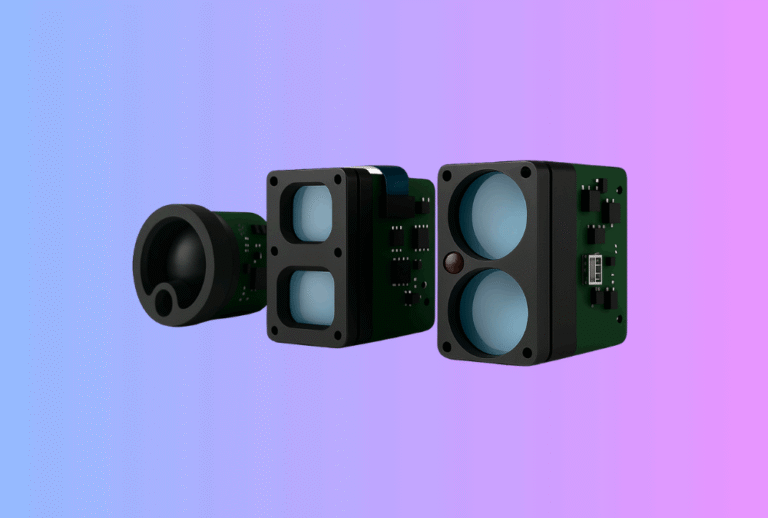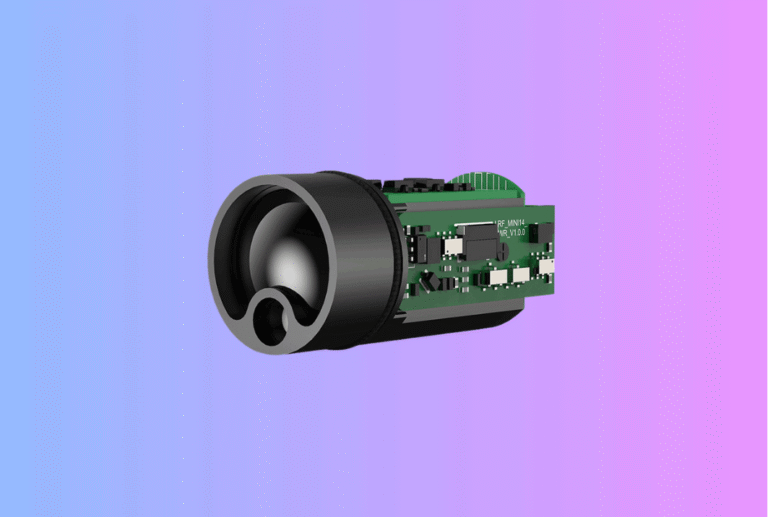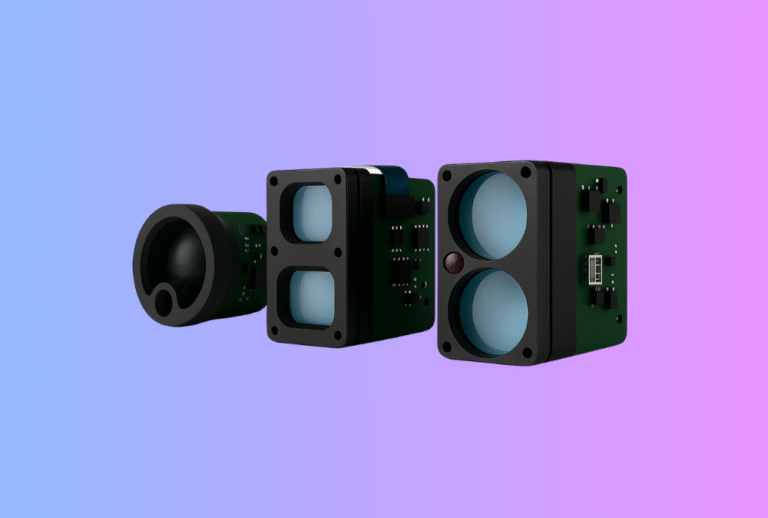
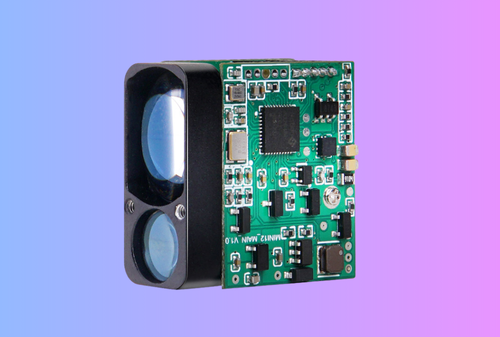
A laser rangefinder module for security PTZ and border surveillance is not just a distance sensor added to a camera platform. In a serious OEM program, it becomes part of a larger decision chain: detection, target confirmation, tracking, event classification, operator response, and sometimes handoff to other systems. That is why security and border applications place different demands on a laser rangefinder module than handheld consumer devices or simple industrial ranging tools. The product is expected to work over long periods, in exposed environments, across difficult backgrounds, with minimal operator confusion, and often inside a multi-sensor platform that includes visible imaging, thermal imaging, pan-tilt-zoom mechanics, and external command systems.
Table of Contents
ToggleThis application class is attractive for OEM suppliers because the technical value is high and the product differentiation is meaningful. But it is also unforgiving. A module that looks acceptable in a bench demonstration can become problematic in a real PTZ or border system if boresight is not stable, if timing is inconsistent, if the front window degrades, if electromagnetic noise is ignored, or if the system cannot distinguish true target ranging from background or scene clutter. In these projects, the buyer is not only buying a module that can measure distance. The buyer is buying a module that can support real security operations under system-level constraints.
That is why OEM teams developing security PTZ and border-surveillance products should evaluate the laser rangefinder module as part of a platform, not as an isolated part number. The correct question is not only “what range can it achieve.” The better question is “how reliably does it contribute to the full observation and response system under the conditions that matter in the field.”
Why security PTZ and border systems are a special use case
Security PTZ and border platforms differ from many other laser rangefinder applications because the module is rarely used alone. It usually works alongside electro-optical, or EO, imaging, thermal imaging, tracking logic, and pan-tilt control. In some systems, the operator actively commands the range measurement. In others, the system uses range data to support target classification, target handoff, or geo-referencing logic. In either case, the rangefinder has to fit into a chain of observation rather than act as a stand-alone device.
This changes the engineering priorities. Long-distance numeric capability still matters, but so do boresight stability, repeatable interface timing, environmental durability, front-window management, and immunity to noise from motors, processors, displays, and radios. The product is also more likely to operate on difficult targets. Security scenes often include fences, vehicles, vegetation, roads, terrain edges, water backgrounds, atmospheric haze, and mixed day-night conditions. A laser rangefinder module that performs well only on ideal matte targets will not create enough value in these systems.
Another reason this is a special use case is duty cycle. A security platform may remain deployed for long periods, with repeated pan-tilt movement, changing weather, wide temperature variation, and limited maintenance windows. In that environment, long-term stability often matters as much as initial performance.
What security buyers actually care about
Many OEM teams think buyers in this segment care first about maximum range. In reality, range is important, but not sufficient. Serious security buyers usually care about whether the module improves operational usefulness inside the whole surveillance system. They want the range output to be believable, repeatable, and easy to associate with the correct target in the camera view. They also want the module to be supportable over time.
In practice, this means buyers tend to care about several linked questions. Can the module remain aligned with the visible or thermal channel over time? Can it survive vibration from PTZ motion and transport? Does it remain stable behind the system’s front window? Does it behave predictably in cluttered scenes or on low-return targets? Does it communicate cleanly with the host controller? Can the supplier support documentation, version control, and service screening when the system is deployed in the field?
This is why a security PTZ project is rarely won by a headline range number alone. It is won by making the rangefinder module part of a credible system architecture.
The laser rangefinder module is only useful if it agrees with the camera view
In a PTZ or border-surveillance product, one of the most important questions is whether the laser path and the operator’s viewing reference actually agree. If the operator is looking through a visible or thermal channel and assumes the system is ranging the center of that view, then even a small boresight mismatch can create real operational confusion.
This matters much more in security systems than in simple range-display tools, because the operator is often trying to interrogate a specific object in a complex scene. A target may be small, partially occluded, near a fence, beside vegetation, or near a reflective structure. If the laser rangefinder module is slightly off-axis relative to the displayed aiming point, the returned distance may belong to background terrain or a nearby object instead of the intended target.
That is why boresight alignment is a central design topic for this product class. The module’s optical axis, the visible channel, the thermal channel, and the PTZ mechanical reference all need to be treated as part of one geometry problem. This directly connects to the earlier Laser Rangefinder Module Boresight Alignment Guide. In a security PTZ product, boresight is not merely a fine-tuning topic. It is one of the conditions that determine whether the module is operationally useful at all.
Thermal and EO integration changes the value of the module
Many security and border platforms are no longer built around visible imaging alone. Thermal imaging has become a major part of detection and night-time observation, and the laser rangefinder module often sits inside a system that combines visible and thermal channels. This changes how the rangefinder should be evaluated.
If the module is paired with thermal imaging, the OEM team must ask how the range result relates to the thermal scene. Will the operator use the thermal image as the primary aiming reference? If so, the alignment and interface relationship between the thermal channel and the laser path becomes a critical systems issue. If the visible channel is used for daytime identification and the thermal channel for night detection, the module may need to support both operating assumptions. In some products, one channel is used for tracking while another is used for confirmation. The laser rangefinder module must fit cleanly into that logic.
This is one reason multi-sensor integration is so important in security platforms. A module that seems fine when evaluated as a stand-alone device may become less compelling if the supplier cannot help the OEM team think through channel agreement, timing, and practical targeting logic across the whole sensor suite.
Border-surveillance scenes are often difficult ranging scenes
Border and perimeter applications are full of targets that are hard to range consistently. A person standing near vegetation, a vehicle partly behind a fence, a moving target near terrain edges, a dark object against a reflective background, or a scene with haze, dust, or moisture can all create ambiguous or weak returns. This means the laser rangefinder module is frequently being asked to work in the same conditions that make field complaints more likely in other products.
This is exactly why target and scene behavior must be reviewed honestly during product design. The OEM team should not assume that a module which performs well on a cooperative test board will automatically produce clean results on real border targets. The system should be evaluated against realistic objects, realistic backgrounds, and realistic operator use cases. If the target is small relative to the beam footprint, or if the background is stronger than the target return, the range value may still be technically valid but operationally misleading.
This connects directly to the earlier Laser Rangefinder Module Target Reflectivity and Background Interference Guide. In security products, target-scene behavior is not an edge case. It is the core use case.
Front windows matter more in PTZ and outdoor security systems
In a security PTZ or border-surveillance product, the laser rangefinder module almost always sits behind a front window or optical cover. This is mechanically necessary, but optically consequential. The front element is exposed to rain, dust, salt, haze, oil residue, maintenance error, and long-term environmental wear. Even if the laser rangefinder module itself is stable, the final product may become less reliable if the front window is not specified and maintained correctly.
This matters for two reasons. First, the window affects signal transmission and optical cleanliness. Second, it can affect the final geometry of the outgoing and incoming optical path, especially if tilt, wedge, stress, or contamination become significant. In a PTZ product, where alignment with the camera view is already critical, the front window can become a hidden contributor to both ranging degradation and boresight confusion.
This is why front-window design is not merely an enclosure topic. Material choice, coating choice, mounting method, cleaning compatibility, contamination control, and service replacement rules all affect how well the rangefinder function survives in real field use. The earlier Laser Rangefinder Module Window Cleaning Guide becomes especially relevant here, because security systems often spend long periods outdoors with less frequent maintenance than teams hope.
Long-term retention matters as much as day-one performance
A supplier demo often focuses on whether the module works now. Security buyers need to know whether it still works predictably later. This application class is heavily affected by long-term retention: boresight retention, mounting retention, window retention, sealing retention, and electrical-environment retention.
The PTZ structure itself introduces repeated movement. That means cable paths, connectors, fasteners, grounding paths, and optical relationships may all experience more mechanical exposure than in fixed products. In border systems, the product may also face vibration, wind loading, transport shock, thermal cycling, and repeated maintenance access. All of those conditions test whether the module remains in its intended state after deployment.
For OEM teams, this means qualification should not stop with initial alignment and basic function. The more useful question is whether the module still agrees with the system reference after repeated use and whether its performance envelope stays stable behind the real front-end architecture. A product that can be aligned once but loses confidence after installation or weather exposure will not satisfy serious security buyers.
EMI and EMC are major issues in PTZ platforms
Security PTZ products often contain exactly the kinds of subsystems that make electromagnetic compatibility difficult. Pan-tilt drive motors, processors, displays, radios, thermal cores, switching power supplies, Ethernet or control interfaces, and long internal cable paths can all create an electrically noisy environment. In such systems, a laser rangefinder module may be affected even if its own design is sound.
This is why EMC should be treated as part of core integration, not only as certification work. If the module shows unstable communication, irregular timing, mode-sensitive behavior, or unexpected resets only when the PTZ head is moving or another subsystem is active, then the OEM team should suspect the electrical environment early. Grounding, shielding, cable routing, and power integrity all matter.
This directly connects to the earlier Laser Rangefinder Module EMI and EMC Guide. For security PTZ products, EMC is not a side topic. It is one of the reasons a field-deployed unit may behave differently from the engineering prototype.
Interface architecture should match the operational workflow
In a real security platform, the laser rangefinder module is rarely used as a stand-alone command-and-response device. It is usually part of a larger control workflow. The host controller may trigger the measurement based on operator input, software rules, tracking logic, or preset PTZ behavior. The returned data may need to appear in an interface overlay, feed a recorder, support a geo-location function, or be used in a fused sensor workflow.
This means interface behavior matters as much as nominal compatibility. The OEM team should care about command timing, response timing, startup behavior, error handling, retry logic, and how the module behaves when the system is under computational or electrical load. If the host software cannot trust when or how the measurement will arrive, operational value falls.
This is why the module’s interface design should be assessed in context. A good security integration is not merely electrically connected. It is behaviorally predictable under the real workflow of the platform.
Environmental performance is not optional in border systems
Border-surveillance products may face temperature swing, rain, dust, condensation, salt exposure, solar heating, wind-driven particles, and long outdoor duty cycles. In such environments, environmental performance cannot be treated as a nice-to-have feature. It directly affects the usefulness of the laser rangefinder module inside the final product.
For OEM teams, this means environmental testing should be tied to real functional concerns, not just survival. It is not enough to ask whether the module can endure temperature or humidity in principle. The team should ask whether the module still aligns correctly, communicates correctly, and ranges acceptably after those exposures. It should ask whether the window and housing retain their intended optical behavior. It should ask whether contamination, condensation, or temperature-induced mechanical shift reduce confidence in the system.
This is why the earlier Laser Rangefinder Module Environmental Test Plan concept remains highly relevant in this vertical. A border system is not evaluated only by whether it turns back on after exposure. It is evaluated by whether it still behaves as a trustworthy sensor after exposure.
Production control matters because security buyers expect repeatability
In security and border-surveillance products, buyers typically expect disciplined, repeatable product behavior. They may be buying in lower quantities than a mass consumer product, but their tolerance for inconsistency is often lower because the product is used in operational environments. This makes production control especially important.
The OEM team should ensure that module version, firmware state, alignment logic, window specification, outgoing verification, and traceability are all under control. A security platform with one excellent pilot unit and one unstable production lot is not a strong product. Buyers in this segment often care more about repeatability and field support than about one-time demo performance.
This is where the earlier Laser Rangefinder Module End-of-Line Test Strategy and Laser Rangefinder Module Pilot Build Readiness Checklist connect directly to the vertical application. PTZ and border projects need controlled builds, not only good engineering prototypes.
Failure analysis and service logic should be planned early
Security systems often operate in environments where field investigation is expensive and downtime is undesirable. That means service and failure analysis need to be planned before launch, not only after the first complaint. If a deployed unit begins measuring inconsistently, the service team needs a structured way to determine whether the issue is scene-related, alignment-related, contamination-related, EMC-related, or truly module-origin.
Without that structure, every issue becomes a suspected module failure, and the OEM team will waste time and credibility. This is why the earlier Laser Rangefinder Module Failure Analysis Guide is particularly relevant for this vertical. A border-surveillance buyer does not just want a module that works. They want a supplier and integrator who can help classify failures cleanly when the system is under real operational pressure.
What OEM buyers should ask suppliers for this application
A buyer sourcing a laser rangefinder module for security PTZ and border use should go beyond generic module questions. They should ask how the module behaves inside a multi-sensor architecture, how alignment is preserved, how the front-end optical path should be designed, what the recommended electrical environment looks like, what target-scene limits should be expected, and how service issues should be screened.
Useful questions include these. How should the module be aligned to visible and thermal channels? What mounting datums are recommended? How sensitive is the module to front-window condition and angle? What EMC precautions are most important in a PTZ head? What outgoing test logic is recommended for alignment-sensitive systems? How should scene-related complaints be separated from true module faults? What service information is needed before approving an RMA?
These questions reveal very quickly whether the supplier understands the real demands of this vertical or only the nominal characteristics of the module.
A practical review framework for security PTZ and border projects
Many OEM teams find it helpful to convert this application into a structured review table before design freeze.
| Review area | What the OEM team should confirm | Why it matters |
|---|---|---|
| Multi-sensor alignment | Laser path agrees with visible and/or thermal reference | Prevents target mismatch in real surveillance scenes |
| Front-end optical path | Window, aperture, and housing preserve optical performance | Outdoor exposure and contamination strongly affect usability |
| Electrical environment | Power, grounding, shielding, and cable routing are robust | PTZ and security electronics create noisy environments |
| Target-scene behavior | Module is validated on realistic security targets and backgrounds | Border and perimeter scenes are rarely cooperative |
| Environmental retention | Alignment and performance survive weather and long duty cycles | Field reliability matters more than bench success |
| Production control | Build and EOL logic protect alignment and version consistency | Security buyers expect repeatable product behavior |
| Service workflow | Failure screening is defined before deployment | Reduces noisy RMA volume and unclear responsibility |
This kind of review helps the team evaluate the module as part of a platform rather than as a stand-alone part.
Final thought
A laser rangefinder module for security PTZ and border surveillance should be evaluated as an operational subsystem, not as a specification-sheet accessory. In this product class, the module succeeds only when it works in agreement with the camera view, survives in the real front-end optical path, remains stable in a noisy electromechanical environment, and keeps its behavior trustworthy across weather, motion, and long-term deployment.
For suppliers, this vertical is an opportunity to demonstrate true OEM support depth. For buyers, it is a reminder that long-range performance numbers alone are not enough. And for the finished product, it is one of the clearest examples of how a laser rangefinder module creates value only when the whole integration architecture around it is disciplined.
FAQ
Why is boresight so important in security PTZ products?
Because the operator usually assumes the system is ranging the target at the visual or thermal aiming point. If the laser path and viewing reference disagree, the returned distance may belong to the wrong object.
Are border-surveillance scenes especially difficult for laser rangefinder modules?
Yes. Vegetation, fences, terrain edges, haze, water backgrounds, and small moving targets can all make scene selection and ranging more difficult than standard reference-target tests suggest.
Why does the front window matter so much in security systems?
Because the module usually operates behind a protective window that is exposed to contamination, weather, tilt, stress, and maintenance. That front element affects both signal quality and final optical geometry.
Should EMC be treated as a major issue in PTZ systems?
Yes. PTZ motors, processors, radios, displays, and power electronics often create a noisy environment. Poor grounding or cable routing can easily make the module appear unstable.
CTA
If your OEM project involves a laser rangefinder module inside a security PTZ or border-surveillance platform, the module should be reviewed together with optics, alignment, EMC, environmental retention, and service workflow. You can discuss your application with our team through our contact page.
Related articles
You may also want to read:
- Laser Rangefinder Module Boresight Alignment Guide
- Laser Rangefinder Module EMI and EMC Guide
- Laser Rangefinder Module Failure Analysis Guide
- Laser Rangefinder Module Window Cleaning Guide