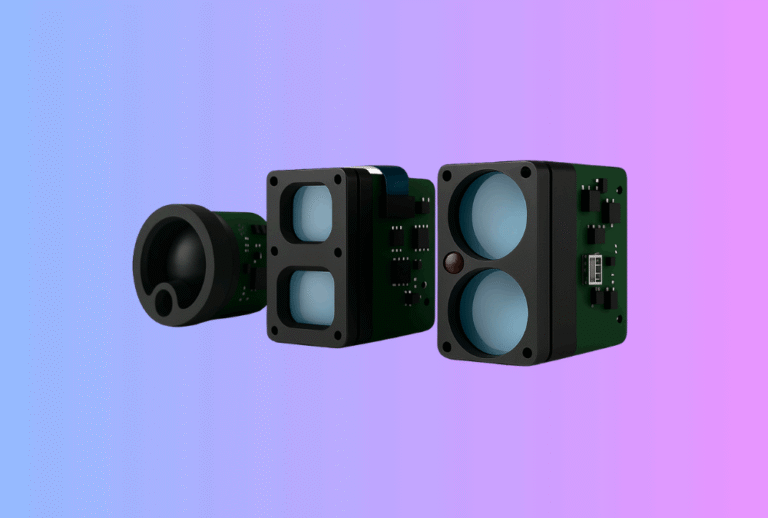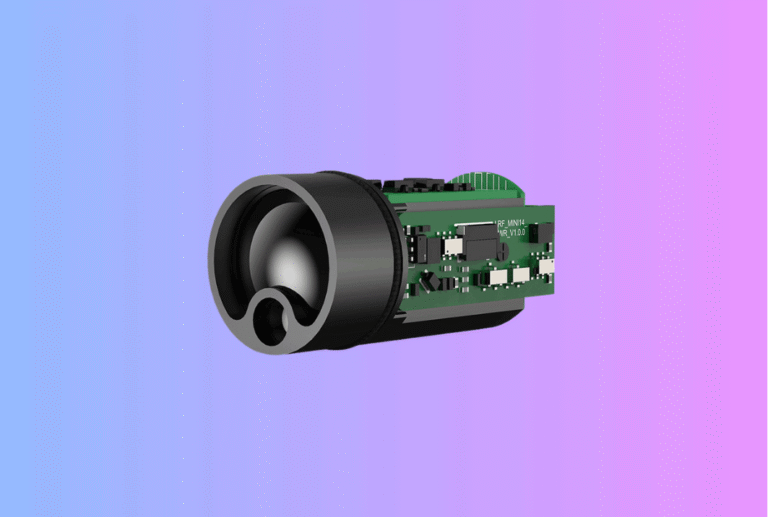
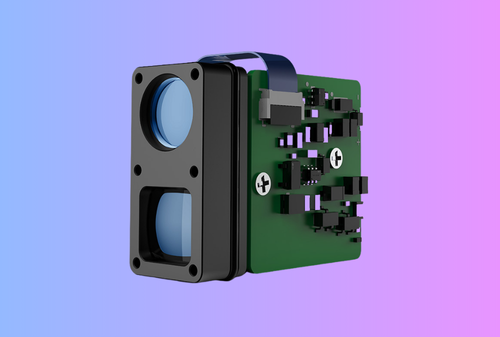
A laser rangefinder module for maritime and coastal systems is never judged only by whether it can measure distance on a calm day in a clean test setup. In real marine applications, the module is asked to survive and remain useful in one of the harshest system environments available to an OEM product: salt-laden air, high humidity, glare, moving targets, moving platforms, window contamination, temperature cycling, and long maintenance intervals. That means a maritime laser rangefinder module is not simply a standard module installed outdoors. It is a module that must continue to create operational value inside a platform exposed to continuous environmental stress.
Table of Contents
ToggleThis matters because the sea does not challenge only the optical engine. It challenges the whole product architecture around the module. A laser rangefinder that looks fine in a land-based demonstration can become much less reliable once it is mounted behind a marine front window, exposed to salt fog, paired with a moving electro-optical system, and operated against water backgrounds, vessel hulls, reflective surfaces, coastal haze, and cluttered shorelines. In those conditions, performance is shaped by far more than nominal range capability.
That is why OEM teams working on coastal surveillance, marine observation, harbor security, offshore platforms, patrol vessels, and coastal monitoring systems should evaluate the laser rangefinder module as part of a complete maritime sensor system. The key question is not just whether the module can range. The key question is whether it can remain trustworthy in a wet, reflective, corrosive, and mechanically dynamic environment over time.
Why maritime and coastal applications are especially demanding
Maritime and coastal systems create a combination of stress factors that rarely appear together in more protected products. First, the environment is aggressive. Salt fog, moisture, wind-driven particles, and thermal cycling all accelerate contamination, corrosion, seal aging, and material degradation. Second, the optical scene is difficult. Water surfaces, wet structures, reflective paint, moving waves, vessel geometry, and atmospheric haze create unstable and sometimes misleading ranging conditions. Third, the platform may not be static. The sensor may sit on a mast, tower, shoreline platform, harbor installation, or moving vessel, each of which introduces motion and vibration challenges.
Because of this, the buyer in this vertical does not only care whether the module works in principle. The buyer cares whether the final system still works after months of exposure, whether it still aligns properly after motion and vibration, whether the front-end optics remain usable, and whether field complaints can be separated cleanly into scene limitations, environmental effects, and true hardware faults.
This is why maritime products must be engineered with retention and environmental stability in mind from the start. They cannot rely on day-one lab performance alone.
What maritime buyers are really looking for
Maritime and coastal buyers may ask about range, but their real decision logic is broader. They are usually trying to reduce operational ambiguity. They want the system to deliver distance information that remains meaningful in real field conditions, not just in controlled demonstrations. They also want predictable maintenance behavior, clean integration with visible or thermal channels, and a supplier who understands how environmental stress changes product risk.
In practice, this means buyers often care about several things at once. Can the module maintain stable behavior in salt fog environments? Can it tolerate long outdoor exposure without front-window degradation becoming the main limitation? Does it remain aligned under vibration and motion? Can it handle reflective and wet targets without excessive operator confusion? Does the module integrate cleanly with thermal and visible systems used for coastal observation? Can the OEM team define a realistic service policy for contamination, cleaning, and inspection? And if the system begins to behave differently after deployment, can the supplier help separate true module issues from scene or environmental effects?
A maritime product is therefore judged less as a component and more as an operational subsystem.
Water backgrounds make scene interpretation harder
One of the most important truths in maritime ranging is that water is not a neutral background. It is a dynamic optical surface. Depending on angle, wave condition, contamination, sunlight, wind, and viewing geometry, water can behave in highly variable ways. It may reflect strongly, scatter unpredictably, or create low-confidence return conditions. Even when the intended target is above the waterline, the surrounding scene may still degrade how easily the laser rangefinder module can isolate the correct return.
This matters because many marine targets are already challenging. Vessel hulls may be wet and reflective. Buoys may be small relative to beam footprint. Structures near shore may sit against mixed land-and-water backgrounds. Targets may move while the platform also moves. In these cases, the problem is not simply “can the laser reach the object?” The problem is whether the system can interrogate the intended object rather than the background, the water surface, or an adjacent reflective structure.
This is why the earlier Laser Rangefinder Module Target Reflectivity and Background Interference Guide is especially relevant in maritime use. Coastal and offshore scenes often place the module directly into the kinds of mixed-background conditions that expose scene-selection weakness fastest.
Salt fog changes the problem from performance to survivability
Many product teams think of salt fog mainly as a corrosion topic. In maritime laser rangefinder systems, it is also a long-term performance topic. Salt does not only attack metal surfaces. It also accelerates contamination, stresses coatings, reduces optical cleanliness, affects sealing durability, and increases the maintenance burden on the front-end optical path.
This means that a maritime laser rangefinder module should be reviewed not only for core optical capability, but for how well the surrounding product architecture resists salt-driven degradation. The front window, housing seams, fasteners, mounting interfaces, connector sealing, and cleaning compatibility all become part of the real module value. A module that is internally sound but placed behind a weak marine optical front end may still fail to meet customer expectations in the field.
For OEM teams, salt fog should therefore be viewed as something that changes the whole service model. It affects how often the front window must be inspected, how contamination is classified, what materials can be used safely, and how much long-term drift should be expected from the mechanical and optical package. This is also why the product must be qualified for more than simple bench cleanliness.
Front-window design is a core maritime decision
In land-based applications, teams sometimes treat the front window as a protective part that can be optimized later. In maritime and coastal products, that approach is dangerous. The front window becomes one of the most critical elements in the final ranging path because it is continuously exposed to salt residue, moisture, cleaning action, glare, and environmental wear.
A front window that is acceptable in a mild industrial product may become a major weakness in a marine product if its material, coating, flatness, mounting method, or cleaning compatibility are not selected carefully. Even before permanent damage occurs, the window can reduce signal margin through salt residue, haze, water spotting, or surface contamination. Over time, poor maintenance compatibility can create scratches, coating wear, or chemically induced haze. In more alignment-sensitive systems, a stressed or poorly mounted window can also contribute to optical-axis uncertainty.
This is exactly why the earlier Laser Rangefinder Module Window Cleaning Guide becomes central in this vertical. In marine use, window cleanliness is not a cosmetic issue. It is one of the first conditions that determines whether the module still performs like the buyer expects.
Maritime systems often combine thermal, EO, and laser functions
Most serious maritime and coastal products do not rely on the laser rangefinder module alone. They typically combine the rangefinder with a visible channel, a thermal channel, or both. This is common in coastal surveillance, port observation, patrol systems, offshore monitoring, and maritime law-enforcement products. In these platforms, the rangefinder gains value only when it is geometrically and operationally aligned with the other sensing channels.
This creates two design demands. First, the module must agree with the operator’s real observation reference. If the operator is using thermal imagery at night and visible imagery during the day, the relationship between the laser path and those channels must remain meaningful. Second, the timing and communication behavior of the module must fit into a larger sensor-control workflow. A delayed or ambiguous range response is more harmful in a multi-sensor system than in a simple distance display.
That is why OEM teams should not select a maritime laser rangefinder module purely on stand-alone output. They should evaluate how it behaves when integrated into a fused or parallel sensing architecture.
Boresight retention is more difficult on marine platforms
A module that is carefully aligned in the factory may still drift into reduced usefulness if the platform experiences vibration, motion, mechanical stress, or repeated environmental cycling. This is especially true in marine products, where the module may sit on towers, exposed PTZ systems, mast structures, or moving vessels. Even when the motion is modest, the long-term cumulative effect on alignment retention can be important.
This matters because boresight problems in maritime products are hard to diagnose from user complaints alone. Operators often report that the product is less trustworthy, that it “feels off,” or that it seems to range the wrong object in cluttered scenes. In reality, the core module may still be healthy, but the optical relationship between the laser path and the observation channel may have shifted enough to create operational confusion.
This is why the earlier Laser Rangefinder Module Boresight Alignment Guide is directly relevant to marine products. In maritime and coastal systems, alignment is not simply a factory setup issue. It is a retention issue across installation, vibration, transport, weather, and service.
Humidity and condensation create a different kind of optical risk
Moisture in maritime environments does not always appear as obvious rain exposure. It often appears as persistent humidity, condensation risk, and cyclical fogging behavior. These conditions can degrade optical performance even before permanent damage appears. The product may show reduced confidence in certain weather, temporary haze inside or outside the optical path, or contamination patterns that build up faster than the service model anticipated.
For laser rangefinder modules, this becomes particularly important because the front-end optical path must remain both clean and predictable. A product that seems fine in dry testing may become inconsistent in coastal dawn or night conditions if condensation management was not handled carefully. In some systems, the problem is not inside the module itself but in the housing architecture around it.
This is why marine product design should treat condensation control, anti-fog strategy, sealing quality, and maintenance intervals as integral to the rangefinder’s real operating value.
Motion complicates both targeting and interpretation
In maritime applications, either the target, the platform, or both may be moving. A vessel observing another vessel, a coastal PTZ tracking a target over water, or a harbor system monitoring moving craft all introduce dynamic geometry. In such cases, even a numerically correct module can become operationally less useful if its timing, boresight stability, or target-selection logic are not robust enough.
This does not mean that maritime use requires exotic module behavior in every case. It means the OEM team should think carefully about how the operator will use the ranging result. Is the laser being used to confirm an object already centered in the image? Is it being triggered manually or through a tracking workflow? Does the system need a stable response while pan-tilt motion is active? Is the target large, isolated, and reflective, or small, moving, and surrounded by clutter?
These questions determine whether the selected module and the host workflow truly fit the application.
EMI and grounding can become worse at sea
Marine and coastal platforms often contain noisy electrical environments. Power systems may be less clean than land-based bench supplies. Long cable runs, radio equipment, navigation electronics, motors, displays, and switching loads may all share the same product or platform. In that kind of environment, a laser rangefinder module may become more sensitive to grounding weakness, cable routing problems, or poor shielding logic.
This is why the earlier Laser Rangefinder Module EMI and EMC Guide matters strongly in marine use. If the product shows unstable ranging, random resets, communication faults, or behavior that changes when other electronics are active, the team should not jump immediately to optics or calibration. Maritime platforms can magnify electrical-environment weaknesses quickly.
For OEM teams, this means that cable routing, shield termination, ground reference structure, and power quality should be considered part of the core marine integration plan. These are not later certification topics. They are operational reliability topics.
Calibration strategy should stay controlled in marine products
Because maritime products are exposed to long-term environmental stress, teams sometimes become tempted to assume that field recalibration should be widely available. In reality, this is not automatically the right answer. A marine product may indeed require robust field verification and strong service procedures, but that does not mean deep internal recalibration should be casually exposed outside controlled environments.
In many cases, what the field team really needs is reliable verification, contamination inspection, alignment confirmation, and controlled service escalation, not unrestricted recalibration access. If the product begins to behave differently at sea, the cause may be window contamination, boresight shift, sealing degradation, grounding change, or scene complexity rather than internal calibration drift.
This is exactly why the earlier Laser Rangefinder Module Calibration Guide is so relevant here. Marine systems need clear boundaries between what stays protected at factory level and what may be checked or restored under field-service conditions.
Production control matters because environmental margin is easy to lose
A maritime product may look robust in engineering and still become inconsistent in production if the team allows too much variation in windows, sealing, mounting geometry, cable routing, fastener handling, or outgoing verification logic. In harsh environments, small losses of margin become visible faster. A unit that is only slightly weaker in optical cleanliness, grounding consistency, or alignment retention may perform noticeably worse after exposure than a stronger unit.
That is why production control is especially important for marine systems. The supplier and OEM team should define which build attributes are safety- or performance-critical for maritime durability and make sure those attributes remain controlled. This is where the Laser Rangefinder Module End-of-Line Test Strategy becomes highly relevant. EOL cannot recreate the sea, but it can protect the product from shipping with avoidable weakness already built in.
Service workflow should expect contamination and retention issues
Marine service teams should assume that a significant percentage of field complaints will involve front-end optical degradation, environmental contamination, retention issues, or scene-related misunderstanding rather than pure module-core failure. If the service model is not built around that expectation, RMA traffic becomes noisy and slow.
A stronger approach is to build the service workflow around early classification. Is the issue related to contamination, window condition, optical fogging, alignment retention, electrical-environment changes, or true module failure? What field evidence is needed before return approval? What checks can be done in place? What conditions justify escalation?
This is where the Laser Rangefinder Module Failure Analysis Guide becomes a practical operational tool. In maritime systems, service clarity often matters as much as hardware quality, because diagnosis in the field can be costly.
What OEM buyers should ask suppliers for maritime projects
An OEM buyer sourcing a laser rangefinder module for marine or coastal use should go beyond generic outdoor questions. Useful questions include these. How has the front-end optical path been considered for salt and residue exposure? What front-window material and maintenance assumptions are recommended? How should the module be integrated with visible and thermal channels in a marine system? What boresight retention risks are most important? What grounding and EMC precautions are recommended for long cable or radio-heavy platforms? How should marine service teams separate contamination and alignment issues from real module faults? What production controls are most important to preserve maritime margin?
These questions help reveal whether the supplier understands marine products as harsh operational systems rather than just outdoor demonstrations.
A practical review framework for maritime and coastal systems
Many OEM teams benefit from turning maritime use into a structured review before design freeze.
| Review area | What the OEM team should confirm | Why it matters |
|---|---|---|
| Front-end optical path | Window, coatings, and cleaning logic suit marine exposure | Salt, haze, and water spotting quickly reduce margin |
| Multi-sensor agreement | Laser path matches visible and/or thermal reference | Real maritime use depends on operator confidence |
| Environmental retention | Product holds performance under humidity, salt fog, and cycling | Marine exposure stresses the full system, not just optics |
| Motion and mounting | Alignment and structure survive platform movement | Marine platforms often move or vibrate over time |
| Electrical environment | Grounding, shielding, and power integrity are robust | Marine systems can be electrically noisy |
| Production discipline | Sensitive build attributes are controlled | Small variation becomes larger at sea |
| Service classification | Field issues can be screened cleanly | Reduces unnecessary RMA and unclear fault ownership |
This type of framework helps the team review the module as part of a marine sensor platform rather than as a standard outdoor part.
Final thought
A laser rangefinder module for maritime and coastal systems should be chosen and integrated as a long-term environmental subsystem, not as a simple add-on sensor. In this vertical, success depends on whether the module can remain useful behind a real marine front end, inside a moving and electrically noisy platform, against reflective and wet backgrounds, and across the maintenance realities of salt, haze, and long service intervals.
For suppliers, this vertical is a chance to demonstrate real OEM depth in optics, integration, retention, and service support. For buyers, it is a reminder that outdoor performance claims are not enough. And for the finished product, it is one of the clearest examples of how a laser rangefinder module creates value only when the full marine system around it is designed to protect that value over time.
FAQ
Why are maritime scenes difficult for laser rangefinder modules?
Because water surfaces, wet targets, haze, glare, and mixed shore backgrounds can all complicate target selection and reduce return stability compared with simple reference targets.
Why is the front window so important in marine systems?
Because the module usually works behind a window exposed to salt residue, moisture, cleaning action, and weather. That front element strongly affects both optical margin and long-term usability.
Should maritime products allow broad field recalibration?
Not necessarily. In many cases, strong field verification and controlled service escalation are more appropriate than wide recalibration access.
Is salt fog mainly a corrosion problem?
No. It is also a performance and maintenance problem because it affects contamination, coatings, seals, optical cleanliness, and long-term retention of the full front-end architecture.
CTA
If your OEM project uses a laser rangefinder module in a maritime or coastal platform, the module should be evaluated together with the front window, environmental retention, multi-sensor alignment, electrical environment, and service model. You can discuss your application with our team through our contact page.
Related articles
You may also want to read:
- Laser Rangefinder Module Window Cleaning Guide
- Laser Rangefinder Module Boresight Alignment Guide
- Laser Rangefinder Module EMI and EMC Guide
- Laser Rangefinder Module Failure Analysis Guide