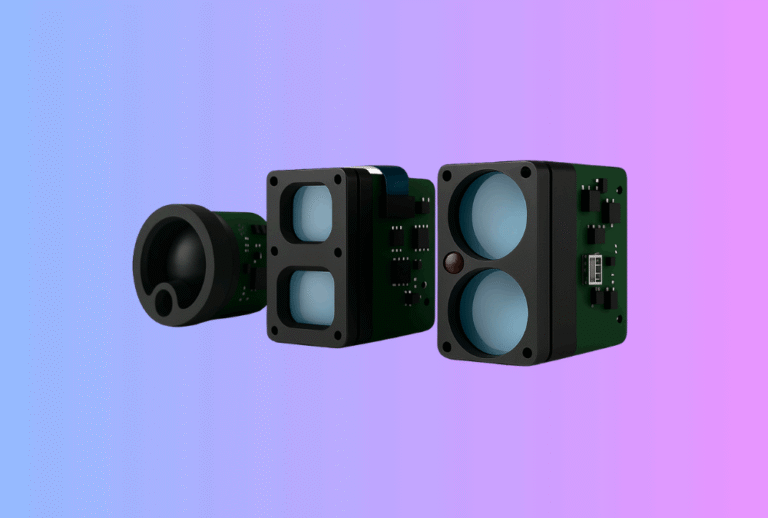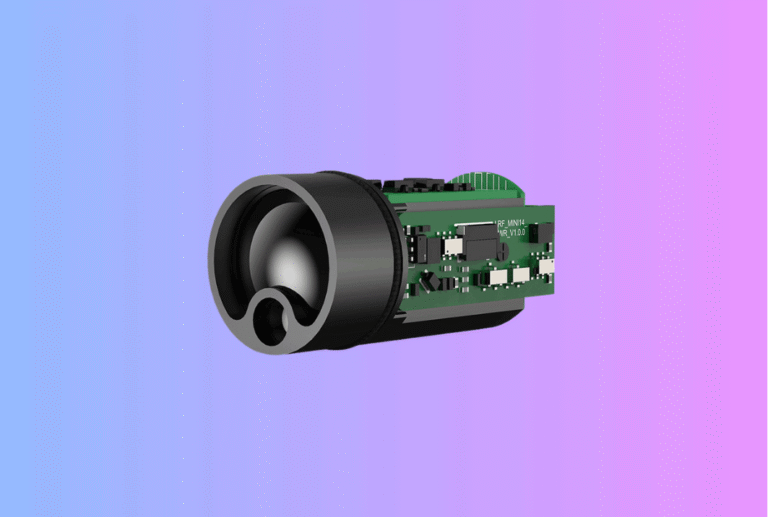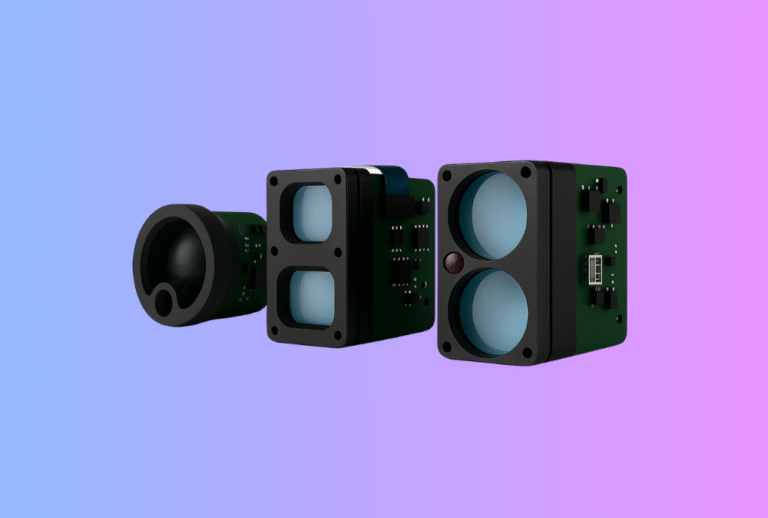
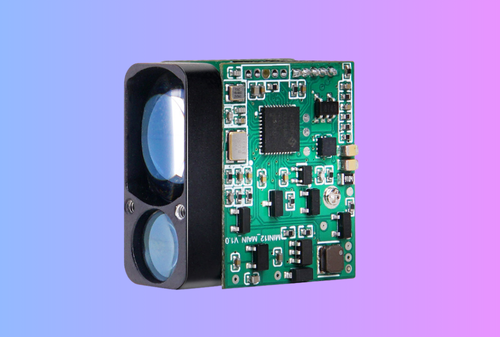
A laser rangefinder module multi-sensor alignment guide is one of the most important technical references an Original Equipment Manufacturer, or OEM, team can develop when building a product that combines a laser rangefinder with thermal and electro-optical, or EO, imaging. In these systems, the laser rangefinder module is rarely valuable on its own. Its real value appears only when the distance it returns can be trusted as belonging to the same target that the operator sees in the visible or thermal image. That sounds simple, but in real products it is rarely simple at all.
Table of Contents
ToggleThe difficulty comes from the fact that thermal, EO, and laser paths are different sensing channels with different optics, different fields of view, different physical positions, and sometimes different timing behavior. Even when each channel works well independently, the system can still disappoint if those channels do not remain meaningfully aligned in the final product. A buyer may see a hotspot in the thermal image, place the aiming point over it, trigger the laser rangefinder module, and receive a perfectly valid distance to the wrong object. In the field, that looks like a ranging problem. In reality, it is a multi-sensor alignment problem.
That is why this topic matters so much in OEM projects. Multi-sensor alignment is not only about visual neatness on a screen. It is about whether the product can support credible decision-making. In a security system, it affects target confirmation. In a UAV payload, it affects inspection confidence. In a utility product, it affects whether the distance belongs to the real asset feature of interest. In a marine system, it affects whether the operator is ranging the vessel, the shoreline, or the water background. If the alignment logic is weak, the platform may still function, but it will be much harder to trust.
Why multi-sensor alignment is harder than single-channel alignment
Single-channel alignment is already a meaningful engineering task. Once thermal and EO channels are added beside a laser rangefinder module, the difficulty increases because the product is no longer managing one axis. It is managing relationships among several axes, several optical centers, and several user expectations at the same time.
The thermal channel has its own optical path, detector geometry, and image center. The EO channel has another. The laser rangefinder module has its own effective optical axis and target-interrogation path. In some systems, these channels are physically close together. In others, packaging constraints force them farther apart. In all cases, the OEM team must decide what “aligned” actually means for the finished product.
This is the first point many teams underestimate. Alignment is not simply making all channels point to one mathematical center in one lab condition. It is defining what level of agreement the user needs, under what range, on what target size, with what field of view, in what environmental condition, and after what kind of transport or service events. Without that definition, alignment work becomes subjective and unstable.
The real question is not whether channels overlap, but whether they agree in use
A common mistake in multi-sensor products is to think that if the laser rangefinder module, thermal image, and EO image look “roughly centered together,” the job is done. That is not enough. The real question is whether they agree in actual use.
A product may look well aligned on a large nearby target and still fail on a smaller target at operational distance. It may appear centered at room temperature and drift after vibration or thermal cycling. It may seem acceptable in the visible channel and still be operationally weak when the operator uses the thermal channel as the real reference at night. It may also appear stable on a static bench and become less trustworthy when integrated behind the final front window.
This is why multi-sensor alignment must always be tied to workflow. Which channel does the operator trust first? Which channel is used for detection? Which for confirmation? Which for aiming? When the user sees a target in thermal, is the laser rangefinder module expected to interrogate that same spot directly, or only the broader structure? The answer changes what acceptable alignment means.
Thermal and EO channels do not behave the same way
One of the reasons multi-sensor integration becomes difficult is that thermal and EO channels do not represent the world in the same way. The EO image often provides finer visible detail, while the thermal image emphasizes heat patterns and may visually enlarge or soften certain features. The operator may believe both channels are showing the same point, but the practical “center of interest” in those images may differ.
This matters because the laser rangefinder module does not measure what looks visually interesting. It measures what its beam path actually interrogates. In a thermal image, the hottest spot on a connector, bearing, housing edge, or insulator may appear clear and important, but the laser path may still interact with a nearby structural element if the geometric relationship is not well controlled. In an EO image, the operator may visually select a bolt, bracket, or object edge that is smaller than the effective laser interrogation area at that distance.
So the challenge is not merely to place crosshairs nicely in each channel. The challenge is to understand the difference between image interpretation and laser target interrogation. That is exactly why a laser rangefinder module integrated into thermal and EO systems must be treated as part of a system of meaning, not only a system of optics.
Boresight is the foundation, but not the whole answer
A multi-sensor platform still begins with boresight discipline. The laser rangefinder module must have a defined relationship to the product reference axis, and the thermal and EO channels must each relate to that system reference in a controlled way. Without that, nothing else becomes stable.
But boresight alone is not enough. In a true thermal and EO platform, the OEM team must also manage channel-to-channel consistency, user-interface interpretation, and long-term retention. The system is not valuable only because the axes were once aligned in the factory. It is valuable because the channels continue to agree well enough that the operator can act on the combined data with confidence.
This is why the earlier Laser Rangefinder Module Boresight Alignment Guide remains fundamental here, but the multi-sensor problem goes further. Boresight tells you how to think about laser-path alignment. Multi-sensor alignment asks how that laser path remains useful once thermal and EO channels become part of the same operator experience.
Field of view mismatch creates hidden alignment problems
One of the most common weaknesses in thermal and EO integration is a mismatch in field of view, or FOV, handling. The thermal channel may be wider, narrower, or differently cropped than the EO channel. The operator may zoom the EO channel more aggressively than the thermal channel. The laser rangefinder module, however, does not zoom with the image. Its effective interrogation behavior stays tied to its own optics and geometry.
This creates a hidden problem. The more the user interface allows channel switching, zoom switching, or overlay behavior without clearly respecting the underlying geometry, the more likely it becomes that the operator will assume target agreement where only approximate overlap exists. In practice, that means a product can feel accurate at one zoom level and confusing at another, even though the hardware itself did not change.
This is why multi-sensor alignment should always be reviewed together with user-interface logic. If the product changes channel magnification, crop, digital zoom, or overlay mode, then the relationship between what the user sees and what the laser rangefinder module is likely interrogating should be understood explicitly.
Mounting architecture decides how much alignment can be trusted
Many multi-sensor problems begin long before calibration or overlay logic. They begin with physical architecture. If the thermal channel, EO channel, and laser rangefinder module are mounted in ways that do not create stable datums, then the final platform will always be harder to control.
A strong mounting architecture does more than hold the parts in place. It defines how their relative geometry is established, how repeatable that geometry is from unit to unit, and how much stress or distortion enters the structure during fastening, adhesive cure, temperature change, and vibration. In multi-sensor platforms, a mechanically weak mount does not just create one axis problem. It creates several relationship problems at once.
This becomes even more important when the product has a front window, a shared housing, or a pan-tilt structure. A slight shift in one channel, a slight tilt in the window, or a small stress imbalance in the mount can change how the operator perceives agreement between channels. The system may still “work,” but its multi-sensor confidence begins to erode.
The front window belongs to the alignment problem too
In many finished products, the thermal channel, EO channel, and laser rangefinder module do not operate directly into open air. They work through front windows or optical covers. Once that happens, the front-end optical package becomes part of the alignment problem.
A slightly tilted, wedged, stressed, or contaminated front window can alter the effective behavior of one or more channels enough to matter. Even when the shift is not dramatic, it may still be operationally important in small-target work, cluttered scenes, or long-range observation. In some designs, the window affects the laser path more strongly than the thermal or EO image. In others, it contributes to general optical uncertainty across the whole front end.
This is why the earlier Laser Rangefinder Module Window Cleaning Guide and your broader front-end design logic should not be treated as maintenance-only topics. In a multi-sensor product, front-window behavior affects whether the channels continue to agree in the way the user expects.
Timing matters when the system is dynamic
In static bench setups, alignment is often thought of as a purely geometric problem. In real thermal and EO systems, especially those mounted on PTZ platforms, UAV payloads, vehicles, or actively tracked observation systems, timing becomes part of alignment too.
If the user sees a target in one channel, triggers the laser rangefinder module, and the system or target moves during acquisition, then the returned distance may no longer belong to the same effective point the user believes they selected. This becomes especially important when channels are being stabilized differently, when tracking logic is involved, or when the operator is switching rapidly among visible, thermal, and laser-confirmed views.
So a mature multi-sensor alignment strategy should consider not only static axis agreement, but also temporal agreement. How stable is the system during measurement? What happens if the platform is moving? What happens if the operator is using a thermal hotspot as a reference but the EO channel is leading or lagging slightly in workflow? These are not always large problems, but in serious OEM products they are real enough to deserve design attention.
Calibration should refine the system, not rescue weak geometry
Calibration has a place in multi-sensor products, but it should not be expected to hide weak physical architecture. If the thermal channel, EO channel, and laser rangefinder module are mounted with poor repeatability or weak retention, then software offsets and calibration maps may create an appearance of alignment that does not survive real use.
The stronger design philosophy is to first build a structurally sound multi-sensor geometry, then use calibration to refine, confirm, or preserve the intended relationship. This applies especially to products that may be serviced, transported, or exposed to significant environmental stress. A platform that depends too heavily on software correction without strong physical stability will usually become harder to maintain over time.
That is why the earlier Laser Rangefinder Module Calibration Guide connects naturally to this topic. Calibration should support disciplined geometry, not replace it.
Multi-sensor alignment should be checked with realistic targets
One of the easiest mistakes in development is to check alignment only on large, cooperative, high-contrast reference targets. That may be useful for initial setup, but it is not enough to validate a product intended for real thermal and EO use.
A better approach is to validate alignment against targets that resemble the product’s actual field work. In a security system, that may mean cluttered scene objects and partial-background conditions. In a utility system, that may mean thin or elevated asset features. In a maritime system, that may mean reflective and mixed-background objects. In all cases, the goal is to understand how well the laser rangefinder module agrees with the user’s visible or thermal interpretation when the scene is no longer ideal.
This is another reason the earlier Laser Rangefinder Module Target Reflectivity and Background Interference Guide matters here. The channel relationship may look excellent on a simple board and still become operationally weak in a realistic multi-object scene.
Production control is critical because users notice channel disagreement quickly
Multi-sensor products are especially sensitive to lot-to-lot inconsistency because users notice disagreement between channels very quickly. An operator may forgive some specification complexity, but they do not easily forgive a product that seems to show one thing in thermal, another in EO, and a third through the laser rangefinder module result.
That means production control needs to protect more than component presence. It must protect the relative geometry, the correct front-end parts, the approved configuration state, the alignment process, and the outgoing verification logic. A single excellent prototype does not make a strong product. A repeatable production result does.
This is where the earlier Laser Rangefinder Module Pilot Build Readiness Checklist and Laser Rangefinder Module End-of-Line Test Strategy become directly relevant. Multi-sensor platforms need disciplined release behavior because channel disagreement is one of the fastest ways to damage user confidence.
Service teams need a way to separate alignment, scene, and core faults
Once thermal and EO channels are added around a laser rangefinder module, field complaints become harder to classify. Users may say the distance is wrong, when the real issue is that the system is interrogating a slightly different target region than the one shown in thermal. Or they may report poor agreement between channels after transport, vibration, service, window replacement, or cleaning.
This is why service teams need a structured way to separate alignment drift, front-end optical change, target-scene limitations, host workflow problems, and true module-origin faults. Without that structure, every complaint becomes a suspected module failure, and the organization loses time.
That is exactly why the earlier Laser Rangefinder Module Failure Analysis Guide belongs in the same content architecture. A product that combines thermal, EO, and laser channels needs failure analysis that respects the fact that disagreement among those channels is often the symptom, not yet the cause.
What OEM buyers should ask suppliers
A buyer evaluating a laser rangefinder module for a thermal and EO platform should ask more than whether the interfaces are compatible. Useful questions include these. How should the laser path be aligned relative to thermal and EO reference channels? What mounting datums are recommended? How sensitive is the multi-sensor relationship to window angle, housing stress, or vibration? How should alignment be checked during pilot and production? What service actions are most likely to disturb channel agreement? How should the product distinguish between scene difficulty and channel misalignment? What parts of the calibration or verification logic remain factory-controlled?
These questions matter because they reveal whether the supplier understands the module as part of a multi-sensor platform or only as a stand-alone ranging device.
A practical review framework for OEM teams
Most teams manage this topic more effectively when they convert it into a structured review before design freeze.
| Review area | What the OEM team should confirm | Why it matters |
|---|---|---|
| Reference-channel logic | Which channel defines the real user aiming reference | Alignment cannot be controlled without a governing reference |
| Channel geometry | Laser, thermal, and EO paths are related intentionally | Prevents false confidence from rough overlap |
| Front-end optical package | Window and housing preserve multi-channel agreement | The front end can shift or degrade channel relationship |
| Timing and workflow | Measurement timing still fits the user’s target selection logic | Dynamic systems create temporal misalignment risk |
| Calibration strategy | Calibration refines stable geometry rather than hiding weak mechanics | Protects long-term maintainability |
| Production control | Lot builds preserve the approved channel relationship | Users notice channel disagreement quickly |
| Service screening | Field teams can classify channel disagreement correctly | Reduces noisy RMA and weak diagnosis |
This kind of framework helps the team evaluate not just the module, but the whole sensor relationship around it.
Final thought
A laser rangefinder module multi-sensor alignment guide for thermal and EO systems is really a guide to trust between channels. It explains why each channel can be individually good while the final product still feels unreliable, why multi-sensor geometry is inseparable from workflow, and why channel agreement must survive front-window design, mounting stress, vibration, timing behavior, and service life.
For suppliers, this is a chance to show real OEM integration depth. For buyers, it is a way to reduce late-stage surprises and field ambiguity. And for the finished product, it is one of the clearest examples of how a laser rangefinder module becomes valuable only when the system around it helps the user believe that all channels are really talking about the same target.
FAQ
Why is multi-sensor alignment harder than simple boresight?
Because the system must manage the relationship among several sensing channels, not just one axis. Thermal, EO, and laser paths each have different optics, positions, and user interpretations.
Can the product look aligned in the lab but still fail in real use?
Yes. It may appear aligned on large nearby targets, but become misleading on small targets, at operational distance, after vibration, or behind the final front window.
Is calibration enough to fix weak multi-sensor alignment?
Not by itself. Calibration can refine a good structure, but it should not be used to hide poor mechanical geometry or weak retention unless that strategy was intentionally designed and validated.
Why should service teams care about multi-sensor alignment?
Because many complaints that look like laser or image error are actually disagreements among the thermal, EO, and laser channels. Without a structured screening method, service becomes slow and noisy.
CTA
If your OEM platform combines a laser rangefinder module with thermal and EO channels, multi-sensor alignment should be reviewed together with mount design, front-end optics, workflow timing, calibration strategy, and service screening. You can discuss your project with our team through our contact page.
Related articles
You may also want to read:
- Laser Rangefinder Module Boresight Alignment Guide
- Laser Rangefinder Module Calibration Guide
- Laser Rangefinder Module Failure Analysis Guide
- Laser Rangefinder Module Window Cleaning Guide