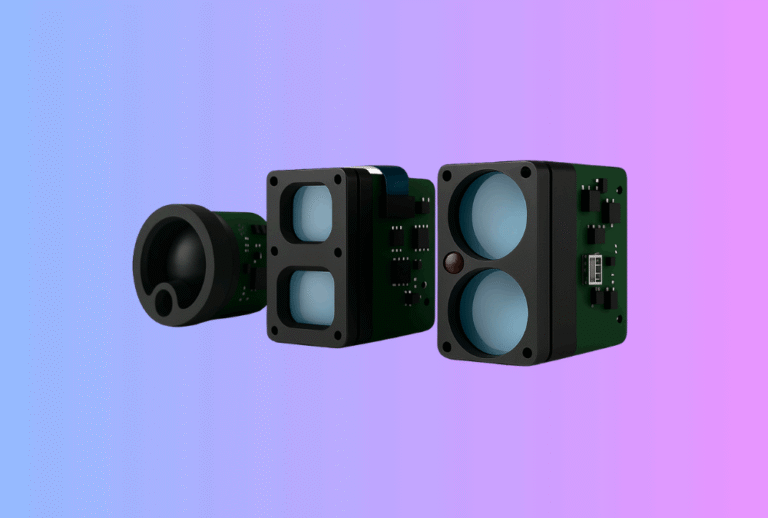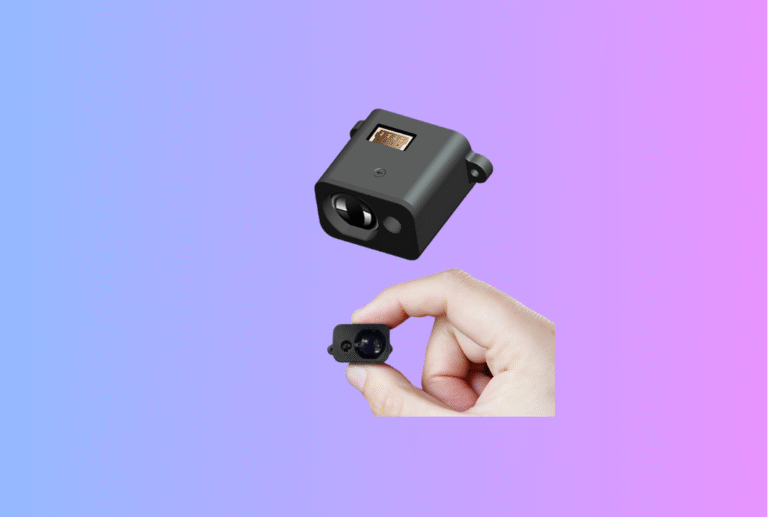
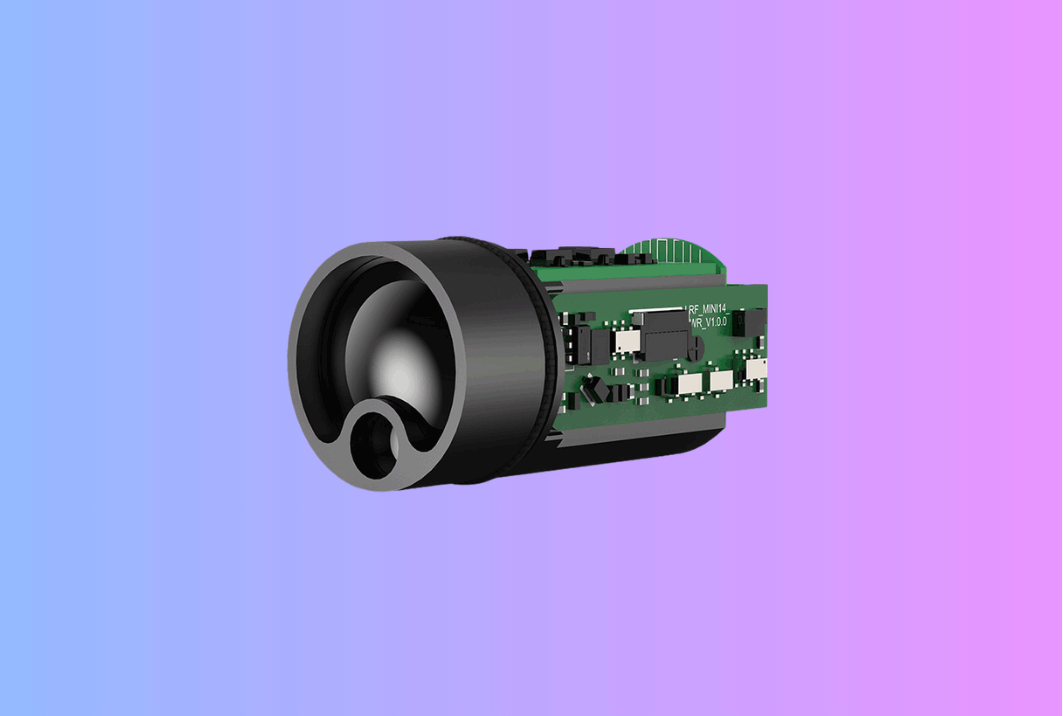
A laser rangefinder module supplier deviation and waiver control guide is one of the most useful B2B control documents an OEM team can build, because many production problems do not begin with a full design change. They begin with an exception. A supplier may ask to ship a lot with a temporary label difference, a substituted noncritical material, a cosmetic issue, a process gap, a dimensional feature near the edge of tolerance, a firmware loading note, or a packaging difference. None of these cases automatically means the lot must be rejected. But none of them should move forward casually either. In serious OEM work, the real risk often comes not from the deviation itself, but from how poorly the exception is defined, reviewed, approved, limited, and traced.
Table of Contents
ToggleThat is why deviation and waiver control matter so much in laser rangefinder module programs. A laser rangefinder module is rarely a simple generic part. It usually sits inside a controlled product architecture with front-window assumptions, host-interface timing, alignment relationships, environmental expectations, service logic, and revision boundaries. A deviation that looks small at incoming inspection may later affect production stability, outgoing confidence, or field diagnosis if the project does not know exactly what was accepted, why it was accepted, and where it was used.
This is also why deviation control should not be confused with flexible cooperation. Good suppliers do not prove responsiveness by asking the customer to “please accept this one time” without structure. Mature suppliers prove responsiveness by presenting a clear deviation description, a risk basis, a proposed containment scope, and an explicit expiration boundary. On the OEM side, mature factories do not approve exceptions by intuition or urgency alone. They evaluate whether the deviation touches fit, form, function, interface, traceability, serviceability, or future control. If the answer is clear, the project stays stable. If the answer is vague, small exceptions accumulate into hidden drift.
Why exceptions need control
Most real manufacturing systems produce exceptions. Materials arrive late. Labels are misprinted. Packaging formats change. A secondary source enters temporarily. A process record is incomplete for one batch. A cosmetic variation appears that does not obviously affect performance. The practical question is not whether exceptions exist. The question is whether the organization controls them better than the exceptions control the organization.
This is especially important for laser rangefinder modules because the product often has narrow trust margins. A slight difference may not break the module, but it may still matter to the OEM program. A packaging change may alter contamination risk. A connector note may influence handling discipline. A firmware loading inconsistency may affect host readiness assumptions. A lot accepted without traceable deviation paperwork may later become impossible to separate from future field complaints. The result is not always immediate failure. More often, it is uncertainty.
That is why deviation control is really a system for protecting baseline trust. It prevents the project from drifting away from the approved product state one small informal exception at a time.
Deviation and waiver are not the same
The terms are often used loosely, but it is useful to separate them. A deviation usually refers to a known departure from the currently approved requirement before the product is fully accepted into the next stage. A waiver usually refers to permission to use or ship a known nonconforming or exceptional condition under defined limits. Different companies use different terminology, but the practical distinction is still useful: what is the exception, at what stage is it being recognized, and what exactly is being authorized?
For OEM teams, this distinction matters because it changes both the decision logic and the traceability logic. A deviation request may ask the customer to accept a temporary change in incoming condition or manufacturing documentation. A waiver may allow shipment of a specific lot that does not fully meet a standard requirement but is considered acceptable within clear boundaries. In both cases, the project should know what is being accepted, who approved it, for how long, and under what restriction.
The important point is not which term a company prefers. The important point is that exceptions should not remain informal. Once an exception is known, it should either be rejected, corrected, or accepted under controlled terms.
Not every deviation deserves the same response
One of the biggest mistakes in exception management is treating all deviations as equally severe or equally harmless. In practice, a mature OEM team should sort them by impact.
Some deviations are administrative. A document format may have changed while the physical lot remains fully aligned to the approved baseline. Some deviations are cosmetic and low risk. Some are process-related but still relevant to traceability. Some touch packaging and therefore may influence handling or contamination. Others affect mechanical, optical, electrical, firmware, or interface behavior directly and therefore deserve much deeper review. The strongest system is not the one that rejects everything. It is the one that classifies correctly.
This matters because overreaction is expensive, but underreaction is usually more expensive later. If every minor label formatting issue becomes a crisis, the factory wastes time. If every meaningful difference is waved through under delivery pressure, the factory accumulates future instability. Good deviation control protects both flow and discipline by separating the two.
First define the baseline
A deviation can only be judged against a clear baseline. If the project does not know exactly what the currently approved module state is, then it cannot decide intelligently whether a supplier request is a harmless exception or the start of uncontrolled drift.
That means the OEM team must begin with baseline clarity. Which hardware revision is active? Which firmware state is expected? Which drawings, labels, packaging rules, test logic, and incoming assumptions are officially current? Which parts of the baseline are critical and which are informational? If those answers are weak, deviation review becomes political rather than technical. Teams start arguing based on memory or urgency instead of based on controlled product definition.
This is why the topic connects directly to the Laser Rangefinder Module Documentation Pack for OEM Projects and the Laser Rangefinder Module Change Control and PCN Guide. Deviation control only works when the normal state is already well defined.
Ask what the deviation touches
A useful deviation review does not stop at the supplier’s description of the exception. It asks what the deviation touches in real project terms.
Does it touch fit? Does it touch mounting repeatability? Does it touch front-end cleanliness? Does it touch labeling and traceability? Does it touch startup timing, interface behavior, or firmware consistency? Does it touch packaging protection, contamination risk, or moisture exposure? Does it touch outgoing test assumptions? Does it create ambiguity for service later? These are the questions that reveal whether the deviation is truly minor or simply not yet fully interpreted.
This is especially important for laser rangefinder modules because apparently small differences can propagate. A packaging deviation may later affect optics. A connector handling exception may later affect interface reliability. A labeling deviation may later damage field traceability. The deviation request should therefore be interpreted through the whole product lifecycle, not only through the supplier’s immediate shipping perspective.
Temporary is not the same as harmless
Many supplier deviation requests are framed as temporary. That can be true and still not be sufficient. A temporary exception can still create permanent confusion if the scope, lot identity, expiration point, and downstream handling are not controlled tightly.
This is one of the reasons deviation approvals should always include a time or quantity boundary. Which lot numbers are covered? What shipment dates are included? Does the approval apply only once, only to one PO, only to one incoming batch, or until a defined corrective action closes? If that limit is not explicit, the exception tends to linger. Temporary becomes habitual, and habitual exceptions slowly rewrite the baseline without formal change control.
For OEM teams, this is one of the clearest warning signs of weak discipline: the same type of “temporary” supplier request appears again and again without forcing either correction or formal revision change. At that point, the project is no longer managing deviations. It is normalizing them.
A deviation is not a shortcut around PCN
One of the most important boundaries in this topic is the line between a temporary controlled exception and a real product change. If a deviation starts affecting the actual released product state in a repeatable or ongoing way, then the issue may no longer belong inside waiver logic. It may belong inside formal change control.
This matters because some organizations let repeated deviations function as an unofficial PCN path. Instead of issuing a controlled revision update, the supplier keeps requesting acceptance for the same difference lot after lot. That can be convenient in the short term, but it weakens the whole product-control system. The customer ends up supporting a changed product without ever receiving proper revision clarity.
For laser rangefinder module programs, this boundary is especially important. Anything that touches interface behavior, optical assumptions, mechanical repeatability, outgoing test meaning, or traceability identity should be watched carefully. A deviation may be acceptable once under controlled risk. The same condition repeating over time may indicate that the baseline itself has changed and should be managed formally.
Good supplier requests are specific
A useful supplier deviation request should be clear enough that the OEM team can make a real decision. At minimum, the request should identify the affected item, the exact difference from the approved baseline, the cause, the lot or quantity scope, the proposed containment, the known risk assessment, and the requested duration or expiration condition.
Weak requests are usually vague. They say the issue is minor, cosmetic, temporary, or equivalent, but they do not explain enough for the customer to judge. Strong requests are practical. They show respect for the customer’s need to protect configuration control. They also make it easier for the OEM factory to approve lower-risk exceptions quickly because the decision basis is already structured.
This is one area where supplier maturity becomes very visible. A supplier that consistently submits vague deviation requests is indirectly shifting risk evaluation effort onto the customer. A supplier that provides clear impact framing is acting more like a real OEM partner.
Good OEM review is cross-functional
A deviation decision should not be made only by whoever feels the most schedule pressure. In a strong OEM program, the review is cross-functional enough to reflect the actual risk. The right participants vary by case, but quality, engineering, manufacturing, and sometimes sourcing or service should be involved when the deviation touches their boundaries.
For example, an incoming label issue may be mainly a quality and traceability question. A firmware-load inconsistency may require engineering review. A packaging deviation may need manufacturing and optics-awareness input. A connector substitution may deserve electrical and service review. The goal is not to create bureaucracy. The goal is to make sure the decision reflects the actual product impact rather than only the shipping urgency.
This is especially useful because many deviations appear small when viewed from one department only. Cross-functional review helps reveal whether the exception is truly local or likely to create problems later in another part of the lifecycle.
Use accept, hold, or reject clearly
A good deviation system usually resolves into clear operational outcomes. The lot is accepted as-is under controlled deviation approval. It is held pending more data or deeper review. Or it is rejected / returned / reworked before entry into the next stage. Ambiguous middle states are dangerous if they are not tightly documented.
This matters because production pressure often encourages fuzzy behavior. A lot is “temporarily okay,” “probably fine,” or “can go first and we will confirm later.” Those phrases usually signal a control gap. If the organization believes the risk is acceptable, it should approve under explicit terms. If it does not, it should hold or reject. Operating in a gray zone weakens traceability and creates later arguments about whether the lot was really authorized.
For laser rangefinder modules, this clarity is especially important because subtle differences may not cause immediate line failure. If the decision is not explicit, the lot may disappear into production before the organization has truly decided what it thinks about the risk.
Trace every approved exception
Any approved deviation or waiver should be traceable to the affected material, lots, build windows, and where necessary finished-goods population. This is not just paperwork. It is future problem prevention.
If the approved lot later becomes relevant in a field issue, service case, or supplier discussion, the OEM team should be able to answer simple but important questions. Which modules were covered by the exception? Which assemblies consumed them? Which customer shipments may contain them? Was the issue a one-time event or part of a broader pattern? Without this traceability, even a responsibly approved deviation becomes much harder to manage later.
This is one reason deviation control belongs close to incoming inspection and production traceability rather than sitting only inside supplier email history. The organization needs the exception to remain visible after the material moves.
Deviations should connect to incoming inspection
A mature OEM factory should not separate deviation control from incoming inspection. In practice, many supplier deviations show up first at receiving. If incoming inspection has no clear link to deviation and waiver logic, then the receiving team is forced to improvise. It either blocks too much or lets too much through.
That is why deviation rules should be reflected in the incoming process. If a lot arrives with a known approved deviation, receiving should know how to identify it, record it, segregate it if needed, and release it correctly. If a lot arrives with an unannounced difference, receiving should know when to hold and escalate instead of quietly passing it forward.
This is a major reason the current topic fits directly after the Laser Rangefinder Module Incoming Inspection Checklist. Receiving is one of the main places where deviation control either becomes real or collapses.
Deviations should connect to production handover
Some supplier deviations are safe only because the production line knows how to treat them. For example, a packaging exception may be acceptable if handling is tightened. A temporary label difference may be acceptable if the line keeps traceability intact. A limited cosmetic issue may be acceptable if the affected modules are routed through a defined build path and not mixed blindly. In those cases, production handover and deviation control need to align.
If they do not, the approved exception may be technically reasonable at the desk and still become messy on the line. The CM or factory may not know what was approved, why it was approved, or what special handling is required. That gap is where “controlled deviation” becomes “uncontrolled variation.”
This is one reason the topic also links to the Laser Rangefinder Module Production Handover Guide. A production handover package should support deviation handling instead of pretending the factory will only ever see perfect lots.
Define expiry
Every approved deviation should end somewhere. It should expire by quantity, by date, by lot, by shipment, or by corrective-action closure. If it has no end point, it is not really a deviation approval. It is hidden baseline drift.
This point deserves emphasis because it is one of the most common discipline failures in real projects. The first time an exception is approved, everyone remembers it is temporary. Six months later, the same condition appears again, and nobody is completely sure whether it is still covered. The organization then runs on memory instead of control.
A stronger system defines expiry in writing and closes the loop. When the deviation expires, either the condition disappears, or the product enters formal change-control logic. That boundary protects the baseline.
Track recurrence
A single approved deviation may be reasonable. Repeated deviations of the same type should trigger management attention. Recurrence often indicates a deeper supplier control weakness, an unrealistic baseline, a packaging problem, a documentation problem, or a product definition that needs formal update.
For laser rangefinder module programs, recurrence is especially important because subtle repeated exceptions can slowly change the effective product population without any one event looking severe enough to trigger alarm. By the time the drift becomes obvious, the organization may already have multiple lots, mixed assumptions, and weak service clarity.
That is why deviation systems should not only record approvals. They should also support pattern review. Which suppliers request the same type of exception repeatedly? Which lots keep arriving with borderline packaging or label issues? Which “temporary” conditions are trying to become permanent? Those patterns are quality signals, not only administrative history.
Protect service and spare logic
Approved deviations do not disappear after production. They can affect service and spare planning later. If an exceptional lot enters field product, then the service team may eventually need to know that the fielded unit came from a deviation-controlled batch. If a deviation touched revision identity, labeling, interface behavior, or packaging state, it may also matter when later service stock or returned units are evaluated.
This is why a mature deviation system does not stop at receiving and build release. It preserves enough visibility for downstream service and lifecycle logic to stay clear. Otherwise, an exception that seemed harmless at shipment can become confusing when the field population ages and mixed histories begin to matter.
That is one reason the topic connects naturally to the Laser Rangefinder Module Service Spares Guide and the Laser Rangefinder Module Failure Analysis Guide. Temporary exceptions can have long tails.
What buyers should ask
An OEM buyer or factory quality team evaluating supplier discipline should ask more than whether a supplier is “flexible.” Useful questions include these. How are supplier deviation requests formatted? What information must be included? Who approves exceptions, and on what basis? How are approved deviations tied to lot traceability? What kinds of exceptions are never accepted? When does a repeated deviation become a formal change issue? How does incoming inspection recognize approved exceptions? How are deviation histories reviewed for recurrence?
These questions are powerful because they reveal whether the supplier and OEM are managing reality or merely reacting to it.
Review table
| Review area | What the OEM team should confirm | Why it matters |
|---|---|---|
| Baseline clarity | The approved state is defined before judging exceptions | A weak baseline makes every deviation subjective |
| Deviation scope | The exact difference, lot, cause, and duration are stated | Vague exceptions create future confusion |
| Impact review | The team knows what the deviation touches in product terms | Small differences can have large downstream effects |
| Decision path | Accept, hold, or reject logic is explicit | Ambiguous approval is weak control |
| Traceability | Approved exceptions stay linked to lots and builds | Future field analysis depends on visibility |
| Expiry and recurrence | Deviations end clearly and repeated cases are reviewed | Temporary exceptions should not become hidden change |
| Production linkage | Receiving and line teams know how to handle approved exceptions | Approval on paper must translate into control in use |
This kind of structure helps the organization keep deviations temporary, visible, and proportional.
Final thought
A laser rangefinder module supplier deviation and waiver control guide is really a guide to disciplined exception handling. It explains why not every nonconformance deserves rejection, why not every “minor issue” deserves approval, and why strong OEM programs protect the baseline by making exceptions visible, limited, and traceable.
For suppliers, this is a chance to show maturity through clarity rather than through pressure. For OEM factories, it is a practical way to keep flow moving without surrendering control. And for the project as a whole, it is one of the clearest examples of how quality discipline is not the refusal of reality. It is the controlled management of reality.
FAQ
Is every supplier deviation a reason to reject the lot?
No. Some deviations are low risk and can be accepted under controlled limits. The key is that the exception must be defined, reviewed, approved, and traced clearly.
What is the biggest risk of weak waiver control?
Small exceptions accumulate into hidden baseline drift. The project slowly changes without formal change control or clear field traceability.
Should temporary supplier deviations have an expiry point?
Yes. They should expire by lot, quantity, date, or corrective-action closure. Without an end point, temporary approval becomes uncontrolled normalization.
When does a repeated deviation become a change-control issue?
When the same type of exception keeps recurring, especially if it touches released product state, traceability, interface behavior, or production assumptions. At that point it may no longer be a temporary case.
CTA
If your OEM factory needs a stronger way to control laser rangefinder module supplier deviations, temporary waivers, and exception traceability before lots enter production, you can discuss your application with our contact page.
Related articles
You may also want to read:
- Laser Rangefinder Module Incoming Inspection Checklist
- Laser Rangefinder Module Change Control Guide
- Laser Rangefinder Module Production Handover Guide
- Laser Rangefinder Module Service Spares Guide