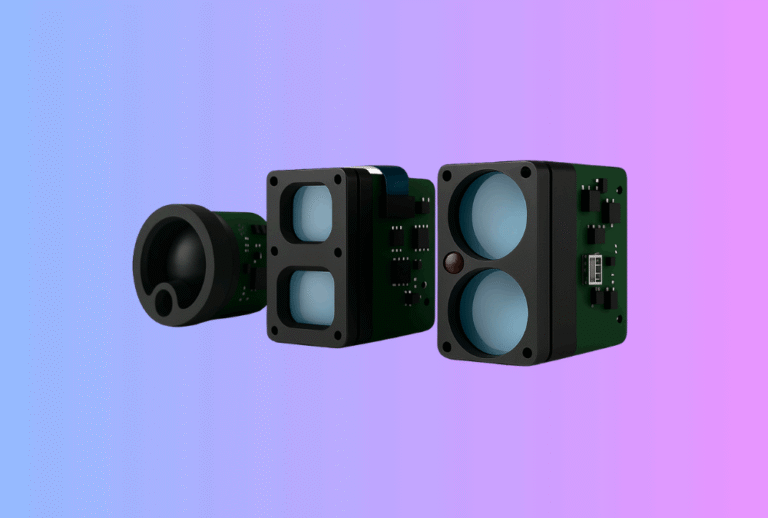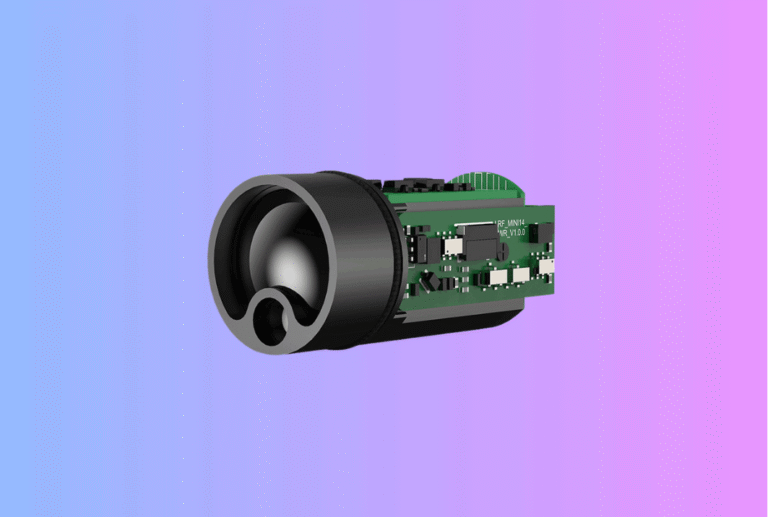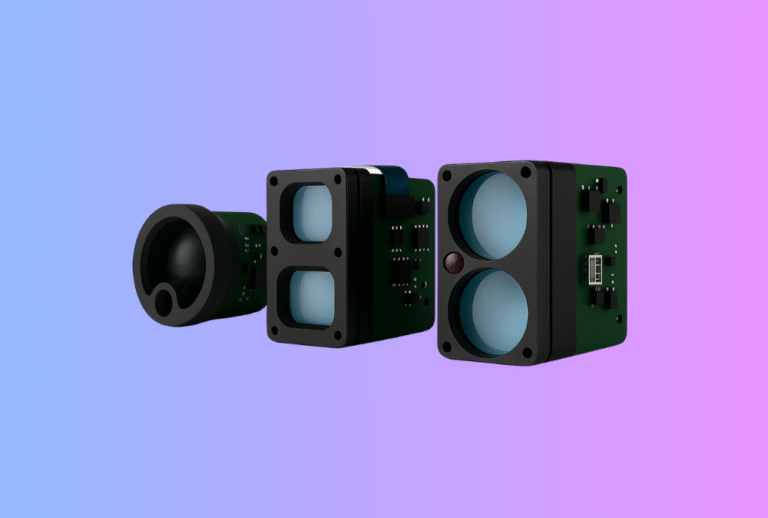

The fastest path to reliable FPV ranging is a disciplined NPI with unambiguous gate criteria. This playbook shows OEM/ODM teams how to structure EVT/DVT/PVT, document Class‑1 eye safety, and keep HUD telemetry stable while hitting commercial dates.
Table of Contents
ToggleExecutive Summary
-
Tie every gate to testable artifacts: interface contract, acceptance scripts, Class‑1 evidence, golden sample with calibration traceability.
-
Standardize telemetry fields—confidence and n_returns—and promise message‑level compatibility across minor firmware releases to avoid HUD regressions.
-
Bake IEC/EN 60825‑1 Class 1 and CE/FCC into DVT so customs and public demos don’t slip launch windows.
-
Protect long‑lead optics/lasers with a 13‑week rolling forecast and capacity reservation; enforce PCN/ECO governance from MP.
-
Measure ROI with TTFR (time‑to‑first‑range), DVT pass rate, NFF rate, and yield; these predict distributor readiness and support cost.
Use Cases & Buyer Scenarios
FPV airframe OEMs planning a family release
You will reuse one Laser Rangefinder Module across multiple airframes. NPI must guarantee a stable message map and identical HUD behavior, even when optics diverge or enclosures change.
Gimbal/payload brands bundling a range‑assist kit
You package the module, harness, and a MAVLink bridge so integrators publish range immediately—no driver authoring. A crisp EVT→DVT path shortens time from evaluation kit to channel SKU.
Industrial/security integrators with field SLAs
You care about acceptance, uptime, and safe public demos. Align DVT with EN 60825‑1 evidence and U.S. Remote ID norms so flight approvals and insurance add‑ons clear faster.
Spec & Selection Guide
At selection, buyers weigh eye safety, optics, interface stability, and environmental margin more than raw “max range.”
| Spec factor | What it is | Why it matters | Buyer tip |
|---|---|---|---|
| Eye‑safety class | IEC/EN 60825‑1 classification | Public demos, imports, liability | Prefer Class‑1 under worst‑case; request rationale + test IDs/evidence. |
| Optics divergence & aperture | Beam spread and receiver area | Range vs clutter; HUD jitter | Tight divergence for landing aids; wider for “obstacle bubble.” |
| Telemetry interface | UART, CAN, MAVLink | Toolchain & log compatibility | If your stack is MAVLink‑centric, choose MAVLink‑native or a maintained bridge. |
| Firmware fields | confidence, n_returns, status bits | HUD stability; QA thresholds | Standardize fields & thresholds in the TDP; version them. |
| Environmental envelope | Temp, IP, vibration | Mission availability | Lock at DVT; avoid late IP/thermal changes. |
| Compliance docs | CE/FCC/RoHS + Class‑1 pack | Customs & channel onboarding | Keep DoCs and change‑control with the TDP for auditors. |
Mini decision flow
-
If your HUD pipeline is MAVLink → pick MAVLink build → verify v2↔v1 parsing in mixed fleets → freeze at DVT.
-
If you demo in public → require Class‑1 evidence + field SOPs (covers, crowd distance) → attach to DVT exit.
-
If ops are all‑weather → demand temperature & IP margins at DVT → validate via SAT scripts before PVT.
Integration & Engineering Notes
Electrical & Interfaces
Write the interface contract like a test: pinout, power profile, timing (PPS/TIMESYNC if you plan fusion), and the exact message map. MAVLink is designed for resource/bandwidth‑constrained links and v2 is backward‑compatible with v1—use that to avoid brittle custom payloads.
Optics & Mechanics (mounting, alignment, sealing)
Key a mechanical datum and include a printable bench fixture to remove angular drift. Validate thermal paths and any potting/coating that could shift calibration. Finalize torque specs and fastener callouts so distributors can service units consistently.
Firmware/ISP/Tuning
Expose confidence and n_returns; debounce range gates near reflective clutter. Promise message‑level compatibility for N minor releases; ship a rollback tool and human‑readable release notes.
Testing & Validation (bench → field → line)
-
EVT: viability—bench cards + short sorties; HUD jitter tamed, EMI tolerances known.
-
DVT: reliability—three scripted scenes (approach/hover, landing assist, obstacle bubble); data pack = logs + short clips + CSV per unit.
-
PVT/MP: line & docs—golden sample, OQC sheet, traceability; packaging/label proofs for neutral or co‑brand.
Compliance, Export & Certifications
-
Eye safety: Design/classify to Class‑1 with documented assumptions; align to EN 60825‑1:2014 + A11:2021 for EU harmonization.
-
EMC/Radio: Maintain routing/grounding notes and reference test setups for CE/FCC.
-
Operations (U.S.): Understand Remote ID applicability and timing; plan demos accordingly.
-
Export & origin: Provide HS codes/origin statements early; avoid last‑minute customs holds.
Compliance notes can live beside your Laser Rangefinder Module docs.
Business Model, MOQ & Lead Time
-
MOQ & lead time: common bands 50/100/300/1000; standard variants ~4–6 weeks ARO post‑PVT; custom optics/enclosures need NRE and higher MOQs.
-
Private label & kits: neutral label/co‑brand; kit SKUs include harness, fasteners, quick‑start, and evaluation‑credit toward PO.
-
Capacity reservation: refundable/creditable deposits for long‑lead optics/lasers.
-
Illustrative distributor ROI
| Assumption | Value |
| Buy price per kit | $xxx |
| Channel MSRP | $yyy |
| Gross spread | $yyy − $xxx |
| Yearly turns | n |
| Annual gross margin | units × n × spread |
Cross‑sell: where payload kits intersect ground optics, consider Thermal Monoculars, Thermal Binoculars, or Thermal Clip‑On Sight.
Pitfalls, Benchmarks & QA
-
Dates without gates: publish criteria (HUD jitter, TTFR, EMI tolerance) or the schedule will slip.
-
Late IP/thermal changes: freeze at DVT or re‑calibrate at scale.
-
Unversioned message maps: adopt semantic versioning and a compatibility promise.
-
Weak traceability: tie serials to calibration evidence; it shortens RMAs and kills NFF loops.
-
Demo risk ignored: Class‑1 evidence + SOPs avoid venue/insurance escalations.
-
No forecast discipline: without a 13‑week forecast and M‑1 lock, optics shortages will set your calendar—not you.
-
Benchmarking: publish detection vs recognition behavior vs divergence; include methodology so buyers compare apples to apples.
FAQs
1) How long should our NPI take
A practical cadence is 12+ weeks: Discovery/NDA (0–1), Feasibility/quote (1–2), EVT (2–4), field trials (4–6), DVT (6–9), PVT (9–12), MP (12+).
2) Do we need MAVLink or is UART/CAN enough
If your flight stack and logs are MAVLink‑centric, pick a MAVLink build or a maintained bridge; v2 remains backward‑compatible with v1 in mixed fleets.
3) What Class‑1 documents will customs or venues ask for
Classification rationale, accessible emission limit references, and a safe‑use statement (covers, crowd distance) aligned to EN 60825‑1/A11.
4) What goes into the evaluation kit
A tuned FPV Laser Rangefinder Module, harness, printable bench fixture (STL/DXF), quick‑start, and a lightweight app or ROS2/MAVLink bridge.
5) How do we avoid “no fault found” RMAs
Scripted acceptance tests, serial‑to‑calibration linkage, and a short evidence pack (logs + clip) before any return.
6) Will regulatory changes affect our timeline
Remote ID enforcement and site rules can affect demo ops and insurance; track FAA updates during DVT/PVT.
7) Can we combine thermal products in the same NPI
Yes—plan optics/thermal co‑validation and refer to the Thermal camera module page for fusion notes.
Ready to lock your NPI and launch windows
Request an evaluation kit, book a 30‑minute engineering consult, and download the gate checklist—we’ll freeze the interface contract, verify Class‑1, and exit DVT with distributor‑ready collateral in weeks.
→ Laser Rangefinder Module · Talk to an engineer · Download gate checklist