
Lead
If you sell FPV platforms internationally, your payload roadmap is your profit engine. This B2B guide shows how to stage a Thermal Imaging Module and Laser Rangefinder Module as add-ons—sequenced by customer value, export readiness, and channel velocity—so you can launch fast, upsell reliably, and protect margins.
Table of Contents
ToggleExecutive Summary
- Roadmap > one-off SKUs. Plan a ladder from “base FPV” → “thermal HUD” → “thermal + range overlay,” with clear gates for engineering, compliance, and channel content.
- Thermal first, range next. Market data shows sustained demand for thermal products and accelerating LiDAR adoption; sequencing thermal before rangefinder often shortens time-to-revenue.
- Export-ready from day one. Keep a standing pack: CE/FCC/RoHS; for the laser add-on, target IEC 60825-1 Class 1 and align US labels via FDA Laser Notice No. 56.
- Price architecture matters. Use tiered pricing, per-SKU MOQ, and optional capacity reservation to lock delivery without over-stocking.
- Make upgrades trivial. Same harness/SDK, same acceptance script; customers progress by swapping optics or enabling features—not by re-engineering.
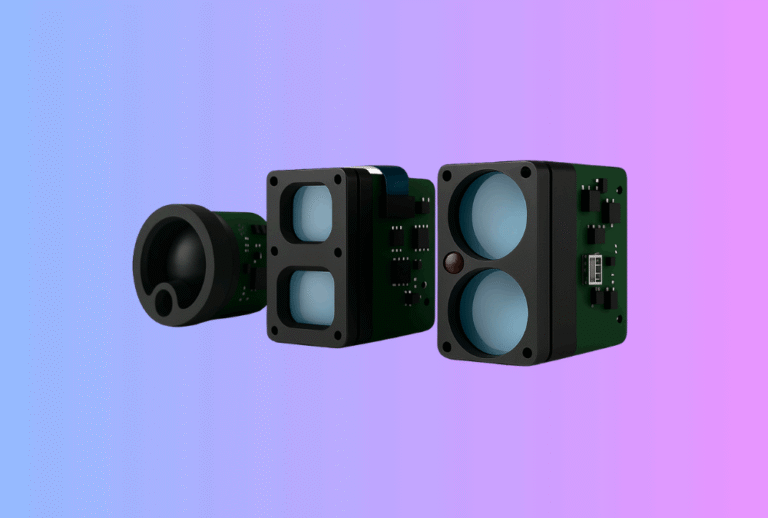
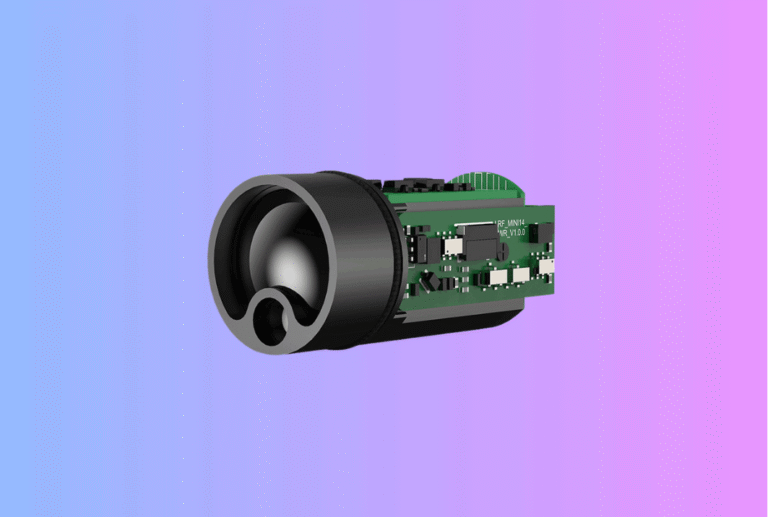
Explore base options on Thermal camera module and add distance with our Laser Rangefinder Module. Channel demo companions: Thermal Monoculars and Thermal Binoculars.
Use Cases & Buyer Scenarios
FPV inspection lines
Start with a thermal HUD to spot anomalies on roofs, lines, and façades; upsell the rangefinder for measured standoff and repeatable work orders.
Public safety and training fleets
Thermal helps detection; the range overlay adds landing distance and obstacle cueing. Standardized acceptance clips simplify program audits. NFPA 2400 offers a useful context for sUAS programs.
Distributors seeking fast listings
Bundles with Class 1 laser files and a light compliance pack get listed faster and reduce NFF returns.
Spec & Selection Guide (the heart)
How to structure a payload ladder without changing your airframe
- Tier 0 — Base FPV
Common power rail spec, spare UART/CAN, reserved space and mounting pattern for payloads, and SDK hooks fort_eventand metadata logging. - Tier 1 — Thermal HUD kit
Resolutions 256×192 / 384×288 / 640×512; NETD targets; lens FOV options (wide for search, narrow for inspect); frame-rate SKUs (≤9 Hz vs >9 Hz for export planning). Thermal demand is growing at ~7.3% CAGR through 2030. - Tier 2 — Thermal + Range overlay
905 nm vs 1550 nm (eye-safe power budget and weather retention), beam divergence (near-field vs standoff), PRF, confidence and multi-echo fields, IEC 60825-1 Class 1. LiDAR market growth supports long-term option value.
Comparison table—three payload rungs
| Roadmap rung | Thermal core | Rangefinder | Target missions | Interfaces | Compliance focus |
|---|---|---|---|---|---|
| Tier 0 Base | — | — | FPV baseline | UART/CAN ready | CE/FCC/RoHS baseline |
| Tier 1 Thermal HUD | 256–640 res, wide/med FOV | — | Search, patrol, training | UART + SDK | Export FR variant (≤9 Hz) |
| Tier 2 Thermal + Range | 384–640 res, med/narrow FOV | 905 or 1550 nm; divergence 0.5–5 mrad; PRF 2–15 kHz | Inspection, landing assist, standoff ops | CAN + UART; Ethernet optional | IEC 60825-1 Class 1, Laser Notice 56 |
Decision flow
If you need revenue in ≤90 days → ship Tier 1 Thermal HUD first
If customers ask for “measured standoff” or landing safety → add Tier 2 Range overlay
If venues are public or demos frequent → require Class 1 files in the quote pack
If you plan global sales → maintain EU dual-use notes and update quarterly
Integration & Engineering Notes
Electrical & Interfaces (UART/CAN/Ethernet/SDK)
-
Keep the harness common. One pinned harness for T1 and T2; rangefinder power isolated with LC filters; CAN for noisy frames (120 Ω ends).
-
Time base parity. Publish event-time for thermal frames and range hits to avoid HUD “swim.”
-
SDK continuity. Same fields across rungs:
t_event,range_m(T2),confidence,n_returns,supply_mv.
Optics & Mechanics (mounting, alignment, sealing)
-
Upgrade without re-drilling. Unify bolt patterns and boresight datums; reserve a clear aperture for both thermal and LRF.
-
Field alignment. Two-distance zero (near/far), with a 5-minute re-zero method post-impact.
Firmware/ISP/Tuning
-
Thermal presets. Search vs inspect AGC, palette lock, and small temporal windows to reduce lag.
-
Range overlays. Numeric distance + confidence bar; derate indicator if the laser reduces power to keep Class 1.
Testing & Validation (bench → field)
-
Bench: NETD/MTF checks; LRF accuracy at 5/25/75/120 m vs taped targets.
-
Weather lane: mist/spray comparison; 1550 nm often retains range better in fog/rain.
-
Acceptance: per-serial 10–20 s clip + CSV (thermal metadata +
range_m,confidence), reused across T1/T2.
Compliance, Export & Certifications
-
Laser safety: Classify to IEC 60825-1; for US, FDA Laser Notice No. 56 recognizes IEC for labeling—include label artwork and user warnings in the pack.
-
Dual-use/export: EU Regulation 2021/821 underpins dual-use rules; the EU has recently centralized and tightened elements of export control, so keep a one-pager in your quotes and review quarterly.
-
Program context: Agencies and training programs often reference NFPA 2400 for sUAS operations; aligning acceptance artifacts helps procurement.
If you plan a fused night kit, add internal links to Thermal Rifle Scopes or Thermal Clip-On Sight for demo optics references.
Business Model, MOQ & Lead Time (OEM/ODM)
-
Sampling cadence: T1 2–4 weeks; T2 4–6 weeks (custom divergence/1550-nm windows may extend).
-
MOQ per rung: T1 100–300 pcs; T2 100–300 pcs per wavelength/divergence mix.
-
Price architecture: bundle discount for T1→T2 upgrades; optional capacity reservation (retainer + commit/flex windows) to hold slots during LiDAR up-cycles.
-
Channel pack: CE/FCC/RoHS DoC; Class 1 laser file set (T2); spec sheets; product images; acceptance clip + CSV.
Mini rollout plan
| Quarter | Deliverable | Channel action | KPI |
|---|---|---|---|
| Q1 | T1 thermal HUD kit samples | Distributor training + demo videos | 2–3 weeks to listing |
| Q2 | T2 range overlay add-on | Joint webinar + case study | 20% attach rate |
| Q3 | Firmware update + SDK docs | Partner integrator workshop | <1% NFF returns |
Pitfalls, Benchmarks & QA
Five mistakes to avoid
-
Treating T2 as a new platform—keep harness/SDK common.
-
No event-time—thermal and range drift in the HUD.
-
Forgetting Class-1 labels—venue and insurer pushback.
-
Over-tight divergence for close-in FPV—creates near-field blind zones.
-
Missing acceptance artifacts—without a clip + CSV, RMA turns subjective.
Quarterly benchmarks
-
Time-to-listing per rung, forecast accuracy by 30/60/90-day buckets, attach rate T2→T1, acceptance pass rate, NFF return rate.
FAQs
1) Why not launch both rungs at once?
Splitting T1 and T2 lets you bank early revenue and proof points while the laser add-on clears Class-1 and export documentation.
2) Which wavelength should T2 start with?
905 nm for lightweight close-in cueing; 1550 nm for standoff and better fog/rain retention—plan both in the roadmap.
3) Can we keep one SDK across rungs?
Yes—design for t_event from day one; add range_m, confidence, n_returns when T2 is enabled.
4) What documentation speeds channel onboarding?
IEC 60825-1 classification + labels, CE/FCC/RoHS DoC, spec sheets, and per-serial acceptance clips.
5) How often should we update export notes?
Quarterly; EU guidance and powers evolve, so keep your one-pager fresh.
Share your airframe class, target ranges, and launch markets. We’ll return a two-rung payload plan—thermal HUD now, range overlay next—complete with harness map, SDK fields, Class-1 file set, acceptance scripts, and pricing tiers based on our Thermal camera module and Laser Rangefinder Module.