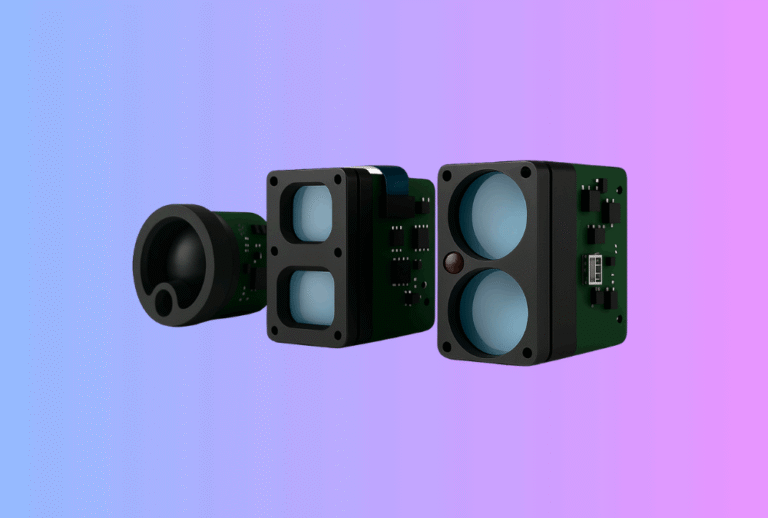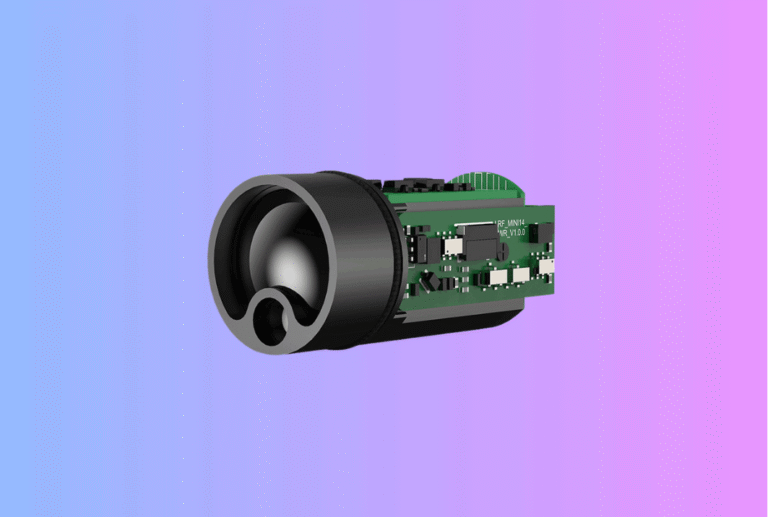
Private-label outdoor optics kits win shelf space when they solve real field tasks with minimal training and fast sell-through. Building your kits around a proven laser rangefinder module lets you package binoculars or monoculars with distance confidence, clean Class 1 eye safety, and a merchandising story retailers can explain in 30 seconds. This playbook shows outdoor distributors how to specify, assemble, and scale private-label kits that feel premium but stay operationally simple.
Table of Contents
ToggleExecutive Summary
Distributors succeed when a kit is both technically credible and easy to retail. Start with a Class 1 module aligned to IEC 60825-1 Ed.3 (recognized by the FDA via Laser Notice No. 56) so safety labeling and manuals are harmonized across regions. Build the optical stack so beam divergence and receiver FOV favor quick, reliable ranging for hikers, hunters, and land managers—not just bench specs. Anchor the commercial case in macro demand: outdoor participation in the U.S. hit 175.8 M people in 2023, a record high, while binocular demand remains steady globally with a ~4.6% CAGR through the early 2030s; golf rangefinders alone were US$161.2 M in 2024 with continued growth—evidence that distance tools aren’t niche add-ons anymore.
Use Cases & Buyer Scenarios
Trail and fieldwork kits for outdoor retailers
These kits target hikers, rangers, and ranchers who need distance quickly while carrying light. A compact optic plus an integrated laser rangefinder module avoids app dependency and works in bright sun. The story on the hangtag is simple: “Know range instantly; decide faster.” Pair with a quick-start card, not a thick manual.
Related page for technical core: Laser Rangefinder Module (serial control, confidence output, sample scripts).
Hunting-ready combos for specialty shops
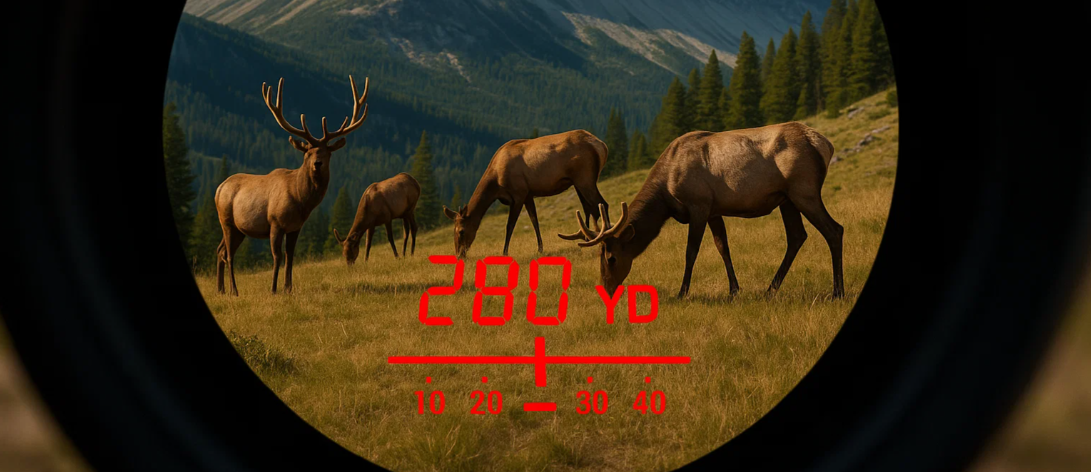
Binocular or monocular kits positioned for pre-shot ranging must survive rain, dust, and cold starts. Keep the UI calm: a crisp reticle, a stable number, a discreet haptic. If your distribution already carries thermal lines, use the kit to funnel traffic to higher-margin night packages without over-complicating the base SKU.
Cross-sell observation at dusk: Thermal Monoculars.
For advanced users later in the ladder: Thermal Rifle Scopes.
Course & property kits for golf, resorts, and land management
Resort shops and course maintenance crews need distance tools all day, often in bright sun and wind. A kit with distance-only mode respects competition rules where applicable and keeps training short. If you build a golf-focused bundle later, remember the Local Rule: when in effect, DMDs must measure distance only.
Spec & Selection Guide (the heart)
Private-label succeeds when the module choice matches real users, not just datasheets. In far-field terms, beam divergence (mrad, H×V) governs how your spot grows with distance and how much background you “paint.” For all-purpose outdoor kits, slightly asymmetric beams (forgiving vertical axis) read steadier in hand-held scans. The receiver FOV should envelope the beam at practical ranges; if it’s much wider, brush or tree trunks dominate returns; if too tight, novices “fall off” the sensing cone.
On the safety side, insist on Class 1 documentation aligned to IEC 60825-1 Ed.3 under FDA Laser Notice 56 for the U.S.—that means a real AEL worksheet, label art, and a safety chapter that matches the shipped device, not a generic template.
A compact comparison (illustrative, kit-level targets to brief suppliers):
| Parameter | Trail/Field Kit | Hunt-Focused Kit | Resort/Property Kit |
|---|---|---|---|
| Module / Class | 905 nm / Class 1 | 905 or ~1550 nm / Class 1 | 905 nm / Class 1 |
| Beam divergence (full-angle) | ~2.5 × 1.5 mrad | ~2.0 × 1.2 mrad | ~2.2 × 1.2 mrad |
| Receiver FOV (approx.) | ≤3–4 mrad | ≤2–3 mrad | ≤3 mrad |
| Scan feel | 8–10 Hz, stable | 10–12 Hz, haptic confirm | 10–12 Hz, bright-sun friendly |
| Typical range window | 50–600 m | 50–800 m (open ground) | 30–500 m, fast lock |
Read the table narratively: trail users need forgiveness and readability; hunters accept a slightly tighter beam for isolation; property crews need “always works at noon” behavior and long battery life. For brands with thermal offerings, lens coatings, baffling, and HUD legibility habits from imaging products carry over directly; see Thermal camera module for pipeline discipline that keeps UI latency predictable.
Integration & Engineering Notes
Electrical & interfaces
Distributors don’t need a science project; they need kitted reliability. Choose a core with UART control for modes and returns, USB for logs and firmware, and a concise SDK that surfaces confidence with distance. Keep end-to-end scan latency under 100 ms so numbers feel instantaneous when users are walking, glassing, or panning.
Optics & mechanics
A simple alignment jig that images the spot at two distances pays for itself quickly. Specify AR-coated windows, internal stray-light control, and gaskets for IPX4–6. If your kit includes a magnet mount or belt clip, design so repeated attachment never creeps the optical stack. Ruggedization habits from recoil-rated products (torque specs, threadlocker choices, adhesive stackups) reduce warranty calls; our Thermal Clip-On Sight notes are a useful reference.
Firmware & UX
Make the ranging loop act like a calm guide. When multiple returns exist, prefer the closest stable cluster but ask for brief consistency before confirming. Let low-battery mode tighten thresholds rather than display jumpy numbers. In golf-adjacent deployments, provide a distance-only state that is obvious at boot and persistent—exactly what committees expect under the Local Rule.
Testing & validation
Bench-measure divergence with two-distance NIR imaging; publish whether you report 1/e² or FWHM and stick to full-angle throughout your docs. In the field, test open terrain, tree line, and urban backdrops; log lock rate, mean lock time, and false-lock rate at practical ranges. The point of kitting is predictability, so keep the test card short and repeatable across vendors.
Compliance, Export & Certifications
For private-label, compliance must be portable across accounts and borders. Your LRF documentation pack should include Class 1 justification to IEC 60825-1, label art, and a user-manual safety chapter; this aligns with FDA policy via Laser Notice No. 56 and prevents copy errors when retailers request custom packaging. Add CE/FCC for the digital hardware and RoHS for substances. As you extend into golf outlets or resort stores, remember that tournament play and some club policies restrict features: distance is fine; conditions like slope and wind are not when the Local Rule is in effect—make this obvious in the quick-start leaflet.
Business Model, MOQ & Kit Architecture
Distributors care about turns, margin, and returns. A modular architecture lets you reuse the same laser rangefinder module across a family of outdoor optics—compact monocular kits for trail shops, larger binocular kits for specialty retailers, and a golf-friendly bundle for resort stores. Market context supports conservative growth assumptions: the global binocular market is projected to rise from US$1.14 B (2024) to ~US$1.63 B by 2032, while golf rangefinders are expected to grow from US$161.2 M (2024) to ~US$277 M by 2033. The broader outdoor category has a healthy top-of-funnel: 175.8 M U.S. participants in 2023. Use those numbers to justify endcaps and preseason commitments.
A simple, defensible ROI card (example for a national retailer):
| Assumption | Value |
|---|---|
| Ex-works (kit) | US$129 |
| MSRP / Typical street | US$279 / US$249 |
| Distributor gross | ~US$120 |
| Sell-through | 30 kits/store/season |
| Store count / season | 40 / 26 weeks |
| Gross margin / season | US$144,000 |
Document what’s inside the box—optic with integrated LRF, battery/charger or CR2, soft case, belt clip/magnet mount, microfiber, quick-start, safety insert—so replenishment planners know exactly what to re-order and returns teams can process fast.
Pitfalls, Benchmarks & QA
The quiet killer in private-label is spec drift. Mixing half-angle vs full-angle divergence, or swapping emitter/coatings without re-verifying the AEL math, leads to mismatched labels and rework. Equally common: aiming for “spec sheet tight” beams that feel twitchy in hand-held scan. Keep vertical divergence slightly forgiving, and spend time on receiver baffling—small optical decisions do more for noon-sun stability than late algorithmic tweaks. Finally, if you sell into golf channels, write an explicit distance-only instruction with a screenshot; committees and shop staff will repeat those exact sentences to consumers.
FAQs
Do kits need ~1550 nm to be safe?
No. Class 1 is fully achievable at 905 nm with the right optics and AEL budgeting. Choose wavelength for system trade-offs; build eye-safety from the IEC math and label accordingly.
What beam divergence feels best for general outdoor users?
For hand-held scanning, many programs settle near ~2.2–2.8 × 1.2–1.6 mrad (full-angle), then size receiver FOV to just envelope the spot at typical ranges. Measure at two distances and use the same definition across vendors.
How do I keep returns low?
Ship a one-page quick-start that explains when to trust the reading (confidence icon), how to toggle distance-only (if sold into golf channels), and how to clean the window. Predictable behavior beats feature lists.
Can kits cross-sell into night products without confusing buyers?
Yes—position the LRF kit as the daytime baseline, and point interested users to thermal observation or thermal riflescopes as step-ups. Keep the daytime UX simple and the upgrade path obvious: Thermal Monoculars and Thermal Rifle Scopes.
Call-to-Action
Ready to build outdoor optics kits that range fast, read clean at noon, and ship with Class 1 confidence? We can help you choose the right laser rangefinder module, tune divergence/FOV for real users, and assemble a compliance pack that travels well across retailers and countries.
Start here: Laser Rangefinder Module
Explore night-friendly step-ups: Thermal Monoculars · Thermal camera module · Thermal Clip-On Sight
Sources
-
FDA — Laser Products: Conformance with IEC 60825-1 Ed.3 (Laser Notice No. 56), 2023. U.S. Food and Drug Administration
-
USGA/R&A — Joint Statement on Electronic Devices (distance-only under Local Rule). USGA
-
Outdoor Foundation — Outdoor Participation Trends Report 2024: 175.8 M U.S. participants. 户外休闲办公室
-
Fortune Business Insights — Binoculars Market Size 2024–2032 (US$1.14 B → US$1.63 B; 4.69% CAGR). Fortune Business Insights
-
IMARC Group — Golf Rangefinder Market (US$161.2 M in 2024; to US$277 M by 2033). IMARC Group