Table of Contents
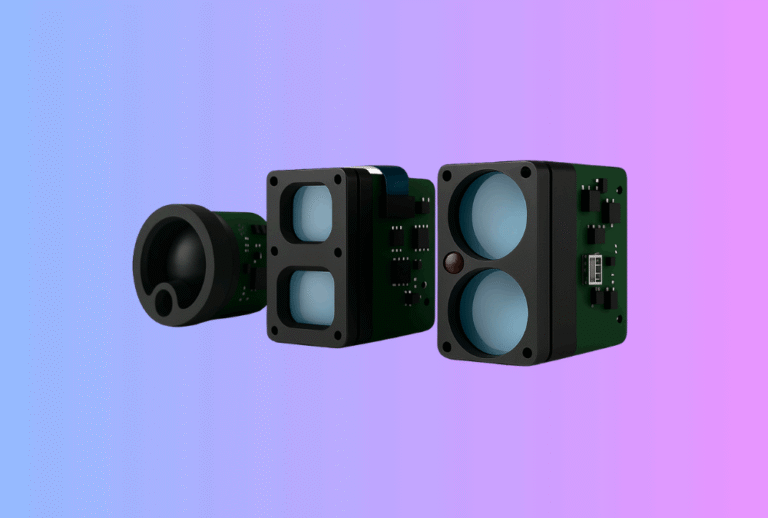
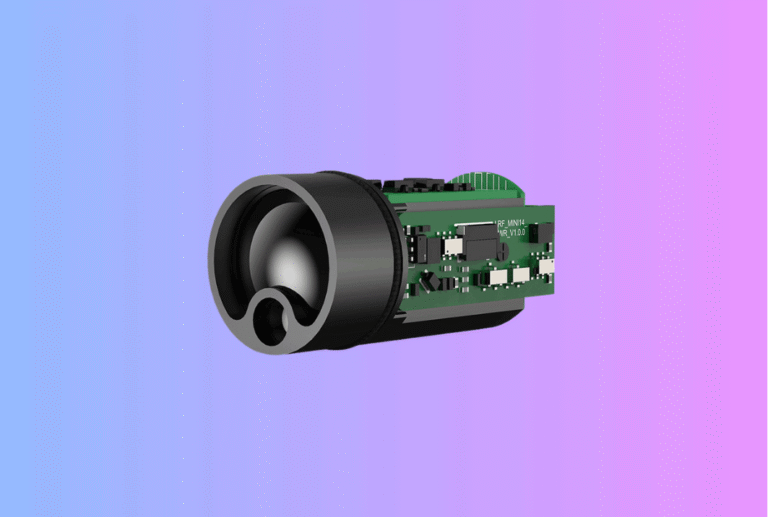
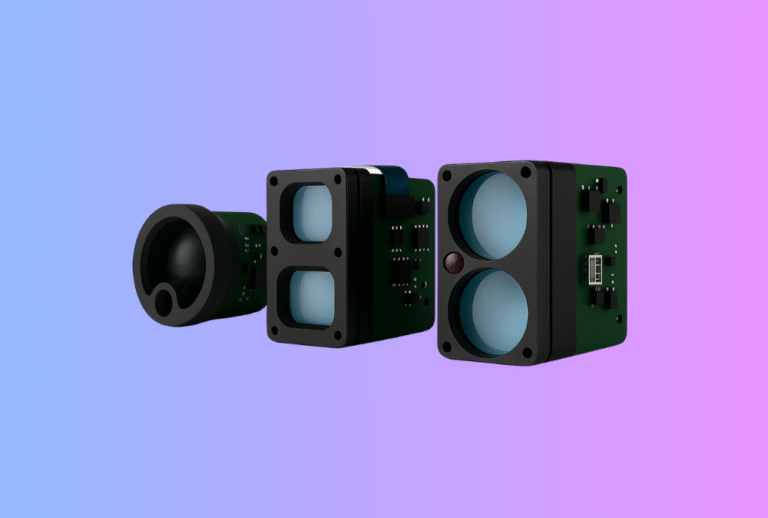
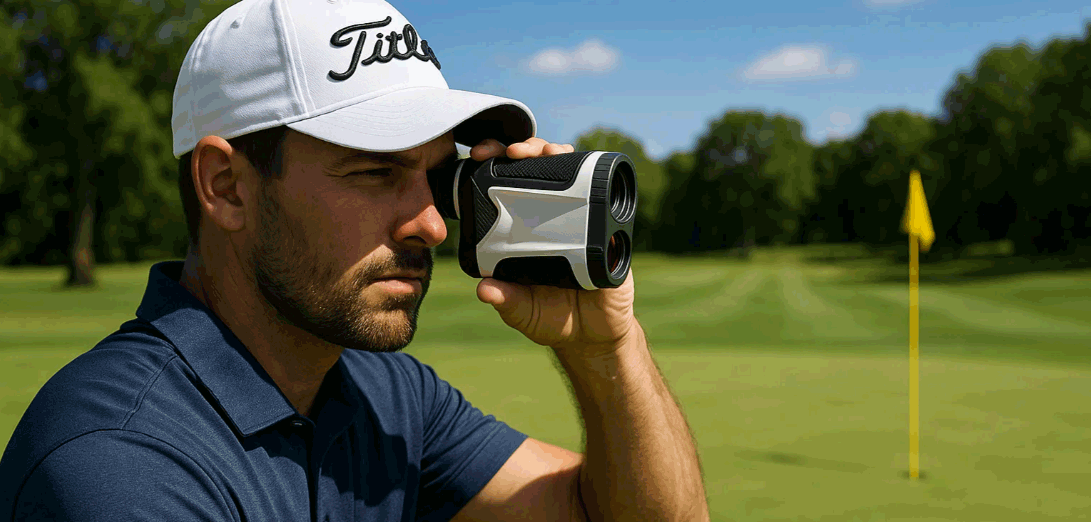
ToggleLead. This field guide is for OEM/ODM product managers, integrators, and distributors who need a fast, reliable way to calibrate a golf Laser Rangefinder Module before it ships. In ten focused minutes you’ll zero the time-of-flight (ToF) offset, lock the distance scale, align the beam and HUD, and verify slope readiness—so units read true on course and pass tournament checks.
Executive Summary
Calibrating a golf LRF isn’t a science project; it’s a repeatable sequence. Work in this order to avoid rework: offset → scale → boresight → HUD → slope zero → latency/lock-rate. Use two distances (near ≈50 m, far ≈300 m or a collimator) and one long sight line. Treat slope as an IMU/tilt problem, not an optical one. Publish acceptance numbers buyers can trust: ±0.5 m repeatability at 200 m, ≤0.3 mrad boresight drift, ≤180 ms latency, and stable Class-1 laser classification with a tournament-legal distance-only mode (slope off). See Sources for standards and rulings you’ll cite on your datasheet.
Use Cases & Buyer Scenarios
Scenario 1 — Line-side final calibration for a compact golf device
You run a small line and must hit takt time. A dedicated 50 m board, a 300 m board (or collimator), a straight sight line, and a 10° incline jig let one operator finish a unit in ten minutes. Each result is tied to the module serial and printed as a one-page certificate for the carton. The same station supports later binocular integrations and Thermal Monoculars bundles.
Scenario 2 — Service re-zero after a drop or hot-car exposure
A retailer flags “reads short at 200 m.” You run a 4-minute quick re-zero: near-range offset, boresight along a corridor, and a single latency/lock check. If boresight exceeds 0.3 mrad or residuals drift, you escalate to mechanical seating, seal inspection, and a full 10-minute flow.
Scenario 3 — Distributor AQL sampling before a big promo
Channel partners want more than “functional test passed.” You add an AQL: one unit per 100 receives the full 10-minute calibration, and the cert is stuck on the inner flap. Numbers beat adjectives in partner training; your next Golf SKU and even future Thermal Binoculars benefit from the same template.
Spec & Selection Guide
What “calibration” means here
-
- ToF offset (b₀). Constant bias from optics/electronics/threshold.
-
- Scale factor (b₁). Proportional term that converts ToF to meters.
-
- Boresight. Angular error between TX/RX axis and the reticle; keep ≤0.3 mrad after handling/drop.
-
- HUD alignment. Ensures the aiming mark sits over the beam at a reference distance.
-
- Slope readiness. IMU/tilt zero tied to gravity so angle-compensated distance (ACD) is correct when slope mode is enabled.
-
- Latency & lock-rate. Time to a stable range and % of successful locks in a short scan—critical in bright sun.
Two-point solve (plus a sight line). Use a near board D1≈50mD₁≈50 \text{m}D1≈50m for b₀, and a far board D2≈300mD₂≈300 \text{m}D2≈300m (or a collimator) for b₁. Model: Measured=b0+b1⋅True\text{Measured} = b_0 + b_1 \cdot \text{True}Measured=b0+b1⋅True
Solve for (b0,b1)(b_0, b_1)(b0,b1), store to NVM with a checksum, then verify a straight sight line for boresight/HUD.
Comparison (what matters in golf)
| Item | Fixture | Typical tolerance | Field reason |
|---|---|---|---|
| Offset b0b_0b0 | 50 m matte/retro board | residual ≤ ±0.25 m | Yardage feels right on approach shots |
| Scale b1b_1b1 | 300 m board or collimator | residual ≤ ±0.5 m | Honest long-hole distance |
| Boresight | 150–200 m sight line | ≤ 0.3 mrad | Reticle truly “points” the beam |
| HUD center | 100 m equiv. | ≤ 0.2 mrad | Prevents “off-flag” complaints |
| Slope zero | Gravity jig 0° (verify at 10°) | zero ≤ 0.2° | ACD accuracy without touching optics |
| Latency/locks | 200 m at >100 klx | ≤ 180 ms / ≥ 90% | Real-use snappiness on course |
Decision rules
-
- If residual error is linear after the two-point solve, then re-verify the far board distance or repeat at a different pair (100 m & 400 m).
-
- If boresight exceeds 0.3 mrad post-drop, then fix barrel seating/torque before “software offsets.”
-
- If noon-sun latency creeps up, then narrow analog bandwidth, strengthen matched filtering, or increase micro-burst size (e.g., 9→13 pulses) rather than pushing peak power (Class-1 limit).
-
- If slope must be tournament-disabled, then keep the IMU zero but suppress ACD output and add a clear “distance-only” indicator per USGA/R&A guidance.
Integration & Engineering Notes
Electrical & Interfaces
Expose a simple calibration API on UART/USB-CDC: GET_RANGE_RAW, SET_B0, SET_B1, GET_STATS, SET_SLOPE_ZERO, LOCK_CAL, PRINT_CERT. Return a confidence score and valid-return count with each range. Isolate TX pulse capacitors from HUD/MCU rails so the UI never browns out during bursts. If you plan overlays in apps or Thermal Rifle Scopes, add a 1 PPS input and microsecond timestamps for easy fusion.
Optics & Mechanics
Co-boresight TX and RX barrels on an adjustable cradle; lock with UV adhesive after a short heat-soak. Use AR-coated, slightly wedged windows to suppress back-reflections into the receiver. Blacken baffles and ensure the field stop is coaxial with RX. If the SKU is weatherized, inherit your proven seal stack from the Laser Rangefinder Module family: 15–25% O-ring squeeze, 85–95% groove fill, compatible grease, and torque windows that hold after hot-car soak.
Firmware/ISP/Tuning (AGC, filtering, ranging algorithm)
During calibration, freeze AGC and thresholds so you measure the system, not auto-tuning. In production, use a micro-burst of 9–13 pulses with outlier rejection; matched filtering aligned to your shipped pulse width stabilizes bright-sun locks. When slope is OFF (tournament), distance-only mode must be explicit in the HUD. When slope is ON (practice), show ACD and line-of-sight (LOS) with an intuitive icon.
Testing & Validation (bench → field, acceptance)
-
- Repeatability @ 200 m: ±0.5 m (10 locks, noon).
-
- Latency: mean ≤150 ms; 95th ≤180 ms.
-
- Boresight drift after 1.0 m drop: ≤0.3 mrad (unit powered between drops).
-
- Energy: mWh/100 ranges within ±5% across 10 samples.
-
- Slope: ACD error ≤1% at 10° and ≤0.5% at 5° (slope ON); distance-only display verified (slope OFF).
The 10-Minute Golf Calibration
(Assumes fixtures are ready: 50 m & 300 m references, 10° incline jig, straight sight line or collimator.)
0:00–1:00 — Warm & ID
Power up; read module ID; enter “cal mode” (fixed AGC/threshold; high-contrast HUD).
1:00–3:00 — Offset @ 50 m
Range 5×; average raw. Compute b₀; store to NVM. Re-range to confirm residual ≤ ±0.25 m.
3:00–5:00 — Scale @ 300 m (or collimator)
Range 5×; solve b₁ using stored b₀. Residual ≤ ±0.5 m. If not, verify board distance or repeat at a different far distance.
5:00–6:30 — Boresight & HUD
On the sight line, center the reticle to the measured beam spot at the reference distance; store offsets; checksum.
6:30–8:00 — Slope zero & verify
Zero pitch/roll at 0° on a gravity jig; verify ≤0.2°. Check ACD on 10°; toggle slope OFF and confirm distance-only mode (tournament).
8:00–9:00 — Latency & lock-rate
At 200 m in bright sun, scan for 5 s. Accept if mean ≤150 ms, 95th ≤180 ms, locks ≥90%.
9:00–10:00 — Print certificate & sealPRINT_CERT generates a lot-linked sheet: b₀, b₁, residuals, boresight, slope zero, latency, locks, energy. Exit cal mode; seal data.
Compliance, Export & Certifications
-
- Laser safety. Classify to IEC 60825-1 Class 1 for your wavelength and worst-case repetition rate, pulse width, and burst. For U.S. marketing, document conformance under FDA Laser Notice No. 56. Keep the classification matched to the exact firmware profile you ship.
-
- CE/FCC/RoHS. Maintain a Technical File with the calibration script, fixtures, surveyed board distances, and acceptance data. If BLE is included, test radio and EMC.
-
- Tournament messaging. USGA/R&A guidance requires slope features disabled in competition; include a simple field check for “distance-only” mode so marshals can verify quickly.
- Records & labels. Put Class-1 and “distance-only” markings where visible; keep lot-linked certs with serials.
Business Model, MOQ & Lead Time (OEM/ODM)
A tight, 10-minute routine improves yield and reduces returns.
-
- MOQs. 200–300 pcs for a catalog laser distance module; 500–1,000 for custom optics or dedicated jigs.
-
- Samples. EVT in 4–6 weeks with catalog glass; +6–10 weeks for custom windows or barrels.
-
- Private label. Offer “distance-only” and “slope-ready” SKUs; bundle a barcoded certificate. The same practice supports future fused devices with a Thermal camera module.
Tiny distributor ROI (illustrative)
| Assumption | Value |
|---|---|
| Ex-works (slope-ready, certified) | $98 |
| Landed (duty + freight) | $8 |
| Distributor sell | $149 |
| Gross per unit | $43 |
| Monthly run | 1,000 |
| Monthly gross | $43,000 |
A one-minute print step adds cents yet cuts “reads wrong” returns and supports a $5–$10 ASP uplift.
Pitfalls, Benchmarks & QA
Cal with AGC on. Auto-gain hides bias; freeze it during cal.
One-point “cal.” A single near board can’t separate offset/scale; you’ll pass the bench and fail at 300 m.
Boresight last. If the beam isn’t under the reticle, everything feels wrong; align before slope checks.
Slope mixed with optics. IMU zero is separate—don’t touch b₀/b₁ to “fix” ACD.
Skipping noon-sun tests. Golf happens in bright light; prove latency/locks at >100 klx.
Paperwork drift. Script revisions happen; lock each lot to a version and keep the cert.
Benchmark recipe. Take five fresh units and two service returns to a range. Verify residuals at 50/300 m, boresight along a fence line, ACD on a 10° path, and latency/locks at noon. Publish the chart; it becomes your best sales slide and QA dashboard.
FAQs
Can we calibrate without a 300 m board?
Yes—use a collimator or long indoor tunnel with a mirror target. The far reference must be long enough to expose scale error.
Do we need retroreflective panels?
They help consistency, but matte boards work if illumination is stable. Retro at the far station speeds the solve and keeps latency measurements tidy.
What divergence is “right” for golf?
Most handhelds ship well at ≈1.0–1.2 mrad: easy aiming on flags/poles with good bright-sun locks. The calibration flow is unchanged.
Will slope calibration hurt tournament legality?
No. You only zero gravity and verify ACD. Tournament mode simply suppresses ACD output. Keep a visible “distance-only” indicator as per USGA/R&A guidance.
Why store a checksum with b₀/b₁?
To prevent “mystery drifts” from field updates. If the checksum fails, the device reverts to safe defaults and prompts for recalibration.
How do we sync ranges with mapping or ballistics?
Expose a 1 PPS input and timestamp ranges at µs resolution. That makes later fusion easy in mobile apps or in Thermal Rifle Scopes overlays.
Call-to-Action (CTA)
Ready to standardize your golf calibration and stop “reads wrong” tickets? We can deliver a turnkey ten-minute bench—targets, incline jig, API, and a certificate template—tuned to your Laser Rangefinder Module roadmap. Ask how this plugs into day/night bundles with a Thermal camera module and accessories like Thermal Binoculars.
Sources
<small>
-
- IEC 60825-1 — Safety of Laser Products (Ed. 3). Class-1/AEL framework used for consumer LRFs. (International Electrotechnical Commission — IEC Webstore)
-
- FDA — Laser Notice No. 56: Conformance with IEC 60825-1. U.S. route recognizing IEC compliance. (U.S. Food & Drug Administration — Guidance)
-
- USGA / The R&A — Distance-Measuring Devices and Slope. Competition policy requiring distance-only mode. (USGA / The R&A — Equipment rules & guidance)
-
- Edmund Optics — Boresight and Optical Alignment Basics. Practical alignment guidance for beam/reticle setups. (Edmund Optics — Tech resource)