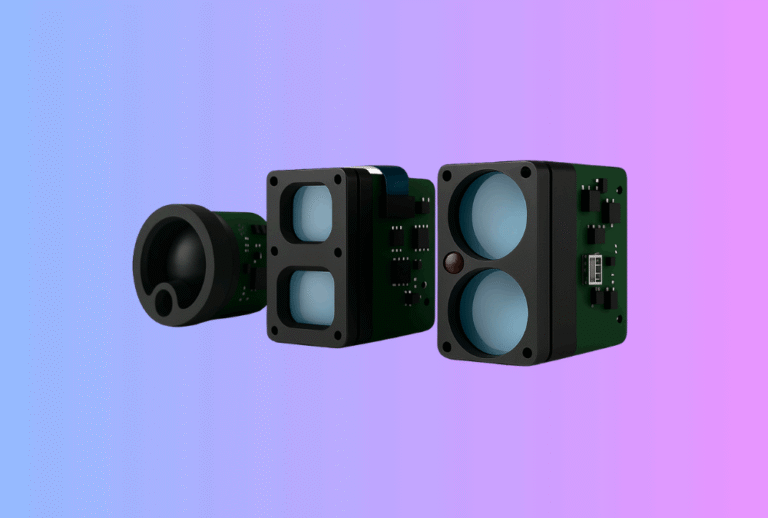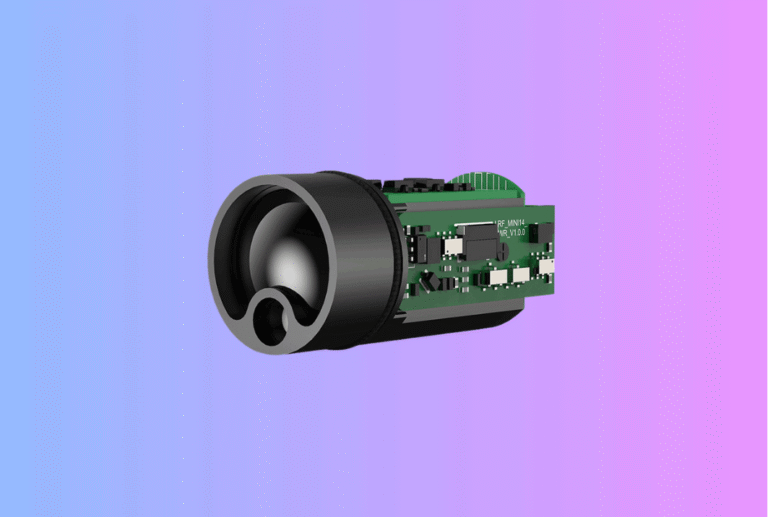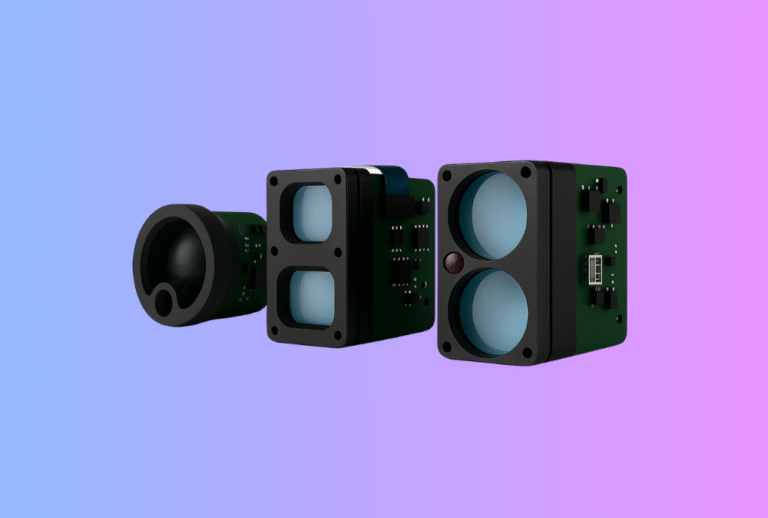
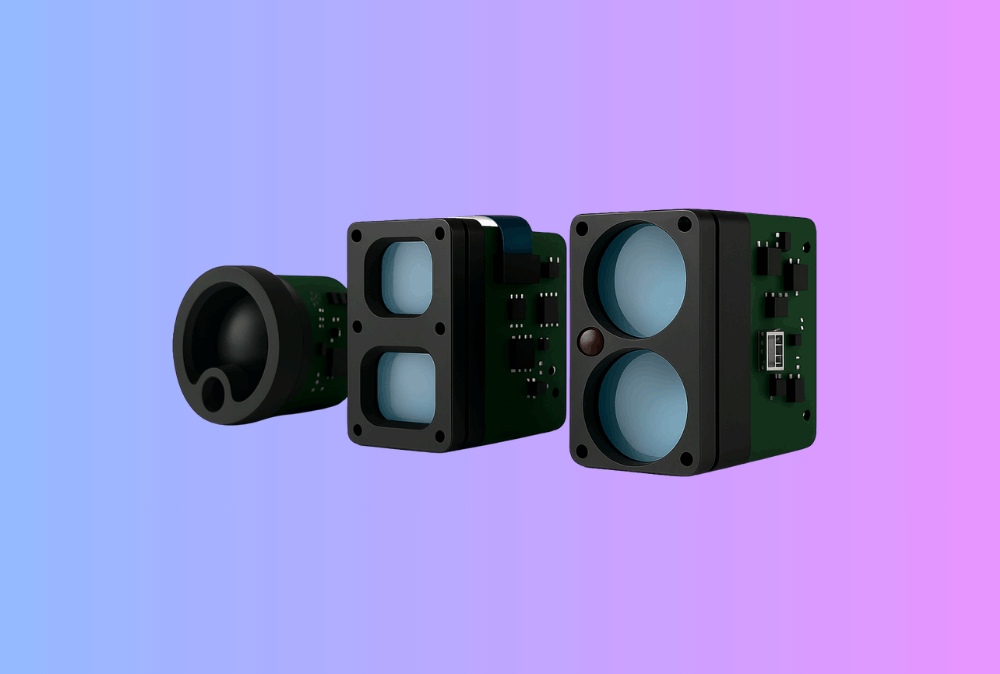
Many teams start with a proven rangefinder module and still ship products that miss easy targets, fail EMC, or get flagged in compliance. This field guide explains the seven mistakes we see most often when integrating a time of flight sensor–based engine into compact optics—and how to design your mechanics, electronics, and firmware so the first mass-production batch works as advertised.
Table of Contents
ToggleExecutive Summary
Integration success is not about exotic parts; it is about discipline across optics, mounting, electrical design, and firmware filtering. Treat the engine, the window, the power rails, and the HUD as one system. Lock Class 1 from day one, publish acceptance gates buyers can repeat, and don’t let pretty CAD or marketing copy override physics.
Use Cases & Buyer Scenarios
Scenario A — Golf/Consumer (50–400 m)
Price, battery life, and “snap” lock speed dominate. Focus on low-noise power, first-target logic, and glare-proof HUD. Reuse seal and UI patterns proven on our imaging lines such as Thermal Monoculars so bright-sun digits stay readable.
Scenario B — Hunting/Outdoors (100–800 m)
Foreground clutter and low-light shots punish poor filtering. Bias for last-target with verify bursts; keep boresight tight after recoil and drops. UX should mirror overlays used in Thermal Rifle Scopes.
Scenario C — Tripod/Vehicle (800–1,500 m)
Confidence, not “max range,” sells. Sync timestamps, publish Pd (probability of detection) curves on 10–20% panels, and keep emissions Class 1 under IEC 60825-1 / FDA Laser Notice No. 56.
The Top Seven Mistakes (and how to fix them)
1) Treating TX/RX boresight like a cosmetic dimension
Symptom: Your reticle sits on the flag but the engine locks a fence behind it. After thermal or drop tests, miss rate spikes.
Cause: TX and RX optical axes leave the factory within a few tenths of a milliradian, but housing creep, soft gaskets, or cantilevered mounts open that gap to 0.5–1.0 mrad. Hand wobble then dominates error.
Fix: Build a rigid, triangular stack. Keep TX/RX angular error ≤ 0.2 mrad after HALT (drop, vibe, thermal). Use anti-creep features (boss-to-boss, not pad-to-pad). If you must use a window, pick AR-coated glass (R ≲ 0.5% per surface) and blacken baffles to kill sparkle. Validate with a 5–10 m collimator target and record full-angle 1/e² divergence.
2) Mounting without a defined “eye box” between reticle and laser
Symptom: Users report “the number jumps when I shift my head.”
Cause: In handheld LRFs the “eye box” is the geometric tolerance where the displayed reticle still represents the laser beam. Loose viewfinder geometry or off-axis windows create parallax.
Fix: Align the visible aiming channel to the beam within ±0.2 mrad through expected eye relief. Add a short parallax test to production (aim at a fine grid at 10 m; shift the unit ±10 mm in eye relief; the hit should stay on grid). If you ship day/night bundles later, reuse the discipline you apply in Thermal Binoculars eye-box testing.
3) Power rails that sag during bursts
Symptom: Great results on the bench; flicker, resets, or slow locks in the sun.
Cause: TX energy storage shares rails with the HUD and MCU. Pulse current sags the display or alters pulse width (τ), degrading SNR and Class-1 AEL budget.
Fix: Isolate the TX capacitor bank and driver. Budget current at cold where ESR is higher. Log τ and repetition rate in firmware and expose GET_STATS() so hosts can verify timing. Keep UI debounced (5–8 Hz) so users see stability, not rail noise.
4) “Firmware filtering” that chases noise instead of decisions
Symptom: Scan mode looks fast but numbers dance; first/last target miss obvious scenes.
Cause: Treating each return as ground truth rather than clustering candidates and making a mode-aware decision.
Fix: Use micro-bursts (9–15 pulses), build a histogram of time-of-flight, and cluster by proximity. Compute amplitude and cluster width (σ). Then apply first-target or last-target bias after clustering. Publish a 0–100 confidence score tied to amplitude, valid-return count, and σ so support can diagnose field logs.
5) Ignoring EMI/ESD until the first pre-scan
Symptom: FCC/CE radiated emissions fail by 2–6 dB above 100 MHz; random resets after ESD tests.
Cause: Long stubs to the laser driver, ground bounce at the APD front end, and floating windows used as antennas. Late “fixes” break optics.
Fix: Plan EMC from day zero. Keep the APD front end within a tight analog enclave; star ground to the driver; use common-mode chokes on I/O; add a conductive window bezel tied to chassis ground. Validate in a pre-scan before tooling. On the bench, scope the APD node during TX to confirm no ringing spills into the receiver passband.
6) Treating Class 1 as a sticker, not a system constraint
Symptom: A firmware update changes burst length; product drifts out of IEC 60825-1 Class 1. Retailer or regulator pushes back.
Cause: Access to timing tables without hardware clamps; no multiple-pulse review when modes change.
Fix: Lock hardware clamps for current/voltage; accept only signed timing profiles. Re-compute AEL for single and multiple pulses whenever τ, f, or burst N changes. Keep a one-page Eye Safety File in the Technical File with divergence plots and label photos. If your unit will share shelves with imaging SKUs, align paperwork with accessories like Thermal Clip-On Sight or Thermal Pistol Sights.
7) Window choices that wreck SNR or fog in week two
Symptom: Noon sun sparkles wash out the reticle; drizzle or temperature swings fog the optic; range confidence collapses.
Cause: Uncoated plastic windows, aggressive tint, or poor sealing. Surface reflections add false returns and raise background; moisture shifts transmission.
Fix: Use IR-friendly glass with hard AR (R ≲ 0.5% per surface). Keep divergence ~1.0–1.2 mrad for handhelds and match the receiver FOV. Nitrogen purge and a proper O-ring stack; qualify to IP67 spray/immersion plus IEC 60068 temperature cycles. Borrow sealing discipline from our Thermal camera module program.
Spec & Selection Guide (what to lock before tooling)
Define wavelength, target divergence, burst strategy, and receiver aperture before mechanicals. Document a power budget that meets your confidence target with margin. Size the battery for mWh/100 ranges at 20 °C and cold. Treat the distance measuring sensor module as an optical instrument, not a drop-in board.
| Parameter | Why it matters | Pragmatic target |
|---|---|---|
| Divergence (full-angle 1/e²) | Coverage vs. backstop risk | 1.0–1.2 mrad handheld; ≤0.8 mrad tripod |
| Burst length (N) | SNR vs. latency/energy | 9–13 pulses; verify bursts on messy scenes |
| Pulse width (τ) | Precision & AEL | 10–20 ns with matched filtering |
| Gate strategy | Suppress clutter/backstops | Distance-scaled; mode-aware (first/last) |
| RX aperture | Photon budget | Balance with divergence and chassis space |
Integration & Engineering Notes
Electrical & Interfaces
Expose a compact SDK: SET_MODE(), SET_BURST(), SET_GATE(), GET_RANGE() → {range, confidence, n_valid, sigma, mode}, plus GET_STATS() (latency, energy/100 ranges). Timestamp at microsecond resolution so integrators can fuse data into HUDs or camera stacks.
Optics & Mechanics
Prefer boss-to-boss location features; torque windows to spec; avoid adhesive-only mounts. Verify parallax (“eye box”) on a grid. After recoil/drop, re-measure boresight and divergence; keep drift ≤0.3 mrad.
Firmware/ISP/Tuning
Do not filter for “smooth numbers.” Decide correctly, then display smoothly. Debounce to a human-friendly 5–8 Hz. Publish the confidence score and teach users what it means in your manual.
Testing & Validation
Panels at 10/20/80% reflectivity @ 50/100/200/400 m; bark/fabric proxies; bright sun ≥100 klx; drizzle/fog box; −10 → +40 °C cycles. Acceptance: Pd ≥90% on poles @150 m (first-target), Pd ≥80% on bark behind grass @200 m (last-target + verify), latency 95th ≤180 ms, energy within ±5% after temperature cycling.
Compliance, Export & Certifications
Classify to IEC 60825-1 Class 1 with single/multiple-pulse rules; align U.S. filings to FDA Laser Notice No. 56. EMC per FCC/CE; sealing per IEC 60529 (IP) and IEC 60068 (temperature, shock). Keep labels near the aperture and include photos in the Technical File.
Business Model, MOQ & Lead Time
Typical MOQs: 200–300 pcs baseline; 500–1,000 pcs with custom optics. EVT with catalog glass: 4–6 weeks; custom windows/filters add 6–10 weeks. Publish Pd curves and a one-page Eye Safety File; they justify a $5–$15 ASP uplift and cut returns.
FAQs
Q: Can I reuse the housing for other optics?
Yes—if the window, AR stack, and field stop suit both day and night lines; paperwork can align with accessories later.
Q: Why do users chase digits in Scan?
Your UI is updating faster than humans can parse. Debounce to 5–8 Hz; show confidence alongside range.
Q: Is narrower divergence always better?
Not handheld. Below ~0.8 mrad, wobble and parallax dominate misses; confidence drops.
Call-to-Action (CTA)
Want your first MP batch to lock cleanly and pass compliance the first time? We’ll help you harden mounting, power, and filtering; publish acceptance gates; and document Class 1—on top of your current engine. If your roadmap includes day/night bundles, we’ll align HUD and paperwork with your imaging line.
Sources
- IEC 60825-1 — Safety of Laser Products (Ed. 3). Classification, AEL, limiting apertures. (IEC Webstore)
- FDA — Laser Notice No. 56. U.S. recognition of IEC 60825-1 conformance. (U.S. FDA Guidance)
- IEC 60529 / ISO 20653 — IP ratings. Ingress protection for handhelds. (ISO)
- RP Photonics — Beam Divergence; Pulsed detection. Definitions and practical implications. (RP Photonics Encyclopedia)
- FCC Part 15 / CISPR 32. Radiated emissions for IT/consumer gear. (FCC)