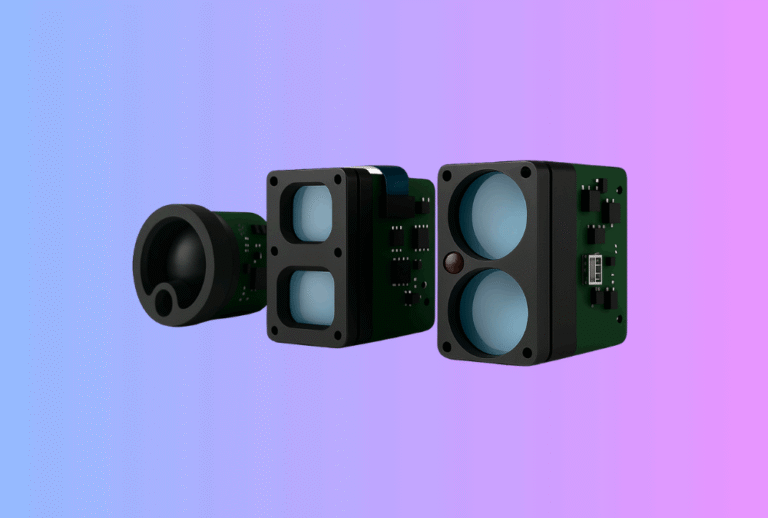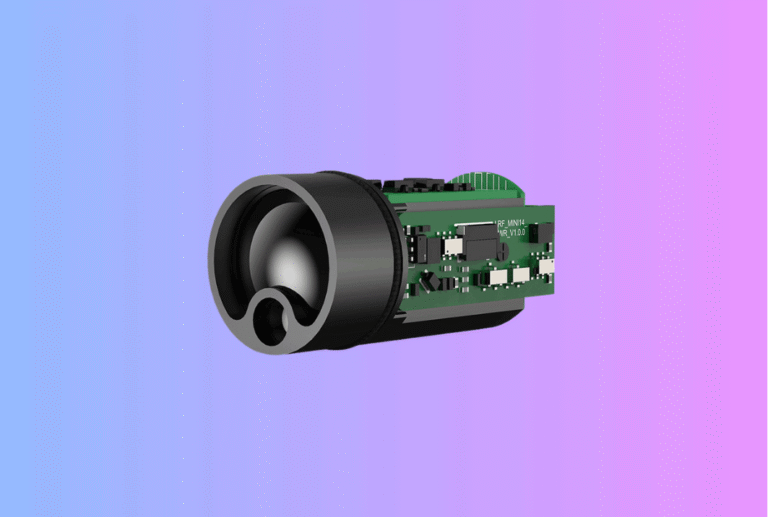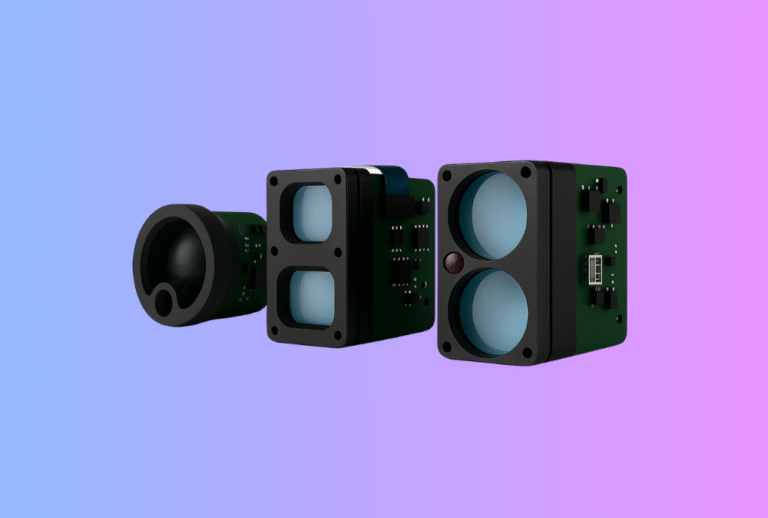
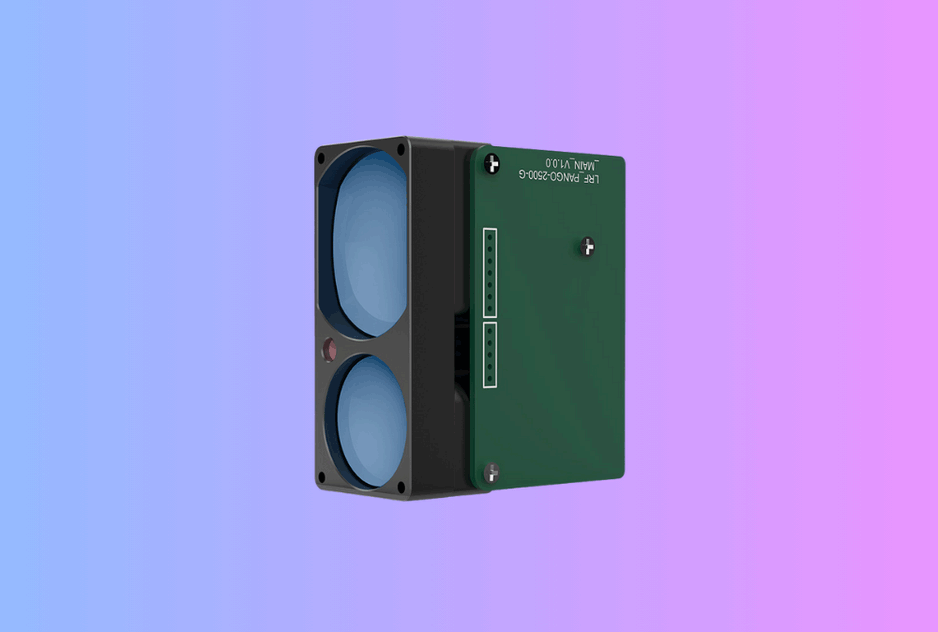
If you ship a handheld built around a laser distance module, “max range” quickly becomes a business metric: retail claims, channel comparisons, and return rates. This guide focuses on the six engineering levers that actually extend range in the field—optics (aperture & divergence), pulse shaping and timing, receiver SNR, software filtering and decision logic, HUD/UI behavior in sun, and environmental hardening—so your compact system earns longer, more confident locks without breaking Class 1 safety or battery budgets.
Table of Contents
ToggleExecutive Summary
Range is SNR × coverage × decision discipline. You win distance by collecting more photons on target (aperture/divergence), launching energy within a safe AEL envelope (pulse width & repetition), lowering detector noise (APD choice & analog chain), and deciding correctly (cluster-then-bias with human-friendly UI cadence). Publish Pd (probability-of-detection) curves, not billboard “max,” and verify after thermal, drop, and sealing cycles.
Use Cases & Buyer Scenarios
Scenario A — Golf/Consumer (50–400 m, bright sun)
Retail price and battery life dominate. A well-tuned 905-nm engine with 1.0–1.2 mrad divergence, first-target bias, and glare-resistant HUD often out-ranges sloppy optics that claim higher power. Keep the UX language consistent with your observation line (e.g., typography learned on Thermal Binoculars) to reduce support friction.
Scenario B — Hunting/Outdoors (100–800 m, brush/dusk)
Background clutter and wobble cause most misses. A modest aperture bump, slightly longer pulse width with matched filtering, and last-target bias + verify burst deliver real gains. Data overlays and reticle behavior should mirror your Thermal Rifle Scopes so users don’t relearn in the dark.
Scenario C — Tripod/Vehicle (800–2,000 m, mixed weather)
With rigid mounting and larger optics, the limit shifts to eye-safe energy and atmospheric losses. 1535-nm options unlock higher Class-1 headroom; sync timing with cameras or a Thermal camera module if you output overlays.
Spec & Selection Guide
1) Optics that actually add meters: aperture & divergence
Aperture increases received photons linearly; divergence (full-angle, 1/e²) controls spot size, coverage, and backstop risk. For handhelds, 0.9–1.2 mrad is the sweet spot: narrow enough for energy density, wide enough to tolerate 1–2 mrad hand wobble. Going to 0.6 mrad on a handheld often loses practical range because users miss flags/animals.
Rule of thumb: doubling receiver clear aperture yields ~+3 dB in received power; tightening divergence from 1.2 → 0.9 mrad boosts energy density ~+3 dB if you still cover the target. Measure divergence after stress; a shocked window can tighten the beam and skew your math.
2) Pulse shaping & timing within Class-1 AEL
Longer pulses (τ) improve low-reflectivity returns by weighting energy under the matched filter, but they also eat AEL budget. Instead of brute-force peak power, run short micro-bursts (9–15 pulses) and keep τ in the 10–20 ns band; then recover precision with matched filtering. Recompute IEC 60825-1 single/multiple-pulse rules when you change τ, repetition rate, or burst length.
3) Receiver SNR: detector, analog chain, and background
Si APD @ 905 nm brings low noise and cost; InGaAs APD @ 1535 nm cuts solar background and unlocks higher eye-safe launch energy but demands careful gain/bandwidth management. Keep the APD and TIA in a tight analog enclave, star-ground the driver, and avoid long stubs that ring into the passband. A narrowband filter (10–20 nm FWHM) can lift SNR in sun with minimal loss.
4) Software filtering & decision discipline
Do not “smooth numbers.” Decide correctly, then display smoothly. Burst → histogram → cluster by proximity → compute amplitude and cluster width (σ) → apply mode bias (first-target for flags, last-target for brush) → optionally fire a verify burst when σ is wide. Emit range + confidence + n_valid + σ so hosts and service can diagnose logs.
5) HUD/UI patterns that convert SNR into usable meters
Range confidence (Pd) increases when the user can aim precisely and believe the output. Use thin reticles (≈1.2 mrad apparent), monospaced digits, and a 0–100 confidence bar. Debounce the display to a human cadence (5–8 Hz perceived) even if the engine samples faster. Anti-bloom auto-dimming preserves contrast at ≥100 klx. These patterns carry into overlays for Thermal Monoculars.
6) Environmental hardening: sealing, fog, and temperature
Fogging, drizzle, and temperature extremes cost more meters than any elegant DSP. Use glass windows with hard IR AR (R ≲0.5%/surface), blacken baffles, nitrogen purge, and O-rings qualified to IP67. Validate range after −10 → +40 °C cycles and after drops; re-measure divergence and confirm HUD readability. If your product sits beside Thermal Clip-On Sight accessories on the same chassis, share the sealing stack.
Comparison: which lever buys the most meters?
| Lever | Mechanism | Typical gain | Risks & notes |
|---|---|---|---|
| Receiver aperture +20–30% | More photons collected | +2 to +3 dB (often +50–100 m practical) | Size/weight; vignetting; seal redesign |
| Divergence 1.2 → 0.9 mrad | Higher on-target energy density | +2 to +3 dB if coverage still good | Handheld misses if too narrow; parallax |
| Pulse shaping (τ 10→16 ns) + matched filter | Improved low-ρ returns | +1 to +2 dB on bark/fur | Recheck AEL; not a free lunch |
| Micro-burst N=9→13 | Statistics lift Pd | +5–10% Pd @ 200–400 m | Energy & latency hit; battery budget |
| Narrowband filter (10–20 nm) | Lower solar background | +1 to +3 dB noon sun | Transmission loss; BOM |
| UI: reticle + cadence + confidence | Better aim & decisions | Misses ↓15–25% in field tests | Requires disciplined UX; not just font swaps |
If/Then mini matrix
- If flags/poles are primary (golf), then 0.9–1.2 mrad divergence + first-target bias + pre/commit tones; publish “snap-to-flag” acceptance.
- If brush/animals dominate, then last-target with verify bursts; slightly longer τ with matched filtering.
- If glare is the blocker, then add a narrowband filter and sun-mode auto-dimming; measure digits contrast ≥4.5:1 at ≥100 klx.
- If you need >800 m compact range, then consider 1535 nm + InGaAs with higher Class-1 headroom; manage analog noise.
Integration & Engineering Notes
Electrical & Interfaces (UART/USB/CAN/MAVLink/SDK)
Keep TX rails isolated from HUD/MCU; sag during bursts skews τ and forces users to “chase digits.” Expose a compact API: SET_MODE(FIRST|LAST|SCAN), SET_BURST(N), SET_TAU(ns), SET_GATE(params), GET_RANGE() → {range, confidence, n_valid, sigma, mode}, GET_STATS() → latency (mean/95th), mWh/100 ranges. Timestamp at µs resolution so logs can prove UI changes never altered emission timing (Class-1 critical).
Optics & Mechanics (mounting, alignment, sealing)
Design a rigid, triangular stack. Keep TX/RX bores ≤0.2 mrad after drop/vibe/thermal. Windows: glass with hard IR AR (R ≲0.5%/surface). Blacken baffles to kill sparkle. Verify eye-box/parallax at 10 m by moving ±10 mm along eye relief. If you plan recoil-rated variants, align with accessories later sold next to Thermal Pistol Sights.
Firmware/ISP/Tuning (filters, clustering, cadence)
Matched filtering around the shipped τ (10–20 ns) strengthens weak returns. Cluster TOF candidates by proximity; compute amplitude and σ; apply first/last bias after clustering; send a short verify burst when σ is wide. Debounce the HUD to ~5–8 Hz perceived. Publish the confidence mapping in your manual to cut support time.
Testing & Validation (bench → field)
Panels: 10/20/80% at 50/100/200/400/800 m.
Natural targets: bark poles, brown fabric (fur proxy), brush wall with/without backstop.
Bright sun: ≥100 klx; handheld sweep 5–10°/s.
Weather: drizzle/spray; fog box; −10 → +40 °C thermal cycling.
Acceptance gates (illustrative)
- Pd ≥90% on poles @150 m (first-target); Pd ≥80% on bark behind grass @300 m (last-target + verify).
- Latency 95th ≤180 ms; stability ±0.5 m on steady target in Scan.
- mWh/100 ranges within ±5% after thermal cycling; digits contrast ≥4.5:1 at ≥100 klx.
Compliance, Export & Certifications
Longer range must not move you out of Class 1. Recompute IEC 60825-1 AEL after changes to τ, burst length, or divergence; align U.S. filings with FDA Laser Notice No. 56. EMC (FCC/CISPR), IP sealing, and RoHS are separate streams but belong in one Technical File. Place Class-1 labels near the aperture; mirror language in quick-start. If your chassis hosts day/night bundles, keep the safety envelope consistent with SKUs that pair beside Laser Rangefinder Module pages.
Business Model, MOQ & Lead Time (OEM/ODM)
MOQs. 200–300 pcs baseline; 500–1,000 pcs with custom windows/filters or larger apertures.
Lead time. EVT with catalog glass: 4–6 weeks; custom optics add 6–10 weeks; InGaAs chains + filters: plan 8–12 weeks.
| Deliverable | Why it matters | Channel effect |
|---|---|---|
| Pd vs distance curves (panels & natural) | Replaces “max range” hype | ASPs +$5–$20; fewer returns |
| Timing table (CSV) + Eye-safety file | Faster audits & retail onboarding | Reduces re-test cycles |
| HUD kit (fonts/icons/tones) | Consistent field behavior | Support tickets ↓ |
Tiny distributor ROI (illustrative)
| Assumption | 905-nm Golf SKU | 1535-nm Field SKU |
|---|---|---|
| Ex-works | $99 | $159 |
| Landed (duty + freight) | $9 | $10 |
| Distributor sell | $159 | $229 |
| Gross per unit | $51 | $60 |
| Monthly run | 900 | 600 |
| Monthly gross | $45,900 | $36,000 |
Pitfalls, Benchmarks & QA
- Chasing narrow divergence on handhelds. <0.8 mrad often reduces practical range via misses; spec 0.9–1.2 mrad and lock parallax.
- “Faster HUD == more range.” No—show 5–8 Hz perceived cadence; decide correctly then render smoothly.
- Skipping multiple-pulse rules after firmware updates. Any τ/f/N change can break Class 1; re-classify.
- Under-estimating optics drift. AR/filters vary by lot; re-measure divergence after stress.
- Only publishing “max range.” Replace with Pd curves and acceptance gates that buyers can repeat.
FAQs
Q: What single change moves the needle most?
Receiver aperture if the chassis allows; otherwise divergence from 1.2→0.9 mrad with careful eye-box control.
Q: Should I stretch pulse width or add pulses?
Do a little of both within AEL: τ 10–20 ns + micro-burst N=9–13, then matched filter. Measure battery impact (mWh/100 ranges).
Q: Will 1535 nm always outrange 905 nm?
It buys eye-safe headroom and less solar background, but you must manage InGaAs noise and BOM. Test Pd vs distance, not marketing lore.
Q: Can UI alone extend range?
UI converts marginal SNR into usable locks by preventing overscan and teaching steady aim. It doesn’t replace photons or timing, but it saves meters you already earned.
Decision Flow — from lab tweaks to field range
Start
  ├─ Define scenes (golf / brush / tripod) & targets (50–400 / 100–800 / 800–2000 m)
  ├─ Pick divergence (handheld 0.9–1.2 mrad; tripod ≤0.8 mrad) & receiver aperture
  ├─ Set τ (10–20 ns) & micro-burst N (9–13); compute AEL (IEC 60825-1)
  ├─ Choose filter (10–20 nm) if glare-limited; verify transmission loss
  ├─ Tune clustering (σ) + mode bias (First/Last); add verify burst when σ is wide
  ├─ HUD: thin reticle; monospaced digits; 5–8 Hz cadence; confidence 0–100
  ├─ Acceptance: Pd curves (panels/natural); latency 95th ≤180 ms; mWh/100 ranges
  └─ Freeze optics + timing + UI kit → Pilot build → Re-measure divergence post-stress
Call-to-Action (CTA)
Want real, defensible meters—not just a “max range” number? We’ll help you choose optics, tune τ and burst strategy, lift SNR, and harden the HUD—then publish Pd curves buyers believe. If you plan a day/night bundle, we can align timing and overlays so your handheld plays cleanly with Thermal Clip-On Sight and accessories shipped beside your Laser Rangefinder Module.
Sources
- RP Photonics — Beam Divergence (definitions; 1/e², FWHM). (RP Photonics)
- Ocean Optics Book — The LiDAR Equation (returned power; attenuation). (Ocean Optics Book)
- Thorlabs — NEP & APD notes (detector sensitivity; bandwidth–gain tradeoffs). (Thorlabs White Paper)
- Edmund Optics — Gaussian Beam Propagation (aperture, waist, divergence). (Edmund Optics)
- FDA — Laser Notice No. 56 (IEC 60825-1 recognition; product reports). (U.S. FDA Guidance)