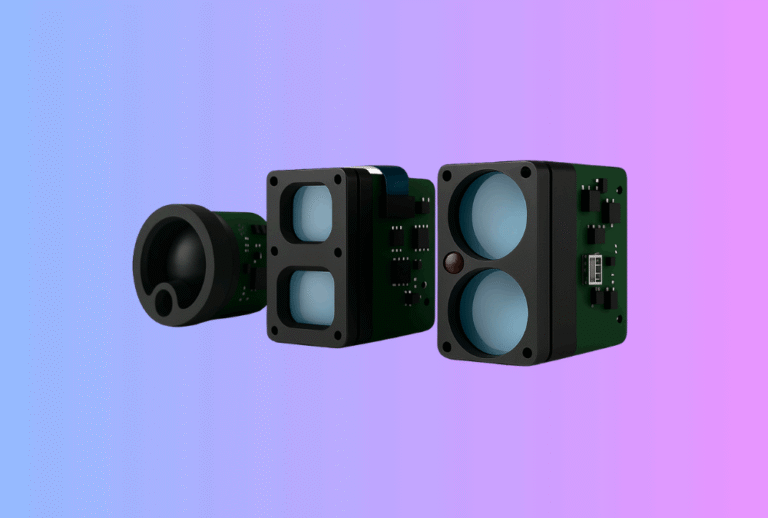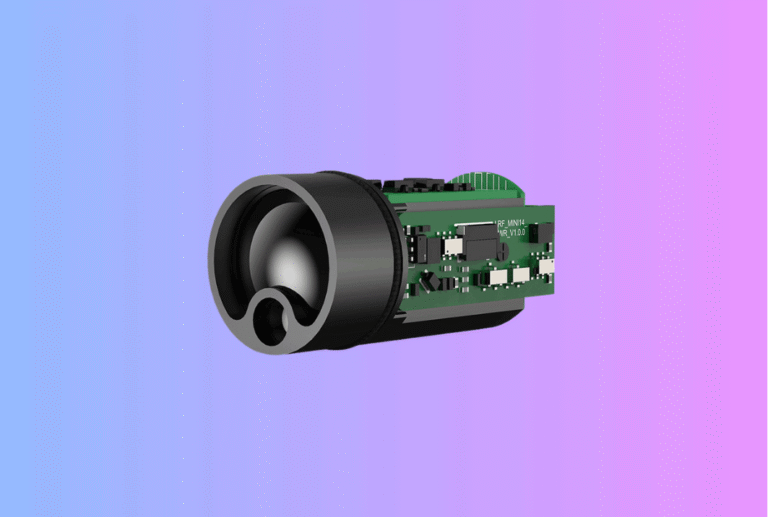
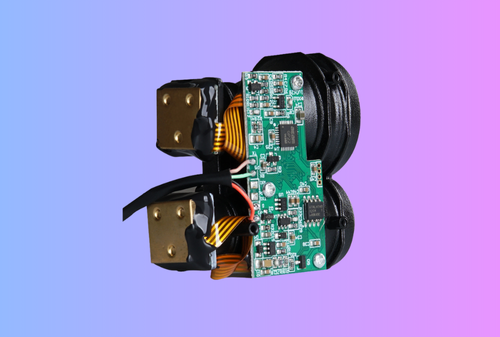
A rangefinder module succeeds only when users can see and aim instantly—through glasses, sunglasses, or at awkward angles. That is the job of the eye box. For a handheld built around a laser sensor module or any compact distance sensor module, eye-box tolerance is what keeps the HUD readable, the reticle centered, and the IR beam hitting the target even when the eye is not. This guide explains the optics, mechanics, and firmware cues that set the tolerance, then turns them into acceptance tests you can run on day one.
Table of Contents
ToggleExecutive Summary
The eye box is the 3-D volume behind the eyepiece within which users still see a full, bright field and a properly colocated reticle. It is governed by exit pupil, eye relief, eyecup geometry, diopter range, and the alignment between the visible aiming channel and the invisible ranging beam. For pocket LRFs, target exit pupil ≥3.5 mm, eye relief 15–20 mm, and a reticle/beam boresight error ≤0.2 mrad after drop/thermal. UI cues—reticle thickness, confidence bars, and anti-bloom—shrink user error more than any exotic glass. Validate on a 10 m grid with ±10 mm lateral and ±15 mm axial eye motion at ≥100 klx ambient.
Use Cases & Buyer Scenarios
Scenario 1 — Golf: fast “snap to flag” at noon
Buyers expect locks in bright sun while wearing caps or sunglasses. Your eye box must remain tolerant with eye relief ≈17–19 mm and an exit pupil ≥4 mm so brim shadows and lenses do not clip the field. A thin, high-contrast reticle and first-target bias pair well with the integration patterns documented in Rangefinder Module Integration and productized under Laser Rangefinder Module.
Scenario 2 — Hunting & outdoor: awkward stances, gloves, dusk
Users tilt the device around obstacles, switch hands, and shoot through brush at low light. Slightly larger exit pupil (≈4–5 mm) and a softer eyecup help hold the eye in place without scratching glasses. Last-target with verify bursts needs a reticle that remains visible at low luminance—copy the readability habits you use across Thermal Optics HUDs such as Thermal Rifle Scopes.
Scenario 3 — Tripod/vehicle rigs: multi-user, masks, safety eyewear
Training burden is high; eye relief must accommodate safety goggles and masks. Prefer twist-up eyecups with hard stops, parfocal collimation, and adjustable diopter with clear markings. These rigs typically share data via CAN; align eye-box metrics with the deterministic UI cadence patterns used across Products and Modules.
Spec & Selection Guide
Key definitions
Exit pupil (EP). Image of the system’s aperture stop viewed from the eye position. For a magnified channel, EP ≈ objective diameter / magnification (classical telescopic relation). For a projected HUD, the microdisplay/combiner creates a virtual pupil you size with collimation optics.
Eye relief (ER). Axial distance from the last optical surface to the location of the exit pupil. Users must see a full field there without vignetting.
Eye box. The 3-D region around ER within which the user sees a full field at usable luminance and the reticle appears centered; practically described as ±Δx, ±Δy, ±Δz tolerances.
Boresight error. Angular misalignment between the visible reticle axis and the IR ranging beam (TX/RX). We express it in mrad; ≤0.2 mrad is the handheld target.
Diopter range. Reticle focus adjustment; ±4 D is common for monocular HUDs.
Small formulas you will actually use
For small angles, spot size on target \( s ≈ θ d \). Eye-box lateral tolerance roughly scales with EP and the allowed vignetting fraction: \( Δx ≈ \frac{EP}{2} \sqrt{v} \) (empirical), where v is the fraction of illumination you accept at field edges. If ER is 18 mm and EP is 4 mm, a ±6 mm lateral tolerance typically preserves ≥70–80% field with a good eyecup—validate, don’t guess.
| Parameter | Golf handheld | Hunting/outdoor | Tripod/rig | Why it matters |
|---|---|---|---|---|
| Exit pupil | ≥4.0 mm | 4.0–5.0 mm | ≥4.5 mm | Larger EP forgives lateral offset & sunglasses |
| Eye relief | 17–19 mm | 16–20 mm | 18–22 mm | Room for glasses, masks, and caps |
| Reticle thickness | ~1 MOA equiv. | ~1.5–2 MOA | ~1 MOA | Thin finds flags; thicker survives brush & dusk |
| Boresight error (reticle↔IR) | ≤0.2 mrad | ≤0.2 mrad | ≤0.1 mrad | Missed targets rise rapidly beyond these values |
| Diopter range | ±4 D | ±4 D | ±5 D | Accommodates varying eyesight |
| HUD luminance | ≥350 cd/m² @100 klx | ≥300 cd/m² @100 klx | ≥400 cd/m² @100 klx | Readability in noon sun |
If/Then rules you can put in a PRD
- If your top complaint is “I can’t see the digits with sunglasses,” then raise EP or reduce eyecup depth, and spec ≥4.5:1 contrast at ≥100 klx.
- If users report “misses when the brim shadows the eyepiece,” then improve eyecup flare angle (by 5–10°) and add a micro-bezel light trap.
- If left-handed users report vignetting, then widen lateral tolerance by +1–2 mm via EP or eyecup reshaping; validate on both eyes.
- If parallax shows up as “reticle on flag but no lock,” then check boresight and the TX/RX-to-reticle collinearity after drop/thermal; correct by mechanical shims or electronic reticle offset.
Integration & Engineering Notes
Electrical & Interfaces
Eye-box improvements fail if the HUD flickers or lags. Maintain a human-friendly cadence at 5–8 Hz whether you run UART or CAN. Telemetry should include {range, confidence, n_valid, σ, retina_lux estimate}. Keep timing tables signed so UI brightness or diopter changes cannot affect laser emission parameters—Class-1 safety must be invariant. Interface templates ship with Downloads.
Optics & Mechanics (eyecup, diopter, alignment)
Eyecup. A conical, softly radiused eyecup with a 50–55° flare and 1–2 mm compliant lip centers the eye without pressing glasses. Make it twist-up with two hard stops (glasses/no-glasses). Texture the inner surface to cut stray reflections.
Diopter. Use a helical with low backlash and clear marks at −4, −2, 0, +2, +4 D. The reticle must stay centered while adjusting—run a runout spec ≤0.1 mrad across the diopter range.
Alignment. Collimate the reticle at optical infinity, then boresight to the TX/RX axis with a far-field jig. Re-measure after −10→+40 °C cycles and a drop to MIL-like energy (e.g., IEC 60068 transit drop levels). Allow an electronic reticle trim (EEPROM) for service.
Windows & coatings. Use hard AR (R ≲0.5%/surface) and blackened baffles around the eyepiece to maintain contrast. If you sell to salt/fog climates, qualify hydrophobic top coats.
Firmware/UX (UI cues that buy tolerance)
- Reticle thickness & logic. Thin for golf (≈1 MOA), thicker for brush (≈1.5–2 MOA). Switchable overlays confuse—pick one per SKU and keep it consistent with overlays across Thermal Monoculars.
- Debounce & confidence. Display a 0–100 confidence bar; when <60, prompt “Steady and rescan.” This prevents eye-box edge hunts.
- Anti-bloom & glare mode. Slightly dim digits before they bloom in sun; pre-bias the OLED gamma curve. Guidance also appears in our bright-sun HUD articles linked from Blog.
- Parallax training. A one-screen tutorial (“center dot on target; if range is unstable, move closer to eyecup”) cuts returns in half.
Testing & Validation (bench → field)
Acceptance gates (illustrative): EP ≥4.0 mm; ER 17–20 mm; lateral ±7 mm and axial ±15 mm tolerance with ≥80% full-field retention at ≥100 klx; boresight error ≤0.2 mrad after stress; HUD contrast ≥4.5:1; Pd ≥90% on 150 m poles with sunglasses.
Grid test. Print a 10 m collimated grid or use a rooftop chart. Place the device on a rest; move the eye behind the eyepiece in 5 mm steps across ±10 mm (x/y) and ±15 mm (z). At each point, mark whether a full field and reticle are visible; record Pd on a 150 m pole and the confidence bar.
Reticle-beam boresight. With a diffuse far target, log reticle center vs measured range as you sweep small angles. Error greater than ≈0.2 mrad will show as “reticle on flag but no lock” complaints.
Sunglasses test. Cycle polarized and non-polarized sunglasses at noon; capture readability video and Pd. Adjust polarization of your combiner to avoid excessive extinction with common sunglasses.
Stress tests. −10→+40 °C, IP67 dunk/spray, drop, and recoil where applicable (for optics mounted to weapons or rails). Re-measure EP/ER/boresight after each stress sequence. Manufacturing discipline mirrors what we publish under Manufacturing & Quality.
Compliance, Export & Certifications
Eye box tuning intersects safety and labeling in subtle ways: diopter and reticle brightness are UI features, but the reticle-beam boresight and any electronic offset must be recorded in the technical file, because the pointing channel affects user behavior. Keep laser emissions Class-1 under IEC 60825-1 with timing tables frozen; U.S. market entries align with FDA Laser Notice No. 56. EMC (CISPR 32/35 or FCC Part 15B), ingress (IEC 60529), and environmental (IEC 60068) complete the pack. House public PDFs on Certificates; warranty norms live at Warranty.
Business Model, MOQ & Lead Time (OEM/ODM)
Eye-box-friendly hardware reduces returns and training costs. We sample eyepiece variants with two eyecup molds (glasses/no-glasses), ship a diopter labeling kit, and include a boresight shim set. Typical MOQs: 200–300 pcs for catalog optics; 500–1,000 pcs for custom eyecups/coatings. EVT in 4–6 weeks; custom glass or hydrophobic layers add 6–10 weeks. The complete integration stack—optics, SDK, timing CSV, acceptance sheet—is covered on Module Integration for OEMs.
| Deliverable | Why it matters | Channel effect |
|---|---|---|
| Eye-box acceptance card | Objective numbers for EP/ER/boresight | Retailer onboarding faster |
| Grid & sunglasses videos | Proof of readability at noon | Fewer returns/warranty calls |
| Electronic reticle trim tool | Service fixes boresight in minutes | Lower field service cost |
Pitfalls, Benchmarks & QA
- Chasing huge exit pupils without shielding stray light. Big EP helps, but light traps and eyecup flare angle carry equal weight for contrast.
- Assuming diopter is “set and forget.” Users bump rings; add detents or a firm friction; teach a 3-second focus check in the quick start.
- Ignoring reticle-beam alignment after stress. It drifts with thermal and drop; verify and log at MP.
- Over-busy reticles. More marks ≠ more accuracy. A crisp dot/crosshair plus a confidence bar wins in user tests.
- Not testing with sunglasses and caps. Noon sun + polarization is where most “can’t see digits” reviews are born.
FAQs
Q: What eye relief number works best for “with glasses” users?
18–20 mm measured to the exit pupil gives reliable full-field with typical lenses; pair with ≥4 mm exit pupil and a soft eyecup lip.
Q: Can I fix eye-box complaints with firmware only?
Partly. Debounce and confidence help, but optics/eyecup geometry set the physical tolerance. Firmware solves perception, not vignetting.
Q: Do diopter and boresight interact?
They shouldn’t, but poorly constrained mechanics create runout. Spec ≤0.1 mrad reticle shift across ±4 D; verify at MP.
Q: What about users with deep-set eyes?
Provide an extended eyecup and a slightly longer ER option. Publish an accessory SKU on Accessories.
Q: How do I document acceptance for retailers?
One page with EP/ER/boresight, sunglasses Pd, and HUD contrast at ≥100 klx; host PDFs under Downloads.
Decision Flow — from complaint to fix
Start
  ├─ Complaint: "can't see digits" / "misses with reticle on target" / "edge vignettes"
  ├─ If visibility → check HUD luminance, contrast @≥100 klx, sunglasses polarization → adjust OLED gamma + AR stack
  ├─ If misses → measure boresight (reticle↔IR) after stress; apply shim or electronic trim; verify Pd on poles
  ├─ If vignetting → measure EP/ER and eyecup geometry; widen flare by 5–10°, soften lip, or raise EP by 0.5–1 mm
  ├─ Verify on grid: ±10 mm (x/y) and ±15 mm (z) full-field; sunglasses pass; confidence ≥60 when off-center
  └─ Freeze fix → update acceptance card → push to MP and service kit
Call-to-Action (CTA)
Eye-box tolerance is where user trust is won or lost. We prototype eyecups and reticles, run grid and sunglasses tests, trim boresight electronically, and ship an acceptance card your channel can defend. Start a review via Contact, or explore full stacks on Products and integration services on Module Integration for OEMs.
Sources
- Edmund Optics — Exit Pupil, Eye Relief, and Field Stops. Practical definitions and design trade-offs. (Edmund Optics)
- Thorlabs — Basics of Reticles and Telescopic Systems. Reticle focus, diopter, and alignment notes. (Thorlabs)
- IEC 60825-1 — Safety of Laser Products (Ed. 3). Class-1 limits and labeling principles relevant to invariant timing. (IEC Webstore)
- IEC 60529 · IEC 60068 series. IP and environmental tests used after eye-box changes. (IEC Webstore)