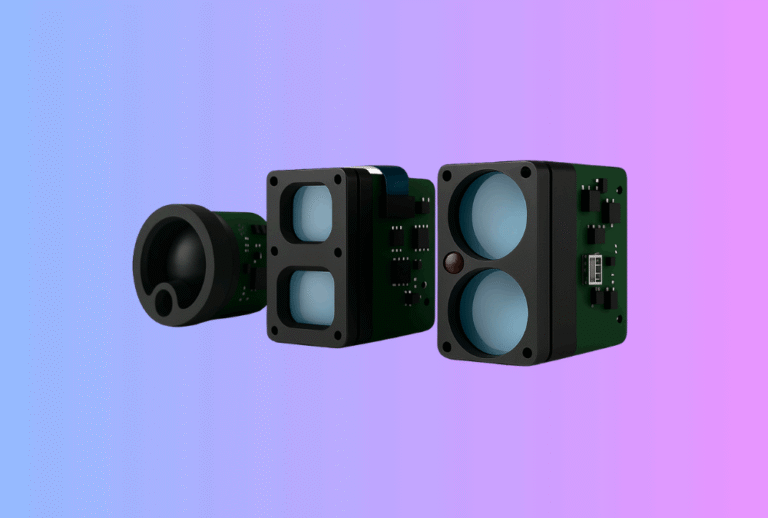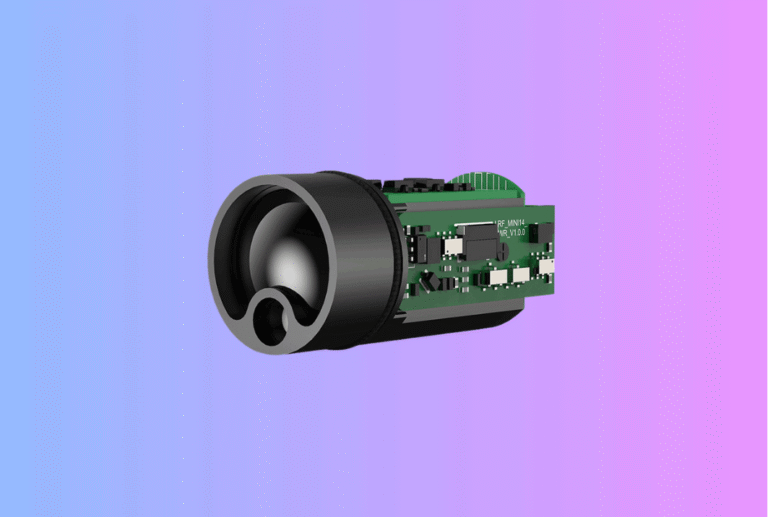
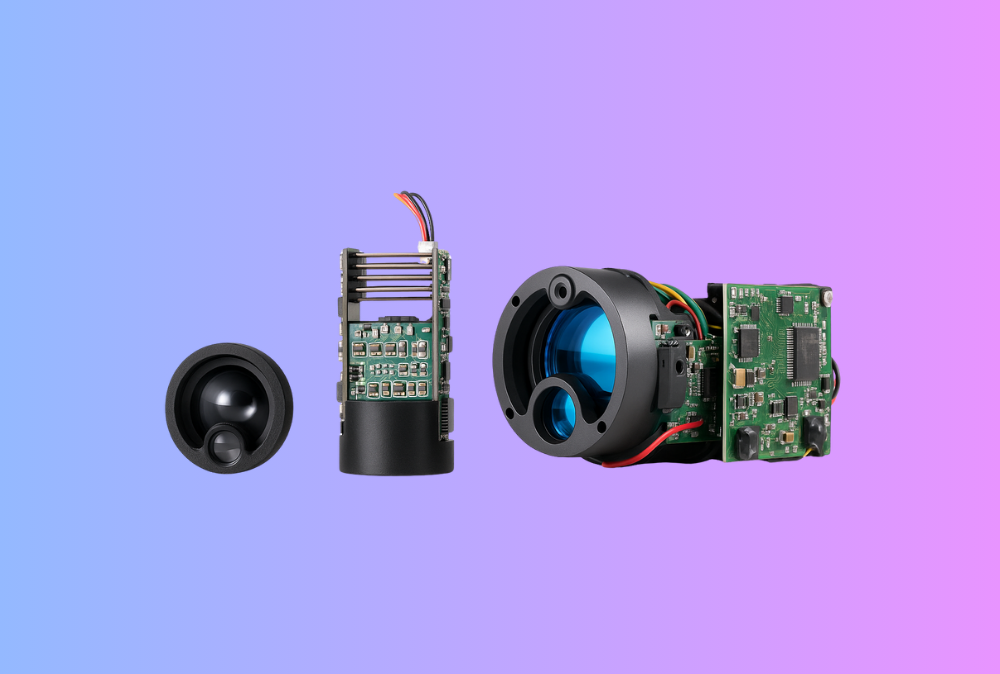
A laser rangefinder module golden sample and reference unit control guide is one of the most practical quality-management documents an OEM team can build, because many arguments in development, pilot build, production, and service do not begin with a clearly broken part. They begin with a comparison problem. One team says the new lot is fine because it still passes basic function. Another team says the product does not feel as stable as the earlier sample. Manufacturing says the module matches the drawing. Service says the returned unit behaves differently from what the customer originally approved. Engineering says the optical path, timing, or alignment seems to have shifted, but no one can prove it clearly because the project no longer has a controlled baseline reference that everyone trusts.
Table of Contents
ToggleThat is where golden samples and reference units become important. In serious OEM work, they are not display pieces or “the nice sample we liked last year.” They are controlled comparison anchors. They help the organization answer a crucial question: compared to what accepted baseline are we making this judgment? Without that anchor, evaluation becomes subjective. Teams begin comparing current units to memory, to mixed old samples, or to customer expectations that were never tied to a controlled physical reference. The result is confusion, wasted analysis, and avoidable disagreement.
This matters especially in laser rangefinder module projects because the product behavior depends on more than a simple pass or fail output. Startup timing, target confidence, boresight stability, interface behavior, front-end optical sensitivity, and environmental retention can all create “small but meaningful” differences. Those differences may not violate a headline specification but may still matter to a real OEM customer. A controlled golden sample system helps the team identify when a change is acceptable, when it requires explanation, and when it may signal a deeper control problem.
Why golden samples are often misunderstood
Many organizations use the phrase “golden sample,” but not all of them mean the same thing. In some teams, the golden sample is simply the first good-looking unit that was shown to a customer. In others, it is a unit that happened to perform well in a demo. In some factories, it becomes a vague object kept in a cabinet without revision discipline, traceability, or clear rules for use. That is not a strong system. It is only a sentimental sample.
A real golden sample is valuable only when it is controlled. That means its identity is clear, its revision state is known, its acceptance basis is documented, and its intended comparison role is defined. Otherwise, the sample becomes dangerous rather than helpful. Teams may compare current production to a unit that belongs to an old firmware state, an obsolete drawing, or a different front-end condition and then draw the wrong conclusion. In that situation, the golden sample creates noise instead of clarity.
This is why the first rule of a strong golden sample system is definitional discipline. The team must know what kind of reference unit it is using, why it was selected, what it represents, and what it should not be used to judge.
Golden sample and reference unit are related, but not identical
It is often useful to separate the idea of a golden sample from the broader idea of reference units. A golden sample is usually the highest-confidence baseline unit tied to a specific approved state of the project. A reference unit is a wider category. It may include golden samples, approved comparison units, retained pilot units, service comparison units, outgoing test references, and engineering baseline units.
This distinction matters because not every comparison task should use the same physical unit. The unit used for engineering characterization may not be the one used on a production line. The unit used for service troubleshooting may not be the same as the one used for customer approval comparison. The unit used to judge interface timing may not be the most appropriate one to judge boresight retention after field deployment.
So a mature OEM program usually benefits from a small controlled family of reference units rather than one mythical sample expected to answer every question. The golden sample is still important, but it works best when placed inside a broader reference strategy.
What a golden sample is supposed to do
A golden sample should create a trusted physical baseline for comparison. In practical terms, it helps the organization answer questions like these. Does the current production lot still behave in the same general way as the approved baseline? Does a returned field unit appear degraded relative to a known-good state? Does a pilot build still match the release condition the customer originally evaluated? Has an internal change altered the product in a way that is visible even if the specification table has not moved dramatically?
These are not abstract questions. They appear constantly in OEM work. A customer may say the new lot feels slower to respond. Manufacturing may say the unit is in tolerance. Engineering may suspect that interface timing changed after a firmware update. Quality may wonder whether a returned module is truly faulty or just different from current production. If the project has no trusted reference unit, the conversation quickly becomes subjective.
That is why the golden sample should be treated as a project-control asset. It is not merely a “good sample.” It is a controlled benchmark tied to an accepted product state.
A golden sample must be tied to a defined revision state
One of the most important rules in golden sample management is that the unit must be tied to a specific revision state. That means at minimum the team should know the relevant hardware revision, firmware revision, drawing or configuration state, and where necessary the calibration or test baseline under which the unit was accepted.
Without this link, the sample loses much of its value. The organization may still be holding a physically good unit, but it no longer knows what baseline that unit actually represents. In long-running OEM projects, that problem appears quickly. The same commercial module name may cover several hardware and firmware evolutions over time. If the golden sample is not clearly marked and documented, it becomes unclear whether teams are comparing current product to the right baseline or to an obsolete state.
This is why golden sample control is tightly linked to the earlier Laser Rangefinder Module Change Control and PCN Guide. A sample without revision identity is not a reliable baseline. It is just an old unit with emotional authority.
Selection criteria should be documented, not improvised
A golden sample should not be selected casually. It should be chosen according to documented criteria. Those criteria do not need to be excessively bureaucratic, but they should be clear enough that the team can later explain why this unit became the baseline.
In many OEM programs, the criteria include at least these elements. The unit belongs to the approved hardware and firmware state. It has passed the relevant acceptance or outgoing verification logic. Its key measured behavior is representative of the approved build rather than being a statistical outlier. Its mechanical and optical condition are clean and documented. Its comparison role has been defined. In some programs, the customer’s evaluation or signoff status may also be relevant.
This is important because a unit that is unusually “better than normal” is not always the right golden sample. If the team selects an exceptional outlier rather than a representative approved unit, then later production may be judged unfairly. The goal is not to keep the most flattering unit. The goal is to keep a credible baseline.
Different functions may require different reference units
A single laser rangefinder module program may need more than one controlled comparison sample. For example, the unit used to compare outgoing interface timing may not be the best choice for final optical or boresight baseline comparison. The service team may need a clean known-good reference for troubleshooting host-side behavior. Manufacturing may need a controlled comparison unit for EOL or incoming spot checks. Engineering may need retained pilot units to compare later changes in environmental or integration behavior.
This is why a structured reference-unit hierarchy is often more useful than a single “one sample solves everything” approach. The organization can keep one primary golden sample tied to the released baseline, plus several secondary reference units tied to specific purposes. The key is that each one should be labeled with its role and limitations.
That kind of structure also makes audits, engineering discussions, and service decisions cleaner. Instead of arguing vaguely about “the sample we used before,” the team can refer to the correct controlled reference for the task at hand.
Storage and handling affect whether the sample remains trustworthy
A golden sample that is poorly stored or casually handled will slowly lose credibility. Dust, contamination, repeated powering, uncontrolled cleaning, connector wear, loose labeling, front-window damage, and mixed storage with ordinary units all weaken the sample’s value. The team may still call it a golden sample, but it is no longer a trustworthy baseline.
That is why storage and handling should be explicit parts of the control system. The unit should be clearly labeled, protected from avoidable contamination or wear, and stored in a way consistent with its intended reference role. If the front window or optical path matters, then cleanliness protection matters. If the unit should preserve boresight confidence, then handling should avoid unnecessary remounting or uncontrolled stress. If the unit will be powered periodically, then those actions should be controlled and recorded.
This sounds simple, but it matters. A baseline sample that drifts through poor handling becomes worse than useless. It begins to distort comparisons rather than clarify them.
Comparison conditions must also be controlled
A common mistake in sample-based comparison is to assume that if the golden sample exists, the comparison is automatically valid. It is not. The conditions of comparison matter almost as much as the sample itself.
If a current unit is compared against the golden sample under a different front-window condition, different host software, different target scene, different thermal state, or different interface timing context, then the results may not support a fair judgment. The same is true in service analysis. A returned field unit compared loosely to a reference sample in a different setup may appear either worse or better than it really is.
So golden sample control should always include some discipline around how comparisons are performed. What conditions should match? Which metrics matter? What observations are qualitative and which are quantitative? What counts as meaningful difference? This does not mean every comparison must become a formal test protocol, but it does mean that careless comparison is not the same as useful comparison.
This is particularly relevant in projects influenced by the Laser Rangefinder Module Multi-Sensor Alignment Guide and Laser Rangefinder Module Host Interface Error Handling Guide. If alignment or host behavior are part of the concern, then comparison conditions need to reflect those realities.
Golden samples should not replace specifications or test plans
A strong warning is necessary here. Golden samples are valuable, but they should never replace formal specifications, drawings, test criteria, or acceptance logic. A golden sample is a comparison anchor, not a substitute for controlled engineering definition.
This matters because some organizations overuse sample comparison when documentation is weak. Instead of clarifying the drawing, they compare to the sample. Instead of improving the interface document, they compare to the sample. Instead of defining acceptance limits, they compare to the sample. That creates an unhealthy project structure where too much authority sits inside one physical object. When that happens, engineering control becomes fragile.
The healthier approach is that documents define the product, tests verify the product, and golden samples help resolve edge cases, training needs, change evaluation, or subtle comparison questions that the documents alone do not answer efficiently. In other words, the sample supports the control system. It should not become the control system.
This is one reason the current topic connects strongly to the Laser Rangefinder Module Documentation Pack for OEM Projects. If the documentation is weak, golden samples tend to be overloaded and misused.
Golden samples are especially useful during pilot and change evaluation
Two phases of an OEM project benefit especially strongly from a good reference-unit system: pilot build and change evaluation.
During pilot, the team is still learning whether the design is stable enough to scale. A golden sample or controlled reference unit helps the organization compare pilot builds against an accepted baseline rather than relying on vague memory or mixed early samples. This can be useful for boresight retention, host behavior, front-end optical confidence, startup timing, and other subtle characteristics that may not show up immediately in a headline specification.
During change evaluation, the value is even clearer. If a firmware update, component substitution, process adjustment, or drawing revision is introduced, the team needs a way to compare the new state against a trusted old state. A controlled golden sample gives that comparison more credibility and reduces the chance that change decisions are made purely on incomplete documentation or subjective impressions.
This is why golden sample logic fits naturally beside the Laser Rangefinder Module Pilot Build Readiness Checklist and the broader change-control discipline. It is one of the practical bridges between documented intent and observed behavior.
Service and failure analysis also need controlled reference units
Golden samples are not only for development and quality teams. Service and failure-analysis teams benefit greatly from controlled reference units too. Many returned products are not clearly dead. They are simply “not as good as expected,” “different from the unit the customer first saw,” or “inconsistent in the field.” In these cases, a controlled known-good reference unit can make the first level of comparison much more efficient.
For example, the team may compare startup behavior, interface timing, basic ranging confidence, or optical-path condition against the reference unit. This does not automatically prove root cause, but it provides a more objective starting point. It helps answer whether the returned unit is clearly degraded, whether the complaint may be environment-related, or whether the product still resembles current accepted behavior.
This is exactly why the topic connects to the Laser Rangefinder Module Failure Analysis Guide. Failure analysis often becomes faster and less political when the organization has a controlled comparison anchor instead of relying only on memory and general expectation.
Traceability must connect the sample to the project history
A golden sample should not float outside the project record. It should be linked to documentation, acceptance basis, revision identity, and selection history. Ideally, the organization should be able to answer these questions quickly: when was this sample selected, under which revision state, under what acceptance conditions, for what role, and whether it remains active or has been superseded.
This traceability matters because projects evolve. A sample that was appropriate during engineering evaluation may later be superseded by a production-release baseline. A service reference may be intentionally retained for a legacy revision after the main golden sample has moved to a new revision. These changes are not a problem if they are documented. They become a problem only when the team loses the story of what each reference unit represents.
That is why sample control should be treated as part of project traceability rather than a side habit of the quality lab.
What OEM buyers should ask suppliers
A buyer evaluating a laser rangefinder module supplier should ask whether the supplier has a real reference-unit philosophy, not only whether they can send samples. Useful questions include these. How are golden samples selected? What revision identity is tied to them? Are there different reference-unit roles for development, production, and service? How are these units stored and protected? What comparison conditions are recommended? How are golden samples updated after revision change? How does the supplier prevent reference units from becoming stale or misleading? Can the supplier support customer-side reference-unit control as well?
These questions are valuable because they reveal whether the supplier thinks in project-control terms or only in shipment terms.
A practical review framework for OEM teams
Many teams manage this topic more effectively when they structure it clearly.
| Review area | What the OEM team should confirm | Why it matters |
|---|---|---|
| Sample identity | The unit is tied to a known revision and acceptance basis | A baseline without identity is unreliable |
| Selection criteria | The sample was chosen intentionally and representatively | “Best-looking unit” is not the same as a valid baseline |
| Role definition | Golden sample and other reference units have distinct purposes | One unit should not be expected to answer every question |
| Storage and handling | The sample is protected from contamination, drift, and misuse | A damaged baseline distorts comparison |
| Comparison method | Conditions and metrics for comparison are understood | Uncontrolled comparison creates false conclusions |
| Traceability | The sample’s project history and supersession status are known | Projects evolve, and reference meaning must evolve too |
| Service use | Reference units support troubleshooting without replacing formal specs | Good comparison helps, but it must stay disciplined |
This kind of structure helps the team use golden samples as controlled anchors rather than vague symbols of “what good used to look like.”
Final thought
A laser rangefinder module golden sample and reference unit control guide is really a guide to disciplined comparison. It explains why memory is a weak baseline, why physical reference units still matter in complex OEM work, and why a controlled sample system can reduce confusion across engineering, quality, pilot, production, change evaluation, and service.
For suppliers, this is a chance to show deeper quality maturity than simple shipment support. For buyers, it is a practical way to reduce ambiguity when product behavior becomes subtle rather than catastrophic. And for the project as a whole, it is one of the clearest reminders that in B2B engineering, trust often depends not only on what the product is today, but on whether the organization can compare today’s product honestly against the baseline everyone agreed to yesterday.
FAQ
Is a golden sample just the best-performing unit from early development?
No. A real golden sample should be tied to a defined revision state, controlled acceptance basis, and specific comparison role. It should be representative, not merely flattering.
Can one golden sample cover development, production, and service?
Usually not by itself. Most mature OEM programs benefit from a controlled family of reference units with different roles.
Should golden samples replace formal specifications and acceptance tests?
No. Golden samples support the control system, but they should not replace drawings, specifications, test plans, or controlled acceptance criteria.
Why do service teams need reference units?
Because many returned units are not obviously dead. A controlled known-good comparison unit helps the team judge whether the field unit is genuinely degraded or simply being assessed under unclear expectations.
CTA
If your OEM project needs a laser rangefinder module supplier with stronger golden sample discipline, clearer reference-unit control, and better comparison support through pilot, production, and service, you can discuss your application with our team through our contact page.
Related articles
You may also want to read:
- Laser Rangefinder Module Documentation Pack for OEM Projects
- Laser Rangefinder Module Change Control and PCN Guide
- Laser Rangefinder Module Failure Analysis Guide
- Laser Rangefinder Module Pilot Build Readiness Checklist