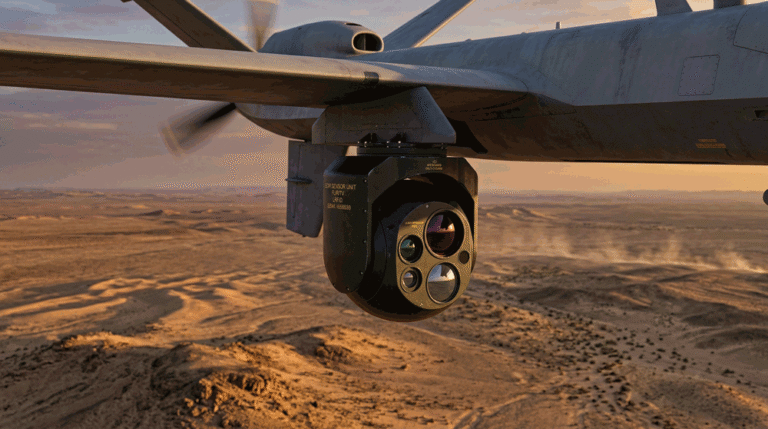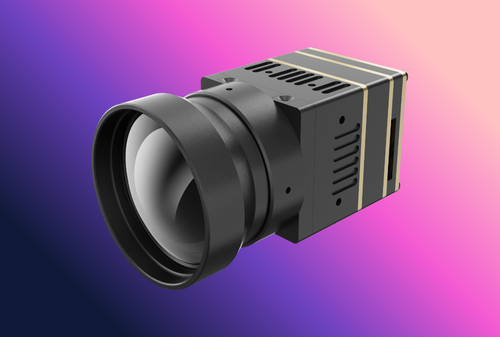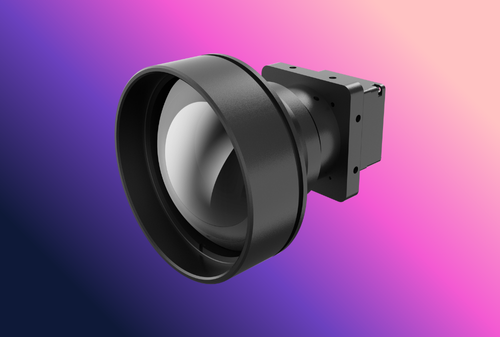
A thermal camera module has become a practical building block for many OEM and ODM products. It is now used in security systems, UAV payloads, industrial monitoring devices, handheld imagers, smart sensing platforms, and specialized inspection tools because it gives product teams a way to detect heat patterns beyond visible light. For B2B buyers, the value is not only that thermal imaging works in darkness. The bigger value is that a well-chosen module can improve target detection, enable non-contact inspection, support temperature-based alarms, and shorten product development time by offering a ready-to-integrate thermal subsystem.
Table of Contents
ToggleThat is why thermal camera module selection should never be treated as a simple detector purchase. In real OEM projects, image output is only one part of the decision. The success of the program also depends on optics, interface options, SDK maturity, power behavior, thermal management, mechanical stability, calibration logic, documentation quality, and long-term supply control. A module that looks impressive in a demo can still become a weak choice if it is hard to integrate, unstable in the final enclosure, or risky in production.
Why thermal camera modules matter in OEM development
For many OEM teams, a thermal camera module is not bought as an isolated component. It is selected because it solves a business problem inside a final product. In a perimeter device, it helps detect people or vehicles in poor visibility. In a UAV payload, it improves awareness when visible imaging is limited by light or contrast. In an industrial product, it supports remote inspection or temperature-based monitoring where contact methods are slow, unsafe, or impractical. In a handheld device, it becomes a feature that differentiates the product and supports premium positioning.
This commercial reality changes how the module should be evaluated. A buyer should not begin with the question, “Which module has the best specification sheet?” The better starting question is, “What job must the final product perform, under what conditions, and at what cost level?” Once that is defined clearly, the right resolution tier, optics, interface path, and supplier profile become easier to judge.
Thermal camera modules matter because they let OEM brands add high-value sensing capability without building a complete thermal engine from zero. That shortens development time, reduces engineering risk, and allows teams to focus on the product experience, host integration, application software, and market positioning. But those advantages only materialize when the module is selected with the final product in mind. If the buyer only compares image samples and ignores integration variables, the program often becomes slower and more expensive than expected.
What a thermal camera module really includes
Many buyers use the term thermal camera module as if it refers only to the sensor. In practice, it is better understood as a subsystem. A complete module usually involves the detector, image processing, optical path or optical compatibility, electronic interface, power behavior, communication protocol, calibration method, and software control support. In a mature OEM project, these elements are inseparable.
This distinction is important because many sourcing mistakes begin with the wrong mental model. If a team treats the module as a plug-in image sensor, it may underestimate issues such as startup behavior, internal heat effects, serial command control, USB video compatibility, firmware revision management, and enclosure interaction. These issues often do not appear during the first sample test. They appear later, when the module is mounted in the actual product and expected to perform consistently across engineering builds, pilot lots, and production units.
A useful way to think about a thermal camera module is to divide it into three layers. The first layer is imaging performance. This includes resolution, pixel pitch, sensitivity, frame rate, lens choice, and radiometric capability. The second layer is integration performance. This includes interface type, SDK readiness, command behavior, power stability, mechanical reference, heat tolerance, and host compatibility. The third layer is program performance. This includes sample lead time, production repeatability, document control, calibration consistency, product change control, and supply continuity. Most buyers focus heavily on the first layer. The second and third layers usually decide whether the project will move smoothly toward mass production.
Where OEM buyers use thermal camera modules
The demand for thermal camera modules comes from many industries, but the buying logic differs by application. In one segment, the product is purchased for awareness and detection. In another, it is purchased for temperature-related information. In another, it is purchased because it supports a premium feature set in a compact product. Understanding the true application objective is more important than repeating a generic list of industries.
Security and perimeter systems
In security products, the value of a thermal camera module usually comes from reliable heat-based detection when visible cameras are limited by darkness, glare, smoke, or visually cluttered backgrounds. In a perimeter device, the module is not being purchased because it produces a “better-looking image.” It is being purchased because it helps the system notice relevant targets when visible imaging becomes unreliable.
This has practical implications for selection. In many security programs, lens choice and field of view can matter as much as resolution. A buyer may assume that upgrading from a mid-tier core to a higher-tier core will automatically improve the product. But if the lens is not matched to the detection distance, or if the analytics stack cannot make good use of the image, the gain may be smaller than expected. Security buyers should therefore define target type, typical scene geometry, working distance, mounting height, expected environment, and analytics workflow before comparing module tiers.
Another key point is stability. Security systems often operate for long periods with minimal user intervention. That means the module must not only deliver acceptable image quality. It must do so repeatably, with stable startup behavior, predictable communication, and manageable environmental sensitivity. A strong module-supplier combination reduces false confidence during sampling and reduces headaches later in deployment.
UAV, robotics, and uncrewed systems
In UAV and robotic products, the decision logic changes. Here, a thermal camera module is often evaluated under size, weight, and power pressure. Image quality still matters, but it competes directly with payload weight, integration effort, latency, and control complexity. This is why a module that looks strong on paper may still be the wrong choice if it makes the aircraft heavier, pushes host processing too hard, or adds too much interface complexity.
Motion matters more in this segment than many buyers first realize. A module used on a moving platform must be judged by how useful the image remains while the system is in motion. That includes frame rate, latency, image tuning, scene adaptation, and the practical clarity of thermal detail under real movement. A premium resolution number does not automatically produce a better airborne or robotic user experience. The full imaging chain must work together.
For OEM buyers building UAV or robotic products, the best evaluation approach is to test the module close to the real operating condition. Bench testing is helpful, but it can hide key weaknesses. A module should also be assessed in a realistic payload arrangement, with representative optics, real power conditions, and actual movement. This is often where the more integration-friendly module proves to be the better business decision.
Industrial monitoring and process products
Industrial OEM projects often require a different level of discipline because thermal imaging may become part of a decision-making or alarm workflow. In these products, the customer is not always buying “thermal vision.” In many cases, the customer is buying a way to observe abnormal heat, trend equipment condition, inspect processes, or support preventive maintenance without physical contact.
In this category, it is especially important to distinguish between a module that shows heat patterns and a module intended to support temperature-related output. Many industrial projects fail at the specification stage because the buyer does not define which one is actually required. If the product only needs thermal contrast for inspection guidance, an imaging-oriented module may be sufficient. If the final product is supposed to trigger alarms, trend values, or support process decisions, then radiometric behavior, calibration method, and environmental stability become much more important.
Industrial buyers also need to think beyond the module itself. They should ask how data will be accessed, what interfaces are available, how alarms will be generated, how settings will be exposed, and how results will remain stable in the final enclosure. In an industrial system, software integration is often just as important as image output. The strongest module is not the one with the most attractive datasheet. It is the one that fits the system architecture and reduces downstream development risk.
Handheld imagers and smart devices
Handheld tools, compact imagers, intelligent attachments, and private-label devices form another important category. In these products, thermal imaging is often a feature that influences the user’s immediate perception of product quality. Startup speed, image smoothness, intuitive thermal palettes, practical optics, and low-friction control behavior all affect whether the final product feels professional.
This is why handheld projects often reward balance. A technically advanced module that demands more power, more host resources, or more software work may not be the best choice if it delays the launch or pushes the final product above the market’s price tolerance. Conversely, a low-cost module may be commercially weak if its image quality or responsiveness causes the product to feel unfinished. In these devices, success usually depends on selecting the right performance tier for the market position rather than simply aiming for the highest possible specification.
Imaging is not the same as temperature measurement
One of the most common misunderstandings in thermal OEM work is the assumption that every thermal image can be treated as reliable temperature data. That is not true. A product may display clear thermal contrast and still be unsuitable for meaningful temperature measurement. For B2B buyers, this distinction should be made at the beginning of the project, not after sample testing.
A simple way to frame the issue is this: some products need to see heat, while others need to measure temperature. Those two needs overlap, but they are not identical. A module intended for detection, observation, search, or general thermal awareness may work well without full radiometric behavior. A module intended for inspection, threshold alarm, trend analysis, or process control requires a more disciplined approach to calibration, accuracy conditions, and thermal stability.
This distinction affects more than engineering. It also affects sales positioning, customer expectation, and after-sales risk. If a supplier markets a module vaguely as suitable for “temperature monitoring” without clarifying the measurement basis, the buyer may assume a capability that the product cannot actually deliver under real-world conditions. That misunderstanding often creates poor-fit projects, mismatched evaluation criteria, and avoidable commercial disputes.
For OEM buyers, the practical lesson is clear. Define early whether the product requires thermal awareness or meaningful temperature output. Once this point is settled, the rest of the specification work becomes much more rational.
How to choose the right thermal camera module
A good module decision starts with the mission profile rather than the brochure. Resolution, sensitivity, lens options, and interfaces matter, but they only make sense when tied to a specific job. Buyers should define the use case in operational language first. What target must be seen? At what distance? Under what ambient conditions? Will the platform be moving? What does the host need to display, record, or calculate? What is the acceptable product cost structure? These questions lead to much better selection decisions than comparing sample images in isolation.
Resolution and product tier
Resolution is important because it influences detail, detection range flexibility, digital zoom usability, and overall image interpretation. But higher resolution is not automatically the best commercial choice. It usually increases module cost and may also increase optics cost, processing demand, data load, and thermal design requirements. The right question is not, “What is the highest resolution available?” The right question is, “What level of resolution supports the product’s actual selling point without creating unnecessary system burden?”
For some products, a mid-tier module is enough because the user only needs reliable awareness or short-range interpretation. For others, a higher-tier module is justified because the product must handle more demanding scenes, longer distances, or more detailed observation. Buyers should connect resolution directly to the end-user task and product positioning rather than treating it as a status symbol.
Sensitivity and usable detail
Sensitivity matters because it affects how well subtle thermal differences appear in the image. In practical terms, better sensitivity can help preserve low-contrast detail and improve scene interpretation. But buyers should resist the habit of reducing this entire issue to a single number. Real image usefulness depends on the total system, including optics, processing, thermal stabilization, housing conditions, and application environment.
A lower sensitivity figure can look attractive in a datasheet, but the business value lies in whether that advantage survives in the final product. If enclosure heat, front-window loss, or software tuning weakens the image, the theoretical benefit may shrink. A capable supplier should therefore be willing to discuss actual application conditions rather than hiding behind ideal laboratory specifications.
Lens and field of view
Optics often influence project success more than buyers initially expect. The module can only perform through the optical system that the final product uses. A wide field of view may be ideal for situational awareness or scanning, but weak for detailed interpretation. A narrow field of view may improve target detail, but make the device less flexible in real operation. That is why the module should never be selected independently from the lens strategy.
Buyers should also remember that lab results can be misleading if the evaluation setup is too idealized. A module tested without the final optical stack, without the intended front window, and without realistic enclosure heat may look better than it will in the finished product. Proper evaluation should happen as close to the real optical path as possible.
Frame rate and motion performance
Frame rate is not only a comfort issue. In many products, it directly affects usability. This is especially true in moving platforms, scanning tasks, dynamic observation, or products expected to support real-time situational interpretation. A module that appears acceptable when pointed at static targets on a bench may feel slow or unstable when deployed in a live scene.
This is why buyers should evaluate frame rate together with latency, image processing, and export-market requirements. A strong selection process considers how the product will actually be used rather than assuming that any thermal video stream is equally suitable.
Interface and software integration
Hardware integration gets a lot of attention in module projects, but software integration is often what determines how quickly a program moves. A module with weak documentation, limited command clarity, or immature SDK support can consume much more engineering time than expected. The real cost is not always obvious in the quotation. It appears later in delayed testing, unstable control behavior, or slow user-interface development.
For a B2B buyer, the practical question is not simply whether the module offers USB, UART, MIPI, or another interface. The more important question is how much integration effort the supplier helps remove. Does the team receive useful documentation? Are commands clearly defined? Is there sample code? Are settings stable across builds? Can the host reliably control image parameters, mode switching, and startup behavior? Can the engineering team automate test workflows without excessive manual work?
These questions matter because the host system must do more than display an image. In a real product, it may need to control the module, synchronize it with other subsystems, expose settings in the user interface, store data, trigger alarms, or manage power states intelligently. Good interface support reduces friction. Weak support creates hidden cost.
Mechanical and thermal integration
Many sampling decisions fail because the module is evaluated in open air and then assumed to behave the same way inside the final product. In reality, enclosure design changes everything. Internal heat sources, front-window material, sealing structure, mounting stability, vibration, contamination control, and thermal soak behavior can all affect the module’s performance.
This is especially important because thermal products are sensitive to temperature behavior in ways that visible-light products are not. The enclosure can influence image stability, measurement stability, or both. A module that works well in a simple test jig may perform differently once it shares space with processors, batteries, displays, or wireless components. Mechanical integration is therefore not just a packaging task. It is part of the imaging system.
A supplier that behaves like a real OEM partner should be able to discuss mounting reference, allowable conditions, power behavior, startup considerations, and integration constraints with practical clarity. Buyers should not wait until late development to surface these topics. The sooner the enclosure and thermal design assumptions are tested, the lower the redesign risk.
The validation process buyers should use
One of the most expensive mistakes in OEM projects is treating a sample as proof of production readiness. A first sample only proves limited things. It may show that the image looks promising, that communication is possible, and that the project is technically feasible. It does not prove that the module will remain stable across final integration, multiple builds, and production supply.
A stronger validation process separates evaluation into stages. The first stage is feasibility. Does the module basically fit the use case? Does it communicate correctly? Does the image quality justify further work? The second stage is integration validation. Does it perform correctly in the intended optical arrangement, power condition, host system, and enclosure direction? The third stage is design validation. Are settings, behavior, and documentation now stable enough to support controlled engineering builds? The fourth stage is production validation. Can the supplier deliver repeatable units with consistent documentation, version discipline, and expected lead time?
This staged process may seem more formal, but it saves time in the long run because it exposes problems early. It also creates better communication with the supplier. Instead of saying that the sample is “good” or “not good,” the buyer can define specific checkpoints: image behavior, interface behavior, startup repeatability, environmental tolerance, calibration logic, and documentation completeness.
How to assess a thermal camera module supplier
Choosing the module is only half of the sourcing decision. The supplier matters just as much. A strong thermal camera module supplier does more than send a sample and a datasheet. A strong supplier reduces ambiguity, supports integration, controls revisions, communicates changes clearly, and understands the difference between sample success and production success.
B2B buyers should therefore evaluate suppliers on multiple dimensions. The first is technical support quality. Can the supplier explain the module in application language rather than only repeating the datasheet? The second is document quality. Are pin definitions, mechanical references, command notes, and version identities clear? The third is software support. Is the SDK usable and sufficiently mature for real integration work? The fourth is production control. Does the supplier clearly distinguish sample lead time, pilot lead time, and mass-production lead time? The fifth is change control. Will the buyer receive clear notice if a component, firmware baseline, or behavior changes? The sixth is commercial honesty. Does the supplier explain which performance claims depend on specific test conditions?
A good supplier is not necessarily the one making the boldest promises. In OEM programs, the most valuable supplier is often the one that reduces uncertainty and communicates real constraints early. That is what prevents expensive rework later.
Common mistakes in sourcing thermal camera modules
A common mistake is buying based only on a sample image. A strong image can be persuasive, but it does not reveal how hard the module will be to integrate, how stable it will be in the final enclosure, or how repeatable it will be in production.
Another mistake is defining acceptance too loosely. If the buyer only checks whether the module powers on and displays a clear thermal scene, later problems become almost guaranteed. Acceptance should also consider communication stability, startup behavior, optical fit, host compatibility, and environmental sensitivity.
A third mistake is underestimating documentation and revision control. In many delayed projects, the sensor itself is not the problem. The real problems are unclear pinouts, incomplete protocol notes, inconsistent software baselines, or silent changes between samples and later units.
A fourth mistake is failing to define the commercial objective clearly. Some teams buy a high-end module for a price-sensitive product and then struggle with cost. Others buy too low in order to protect margin and later discover that the product feels weak in the market. The correct choice depends on the market position, not just on engineering preference.
A fifth mistake is ignoring long-term supply considerations. A module may be acceptable technically, but still risky if lead times are unstable, change control is weak, or the supplier cannot support a growing program predictably.
From RFQ to mass production
A disciplined OEM workflow usually starts with a clearer RFQ. Instead of asking only for price and lead time, the buyer should provide use case, target distance, environmental assumptions, output expectations, and approximate volume plan. The better the initial brief, the more useful the supplier’s recommendation becomes.
After that, the evaluation should move into sample testing, but sample testing should be structured. The buyer should confirm basic image quality, interface behavior, startup logic, power behavior, and fit with the intended host. Once the module shows promise, the next step is not immediate commercial approval. The next step is integration validation under conditions that resemble the final product.
Once integration confidence improves, design validation should lock critical assumptions. Firmware baseline, key settings, optical configuration, and acceptance criteria should all become more controlled. Pilot build should then be treated as a rehearsal for mass production, not as a formality. The point is not only to see whether the module works. The point is to confirm that the supplier, the documentation, and the buyer’s own production workflow are aligned and repeatable.
This kind of process reduces launch risk. It also improves negotiation quality because the buyer is no longer reacting only to headline pricing. The buyer is evaluating the full cost of integration, redesign risk, and supply continuity.
What makes one module commercially better than another
In B2B sourcing, the best module is rarely the one with the most impressive isolated parameter. The better module is the one that supports the target application with the lowest practical integration risk and the strongest long-term commercial fit. Sometimes that means choosing the higher tier because the product needs more detail and a stronger premium position. Sometimes it means choosing the more balanced tier because it shortens development time and preserves acceptable margin.
A commercially better module usually has four traits. First, it matches the real task rather than overserving or underserving it. Second, it fits the host system with manageable power, software, and mechanical burden. Third, it comes from a supplier that supports document clarity and change control. Fourth, it makes the final product easier to build, test, and scale.
That is the mindset OEM buyers should use. The module is not only a component cost. It is a decision that affects engineering time, launch timing, product stability, and future sourcing flexibility.
FAQ
What is a thermal camera module?
A thermal camera module is an embedded thermal imaging subsystem that can be integrated into another product. It is typically used in OEM and ODM devices such as security systems, UAV payloads, industrial monitoring products, handheld imagers, and smart sensing equipment.
Is a thermal camera module the same as a finished thermal camera?
No. A module is intended for integration into a host product. A finished thermal camera is a complete end device with housing, power, user interface, and application-level functions already built in.
Do all thermal camera modules support temperature measurement?
No. Some modules are intended mainly for thermal imaging and scene awareness, while others are designed to support more meaningful temperature-related output. Buyers should define this requirement clearly before selection.
Is higher resolution always better?
Not always. Higher resolution can improve detail and flexibility, but it may also increase cost, processing demand, optics cost, and integration burden. The best choice depends on the product’s real use case and target market.
What matters most besides image quality?
For OEM buyers, key factors also include optics, field of view, interface options, SDK maturity, power behavior, mechanical fit, enclosure heat effects, documentation quality, supplier support, and long-term supply control.
What is the biggest sourcing risk?
The biggest risk is often not the first sample. It is what happens after the first sample, including weak documentation, silent changes, poor revision control, unstable lead times, or mismatch between the module and the final product environment.
CTA
Choosing the right thermal camera module is not only about resolution or price. For OEM buyers, success depends on how well the module fits the target scene, optics, interface architecture, enclosure design, and long-term supply plan. A clear evaluation process at the beginning will save time, cost, and redesign risk later.
If you would like to discuss module selection, integration requirements, or sample evaluation, please visit CONTACT.