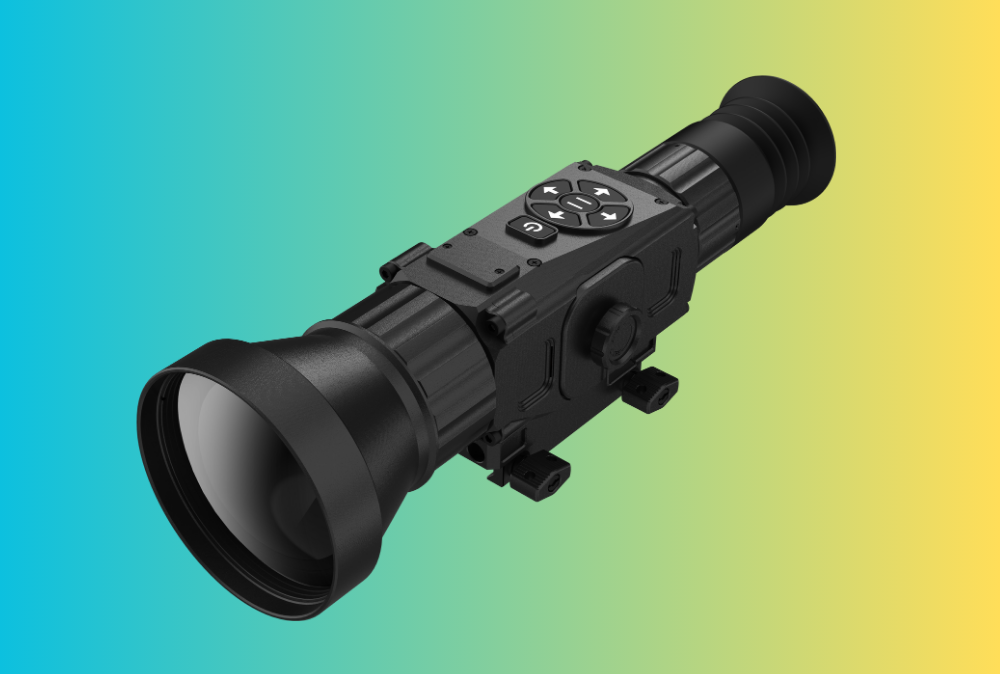
For many brands and distributors, the fastest way to enter the night-hunting market is not to design a Thermal Hunting Scope from scratch, but to partner with an experienced China-based OEM. Done well, this partnership gives you access to mature technology, proven production lines and competitive pricing—while you focus on brand, channels and customer support.
Table of Contents
ToggleDone badly, it leads to quality issues, missed seasons and damaged reputation.
This article looks at how to build win-win OEM partnerships around thermal hunting scopes, including dedicated rifle scopes, clip on thermal scope lines and hybrid systems such as a thermal scope with rangefinder. We will also discuss how to position different models—from best budget thermal scope entries to flagship long-range optics—in a coherent portfolio.
1. Why China OEM for Thermal Hunting Scopes?
China has become the global centre for uncooled thermal technology. A large ecosystem of sensor makers, optics factories, electronics assemblers and firmware teams has grown around both industrial and outdoor applications.
For international brands, this means:
- competitive pricing across resolutions and lens options
- ready access to imaging cores, germanium optics and long-wave IR coatings
- factories that already mass-produce thermal hunting products for multiple markets
Partners like Gemin Optics combine these capabilities into complete thermal rifle scopes and thermal clip-on sights, plus the underlying thermal camera modules and laser rangefinder modules used inside them.
When you choose your OEM well, you inherit that ecosystem without having to build it yourself.
2. Mapping Your Product Strategy: from Best Budget to Flagship Thermal Hunting Scopes
Before you visit a factory or request quotations, you need a clear picture of your product line. Many successful partners plan a thermal portfolio in tiers rather than chasing one “hero” model.
2.1 Entry level: best budget thermal scope
At the base of the pyramid sits a reliable, cost-effective optic—the genuine best budget thermal scope for your target audience. It might use a 256×192 sensor and a 19–25 mm lens, with simple controls and limited recording.
Its role:
- give new customers their first positive experience with your brand
- compete with mass-market “cheap” units without sacrificing reliability
- anchor package deals with rifles or accessories
2.2 Core range: workhorse thermal hunting scopes
Your middle tier is where most revenue comes from: 384×288 sensors, 25–35 mm lenses, 50 Hz refresh, PIP, and better image processing. These models become your default thermal hunting scopes for mixed hog and predator work.
Within this tier you can offer:
- one dedicated “all-round” thermal hunting scope
- a lighter thermal scope for ar15 optimised for semi-auto platforms
- perhaps a compact infrared scope for rifle roles on rimfire or farm guns
2.3 Flagship models: best thermal scopes for demanding users
At the top sit a few high-spec products aimed at professionals and enthusiasts: typically 640×512 sensors with 35–50 mm lenses, advanced recording and, increasingly, integrated LRF.
These become your:
- best thermal rifle scope offerings for serious predator hunters
- specialist best thermal scope for coyote hunting in open terrain
- high-margin visibility products for trade shows and marketing
A good OEM partner can often base all three tiers on the same core technology, changing optics, housings and firmware options while keeping service and spare parts manageable.
3. Working with Your OEM on Platform Families
Rather than ordering one-off designs, the smartest brands co-develop platforms that can spawn multiple models.
3.1 Dedicated scope platforms
Start with a robust rifle-mounted chassis that can accept several module/lens combinations. On this platform you can build:
- entry-level and mid-range scopes with 256 and 384 sensors
- flagship 640 versions using the same mechanical envelope
- variants optimised for bolt guns vs. thermal scope for ar15 setups
Discuss with your OEM how they manage boresight stability, recoil ratings and environmental sealing across all variants.
3.2 Clip-on platforms
A separate platform supports your clip on thermal scope line. Critical points to define with the manufacturer include:
- precise collimation and repeatability when used in front of premium day glass
- mount interfaces for different objective bell diameters and rail setups
- firmware modes tailored to different magnifications of host scopes
Position these as your best thermal clip on solutions, especially for markets where hunters already own high-end daytime optics.
3.3 Rangefinding and fusion platforms
If you plan a thermal scope with rangefinder, agree early on how the LRF is integrated:
- where the laser aperture sits relative to the thermal lens
- how the beam is aligned to the reticle during assembly
- how ballistic profiles will be stored and updated
This is where your OEM’s experience with thermal + LRF fusion & ballistics becomes a major advantage.
4. Evaluating a China Thermal Hunting Scope OEM Partner
Once your product strategy is clear, you can evaluate potential manufacturers against it.
4.1 Technical capability and engineering support
A strong OEM partner should:
- have in-house expertise with thermal imaging cores and optics
- show you sample image quality across resolutions and lenses
- explain their approach to NETD optimisation, non-uniformity correction and firmware updates
- support custom reticles, menu languages and regional settings
Ask to see not only finished thermal hunting scopes but also the underlying thermal camera modules and test jigs.
4.2 Manufacturing quality and QA
Look for evidence of:
- calibrated collimation benches for rifle scope alignment
- recoil and drop testing for different calibres
- environmental tests (temperature cycling, humidity, water ingress)
- burn-in processes to catch early component failures
Partners such as Gemin Optics outline their approach to QC and reliability on “Why Choose Us” and quality pages; a factory tour or video walk-through can confirm that these processes are real, not just marketing.
4.3 Communication and project management
A thermal OEM partnership touches hardware, firmware, documentation and logistics. Strong partners provide:
- English-speaking project managers familiar with hunting markets
- clear timelines for sample builds, validation and mass production
- version control for firmware so your customer support team can track changes
If you plan multiple SKUs—from budget scopes to top-tier best thermal scopes—you need a partner who can coordinate them as a family, not as separate one-off projects.
5. Co-Designing Scopes for Specific Use Cases
OEM partnerships work best when you feed real field requirements into the design process instead of just copying existing models.
5.1 AR-15 night-hunting configurations
For AR-centric markets, collaborate with your OEM on:
- appropriate mount heights and eye relief for thermal scope for ar15 builds
- control layouts that can be reached from typical AR grips
- weight targets that maintain good balance with suppressors and accessories
Provide real rifles and feedback from your field testers; use this to iterate prototypes with the manufacturer.
5.2 Predator and coyote specialists
If your dealers sell mostly to predator callers, work with the OEM on:
- sensor/lens combinations tuned for open terrain and 250–350 m ID
- reticles and PIP modes that support fast follow-up shots
- optional integrated LRF to create a true best thermal scope for coyote hunting flagship
Your feedback on local regulations, calibre preferences and hunting culture makes the difference between a generic optic and a market-leading one.
5.3 Farm, ranch and pest-control users
For customers who mainly need an all-purpose infrared scope for rifle use around property, focus joint design sessions on:
- ruggedness and ease of operation over ultimate range
- battery systems that match working patterns (e.g., hot-swappable 18650s)
- modes that simplify close-range identification in cluttered environments
These products often form the backbone of your best budget thermal scope tier.
6. Commercial Terms that Support Win-Win Partnerships
Good technical work must be supported by sensible business terms.
6.1 Pricing and volume planning
Discuss volume brackets early and honestly. A fair structure often includes:
- higher prices for first-article runs and small MOQ batches
- clearer discounts once annual volume targets are achieved
- options to share tooling costs for new housings or mounts
OEMs appreciate realistic forecasts more than aggressive but unreliable promises.
6.2 Branding, certifications and regional compliance
Agree who is responsible for:
- applying CE, FCC and other markings to the finished thermal hunting scope
- keeping documentation updated as regulations evolve
- managing country-specific restrictions on thermal optics or rangefinders
China manufacturers can usually obtain core certifications, but you may need to handle import licences or registration in your own region.
6.3 After-sales and warranty support
Clarify:
- standard warranty duration and what failures are covered
- how repaired or replacement units are handled logistically
- whether your technicians will receive training on common issues
A strong OEM will treat warranty data as a feedback loop to improve future batches rather than as a cost to minimise.
7. Protecting IP and Managing Exclusivity
Thermal technology itself is no secret, but your product combinations and branding are. To keep partnerships healthy:
- use NDAs and clear contracts covering logo and design use
- specify whether your chosen cosmetic design, menu theme or reticle is exclusive
- agree on how long the factory must wait before selling similar designs to other brands, if at all
Many Western partners prefer to build on common internal platforms while keeping external appearance and firmware branding unique. This lets the OEM scale production while protecting your market position.
8. Building Long-Term Win-Win Relationships
The most successful collaborations treat the Thermal Hunting Scope as the starting point, not the endpoint. Over time, you might:
- add related products like thermal monoculars and binoculars that share the same cores
- co-develop new clip-on or LRF variants as your market matures
- jointly attend trade shows, sharing demo units and marketing material
From the manufacturer’s viewpoint, you are more than a buyer; you are a channel and a source of field intelligence. From your viewpoint, they are more than a factory; they are a technology partner keeping you competitive as new sensors and features reach the market.
Partners such as Gemin Optics emphasise this relationship aspect on their OEM/ODM solutions pages, highlighting cooperative roadmaps rather than one-off orders.
9. Conclusion: Turning Thermal Hunting Scope OEM Work into a Strategic Asset
A well-structured OEM partnership around thermal optics can transform your business. Instead of just reselling someone else’s finished units, you can curate a full range of thermal hunting scopes—from accessible best budget thermal scope models to high-end best thermal rifle scope platforms with clip-on and LRF variants—under your own brand, tuned for your own markets.
The key is to treat your China manufacturer as a long-term ally:
- define a clear product strategy before you start
- evaluate engineering depth, QA and communication, not just price
- co-design platforms that cover dedicated scopes, clip on thermal scope options and future upgrades
- put transparent commercial and after-sales frameworks in place
If you are ready to explore this path, teams like Gemin Optics invite you to share your roadmap, volume expectations and target users through their contact page. With the right cooperation, a Thermal Hunting Scope OEM programme can become a durable win-win engine: you bring market insight and brand reach, your China partner brings thermal engineering and manufacturing excellence—and together you build products that hunters trust in the dark, season after season.