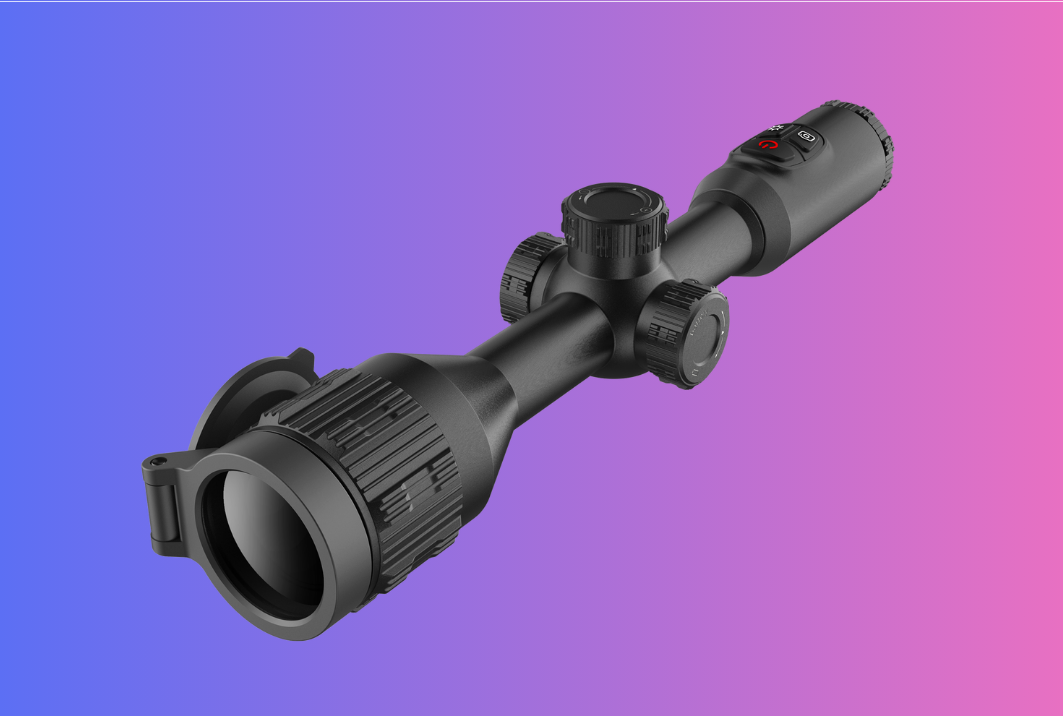
In the hunting optics market, a thermal hunting scope is not just another SKU on your price list. For B2B brands, distributors and wholesalers, it is a flagship product that carries your logo, your promise and your reputation in the field at night.
Table of Contents
ToggleChoosing the right thermal hunting scope supplier is therefore a strategic decision. It influences your margins, your dealer relationships and, ultimately, whether your brand is trusted by serious hunters.
Yet many buying decisions are still driven mainly by unit price. In reality, the brands that win over the long term evaluate their suppliers on three pillars: quality, integrity and long-term value. Price matters, but only after these foundations are secure.
Why supplier choice matters so much in thermal hunting scopes
Thermal hunting scopes are complex systems. They combine sensors, lenses, image processing, mechanics, firmware, power management and ruggedized housings. If anything goes wrong, your end user does not blame the OEM factory; they blame your brand.
For B2B buyers, the choice of thermal hunting scope manufacturer has several direct impacts:
- Brand reputation
Consistent image quality, reliable zeroing and low failure rates build trust among hunters. A bad batch can damage your brand for years. - Dealer confidence
Dealers prefer product lines with predictable performance and low return rates. A strong supplier relationship helps you maintain that stability. - Total profitability
Warranty claims, replacements and technical issues can quietly eat up your margin. A “cheap” supplier can actually be the most expensive over time. - Strategic flexibility
The right OEM/ODM partner can help you react faster to trends, add new models and update features without starting from zero each time.
This is why serious B2B brands look far beyond the initial quotation when evaluating thermal hunting scope suppliers.
Pillar 1: Quality – more than just resolution and specs
For B2C marketing, it is easy to talk about resolution and detection range. But B2B buyers know that real quality is deeper than product brochures. When evaluating a thermal hunting scope supplier, consider at least three layers of quality.
1. Product performance in real conditions
Datasheets tell only part of the story. You need to understand how the scope behaves in the field:
- Is the image clean and stable across different temperature conditions and humidity?
- Does the thermal hunting scope hold zero after repeated recoil?
- Are detection and recognition ranges realistic, or based on ideal lab conditions?
- Are menu operations intuitive enough for a hunter wearing gloves and under time pressure?
Field testing with your own team and trusted dealers is essential. A serious supplier will invite this testing and accept honest feedback.
2. Process quality and consistency
You are not buying one thermal hunting scope; you are buying repeatable batches. That depends on the supplier’s internal processes:
- Do they have documented QC at incoming, in-process and final stages?
- Is there a clear procedure for calibrating every device?
- Can they explain their burn-in tests, drop tests and environmental tests?
- Do they have traceability systems for components and finished units?
B2B brands should ask for process descriptions, test reports and sample QC records. A reliable supplier is proud to show how they control consistency.
3. Quality culture and problem-solving attitude
Even the best factories face issues from time to time. What matters is how they respond:
- Do they hide problems or communicate early and openly?
- Do they analyze root causes and implement corrective actions?
- Do they share lessons learned to prevent repeat issues?
A supplier with a strong quality culture sees every issue as an opportunity to improve. This protects your brand and your dealers.
Pillar 2: Integrity – the foundation of long-term cooperation
In B2B relationships, integrity is a real business asset. It reduces risk, saves time and allows both sides to focus on growth instead of firefighting.
When choosing a thermal hunting scope supplier, integrity shows up in several ways.
1. Honest specifications and realistic promises
Some suppliers overstate detection ranges, battery life or ruggedness just to win the order. For B2B buyers, this is dangerous:
- Dealers and end users will compare real performance with your marketing claims.
- Over-promising leads to complaints, returns and loss of trust.
A supplier with integrity:
- Gives conservative, realistic performance data.
- Explains test conditions clearly.
- Is willing to adjust brochures and manuals to match reality.
This honesty supports your own integrity as a brand.
2. Transparent pricing and cost structure
Unit price is important, but so is clarity:
- Are all optional features (Wi-Fi, recording, LRF, extra accessories) clearly quoted?
- Are there hidden costs for branding, packaging or certification documents?
- How do they handle cost changes when components fluctuate?
A professional thermal hunting scope manufacturer will explain:
- What drives cost (sensor resolution, lens size, housing, software features).
- Where there is room for optimization without hurting quality.
- How they plan to keep pricing stable over time.
This transparency allows you to plan your own pricing strategy with confidence.
3. Respect for IP, confidentiality and channels
For many brands, the key asset is not only the hardware, but also:
- Own brand, logo and product design
- Software features, reticles, UI logic
- Dealer network and pricing system
An ethical supplier respects:
- Your private-label designs and does not copy them for others.
- Your market territories and does not undercut you with direct online sales.
- NDAs and technical documents you share for co-development.
This is critical for building a truly win-win partnership.
Pillar 3: Long-term value – looking beyond the first order
The third pillar is long-term value. The best thermal hunting scope supplier is not always the cheapest, but the one who helps you earn and keep money over many seasons.
1. Total cost of ownership (TCO)
B2B brands should calculate:
- Failure and return rates
- Warranty handling costs and logistics
- Technical support time for your own team
- Lost sales from stock-outs or delayed deliveries
Sometimes, a supplier with slightly higher unit price but much lower failure rates and better support will deliver higher overall profit and far less stress.
2. Product roadmap and scalability
Thermal hunting scopes are evolving fast. Successful brands need:
- New models with improved sensors or lenses
- Variants tailored for different markets (US, EU, AU, etc.)
- Accessories and firmware updates to keep the lineup fresh
A committed OEM/ODM partner will share their technology roadmap, discuss future options and help you plan:
- Entry-level, mid-range and premium models
- Upgrade paths between generations
- Compatible platforms to reuse accessories and training
This forward-looking approach turns your supplier into a strategic partner, not just a vendor.
3. Support, training and co-marketing
Long-term value also comes from the support around the product:
- Technical training for your sales and service teams
- Marketing materials (photos, videos, manuals, comparison charts)
- Quick response for dealer questions and special requests
Suppliers who “think B2B” understand that helping you succeed in the market is also helping themselves. Their mindset is: “If our partners grow, we grow.”
A practical evaluation framework for thermal hunting scope suppliers
To make supplier evaluation more systematic, B2B brands can follow a structured approach.
Step 1: Clarify your own positioning and priorities
Before talking to factories, define:
- Target customers and price segments (budget, mid-range, premium)
- Target markets (e.g. US coyote hunting, European wild boar, etc.)
- Expected annual volume and growth plan
- What matters most: speed, customization, lowest failure rate, etc.
This clarity helps you see which supplier is the best fit, not just the best price.
Step 2: Shortlist by capabilities and focus
Screen potential suppliers by:
- Experience specifically with thermal hunting scopes, not just generic thermal imagers
- Design, R&D and testing capabilities in-house
- Minimum order quantities (MOQs) and flexibility
- Focus on B2B vs direct-to-consumer business
Suppliers who are “one-stop shops” for all consumer gadgets may not be as committed to long-term B2B partnerships.
Step 3: Audit factory and processes (on-site or virtual)
Whenever possible:
- Visit the factory or conduct a detailed video audit.
- Review their production lines, test equipment and warehouse management.
- Ask to see real QC procedures and test reports.
This will quickly show whether the supplier is truly ready for serious B2B cooperation.
Step 4: Run structured sample and field tests
Do not skip testing:
- Order thermal hunting scope samples with the exact configurations you plan to sell.
- Test them with your internal team and trusted dealers in typical hunting scenarios.
- Use a standard checklist (image performance, menu logic, zero stability, battery life, ergonomics).
Share results with the supplier and see how they respond. Their reaction will tell you a lot about their professionalism and willingness to improve.
Step 5: Start with a pilot order and clear KPIs
Before committing to large volumes:
- Place a pilot order with agreed quality and delivery KPIs.
- Monitor failure rates, delivery accuracy and communication quality.
- Hold a review meeting after the pilot to decide next steps.
If the supplier shares your win-win mindset, they will treat the pilot as an investment in a long-term relationship.
Key questions B2B buyers should ask a thermal hunting scope supplier
During discussions, questions like the following can help you see beyond the surface:
- What is your main business model: OEM/ODM for brands, or direct online sales?
- How do you control consistency between batches of thermal hunting scopes?
- Can you share typical failure rate data and examples of improvement projects?
- How do you handle warranty cases and RMAs with B2B partners?
- What is your roadmap for new sensors, lenses and features in the next 2–3 years?
- How do you ensure ethical and responsible manufacturing in your supply chain?
- How do you protect B2B partners’ brands, designs and market territories?
The answers will reveal whether the supplier truly thinks in terms of quality, integrity and long-term value.
What a value-driven OEM/ODM partner looks like
A supplier who shares your values will usually:
- Talk about long-term cooperation, not just short-term volume.
- Show real commitment to quality systems and continuous improvement.
- Communicate openly, even when there is a challenge.
- Respect your brand, your IP and your channel strategy.
- Take social responsibility seriously, from worker safety to environmental impact.
Such a partner is not just selling you a thermal hunting scope. They are co-building your brand reputation in the hunting market.
Conclusion: Choosing the right thermal hunting scope supplier is choosing your future
For B2B brands and distributors, the supplier of your thermal hunting scope line is more than a cost line in your spreadsheet. It is a partner who can either protect or damage your reputation, support or exhaust your team, and build or weaken your relationships with dealers.
The brands that succeed in the long run are those that look beyond price and choose suppliers based on:
- Quality – proven performance and stable processes
- Integrity – honest specs, transparent pricing, respect for IP and channels
- Long-term value – lower total cost of ownership, clear roadmap, strong support
Work with a manufacturer who believes in win-win cooperation, is dedicated to creating value for B2B customers, operates with integrity, and cares about its social responsibility in the supply chain.
Then every thermal hunting scope you ship is not just a product, but a shared achievement between your brand, your supplier, your dealers and the hunters who trust your name in the field.