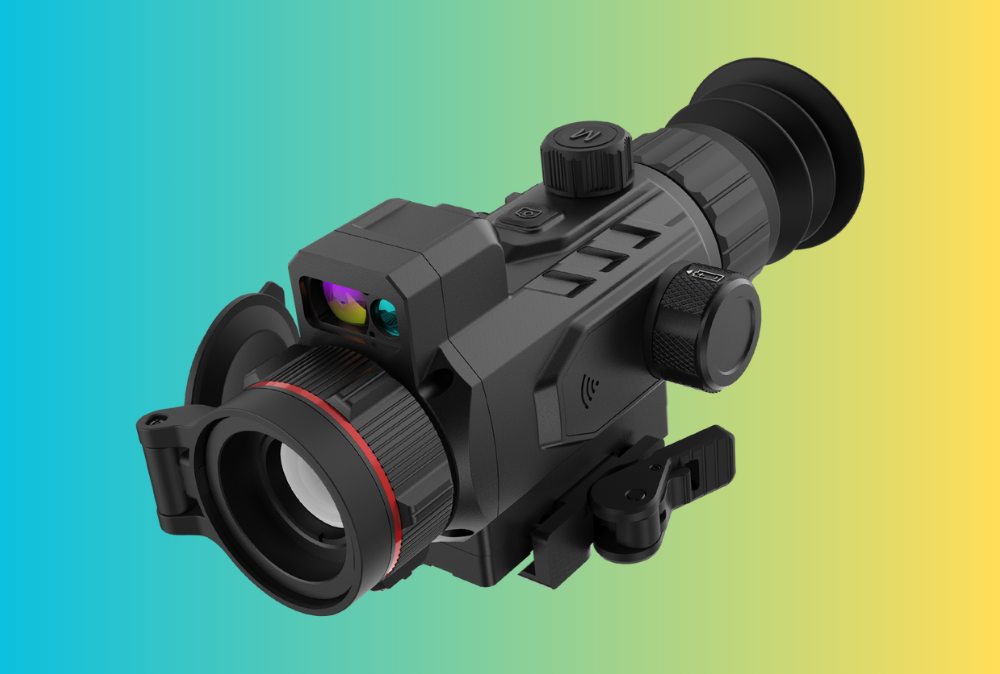
For many distributors, gun shops and outdoor e-commerce businesses, the next logical step after reselling big brands is to launch a house brand. In the thermal space, a well-designed Thermal Hunting Scope private-label line can transform you from “just another dealer” into a hunting optics brand with its own identity, loyal following and higher margins.
Table of Contents
ToggleBut private label is not just about putting your logo on an existing optic. It is about designing a product family that fits your customers, protecting quality and building a long-term relationship with a trusted OEM/ODM partner. In this article we look at how a thermal private-label programme works, what dealers should plan for, and how to think about entry-level, mid-range and premium segments from a business point of view.
1. Why launch your own Thermal Hunting Scope brand?
From a B2B perspective, the benefits of a private-label Thermal Hunting Scope line are simple but powerful.
First, you gain control over your margin structure. Instead of competing against dozens of dealers selling the same SKUs at ever-lower prices, you own a differentiated product that customers cannot directly price-match online.
Second, you own the customer relationship. When a hunter upgrades from an entry model to a premium optic, they stay within your brand ladder instead of “graduating” to another manufacturer’s flagship. A buyer who starts with one of your Best Budget Thermal Hunting Scope Options for Everyday Hunters can later move up to a long-range predator model without changing brands.
Third, you build equity. Every positive hunting story, every social-media post and every word-of-mouth recommendation accrues to your own name rather than someone else’s. Over time, your brand becomes an asset that can support accessories, clothing, digital products and more.
Finally, a private label lets you design a portfolio that truly fits your market. You are no longer limited to whatever global brands decide to import. Instead, you can tailor specifications, features and price bands to the exact mix of hog hunters, coyote callers, AR users and outfitters you serve.
2. What “private label” means in thermal hunting optics
The phrase “private label” covers a spectrum of cooperation models with a manufacturer. Understanding the differences helps you set realistic expectations and choose the right level for your business.
At the most basic level is white label: a finished scope, identical to others sold worldwide, with only the logo and packaging changed. This is fast and cheap, but your ability to differentiate is limited and you depend heavily on the factory’s decisions about future upgrades.
A step up is OEM work on existing platforms. Here, you choose from proven housings, lenses and electronics, but you can modify firmware, reticles, cosmetic finish and packaging. You might, for example, develop a line of thermal rifle scopes with your own user interface and menu language while sharing the same core hardware as other projects.
The highest level is ODM or co-development. You work with the manufacturer’s engineers to create new models or entire platforms based on your product roadmap. That can include unique housings, controls and optical configurations. Time-to-market is longer, but the result is a genuinely distinctive Thermal Hunting Scope family that competitors cannot easily copy.
Most hunting brands operate somewhere between OEM and ODM. They leverage existing, reliable imaging cores, but customise the optics, appearance and feature set to match their specific customers.
3. Mapping your market and product ladder
Before choosing models or housings, you need a clear picture of who will buy each Thermal Hunting Scope in your line and what problems it will solve.
3.1 Entry level: everyday hunters
At the bottom of the ladder are recreational users with limited budgets. They may have used lights or basic night-vision and now want a reliable thermal they can afford. For them, your entry tier should focus on true value rather than rock-bottom prices.
Typical specs include a 256×192 or 384×288 sensor, a compact lens, simple controls and trustworthy zero. When positioned correctly, these scopes become your best budget thermal scope offers: honest tools that make thermal accessible without the headaches of ultra-cheap imports.
This is where content like “Best Budget Thermal Hunting Scope Options for Everyday Hunters” works well on your blog and social channels. It shows that you understand their budgets and are not pushing them into gear they do not need.
3.2 Mid-range: serious local hunters
The middle of the ladder serves intensive hog hunters, predator shooters and small outfitters who hunt many nights per year. They want more range, better detail and more robust housing.
Here your private-label line might feature 384×288 sensors with 25–35 mm lenses, multiple zero profiles and picture-in-picture modes. These become your general-purpose thermal hunting scopes—the ones most customers eventually settle on and talk about as the “best thermal scopes” in your brand.
Within this tier you can design a model optimised as a thermal scope for ar15, with an appropriate mount height and weight distribution, plus a more traditional configuration aimed at bolt-action users.
3.3 Premium: long-range predators and specialist users
At the top of the ladder live the optics that define your brand’s technical credibility. These premium scopes use 640×512 sensors, larger lenses and advanced image processing. They are positioned as your best thermal rifle scope offerings, and specifically as the best thermal scope for coyote hunting for customers who chase predators across big country.
This tier might also include a high-end thermal scope with rangefinder, where an integrated laser rangefinder and ballistic calculator justify the extra cost for long-range users who need precise drops and hold-overs at night.
3.4 Parallel clip-on and multi-weapon solutions
Alongside dedicated scopes, many dealers choose to offer a clip-on line aimed at hunters with multiple rifles and high-end daytime optics. Working with your OEM partner, you can create a family of thermal clip-on sights that preserve zero, fit various objective diameters and earn the title of best thermal clip on in your market.
Clip-ons sit mostly in the mid-to-premium tier. They do not replace dedicated scopes but complement them, giving your customers choices for how they configure their systems.
4. Core technology building blocks behind your brand
To build a sustainable private-label programme, you need transparency into the technology stack behind each Thermal Hunting Scope. That allows you to plan long-term, not just for a single season.
4.1 Thermal imaging modules
Modern scopes and infrared scope for rifle products are built around compact core assemblies that combine sensor, lens and processing electronics. Partners like Gemin Optics supply families of thermal camera modules that can be configured for different resolutions, lens sizes and interface options.
By basing several private-label models on a shared module family, you gain:
- consistent image quality and firmware behaviour across the line
- simplified spare-parts and service logistics
- a clear path to future upgrades as new sensors become available
4.2 Laser rangefinder modules and fusion
For your premium line, integrating rangefinding is a powerful differentiator. Instead of bolting a third-party unit on top of the scope, you can work with the factory to embed compact laser rangefinder modules into selected models.
This approach allows tight alignment between the thermal image, laser beam and ballistic calculator, turning those SKUs into true thermal scope with rangefinder solutions that justify their flagship status.
4.3 Form factors: dedicated, clip-on and handheld
Beyond rifle optics, many private-label programmes include handheld scanners and monoculars that share the same imaging technology. A hunter might scan with a handheld, then engage targets with a rifle-mounted Thermal Hunting Scope. For that role, you can co-develop a range of thermal monoculars that match your scopes’ palettes and controls, making the ecosystem feel cohesive.
5. Designing your Thermal Hunting Scope family
Once technology building blocks are clear, you can shape the products around your brand identity and customer expectations.
5.1 Visual language and ergonomics
Housings, turret shapes, buttons and even battery caps communicate brand personality. Do you want your scopes to look minimalist and utilitarian, or bold and tactical? Will they share a common silhouette so hunters recognise your gear across rifles and social-media photos?
Ergonomics matter too. A private-label Thermal Hunting Scope should feel like it was designed for real hands wearing gloves in the dark:
- controls easy to reach from natural shooting positions
- clear distinctions between buttons (click vs hold, different textures)
- intuitive menu structure that does not require a manual on every hunt
Because you control the design, you can keep this language consistent across entry, mid and premium tiers so that upgrading feels natural to returning customers.
5.2 Feature sets by tier
Your entry scopes do not need every advanced feature; mid and premium scopes can add them as differentiators. A typical breakdown:
- Entry: solid imaging, basic recording, simple reticles, minimal in-scope menus.
- Mid: multiple profiles, improved recording, picture-in-picture and more palettes.
- Premium: LRF integration, advanced ballistics, custom reticles, Wi-Fi streaming.
This tiering supports clear marketing messages and avoids confusing buyers with too many similar SKUs.
5.3 Naming and positioning
Model names should reflect their intended role: perhaps a “Ranch” series for general-purpose infrared scope for rifle applications, a “Predator” series for open-country hunting, and a “Clip-On” series for multi-rifle users.
When your naming scheme matches customer language—“This is our all-round thermal scope for AR-15 platforms”, “This is our dedicated coyote rig”—staff find it easier to recommend the right product and buyers remember the names.
6. Differentiation beyond hardware: firmware and user experience
Two scopes may share similar sensors and lenses yet feel very different to use. Your private-label line can stand out through thoughtful firmware and UX decisions.
6.1 Reticles, profiles and ballistics
Different regions favour different calibres and shot distances. As a private-label partner you can tune reticle selection, subtension and ballistic profiles around local realities. That might mean including holds that match popular .223, .243 or 6.5 mm loads, or offering specific profiles for subsonic hog work.
Premium models with integrated rangefinding can go further, turning your flagship into a complete night-hunting fire-control solution rather than “just another scope”.
6.2 Palettes and image modes
While every Thermal Hunting Scope offers white-hot and black-hot, subtler palette choices and contrast curves can make a big difference in mixed climates. Your OEM partner can help you define presets for hot summer nights, damp coastal air or cold open fields so hunters spend less time fiddling with menus and more time hunting.
6.3 UI consistency across the line
To keep training costs down and reduce support calls, aim for consistent menu logic across all models. An entry buyer who upgrades later should feel immediately at home. Dealers who demo your scopes will appreciate being able to move from one SKU to another without relearning controls.
7. Operational aspects of a private-label programme
Even the best-designed Thermal Hunting Scope family will fail commercially if operations are not planned carefully. B2B buyers should clarify these aspects early with their manufacturing partner.
7.1 MOQ, lead times and flexibility
Discuss minimum order quantities by model and by year, realistic lead times for initial and repeat orders, and how the factory can support seasonal peaks. You may decide to keep entry models in deeper stock while treating premium clip-ons or LRF versions as build-to-order items.
7.2 Quality assurance and field testing
Agree on QC procedures, from incoming component checks to final imaging and recoil tests. Many private-label partners also run their own field trials before launching a new SKU, especially when targeting demanding predator hunters who expect “best thermal scopes” levels of performance.
Collect feedback from these testers and channel it back to the OEM; this loop is where private label becomes true ODM collaboration.
7.3 Documentation, packaging and after-sales support
You control how the brand looks on shelves and in parcels. Work with your partner on:
- manuals in your chosen languages, with diagrams that match actual firmware
- packaging that protects scopes in transit and reflects brand identity
- warranty cards and registration procedures so you can track units and users
Clarify how repairs, replacements and spare-parts logistics will be handled, especially for export markets. Simple, predictable after-sales processes are a major part of total cost of ownership for your customers.
8. Marketing support: building your brand story
Hardware is only half the story. To grow a hunting optics brand around your Thermal Hunting Scope line, you need strong marketing content and dealer support.
Your OEM/ODM partner can often supply test footage, technical diagrams and feature descriptions, but you should adapt them to your tone of voice and market. Articles comparing your entry models with other best budget thermal scope options, how-to guides for clip-ons, and detailed explainers on choosing a Thermal Hunting Scope for different rifles are all valuable.
Remember that your private-label ecosystem can extend beyond scopes themselves. Branded mounts, cases, lens covers and training events reinforce the message that you are not just selling “boxes” but a complete night-hunting solution.
When hunters start asking specifically for your brand—rather than generically for a “thermal scope”—you will know that your private-label strategy is working.
9. How Gemin Optics supports Thermal Hunting Scope private label partners
Partners who choose Gemin Optics for their private-label projects gain access to an integrated engineering and manufacturing ecosystem built around OEM/ODM work. The company offers:
- modular imaging cores, housing designs and accessories that can be customised into full private-label lines
- experience delivering OEM/ODM thermal rifle scope solutions to brands targeting hunting, security and industrial markets
- in-house mechanical, optical and firmware teams able to tune products to specific regional requirements
Because Gemin also builds industrial devices and online monitoring systems, lessons learned about reliability, calibration and long-term availability feed directly into hunting products. That reduces warranty risk and ensures your Thermal Hunting Scope family has a stable future, not just a single-season sales spike.
10. CTA – Build your Thermal Hunting Scope private label line with a trusted partner
Launching a private-label Thermal Hunting Scope line is not only about finding a factory that can print your logo. It is about designing a coherent product ladder, choosing the right technology building blocks and aligning operations, marketing and after-sales support so that your brand creates real long-term value for hunters and dealers alike.
If you are planning to start or expand your own hunting optics brand, Gemin Optics can work with you on everything from entry-level workhorses to flagship long-range systems, including dedicated scopes, clip-ons and handheld devices. To discuss private-label ideas, volumes and timelines, you can contact the team via the Gemin Optics contact page and begin shaping a Thermal Hunting Scope programme that truly belongs to your brand.