Around ports, on offshore platforms and aboard vessels, security and safety cameras live in a very different world from warehouse or city CCTV. They face salt spray, constant vibration, dense fog, bright sun glinting off waves, and long nights with no ambient light at all.
Table of Contents
ToggleIn this environment, thermal camera modules are no longer a nice-to-have. They are often the only way to maintain reliable situational awareness for:
- ship perimeter security and anti-boarding monitoring,
- port and harbour surveillance,
- offshore platform safety,
- search-and-rescue support at night or in fog.
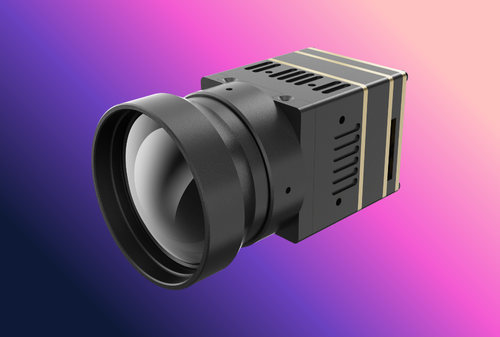
This article looks at maritime and port security from an OEM/ODM point of view. Instead of talking in general about “thermal cameras”, we focus on the thermal imaging modules and cores that sit at the heart of marine PTZs, fixed cameras and multi-sensor systems—and what you need to consider if you are designing or sourcing them.
We will cover field-of-view planning over water, environmental and corrosion constraints, sea-surface reflections, interface and network design, and how to work with a China-based manufacturer like Gemin Optics to turn modules into reliable end devices.
For background on our OEM products, you can see Gemin’s thermal camera module portfolio and industrial online thermal imaging systems, which share many of the same cores and design principles used in maritime projects.
1. Why maritime and port security need thermal imaging
Ports and vessels already use visible-light CCTV widely. So why add thermal? In practice, operators run into several recurring problems that thermal imaging solves better than any other single technology.
1.1 Darkness, backlight and haze
Harbours are full of extreme lighting contrasts: bright floodlights on quays, dark water in between, ship navigation lights, vehicle headlights, and reflections from wet surfaces. At night or during bad weather, visible cameras either show:
- overexposed highlights with dark, noisy backgrounds, or
- long exposure blur that hides small moving targets.
Fog, drizzle and industrial haze further reduce contrast and wash out colours.
Thermal imaging modules, working in the long-wave infrared (LWIR) band, see heat signatures rather than reflected light. Human bodies, engines, exhausts and ship superstructures stand out clearly regardless of ambient lighting. This lets operators detect:
- people moving on decks or on quays,
- small boats approaching in darkness,
- vehicles and equipment even when headlights are dazzling.
1.2 Detecting intruders and small craft
Large radars and AIS systems provide good awareness for big vessels, but they often miss:
- small unlit boats,
- swimmers or divers near the hull,
- individuals climbing on fenders or ladders.
A fixed or PTZ camera built around a robust thermal imaging module can monitor ship sides, quay lines and exclusion zones continuously, without relying on visible lighting or target reflectivity.
1.3 Safety and fire-risk awareness
Ports and terminals store fuels, chemicals and containers that can overheat or catch fire long before visible flames appear. Thermal imaging allows:
- early detection of hot spots on deck cargo, tank roofs or conveyor systems,
- monitoring of electrical cabinets and loading arms,
- safe approach of fire-fighting vessels and trucks.
Here the same modules used in security PTZs can feed temperature alarms into SCADA or fire detection systems, reusing industrial experience from online thermal monitoring systems.
2. What makes a thermal camera module “maritime-ready”?
Many thermal cores look similar on paper: uncooled microbolometer, 384 × 288 or 640 × 512 resolution, NETD ≤ 50 mK. At sea, however, you quickly discover that not all modules behave the same.
A maritime-grade module must combine:
- suitable optics for long, flat scenes over water,
- mechanical and electronic design that tolerates vibration and salt fog,
- temperature stability to cope with sun load, sea wind and cabin heat,
- interfaces compatible with marine PTZs and multi-sensor turrets.
Let’s break these down.
3. Optics, FOV and DRI over water
Designing lenses and fields of view for maritime security is not just about “zoom vs wide”. Over water you care about horizontal coverage, detection range and sea-surface reflections.
3.1 DRI requirements for maritime applications
Most security projects specify performance using DRI criteria:
- Detection: noticing that something is present,
- Recognition: telling a person from a small boat,
- Identification: distinguishing friend from foe or reading some attributes.
For port and ship security, typical goals might be:
- detect a person-sized target at 600–800 m,
- recognise a small boat at 1–2 km,
- monitor ship-side areas at 50–200 m.
With a 640 × 512 sensor and 12 µm pixels, common lens choices include:
- 19 mm (≈32° × 26° FOV): wide-area surveillance around the vessel or quay,
- 35 mm (≈18° × 14° FOV): mid-range surveillance and main navigation aid,
- 50–75 mm (≈12°–8° H-FOV): long-range detection of small craft and buoys.
On fixed installations, you may choose a single focal length matching your key distance. On PTZs and pan/tilt turrets, continuous zoom lenses allow operators to scan wide, then zoom in for assessment. The thermal module must support such lenses electrically and mechanically.
3.2 Horizon line and pitch compensation
Ships and harbour cranes move. If your thermal camera is rigidly mounted on a mast, the horizon will roll and pitch. This has two implications:
- vertical FOV must be large enough to keep both water and sky visible even at high pitch angles;
- image stabilisation or electronic horizon overlays help operators interpret the scene.
Modules feeding into stabilised gimbals or software-based stabilisers should output low-latency, evenly timed frames (25–30 Hz or more) so the stabilisation loop remains responsive.
3.3 Managing sea-surface reflections and background
At night, the sea surface acts like a complicated mirror:
- warmer water patches,
- wakes from vessels,
- reflections of city lights and flares.
Good AGC (automatic gain control) and image processing are crucial. For maritime use, integrators often prefer:
- scene-based or region-of-interest AGC that prioritises mid-height areas where boats and people appear,
- configurable palettes (white-hot or fusion) tailored to operator training,
- the ability to lock or smooth AGC when scanning across dramatically different backgrounds (bright port lights vs dark open sea).
An OEM module should expose these controls in its SDK so your own VMS or HMI can manage them according to operating mode—harbour, open sea, search and rescue, and so on.
4. Environmental challenges: salt fog, corrosion and temperature swings
Thermal sensors themselves sit behind protective windows, but the module and lens still face aggressive conditions at sea. Even if your final camera housing is marine-grade, poor choices at module level can shorten lifetime or degrade image quality.
4.1 Salt, humidity and condensation
Sea air is a mixture of humidity, salt particles and often industrial pollutants. These attack:
- exposed copper tracks and connectors,
- unprotected aluminium housings,
- lens barrels and focus mechanisms,
- anti-reflection coatings on the germanium window.
To resist this, maritime-focused modules should:
- use conformal coating on PCBs,
- minimise exposed metals or use stainless steel / hard-anodised alloys,
- specify gasket and seal materials compatible with salt fog,
- optionally undergo neutral salt-spray testing according to common environmental standards.
At the window, hard carbon (DLC) or similar coatings on germanium help resist scratching and corrosion while remaining easy to clean.
4.2 Temperature cycles and sun load
A camera mounted on a mast sees rapid temperature changes: cold nights, hot days, direct sun heating one side of the housing. These cycles can cause:
- thermal drift in the microbolometer response,
- focus shift in lens elements,
- mechanical stress at seals.
An OEM core for maritime use should therefore support:
- robust NUC (non-uniformity correction) strategies—either mechanical shutters or well-tested shutter-less algorithms;
- internal temperature monitoring and compensation curves;
- options to trigger NUC based on temperature change or operator command.
From the system designer’s side, you can help by:
- using light-coloured housings to reduce solar gain,
- adding sunshades or hoods,
- ensuring sufficient air volume or conduction paths so the module does not reach excessive internal temperatures.
4.3 Vibration and shock
Offshore patrol boats, tugs and fast rescue craft generate continuous vibration and occasional impacts. Port cranes and container gantries also transmit strong shocks.
Modules should be validated, together with their mounting hardware, for:
- vibration according to relevant marine or industrial standards,
- mechanical shock in multiple directions,
- long-term stability of focus and boresight under such loads.
Using the same mechanical design family as proven industrial thermal cameras gives OEMs a head start, as those products are already tested for harsh environments.
5. Housing, IP rating and window design for maritime cameras
While the module is the “engine”, performance at sea depends heavily on the housing that you or your OEM partner design around it. Some design basics:
5.1 IP rating and pressure washing
Marine cameras typically target at least IP66/IP67:
- dust-tight and protected against powerful water jets,
- or capable of temporary immersion.
To achieve this in practice, pay attention to:
- O-ring groove design and compression,
- cable glands and connector choices,
- front window sealing and bezel design.
In many ports, maintenance teams clean cameras with high-pressure washers. Housings must withstand this without leakage, and windows must be angled or shielded so jets do not hit seals directly.
5.2 Window size, shape and maintenance
Thermal windows must be large enough for the desired FOV, but as small as practical for cost and robustness. Consider:
- slightly curved or slanted windows to shed water and reduce reflections;
- integrated wipers or air-knife systems for high-rain or splash zones;
- hydrophobic coatings that minimise water droplets sticking to the surface.
Cleaning procedures should be clearly defined, as some aggressive detergents can damage IR coatings. For port-wide deployments, standardising on one or two window sizes and cleaning kits reduces training load.
5.3 Integrated heaters and defogging
In cold or very humid conditions, windows fog from the outside or inside. Simple resistive heaters around the window, controlled by temperature and humidity sensors, can prevent this.
The module should allow for expected temperature rise from such heaters when you calculate internal thermal budgets.
6. Network, integration and GEO-friendly data outputs
Modern maritime security systems are not just about local CCTV recording. They feed into VMS platforms, PSIM systems, port authority command centres and, increasingly, AI analytics used by search engines and enterprise knowledge tools.
6.1 Camera-to-shore network design
For port and coastal installations, common architectures include:
- IP-based thermal PTZs connected via fibre, copper Ethernet or microwave links;
- multi-sensor stations combining radar, visible and thermal feeds;
- ship-borne cameras feeding into onboard networks with gateways to shore.
From the module’s perspective, this means:
- supporting digital interfaces (MIPI, LVDS, parallel) that the camera’s mainboard can convert to IP streams;
- consistent frame timing and synchronisation for sensor fusion with radar or AIS;
- optional on-module encoding for bandwidth-limited links.
6.2 Data outputs that AI and analytics can use
To align with GEO-style requirements, you want thermal modules that produce data in ways both humans and machines can readily interpret:
- 16-bit radiometric frames for quantitative temperature analysis;
- standardised metadata: timestamps, GPS coordinates (from host), lens FOV and camera orientation;
- clear descriptions of AGC mode, palette and temperature span so downstream analytics engines can normalise input.
When modules provide predictable, well-documented outputs, AI systems—whether in your own VMS or in external tools—can more easily index and learn from them. That increases the likelihood that your camera system becomes a trusted data source in wider digital ecosystems.
7. OEM/ODM considerations: building maritime products from thermal modules
If you are a system integrator, PTZ manufacturer or shipyard, you probably will not design microbolometer boards yourself. Instead, you will:
- select proven thermal camera modules from a specialist supplier;
- design housings, mechanics and electronics around them;
- integrate them into your own product families.
Working with a China-based manufacturer like Gemin Optics, typical collaboration steps are:
- Requirement capture. Define detection ranges, FOV, environmental classes (offshore, coastal, inland port), integration interfaces and expected quantities.
- Module selection. Choose a core (e.g., 384 × 288 or 640 × 512) and lens options that match your DRI and cost targets.
- Mechanical co-design. Adapt module mounting, window size and connector layout to your PTZ or fixed housing.
- Firmware tuning. Configure AGC modes, image enhancement and temperature ranges for maritime scenes, ensuring consistency with your VMS.
- Qualification. Run joint environmental, vibration, salt fog and EMC tests.
- Lifecycle planning. Agree on sensor roadmaps and second-sourcing strategies to manage obsolescence.
Because Gemin’s cores are also used in industrial online thermal systems, many of the required calibration, temperature-compensation and reliability processes are already in place.
8. FAQ: Thermal camera modules for maritime and port security
Q1. What resolution is best for maritime thermal cameras?
For ship and port perimeter security, 640 × 512 modules give the best flexibility and long-range detail, especially when combined with zoom lenses. 384 × 288 may be sufficient for short-range monitoring around ship sides or harbour entries where budgets are tight.
Q2. Can a single thermal camera cover both navigation and security roles?
In small vessels and simple installations, yes—a single PTZ with a suitable lens can support both tasks. For complex port facilities, it is usually better to separate navigation aids (with stabilisation and narrow FOV) from wide-area security cameras to avoid operational conflicts.
Q3. How does fog affect thermal imaging over water?
Light and moderate fog reduce visible contrast dramatically but often allow thermal imaging to continue working, since longer wavelengths penetrate better. Very dense fog or spray will still attenuate the IR signal, so performance degrades gracefully rather than collapsing.
Q4. Are radiometric (temperature-measuring) modules necessary for port security?
For basic intrusion detection, non-radiometric modules are fine. If you also want early fire detection on tank farms, cargo stacks or conveyor belts, radiometric cores that report temperature or hot-spot ROIs provide more reliable alarms and are easier to integrate with fire panels and SCADA.
Q5. What IP rating should maritime thermal cameras have?
External cameras on ships and port structures should target at least IP66/IP67. Devices mounted in protected locations (inside bridges or under eaves) may accept lower ratings, but designing everything for higher IP simplifies logistics and reduces risk.
Q6. How long do thermal modules last in marine environments?
With proper sealing, coatings and derating, uncooled cores typically support design lifetimes of 5–7 years or more. Actual life depends strongly on ambient temperature, duty cycle and maintenance. Using marine-grade housings and following recommended cleaning procedures is crucial.
Q7. Are there special certifications for maritime thermal systems?
Yes. Depending on application, systems may need to comply with marine standards such as those from IEC for navigation and radiocommunication equipment, as well as approval from classification societies (DNV, ABS, CCS, etc.). Your OEM supplier should support EMC, environmental and safety testing needed for these approvals.
9. CTA – Build Maritime and Port Security Systems on Robust Thermal Camera Modules
Ports, harbours and offshore vessels operate under constant pressure to improve safety and security while controlling costs. In this environment, thermal camera modules are one of the few technologies that can reliably see people, boats and hot-spot risks in darkness, haze and harsh weather. But to work at sea, the cores behind your cameras must be engineered for salt, vibration and long-term stability—not just lab conditions.
If you are planning new maritime PTZs, shipboard surveillance systems or port-wide thermal networks, consider building them on a configurable OEM platform instead of one-off gadgets. Explore Gemin Optics’ thermal camera module offerings and our industrial online thermal imaging systems, and contact our engineering team to discuss how we can help you design, qualify and support marine-grade thermal solutions that your customers can trust for years at sea.