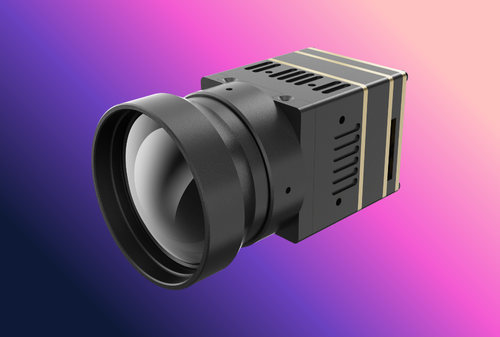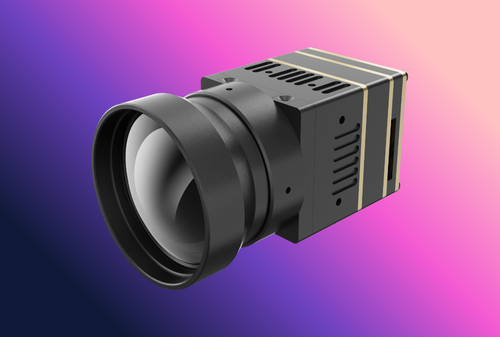
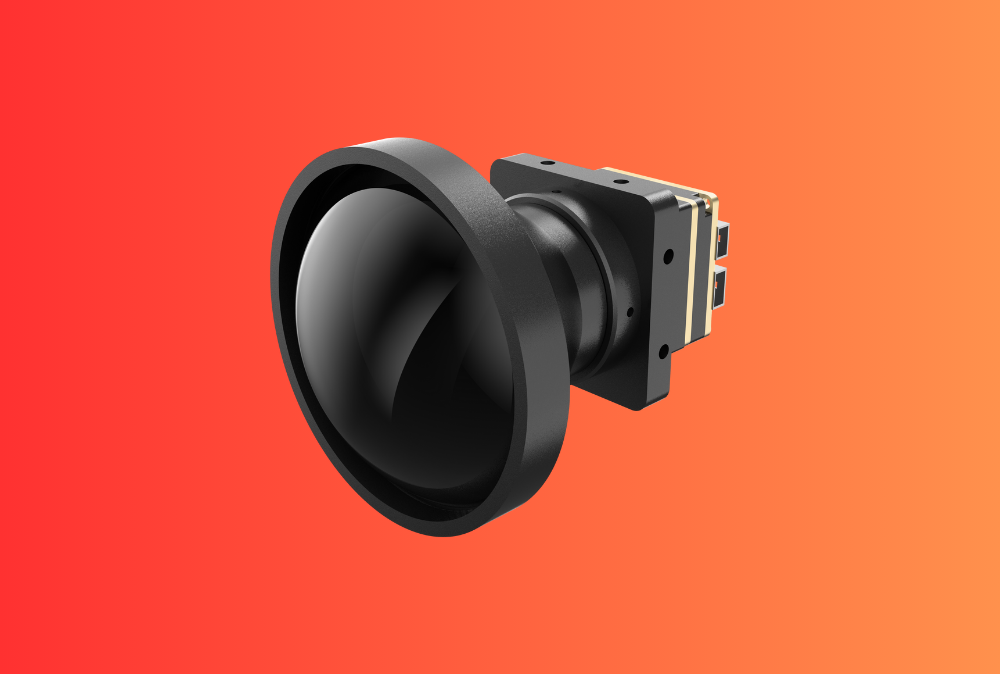
For many OEMs, the most painful risk in a thermal product is not image quality on day one, but what happens five or ten years later when the sensor you designed around goes end-of-life (EOL).
Table of Contents
ToggleThermal camera cores and modules sit at the heart of driver vision systems, security cameras, handheld imagers and industrial monitoring systems. When a sensor generation (for example 17 μm, 12 μm, 10 μm) is discontinued, every product that depends on it is suddenly exposed: optics, firmware, certification and even sales promises about long-term service.
This article looks at thermal core obsolescence from an engineering and lifecycle perspective. It is written for product managers, hardware engineers and sourcing teams who integrate uncooled LWIR thermal camera modules into their own devices and need a clear strategy for the next 5–10 years.
Where relevant, we will use examples based on the type of thermal camera modules and thermal imaging modules supplied by Gemin Optics, but the principles apply across the industry.
1. Why obsolescence in thermal cores is different
Component obsolescence is not unique to thermal imaging. MCUs, FPGAs, memory and RF ICs all have lifecycles. But thermal cores are different in several ways.
1.1 Long service life of end equipment
Many thermal end products have service lives of 7–15 years:
- perimeter security cameras on critical infrastructure;
- vehicle driver-vision systems on mining or construction machines;
- industrial monitoring systems on plants and substations.
End users expect spares and repairs for a decade or more. That means core availability must outlast normal electronic component cycles.
1.2 Concentrated sensor supply
Compared with visible CMOS sensors, the number of LWIR microbolometer manufacturers is small. A strategic decision at one supplier can ripple through many OEM product lines. When a pixel pitch shrinks (17 → 12 → 10 μm) or a resolution is discontinued, finding a drop-in replacement is not trivial.
1.3 Tight coupling between optics, mechanics, firmware and certification
A thermal camera core is not just a sensor PCB. It includes:
- optics designed for a specific pixel pitch and format;
- mechanical envelope and mounting interfaces;
- NUC and image-processing firmware tuned to that sensor;
- radiometric calibration data stored in flash;
- safety and EMC certifications tied to the product version.
Changing a core generation can force re-design and re-certification if not planned carefully at the platform level.
2. Pixel pitch evolution: from 17 μm to 12 μm to 10 μm
Most modern uncooled LWIR sensors now sit at 12 μm or 10 μm pixel pitch, with 17 μm slowly phasing out. New generations offer:
- smaller pixels → more resolution in the same optical format;
- smaller optics for a given FOV;
- lower power consumption in many designs.
From a marketing perspective, this looks straightforward: “newer is better.” For OEMs with existing products, it is more nuanced.
2.1 What changes when pixel pitch shrinks
If you keep the same lens focal length and simply replace a 17 μm sensor with a 12 μm or 10 μm one, the effective field of view shrinks, because the active area becomes smaller. The image looks like it has more “zoom.”
Conversely, to maintain the original FOV, you must shorten the focal length or change the lens design. That affects:
- MTF and spot size requirements;
- lens size and cost;
- mechanical design and NUC behaviour.
The table below gives a simplified illustration for a 640 × 480 sensor and a 19 mm lens (approximate horizontal FOV values, for illustration only):
| Pixel pitch | Approx. sensor width | Focal length | Approx. horizontal FOV |
|---|---|---|---|
| 17 μm | ~10.9 mm | 19 mm | ~31° |
| 12 μm | ~7.7 mm | 19 mm | ~23° |
| 10 μm | ~6.4 mm | 19 mm | ~19° |
If you want to keep a 31° FOV when moving from 17 μm to 12 μm, the focal length must be reduced. That in turn affects vignetting, distortion, depth of field and mechanical packaging.
2.2 Resolution vs. integration effort
A newer pixel pitch often comes with higher resolutions (e.g., 640 × 512, 1024 × 768). This can improve detection ranges and image quality, but may require:
- higher-bandwidth interfaces (MIPI/SLVS/Ethernet);
- more powerful ISPs or SoCs;
- updated NUC and AGC algorithms.
OEMs must balance the benefits of higher resolution against the cost of re-engineering and potential need for new regulatory tests.
3. Optical and mechanical compatibility across generations
One of the key questions during obsolescence planning is:
“Can I drop a new core into my existing product without changing the housing or lens?”
The honest answer is often “partly.”
3.1 Lens reuse strategies
There are three basic approaches:
- Keep the lens and accept a new FOV.
Suitable for applications where the exact coverage is not critical (e.g., handheld imagers). - Re-optimise lens focal length to keep FOV.
Necessary when FOV is tied to detection ranges, as in security or driver-vision systems. - Design a lens family where each mechanical envelope supports multiple sensors with small spacer or adapter changes.
For OEM/ODM products, it is common to create a lens-core matrix, where a set of standard lenses (e.g., 9 mm, 13 mm, 19 mm, 35 mm) is matched with different sensors and resolutions, keeping mechanical interfaces stable.
3.2 Mechanical envelopes and mounting
A good core platform maintains the same:
- outline dimensions;
- mounting hole pattern;
- reference optical axis;
- connector positions
across multiple sensor generations.
This allows OEM customers to keep their main enclosure, mounting brackets and calibration fixtures unchanged. Only the core part number and, if needed, lens selection change.
When evaluating a supplier, ask specifically how they handle mechanical continuity between their 17 μm, 12 μm and 10 μm products.
4. Firmware, calibration and image quality continuity
Sensor changes affect not only optics but also how the image looks and how temperatures are measured.
4.1 NUC, AGC and image processing
Each sensor family has its own:
- noise characteristics;
- response curves;
- bad-pixel patterns;
- shutter or shutter-less NUC strategies.
When moving to a new core generation, the vendor must ensure that:
- default image appearance (contrast, sharpness, noise texture) remains consistent enough that end users are not confused;
- NUC timing and behaviour do not interrupt mission-critical use (for example, driver-vision cameras at speed);
- auto-gain and dynamic range settings match real operating conditions.
For OEMs using their own ISP or video pipeline, access to a stable SDK and configuration interface is key. When evaluating a new core, check if the existing control commands for temperature range, palettes, ROI measurement, etc., remain compatible.
4.2 Radiometric behaviour and cross-calibration
If your product is a radiometric camera—for industrial inspection, online thermal monitoring or R&D—then absolute temperature accuracy matters.
A new sensor may have:
- different emissivity assumptions;
- different non-linearities across temperature ranges;
- different thermal drift with ambient temperature.
To manage obsolescence without breaking customer workflows, suppliers should:
- specify how many calibration points are used and how they are distributed;
- provide procedures for field cross-calibration between old and new cores;
- document any changes in measurement uncertainty or supported temperature ranges.
Industrial customers expect that if they replace a camera or module, their process alarms and trending thresholds still make sense.
5. Regulatory, quality and documentation aspects
Obsolescence management is not just technical; it has strong QA and regulatory dimensions.
5.1 Managing CE/FCC and other certifications
If a core change affects:
- EMC emission or immunity characteristics;
- safety-critical circuits;
- functional behaviour relevant to standards,
then re-testing or updating documentation may be required.
A robust supplier with clear quality control processes will:
- maintain test reports across generations;
- provide delta-analysis showing what changed;
- advise OEMs whether a full re-certification is necessary.
5.2 Traceability and version control
Over a 10-year product life, OEMs need a clear view of which core versions were used where. That requires:
- unique part numbers for each sensor generation;
- serial-number tracking and date codes;
- change notifications with explicit “last-time-buy” and “final delivery” dates.
Suppliers should issue formal PCNs (Product Change Notifications) well in advance, giving customers time to design and validate replacements.
5.3 Documentation and lifecycle guarantees
For mission-critical or regulated markets, customers often request:
- minimum availability commitments (e.g., 7 years from launch);
- repair/replace policies after EOL;
- options for stocking buffer quantities or long-term storage.
Being able to point to a public lifecycle statement and to structured service and support policies is a factor when procurement compares multiple thermal core vendors.
6. Practical strategies for OEMs facing sensor EOL
From the OEM side, what can you do to reduce risk when pixel pitches and sensors inevitably evolve?
6.1 Design “platform” products, not single-sensor designs
Instead of designing around one specific core, define a platform envelope:
- mechanical volume and mounting for the core;
- maximum and minimum lens diameters and lengths;
- interface expectations (e.g., Ethernet + UART, 12 V power).
Within that envelope, ensure you can accommodate at least two generations of cores from your chosen supplier.
6.2 Separate “customer-visible” specification from internal implementation
In your own datasheets and manuals, define performance in terms that remain valid through upgrades:
- FOV and detection ranges;
- frame rate and latency;
- temperature ranges and accuracy;
- environmental ratings (IP, shock, vibration).
Internally, you may change from 17 μm to 12 μm sensors or upgrade firmware, as long as these external specifications hold or improve. That gives you flexibility to adopt new cores without re-positioning the product.
6.3 Maintain validation and regression test suites
Each time you integrate a new core generation, run through the same:
- functional tests;
- environmental tests;
- long-duration burn-in;
- interoperability tests with your host systems.
Over time, this becomes a repeatable regression test that makes future transitions less risky and more predictable.
6.4 Use data to support decisions
If you have a fleet of installed systems, use their telemetry (temperature measurements, failure statistics, field returns) to compare old and new cores over time. This helps:
- quantify the benefit of moving to a new sensor;
- justify investment to management;
- adjust stocking and service strategies.
7. What to ask a thermal core supplier about obsolescence
When evaluating or auditing a thermal-core supplier, specific questions help reveal how seriously they take lifecycle management:
- Roadmap transparency
- What is your current sensor portfolio (pixel pitch, resolutions)?
- How long do you expect each line to remain in production?
- EOL and migration policy
- How much notice do you give before declaring EOL?
- Do you propose a pin-compatible or mechanically compatible successor?
- Mechanical and optical continuity
- Are mounting patterns, reference planes and connector positions maintained across generations?
- Is there a documented mapping between old and new FOV options?
- Firmware and SDK stability
- Will our current API calls still work with the next core?
- How do you handle backwards compatibility for radiometric functions?
- Quality and traceability
- How do you track serial numbers and production batches?
- What failure-rate and MTBF data do you provide?
- Support and collaboration
- Can we access engineering support during migration projects?
- Are there references from other OEMs who have already transitioned?
Answers to these questions make it easier for procurement and engineering to compare suppliers on more than just unit price.
8. How Gemin Optics approaches thermal core lifecycle management
From Gemin Optics’ perspective as a China-based OEM/ODM manufacturer of thermal camera modules and industrial online thermal imaging systems, obsolescence planning is built into product design from the start. Key practices include:
- Platform families of modules that share mechanical envelopes and interfaces across sensor generations, reducing redesign effort for OEM customers.
- Carefully chosen lens sets whose FOV options can be reproduced when moving from 17 μm to 12 μm or 10 μm sensors, with documentation of equivalent combinations.
- Consistent SDKs and configuration interfaces so that host firmware can be reused with newer cores.
- Factory quality control and calibration processes that allow comparable image quality and radiometric behaviour across batches and generations.
- Formal service policies on support and maintenance, including engineering assistance during migration projects and advice on stocking strategies.
For OEMs integrating both thermal cores and related technologies such as laser rangefinder modules, this platform approach simplifies long-term planning across product lines.
9. FAQ: Thermal core obsolescence and pixel-pitch changes
Q1. If I move from a 17 μm to a 12 μm sensor, will my detection ranges automatically improve?
Not necessarily. Detection range depends on pixel count, optics, target size and processing. If you keep the same lens and accept a narrower FOV, you gain angular resolution but lose coverage. If you adjust the lens to keep FOV constant, detection ranges may remain similar but image detail improves. A proper range calculation is required.
Q2. How far in advance do I need to start an obsolescence-driven redesign?
For safety-critical or certified equipment, 18–24 months is a realistic planning horizon. That includes prototype design, testing, customer approvals and logistics.
Q3. Can a supplier guarantee core availability for 10 years?
Few suppliers will give absolute guarantees, but they can offer indicative lifecycles, last-time-buy options and repair strategies. What matters is clear communication and documented policy rather than a simple number.
Q4. Is it safe to use different core generations in the same product family?
Yes, if you control external specifications and validate performance carefully. Some OEMs even design “Mark I / Mark II” revisions where internal cores differ but external behaviour is held constant.
Q5. How do AI and analytics affect lifecycle planning?
If your system uses AI models trained on thermal images, sensor changes may alter noise patterns or contrast. Plan for model retraining or validation when migrating to new cores. Choosing modules with stable image characteristics eases this burden.
10. CTA – Plan Thermal Core Lifecycles, Not Just First Launch
For OEMs building thermal imagers, driver-vision systems or industrial monitoring cameras, the real challenge is not shipping the first batch, but keeping the product serviceable and competitive for a decade or more. Managing obsolescence in thermal camera cores means thinking about pixel-pitch roadmaps, optical compatibility, firmware continuity and QA from day one.
If you are reviewing your current thermal core strategy or planning a migration from 17 μm to newer generations, it can be useful to work with a supplier that treats lifecycle planning as part of the product, not an afterthought.
You can explore Gemin Optics’ current thermal camera module platforms, review our online thermal imaging solutions, or contact our engineering team to discuss sensor roadmaps, replacement options and long-term support strategies for your thermal product portfolio.