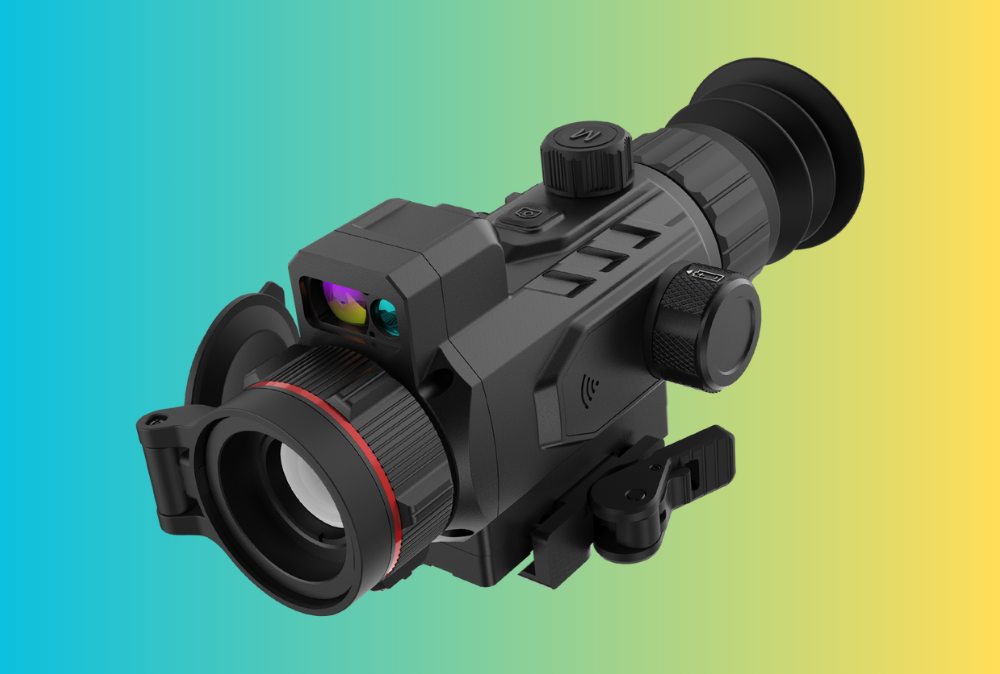
For many brands, the first serious contact between a dealer and a new thermal product line is not a brochure or an online video, but a thermal optics demo fleet. The way you design, finance and manage that demo fleet strongly influences how actively dealers promote your thermal rifle scopes, clip-ons and monoculars over the next several seasons.
Table of Contents
ToggleThis article discusses demo fleet management for thermal optics from the perspective of inventory, risk and channel efficiency. It focuses on objective policies—deposits, discounts, depreciation and refurbishment—rather than marketing slogans, and is written for product managers, sales directors and procurement managers in OEM/ODM environments.
1. Why a disciplined demo fleet policy matters
Thermal scopes and monoculars are high-value items with characteristics that make demo programmes both necessary and risky:
- End users want to see real targets at night before committing several thousand dollars.
- Dealers need physical units for counter demos, demo days and staff training.
- Each sample unit can quickly accumulate cosmetic wear if not controlled.
Without clear rules, demo fleets tend to grow informally: units are shipped “just for events”, never fully tracked, and end up as unplanned write-offs. A structured demo policy creates:
- predictable cost of sales,
- consistent dealer experience across regions, and
- a controlled pathway to refurbish and resell demo units instead of scrapping them.
2. Defining the scope of a thermal optics demo fleet
A modern thermal portfolio may include:
- dedicated thermal rifle scopes,
- thermal clip-on sights for front-mount use,
- handheld thermal monoculars for scanning, and
- accessories such as rails, power packs and mounts.
Not every SKU needs a dedicated demo unit. A practical approach is to treat the demo fleet as a compressed mirror of the full line:
- At least one representative sample per sensor resolution (for example, 384×288 and 640×512).
- One or two models per use case: hunting, law enforcement, industrial inspection.
- A small number of accessories that show the ecosystem concept.
In many cases, two to four carefully chosen devices can demonstrate 70–80 % of the functional range of the complete catalogue.
3. Financial models: deposits, discounts and depreciation
From a financial standpoint, demo units are a controlled form of marketing expense. The key variables are:
- who holds legal ownership of the unit,
- how much capital the dealer must tie up, and
- how quickly the manufacturer recovers the cost through sales.
3.1 Common demo fleet models
The table below summarises several typical setups used with thermal optics. Numbers are illustrative.
| Model | Ownership | Dealer cash outlay | Typical use case |
|---|---|---|---|
| Free loan with deposit | Manufacturer | Refundable deposit (30–50 %) | New dealer recruitment, short-term events |
| Discounted demo purchase | Dealer | Buy at 40–60 % of MSRP | Established key dealers, long-term demo use |
| Sell-and-credit programme | Dealer | Buy at normal discount; credit back part after sales target is met | Performance-based support |
| Central demo pool (distributor) | Distributor | Distributor funds pool; units rotated between shops | Large markets with many small retailers |
A free loan with deposit minimises barriers for new dealers but requires robust control and clear return dates. A discounted demo purchase shifts more responsibility to the dealer and often results in better care of the equipment.
3.2 Setting realistic depreciation rules
Thermal demo units accumulate wear quickly: cosmetic scratches, minor dings, and sometimes firmware experiments. A transparent depreciation model avoids disputes when units are returned or converted into sales.
A simple structure could be:
- 0–6 months of demo use: resale as “Grade A demo” at 85–90 % of normal dealer price.
- 6–18 months: resale as “Grade B demo” at 70–80 %.
- Over 18 months or heavy cosmetic damage: use as training units or sell into secondary channels.
Depreciation should be documented in the demo agreement so that both parties know the expected value trajectory.
4. Lifecycle of a demo unit: from allocation to refurbish and resale
A well-managed demo fleet treats each unit as going through a defined lifecycle rather than remaining in an indefinite “demo” status.
4.1 Allocation and registration
Each demo unit should be clearly tagged in the ERP/CRM system with:
- serial number and model,
- assigned dealer or region,
- start date of demo allocation, and
- financial model (loan with deposit, discounted purchase, etc.).
Packaging should include a checklist of accessories (batteries, mounts, cables) to reduce losses during transport.
4.2 Use, monitoring and field feedback
During deployment, simple reporting mechanisms—short monthly emails or an online form—help collect usage data:
- number of demo events or customers,
- feedback on image quality and ergonomics,
- recurring questions or objections.
This information is valuable for both product managers and marketing teams, especially for early generations of thermal hunting scopes and clip-ons.
4.3 Return and technical inspection
When a demo period ends, returned units should go through a light but consistent inspection process:
- external condition and accessories completeness;
- basic functional test (boot, image, focus, menu, recording);
- firmware version check.
Findings should be logged, with photos for units that show unusual wear. This documentation supports later decisions on refurbishment level and resale price.
4.4 Refurbishment and reclassification
Refurbishment levels can be standardised, for example:
- Level 1: cleaning, firmware update, new packaging;
- Level 2: replacement of eyecups, lens covers or minor mechanical parts;
- Level 3: major repair or housing replacement.
Each unit is then reclassified as new, Grade A demo, Grade B demo or training-only. This structured approach helps finance and sales estimate recoverable value accurately.
5. Sample policy frameworks dealers can understand
Dealers prefer demo policies that are clear, predictable and easy to explain internally. Below are three sample frameworks that often work in practice.
5.1 Starter demo kit for new dealers
For new partners entering thermal optics:
- Manufacturer loans one thermal rifle scope and one handheld monocular.
- Dealer pays a 40 % refundable deposit per unit.
- Loan period is six months, extendable if quarterly activity reports are submitted.
- At the end of the period, dealer can:
- return the units in good condition and recover the deposit, or
- purchase them at a pre-agreed demo price using the deposit as part payment.
This model limits manufacturer risk while giving small dealers an accessible entry point.
5.2 Enhanced demo support for key accounts
For regional distributors or chain retailers:
- Dealer buys demo units at a substantial discount (for example, 55–60 % off MSRP).
- Units must be clearly marked as “demo, not for resale” until the end of the agreed period.
- After 12–18 months, the manufacturer authorises sale of the demo units at a reduced resale price and offers new demo units at updated specifications.
Here, the distributor invests more capital but gains priority access to new products and extended marketing support, including joint demo days.
5.3 Event kits for mobile demo days
For brands running roadshows or co-branded events:
- Dedicated event kits contain a pre-defined set of devices: several scopes, clip-ons and accessories.
- Kits are shipped only to certified partners who have completed product training.
- After each event cycle, kits return to a central hub for inspection and refurbishment.
This approach centralises risk around a limited number of heavily used units while keeping line stores free from cumulative demo wear.
6. Operational controls: tracking, damage and loss
Demo units see intensive handling. Clear operational controls are necessary to keep losses within planned limits.
Key practices include:
- Serial tracking: record every transfer between manufacturer, distributor and dealer.
- Responsibility clauses: agreements should specify who is responsible for theft, severe damage or loss during shipping and events.
- Damage classifications: define what is cosmetic, what requires chargeable repair, and what counts as total loss.
- Firmware governance: ensure demo units run stable firmware versions and are updated centrally to avoid field issues during high-profile events.
Some brands use QR codes on each unit to link directly to an online registration and check-in/check-out form, simplifying monitoring across regions.
7. Demo fleets as training and feedback infrastructure
A thermal demo programme is more than a box of units; it is an infrastructure for training and feedback. Well-planned fleets can be used to:
- host structured Demo Days where hunters test thermal scopes and monoculars under guidance;
- run in-store staff training sessions that simulate typical customer questions;
- collect comparative footage between different sensor resolutions, lens sizes and firmware profiles.
The same units can also be used to evaluate new accessories—bipods, power packs, recording modules—before rolling them out widely.
Connecting demo feedback into the product-management process is especially important when brands work with partners on OEM/ODM thermal optics solutions. Field insights from demo fleets often reveal usability issues that bench testing alone does not show.
8. How manufacturers can support dealer demo programmes
Well-structured demo fleets require support from the manufacturing side:
- Mechanical and environmental robustness of demo-designated units, including reinforced mounts and housings.
- Availability of spare parts and refurbishment kits (eyecups, lens caps, rails) that keep demo units looking professional.
- Clear documentation of recommended demo configurations—for example, pairing certain thermal hunting scopes with specific mounts or rifles.
- Data sheets and checklists that help dealers record demo usage and collect qualified leads during events.
For brands that wish to build or expand their thermal portfolio, partnering with a manufacturer experienced in both thermal imaging modules and finished devices makes it easier to maintain a consistent demo fleet even when product lines evolve quickly.
9. Conclusion: treat demo fleets as a managed asset, not a side project
In thermal optics, a carefully designed demo fleet often determines whether dealers remain passive catalog resellers or become active advocates for your brand. Clear policies on deposits, discounts, depreciation and refurbishment turn demo units into managed assets with predictable ROI rather than uncontrolled expenses.
By aligning demo fleet management for thermal optics with your overall product and channel strategy, you can:
- allocate demo resources to the most promising dealers,
- protect margins through structured resale of refurbished units, and
- gather high-quality field feedback for future product generations.
A disciplined approach benefits all parties: OEMs, distributors, retailers and end users who experience reliable, well-presented thermal optics in real field conditions.