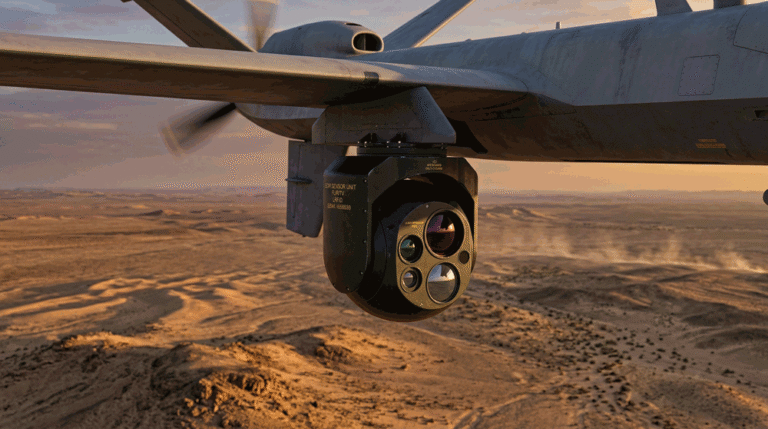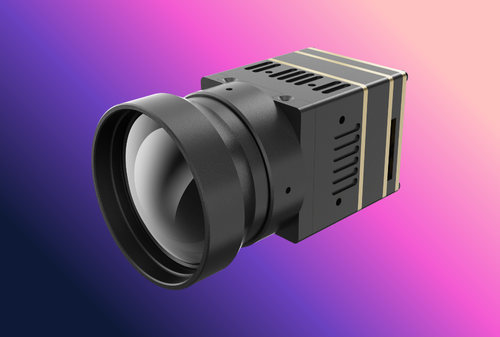
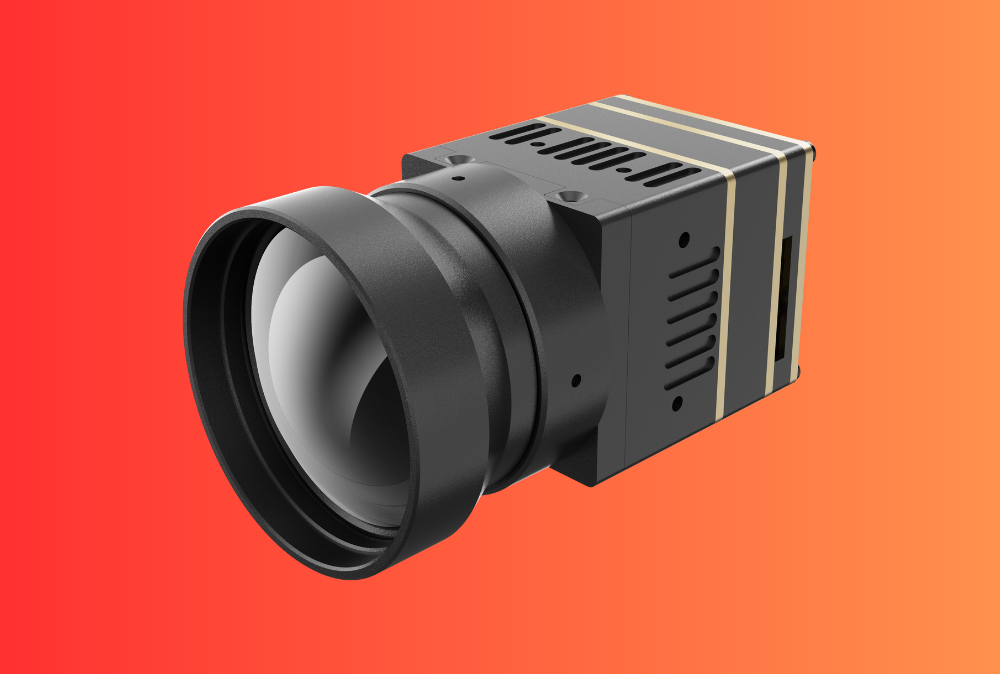
When agencies and drone OEMs evaluate thermal camera modules for firefighting and search & rescue (SAR) missions, they are not buying “just another sensor.” On a burning rooftop, in a smoke-filled warehouse, or over a dark forest after midnight, these modules can determine whether operators see the right hotspot, find a missing person in time, or misinterpret a dangerous situation. This article takes a system-level view of thermal camera modules on drones and explains what engineering teams and procurement managers should look for when they design or source these platforms.
Table of Contents
ToggleThroughout the article we will focus on modular payloads that can be integrated into OEM gimbals and UAVs, rather than finished drones. The goal is to help you specify, test, and deploy the right module so you can build reliable, repeatable solutions for fire departments, public safety agencies, and industrial emergency teams.
1. Why Use Thermal Camera Modules on Firefighting and SAR Drones?
Traditional visible-light cameras fail quickly in the conditions where firefighters and SAR teams most need situational awareness. Smoke, fog, darkness, backlighting from flames, and strong glare make it difficult or impossible to see with standard RGB sensors.
Thermal camera modules, especially uncooled LWIR cores, image heat rather than visible light. This makes them effective in several mission-critical tasks:
- Locating hotspots in burning structures and roofs.
- Seeing through smoke to follow escape routes and track team positions.
- Finding missing persons in forests, mountains, or at sea during night or bad weather.
- Monitoring fire spread lines along ridges, industrial sites, and wildland-urban interfaces.
- Assessing residual heat after a fire is “out” to prevent re-ignition.
Unlike handheld imagers, a drone-mounted thermal payload can cover large areas quickly and repeatedly, making it well suited to pre-incident planning, live operations, and post-incident analysis.
For OEMs and integrators, using thermal camera modules instead of finished cameras provides more flexibility: you can optimize gimbal size, match your radio link, integrate with your existing ground-control software, and brand the solution for your own product line. For many of these projects, a configurable module such as the ones in Gemin Optics’ thermal imaging modules portfolio becomes the foundation of the system.
2. Firefighting and SAR Mission Profiles
2.1 Structural Firefighting
In urban firefighting, drones are typically launched minutes after the first engine arrives. They provide overhead views of:
- Roof temperatures and structural integrity.
- Fire spread between floors or along attics.
- Exits, ladders, and hose lines.
The thermal camera module must handle very bright sources (open flames, exposed steel) and cooler surrounding structures in the same frame. It also has to adapt quickly to changing scenes as the drone moves around the building. Dynamic range and automatic gain control (AGC) are therefore critical.
2.2 Wildland and Industrial Fires
For forest fires or industrial blazes (chemical plants, tank farms, refineries), drones may operate at higher altitudes or on fixed-wing platforms. The thermal imager is used to:
- Map fire fronts at a regional scale.
- Identify spot fires and ember showers beyond the main line.
- Monitor critical infrastructure (pipelines, substations, tank walls) during and after the event.
Here, long-range lenses, good temperature discrimination in mid-range values, and accurate geo-tagging are more important than very high frame rates.
2.3 Search & Rescue
SAR missions include looking for lost hikers, avalanche victims, flood survivors, or missing persons in urban environments. Compared to fire scenes, temperature ranges are narrower but contrast can be subtle:
- A slightly warmer human body against cold snow.
- A person cooled by water immersion against a mild background.
- A child hiding in dense vegetation, with only partial exposure.
This calls for low NETD performance, stable AGC, and image processing that preserves faint signatures rather than over-compressing the histogram. Many SAR drone integrators therefore select high-sensitivity cores similar to the high-end thermal imaging camera module lines used in security and perimeter protection.
3. Core Performance Requirements
3.1 Spectral Band and Temperature Range
Most drone payloads for firefighting and SAR use uncooled VOx microbolometers in the 8–14 μm LWIR band. This range is well suited to imaging human bodies, building materials, and fire scenes without the cost and complexity of cooled detectors.
However, not all thermal camera modules are equal in their temperature span. For structural fires, the module should support:
- At least one high-temperature range, for example –20 °C to 650 °C, for flames and exposed metal.
- One or more low/medium ranges, such as –20 °C to 150 °C, for SAR and general surveillance.
Multi-range support with selectable gain modes allows the drone operator (or ground station) to switch between ranges without changing hardware.
3.2 Dynamic Range and AGC Strategies
In a burning building, the imager might see a 600 °C flame, 200 °C hot spots, and 40 °C human bodies in one frame. If the AGC is not designed for such extremes, humans may disappear into dark or washed-out regions.
A good firefighting-grade module should therefore provide:
- Several AGC modes (fire, SAR, surveillance) tuned to different histogram distributions.
- Isotherm and threshold displays that highlight temperature bands of interest (e.g., 50–80 °C for hidden fire behind walls).
- Manual gain and level control via SDK for advanced integrators.
Modules that expose these controls through a documented API—similar to what Gemin Optics provides in its OEM/ODM solutions—are easier to adapt to agency-specific workflows.
3.3 Resolution, FOV and Ground Sample Distance
Choosing detector resolution and lens FOV is always a trade-off between coverage and detail. For drone applications, a 640×512 or 1024×768 core is common; lower resolutions may be suitable for small quadcopters or short-range urban work.
For engineering teams, it is useful to translate resolution and FOV into ground sample distance (GSD):
| Flight Altitude | Lens Focal Length | Horizontal FOV | Approx. GSD (640 px wide) | Typical Use Case |
|---|---|---|---|---|
| 60 m | 19 mm | ~32° | ~0.05 m / pixel | Search & Rescue in forests or fields |
| 100 m | 25 mm | ~24° | ~0.08 m / pixel | Structural fire overview, industrial sites |
| 250 m | 50 mm | ~12° | ~0.17 m / pixel | Wildland fire lines, tank farms |
This table is simplified, but it shows why lens choice is central to mission design. Many OEMs choose thermal camera modules with interchangeable lenses or motorized focus options, so they can offer different payload SKUs for various customer profiles without redesigning the core.
3.4 NETD, Frame Rate and Latency
For SAR, a low NETD (≤40 mK or better) improves the ability to distinguish humans from background, especially when body temperature is reduced by exposure. For fire scenes, NETD is less limiting than dynamic range, but better sensitivity still produces more stable contours in smoke and steam.
Frame rate and end-to-end latency are just as important as raw sensitivity:
- 25–30 Hz output is generally sufficient for manual piloting and observation.
- Latencies under 200 ms make it easier to fly close-quarters missions safely.
Integrators should look for modules with native digital outputs (such as LVDS, MIPI, or Ethernet) that minimize additional encoding steps in the gimbal, reducing latency and preserving image quality for the radio link.
4. Ruggedization for Fire and SAR Environments
4.1 Thermal and Mechanical Stress
Drones often hover close to heat sources, fly through turbulent smoke, or operate near water streams. The thermal camera module and its optics must survive:
- Rapid ambient temperature changes (e.g., takeoff from a cold truck into a 200 °C plume).
- Radiant heat from flames and hot surfaces.
- Mechanical shock from turbulence, downdrafts, or hard landings.
A practical design is to keep the microbolometer within its rated operating range (typically –20 to +70 °C) by:
- Using heat-resistant housings and sunshades.
- Providing thermal isolation from external structures.
- Optionally adding small, low-noise fans or heat sinks on larger payloads.
Suppliers that already build industrial handheld thermal imagers usually transfer similar thermal-management techniques into their UAV cores.
4.2 IP Rating, Salt Fog and Contamination
For drones operating near the sea, in coastal cities, or around industrial fires with chemical aerosols, corrosion and contamination are major concerns. A UAV-grade thermal module should offer:
- At least IP66 protection at the system level once integrated into the gimbal.
- Window materials and coatings resistant to salt fog and aggressive chemicals.
- Lens barrels and mechanical components made from corrosion-resistant alloys or treated surfaces.
In addition, designers should consider how easily the window can be cleaned or replaced after exposure to soot, foam, or other fire-scene residues.
4.3 Vibration and Gimbal Integration
Firefighting drones are often relatively large multirotors, but they still generate vibration and dynamic loads. For fixed-wing SAR aircraft, turbulence during low-altitude turns adds further stress. Testing should therefore include:
- Random vibration profiles representative of the chosen airframe class.
- Shock tests simulating hard landings or unexpected impacts.
- Long-term operational tests at typical rotor RPM and flight speeds.
Choosing a thermal imaging camera module with a compact, rigid housing simplifies gimbal design. Integrators should also pay attention to connector locking mechanisms and cable routing; loose or intermittent connections are one of the most common failure modes in the field.
5. Data Interfaces, Telemetry and Ground Systems
5.1 Video and Control Interfaces
To integrate smoothly into existing UAV and ground-control architectures, thermal modules should expose standard, well-documented interfaces:
- Digital video: Ethernet, HDMI, SDI, MIPI or LVDS.
- Control and telemetry: UART, RS-485/422, or CAN bus.
- Optional: USB for configuration and firmware updates on the bench.
A consistent SDK across different modules—similar to how Gemin Optics families share common command sets—reduces software maintenance efforts when you manage multiple payload options.
5.2 Time Synchronization and Geo-Tagging
For post-incident analysis and evidence, each frame should be associated with reliable time and position information. This usually means:
- Synchronizing module timestamps with the UAV’s GPS clock or PTP/IEEE-1588 master.
- Embedding metadata (GPS, altitude, heading, gimbal angles) in the stream or recording file.
Well-designed thermal camera modules expose hooks for timestamping and metadata injection, rather than leaving integrators to implement workarounds at the video encoder level.
5.3 Recording, Streaming and Command Workflows
Depending on customer requirements, the system may need to support:
- Local recording on the drone with later offload.
- Live streaming to command vehicles or cloud platforms.
- Multi-viewer layouts combining thermal and visible feeds.
Modules that support dual-channel outputs or dual-spectrum configurations (visible + thermal) make it easier to implement picture-in-picture or side-by-side views without complex external processing hardware.
6. Software Features Tailored to Fire and SAR Missions
6.1 Color Palettes and Isotherms
Choosing the right color palette is not a cosmetic decision. In firefighting, operators often prefer high-contrast palettes like “White Hot,” “Black Hot,” or “Fire” modes that emphasize mid-to-high temperatures. In SAR, palettes that highlight small differences around human body temperature—while preserving background detail—are more useful.
Isotherms and temperature alarms allow the system to:
- Highlight regions above a set threshold, such as 200 °C for structural compromise.
- Emphasize bands around 35–40 °C to make human bodies stand out.
These functions should be adjustable via gimbal controls or the ground-control application and must be documented in the thermal camera module’s SDK.
6.2 Measurement Tools and Reporting
For pre-incident surveys and post-incident reporting, some users need quantitative temperature readings rather than purely qualitative imagery. A drone-ready module can support:
- Single-spot and multi-spot measurements.
- Area statistics (max/min/average) over user-defined regions.
- Emissivity and reflected temperature corrections where appropriate.
While fire scenes often involve unknown emissivities and reflectance, consistent measurement tools help agencies track thermal trends over time even if absolute values have some uncertainty.
6.3 AI and Analytics Integration
Many integrators now combine thermal camera modules with AI models that detect humans, vehicles, or fire contours. The module does not need to implement these algorithms itself, but it should provide:
- Clean, low-latency digital video streams at predictable frame rates.
- Optional access to RAW or minimally processed data where higher fidelity is needed.
- Stable shading and flat-field correction to avoid false positives from sensor artefacts.
Some OEMs run detection models directly on edge computers mounted on the drone. Others send streams to ground stations or cloud servers. A flexible module architecture supports both approaches.
7. Example System Architectures
7.1 Municipal Fire Department Multirotor
A typical configuration might use:
- 640×512 12 µm module with 19 mm lens (mid-wide FOV).
- Dual-spectrum payload combining thermal and 4K visible camera.
- Ethernet video to the gimbal controller, then H.264 over 5.8 GHz or LTE.
- Quick-swap battery and payload mounts for fast turnaround.
The thermal module’s fire-specific AGC and isotherm modes help crews quickly identify roof collapse risks and track crew position relative to heat sources.
7.2 Industrial Site Emergency Response Drone
Large chemical plants or refineries may deploy long-endurance multirotors or VTOL fixed-wing drones:
- 640×512 module with 25–50 mm motorized lens for flexible standoff distances.
- Integration with plant SCADA systems via IP video streams.
- Automated patrol routes triggered by alarms from gas detectors or pressure sensors.
Here, the procurement team will value suppliers with solid QA systems and documented lifetime support for their cores, similar to the manufacturing practices described on Gemin Optics’ quality and reliability pages.
7.3 SAR Drone for Mountain Rescue
A lighter airframe might use:
- 640×512 module with 13–19 mm lens for wide coverage.
- Optimized low-NETD sensor, tuned AGC for human detection.
- Simple Ethernet or MIPI interface feeding a small onboard computer running AI detection.
Battery life and weight are critical, so OEMs typically seek thermal camera modules with low power consumption and compact dimensions.
8. Procurement and Qualification Considerations
For agencies and system integrators, selecting a module is only part of the job. Long-term support and supply-chain stability matter just as much. Points to review during supplier assessment include:
- Clear roadmap for sensor generations and pixel pitches.
- Availability of development kits, documentation, and reference code.
- Traceability in production and the ability to provide calibration data per unit.
- Compliance with relevant standards (such as CE, FCC, RoHS) for export and deployment.
Working with a China-based manufacturer that already ships both thermal imaging modules and complete online thermal monitoring systems can simplify multi-vertical projects where drones, fixed cameras, and handheld devices all need to share similar imaging characteristics.
9. CTA – Work with a Thermal Camera Module OEM Focused on Fire and SAR Drones
If your next UAV platform targets firefighting, emergency response, or search & rescue missions, the choice of thermal camera modules will determine much more than image quality on a spec sheet. Dynamic range, ruggedization, interface design, and long-term support all affect whether your system performs reliably in the toughest environments your customers face.
Gemin Optics combines uncooled LWIR core design, optics engineering, and system-level experience from handhelds, fixed cameras, and drone payloads. Our engineers can help you match sensor resolution, lens options, and interfaces to your specific airframes and mission profiles, and our manufacturing teams provide the QA and lifecycle management needed for public-safety programmes.
To discuss how modular thermal payloads can fit into your next firefighting or SAR drone project, visit our thermal imaging modules page or contact our engineering team with your requirements and timeline.