In industrial plants, the right thermal deployment is rarely a single device decision. The real question is how to combine handheld, tripod-mounted/pan-tilt, and fixed online thermal systems to meet response-time targets, coverage requirements, and budget constraints—without creating an unmanageable maintenance burden. This guide provides a practical selection framework for EPCs, system integrators, and end-user reliability teams.
Table of Contents
Toggle1) Why “Form Factor” Is a System Decision, Not a Camera Decision
Thermal inspection in plants usually starts as an exception workflow: a technician brings a handheld imager when something sounds wrong, smells wrong, or trips a PLC alarm. Over time, teams realize the same failure modes repeat—busbar hotspots, bearing overheating, belt misalignment, steam trap issues, refractory degradation, cable termination loosening—and manual rounds cannot catch early thermal drift fast enough.
That is when “form factor” becomes strategic.
A camera’s detector resolution and NETD matter, but the bigger risk is choosing the wrong deployment model:
- Handheld excels at flexibility and diagnosis but is limited by people and schedules.
- Tripod-mounted / pan-tilt can deliver repeatable measurements and safer standoff, but still requires periodic setup or operator time.
- Fixed online systems deliver 24/7 coverage and fast alarms, but require engineering design: mounting, network, calibration workflows, and maintenance plans.
If you treat these as competing products, you will overinvest in one and under-cover the actual risk profile. The most robust programs standardize all three as a tiered toolkit.
2) Quick Definitions: What Each Form Factor Really Means
Handheld industrial thermal cameras
Handheld devices are portable thermal imagers used for route-based inspection, troubleshooting, acceptance testing, and “find-and-fix” work. In many plants they become the first thermal step because procurement is easy and training is straightforward. (See typical handheld options under industrial handheld thermal imagers.)
Tripod-mounted / pan-tilt thermal systems
This category includes:
- A thermal camera mounted to a tripod for stable measurement at a known distance and angle.
- A thermal camera on a pan-tilt head (PTZ or pan-tilt unit) to scan multiple assets from a safe location.
- Temporary deployment rigs for outages, shutdowns, or temporary risk periods.
Tripod/pan-tilt often acts as the “bridge” between handheld and full online systems because it improves repeatability without the full infrastructure investment.
Fixed online thermal imaging systems
These are permanently installed thermal cameras connected to a monitoring platform for continuous temperature trending, alarms, and event recording. They are used when risk exposure is high, access is difficult, or response time must be minutes, not days. A typical architecture is described under online thermal monitoring systems.
3) When Handheld Is the Best Choice
Handheld is usually the correct choice when the plant needs coverage by people, not coverage by cameras.
Use handheld when:
The inspection target changes frequently. New assets, changing layouts, rotating programs, trial lines, and prototype equipment benefit from flexible imaging.
You need diagnosis more than trending. Handheld works well for “What is happening?” questions—finding the hotspot location, verifying the anomaly, and capturing visible + thermal context.
Access is intermittent and safe. If technicians can approach equipment safely during planned rounds, handheld is cost-effective.
The thermal signature is not continuous. Some faults appear only during certain operations. A skilled technician can time the inspection around operating states (load changes, start-up, process transitions).
Common pitfalls with handheld
Handheld programs fail when plants assume they provide online coverage. They do not.
Typical limitations include:
- Sampling gaps: a weekly route cannot catch a fault that evolves in hours.
- Operator variability: distance, angle, focus, and emissivity assumptions differ across technicians.
- Documentation inconsistency: images without asset tags, distance, load state, or reference points reduce comparability.
- Safety constraints: energized cabinets, live busbars, and rotating machinery often require standoff or windows that handheld alone cannot solve.
Handheld is most valuable when paired with clear SOPs, acceptance criteria, and a consistent reporting workflow. Many EPCs standardize the handheld workflow first, then “promote” high-risk points into tripod/pan-tilt or fixed monitoring.
4) When Tripod-Mounted or Pan-Tilt Makes More Sense
Tripod/pan-tilt is optimal when the plant needs repeatable measurement without committing to a fully permanent online installation.
Use tripod/pan-tilt when:
Repeatability matters. If you need to compare the same cable termination each week under similar angle/distance, stable mounting helps.
Safety requires standoff. Tripods and pan-tilt mounts allow measurement from outside hazard zones (arc flash boundaries, hot zones, restricted access areas).
Targets are clustered. A pan-tilt camera can scan multiple assets—switchgear lineups, MCC rows, or transformer yards—from a single safe point.
Your monitoring is seasonal or event-driven. Examples:
- Commissioning, ramp-up, or temporary overload seasons.
- Maintenance shutdowns where equipment is exposed.
- Construction phases when access is limited but risk is elevated.
You are building the business case for online monitoring. Tripod-based measurement is often used to gather baseline data: temperature distributions, false alarm risk, and trend stability. That data makes fixed-system ROI defensible.
Engineering notes that matter in tripod/pan-tilt deployments
- Distance and IFOV: At longer standoff distances, spot accuracy and smallest measurable target degrade quickly. Lens selection and mounting distance must be planned together.
- Focus stability: Consider motorized focus where operators may not reliably adjust focus for each scene.
- Environmental exposure: In dusty plants or high humidity, the optical window cleanliness becomes a maintenance item.
- Pan-tilt repeatability: If scanning multiple assets, define repeatable presets and verify that the camera returns to the same framing.
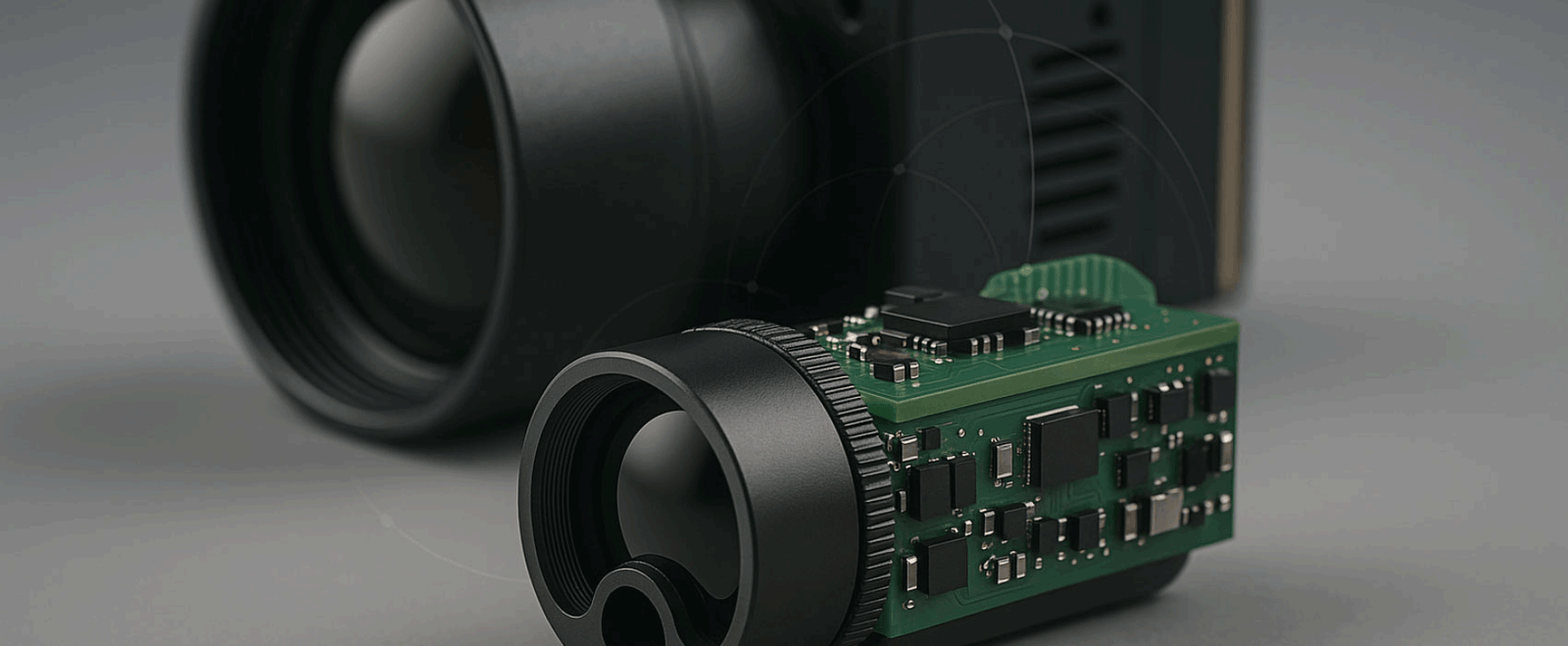
Tripod/pan-tilt is often deployed with cores that are also used in permanent installations (see thermal imaging modules), which helps OEMs reuse firmware, calibration tools, and spare parts across product lines.
5) When Fixed Online Thermal Systems Are the Right Answer
Fixed online systems should be chosen when the plant needs time advantage and continuous visibility, not just better images.
Use fixed online systems when:
Failure consequences are high. Fires, explosion risk, major outage risk, safety incidents, regulatory exposure, and insurance pressure justify continuous monitoring.
Response time targets are short. If your escalation process expects detection-to-response in minutes, manual routes cannot meet the requirement.
Assets are difficult or dangerous to access. Elevated conveyors, enclosed cable tunnels, high-voltage yards, confined spaces, or high-temperature process areas.
Thermal behavior is dynamic. Loads change quickly, processes cycle, and anomalies can accelerate fast (e.g., electrical contact degradation under variable load).
Trending is required, not optional. Fixed systems capture baseline drift and allow you to detect “rising-but-not-yet-critical” conditions.
Practical advantages of fixed monitoring
- Coverage: One system can cover hundreds of points continuously.
- Consistency: Same angle, same distance, same calibration approach—less measurement variance.
- Evidence: Alarm history, temperature curves, and event recordings support root-cause analysis and maintenance justification.
- Integration: Linking alarms to SCADA/DCS, CMMS work orders, and site dashboards reduces manual reporting time.
Typical risks and how to mitigate them
Fixed systems introduce engineering risks if deployed like “just install a camera”:
- False alarms: Without rules and context, even normal load cycles can cause alarm spam.
- Emissivity errors: Shiny metals, reflections, or changing surface conditions can mislead readings.
- Maintenance overhead: Optical window cleaning, alignment checks, and network health must be planned.
- Network cybersecurity: Remote access and system hardening must follow plant standards.
A proper online deployment starts with a risk map and measurement design, then moves to installation and integration. Many plants deploy fixed monitoring as part of a broader industrial thermal cameras program rather than a stand-alone project.
6) CAPEX vs OPEX: Comparing the Three Options
A simple way to compare form factors is to separate hardware cost (CAPEX) from people/process cost (OPEX) and risk cost.
Comparison table: form factor trade-offs in plants
| Factor | Handheld | Tripod / Pan-Tilt | Fixed Online System |
|---|---|---|---|
| CAPEX | Low to medium | Medium | Medium to high |
| OPEX (labor) | High (routes + reporting) | Medium (setup + periodic scans) | Lower per asset (monitoring + maintenance) |
| Response time | Hours to days | Minutes to hours (if scheduled) | Minutes (continuous alarms) |
| Coverage scalability | Limited by staff | Moderate | High |
| Measurement repeatability | Variable | Good to very good | Excellent |
| Best for | Diagnosis, flexible inspection | Repeatable audits, safe standoff | Critical assets, trending, compliance-driven monitoring |
| Main failure mode | Missed events between routes | Poor presets / inconsistent setup | Alarm spam, neglected maintenance |
A key point: online systems often look expensive in CAPEX but can be cheaper in total cost once you model staffing and outage avoidance. Conversely, handheld can look cheap but becomes expensive when the program scales to multiple plants and multiple shifts.
7) Response-Time and Coverage: A Practical Selection Framework
Instead of starting from camera specs, start from two plant questions:
- How fast do we need to detect and respond?
- How much of the plant must be covered continuously?
A simple 3-tier selection logic
Tier 1: Diagnostic coverage (handheld).
Use for broad plant coverage where risk is moderate and access is safe. The program’s goal is to find anomalies and improve maintenance decisions.
Tier 2: Repeatable monitoring (tripod/pan-tilt).
Use where access risk is higher or repeatability matters for decision-making, but 24/7 monitoring is not yet justified.
Tier 3: Continuous risk control (fixed online).
Use where the fault-to-failure window is short or consequences are severe.
Most mature plants run all three tiers simultaneously. The art is choosing which assets “graduate” upward.
8) Typical Industrial Use Cases by Form Factor
Electrical distribution: switchgear, busbars, transformers
- Handheld: routine cabinet scans, commissioning checks.
- Tripod/pan-tilt: scanning outdoor yards or lineups from safe boundaries.
- Fixed online: critical busbar joints, transformer bushings, cable terminations with high load variability.
Rotating equipment: motors, bearings, couplings
- Handheld: troubleshooting after vibration alerts.
- Tripod: stable standoff measurement for high-temperature zones.
- Fixed online: continuous monitoring for high-value critical motors where downtime is costly.
Conveyors and material handling
- Handheld: belt misalignment and roller hotspot checks.
- Tripod/pan-tilt: scanning multiple rollers from elevated safe positions.
- Fixed online: long conveyors in remote areas with fire risk (coal, wood, biomass).
Process and utilities: steam systems, refractory, insulation
- Handheld: insulation surveys, steam trap checks.
- Tripod: repeatable refractory monitoring during heat-up/cool-down cycles.
- Fixed online: continuous monitoring of furnaces, kilns, or high-risk thermal zones.
9) OEM “Combination Solutions”: Why Plants Benefit from Bundled Programs
Many EPCs and multi-site groups now procure thermal solutions as a package rather than as single devices. This is where OEM strategy matters.
What a “handheld + online” package can look like
A practical combination package includes:
- Handheld units for routine routes and diagnosis.
- Fixed online cameras for critical assets and alarm coverage.
- Shared software workflow: consistent asset naming, alarm rules, and reporting templates.
- Shared calibration and QA practices, reducing training variability.
- Spare parts and service plan that covers both categories.
This approach reduces “tool sprawl.” Instead of buying different ecosystems from different suppliers, teams standardize on a smaller set of platforms with compatible accessories, file formats, and training material.
Gemin Optics supports these mixed deployments through an OEM approach that spans modules and systems—covering thermal imaging modules for integrators and complete online solutions under industrial online thermal imaging systems.
10) Implementation Checklist for EPCs and End Users
A form-factor decision still needs an implementation plan. The most common project failures are not about camera performance; they are about incomplete engineering definition.
10.1 Define measurement targets and decision rules
- What constitutes an alarmable condition?
- Is the goal “absolute temperature” or “trend deviation from baseline”?
- What is the required response workflow (callout, shutdown, verify)?
10.2 Design mounting and field-of-view deliberately
- Verify target size vs distance and lens selection.
- Avoid reflective backgrounds where possible.
- Plan for maintenance access to the lens window.
10.3 Plan integration early
- Determine network and protocol requirements (Ethernet, RTSP, ONVIF, Modbus, etc.).
- Define data ownership and retention.
- Apply plant cybersecurity rules for remote access and patching.
10.4 Operationalize maintenance
- Cleaning schedule for optical windows in dusty plants.
- Periodic verification checks (blackbody reference or comparative checks).
- Spare parts plan and calibration traceability.
For large programs, include a service model from the beginning (see service and support for typical industrial expectations).
11) How to Decide: A Short Decision Matrix You Can Use in RFQs
If you are writing a tender or RFQ, include a matrix that forces clarity across the three form factors. For each asset class, ask vendors to propose:
- Deployment type (handheld / tripod / fixed) and justification.
- Lens and mounting distance assumptions.
- Expected detection time for key fault modes.
- OPEX estimate: labor hours per month and maintenance tasks.
- Alarm philosophy: thresholds, hysteresis, and escalation logic.
- Spare parts and lifecycle plan.
This prevents “lowest-price camera wins” procurement cycles that later become operational headaches.
CTA: Build a Practical Mixed Thermal Program for Your Plant
Selecting between handheld, tripod-mounted, and fixed systems is ultimately about managing risk with the right combination of response time, coverage, and operating cost. If you are planning a mixed deployment—handheld for diagnosis plus online monitoring for critical assets—Gemin Optics can support OEM and integrator programs with modular cores, industrial systems, and long-term supply planning.
To discuss your plant layout, asset risk map, and a phased deployment plan, contact our team via Contact Us and share your target assets, operating environment, and expected response-time requirements.