
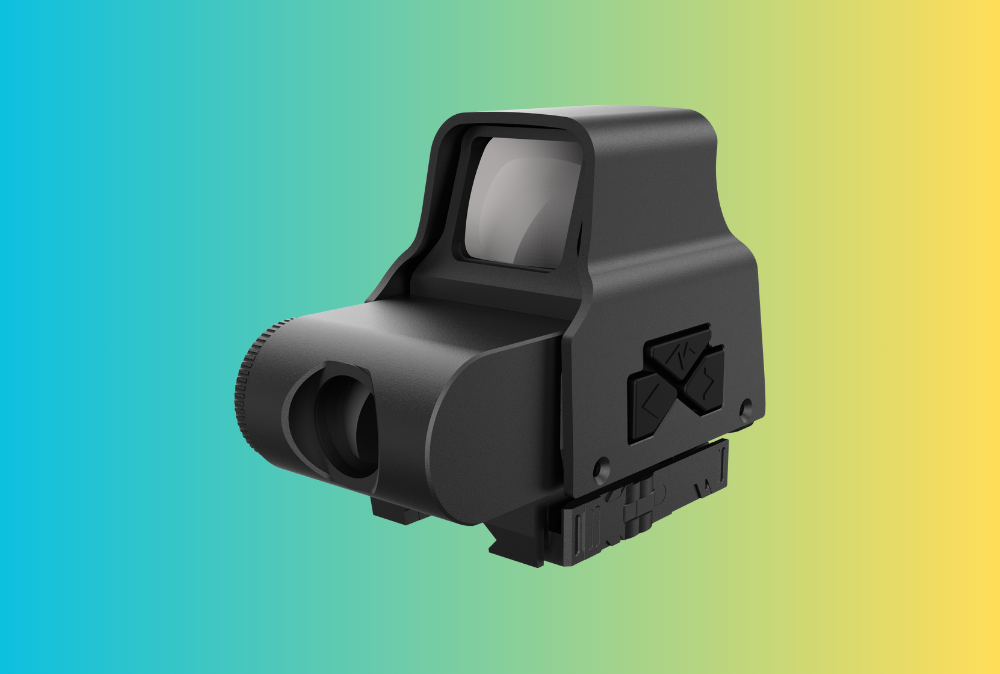
Thermal pistol sight accessories are often the difference between a compact product that sells as a single SKU and a compact platform that scales into a full line. In handgun thermal programs, image quality is important—but it is rarely the only reason a unit succeeds or fails in big-channel retail and e-commerce. Returns and negative reviews more often come from ecosystem issues: “doesn’t fit my rail,” “can’t use my holster,” “battery dies too fast,” or “mount shifts after a few uses.”
Table of Contents
ToggleFor OEM/ODM buyers and brand owners, this means the real work starts after the core device is defined. You need a mounting strategy that tolerates platform variance, a power solution that supports real runtime expectations, and an accessory and content system that makes buyers confident before they click “Buy.” This article explains what big-channel brands typically require and how a supplier should prepare a complete thermal pistol sight ecosystem—including compatibility planning, external battery options, quick-detach structures, and retail-ready SKU and asset packages.
1) The Core Challenge: A Small Device Must Fit a Large Variety of Handgun Platforms
Thermal pistol sights live on a “compact” envelope, but they must integrate into an ecosystem that is not compact at all. In real-world channels, handguns vary widely by frame geometry, dust-cover rail profiles, slide widths, accessory clearances, and holster designs. Even among rails that appear similar, tolerance differences can be enough to produce wobble, misalignment, or mounting failures.
This is why broad “fits most pistols” claims are dangerous for e-commerce. When customers experience uncertainty during installation, they interpret it as incompatibility—even if the device technically mounts. Retailers also dislike ambiguous compatibility because it increases customer service costs and return rates. The program’s accessory strategy needs to make platform fit predictable, repeatable, and easy to communicate.
From an OEM/ODM perspective, the most professional approach is to define the “platform coverage plan” upfront: which pistol families and rail types are in-scope, what the default mounting configuration is, and what accessory modules expand compatibility without exploding SKUs.
2) What Is a Thermal Pistol Sight Ecosystem in a B2B Program?
A thermal pistol sight ecosystem is the complete set of hardware components, documentation, and channel assets that allow the sight to work reliably across multiple handgun configurations and usage contexts. It includes mechanical interface solutions (clamps, keys, risers), power extensions (external battery boxes, cable routing), and the “retail layer” that prevents confusion (SKU bundles, packaging, photography, compatibility statements).
In many private-label programs, the sight itself is only one part of what the brand sells. The brand sells a “ready-to-use configuration.” If the ecosystem is incomplete, the brand ends up paying for the gaps through support tickets, accessory claims, and returns—costs that are far higher than the accessory bill of materials.
A capable thermal pistol sight accessories China manufacturer should be able to propose an ecosystem roadmap the way consumer electronics suppliers do: start with a clean base SKU, then expand with controlled accessory kits that solve specific constraints (holster clearance, runtime, and multi-platform mounting).
3) Compatibility Engineering: Rails, Slides, and Holsters Determine Whether the Program Scales
Rail and Dust-Cover Interface Reality
Most thermal pistol sights mount to the handgun’s accessory rail area. The complication is that rail profiles and dimensional tolerances vary across models and generations. A mount design that works perfectly on one platform can feel loose or misaligned on another. Even when the clamp “fits,” small differences can create motion under handling, and customers describe that as “not stable.”
This is where an ecosystem approach matters. Instead of trying to force one clamp geometry to cover everything, mature programs use controlled interface options, such as interchangeable indexing solutions that match common rail geometries. The objective is not theoretical compatibility; it is predictable engagement and repeatable mounting on your target platform list.
For brands selling through big-box and e-commerce, the most effective practice is to publish a compatibility matrix and keep it conservative. Your matrix should define supported platforms and highlight known limitations. Over-promising compatibility is one of the fastest ways to increase returns.
Slide and Optic-Cut Expectations
Even if your thermal pistol sight is designed as a rail-mounted device, customers will still ask about slide and optic-cut compatibility because they are familiar with the pistol red-dot ecosystem. This can become a support burden unless the brand positions the product clearly.
If you are not offering slide-mount compatibility, say so explicitly and explain why: weight, geometry, and recoil dynamics can make “direct slide mounting” unrealistic for certain thermal designs. If you are offering slide mounting, you must treat it as a controlled subsystem with validated adaptor plates, screw specs, and installation instructions. Otherwise, the program becomes unmanageable and returns will climb because customers assume it “should fit like an RDS.”
Holster Compatibility Is Often the Biggest Return Driver
Holster fit is where most compact thermal programs struggle, especially in retail channels. Holsters retain on specific contours, and any forward-mounted or downward-extending device changes those contours. Many customers expect to keep using existing holsters, and they do not realize that a mounted thermal device changes clearance needs and retention behavior.
Brands have to decide what “holster compatibility” means for their program. Some brands take a conservative stance and recommend open-front or modified holsters. Others invest in a holster-aware outer geometry, such as a low-profile housing variant or a protective hood that shapes the external profile more predictably. The right decision depends on target user behavior and channel expectations, but the key is to be explicit.
From the supplier side, the right support is not vague claims. The supplier should provide outer geometry options and help the brand craft accurate compatibility language that reduces wrong purchases and dissatisfaction.
4) Power and Runtime: External Battery Systems Must Be Engineered, Not Added
Compact thermal devices face a predictable trade-off: small form factor limits battery capacity. In real channel feedback, runtime complaints are among the most common drivers of negative reviews. An external battery box can be an effective solution, but only if it is designed as a system rather than a cable accessory.
The first requirement is strain relief. Without it, connectors and cables become failure points, and cable failures create returns that look like “device quality problems.” The second requirement is cable routing. If the user has to improvise routing, the cable will snag, bend, or get pinched, and the product becomes frustrating. The third requirement is clarity: the system must behave predictably when switching between internal and external power, and the user must understand what the indicators mean.
For brands, the external battery kit should be treated as a structured SKU, not a loose accessory. It needs a consistent “what’s included” configuration, a simple routing guide, and packaging that protects connectors during shipping. It should also have a clean replacement path—cables are a high-frequency support item, and a spare cable SKU often reduces customer frustration more effectively than extended warranty language.
5) Offset Mounts, Risers, and Quick-Detach: Versatility Features That Must Be Controlled
Offset mounts and risers solve practical clearance issues on certain platforms, but they also create stack-up tolerance problems if too many combinations are allowed. If customers can stack multiple parts without guidance, the result is often instability, misalignment, or “mount feels weak.” That becomes a return—even if the parts are technically correct.
The practical B2B approach is to keep riser and offset options limited and curated. Offer one or two heights at most, validate them against your target platform list, and provide clear guidance on when each is needed. Most of the time, a few well-tested options produce better outcomes than a large menu of parts.
Quick-detach designs are similar. They can be valuable for customers who switch the sight between pistols or remove it for storage, but QD introduces new failure modes: accidental release, wear-induced looseness, and inconsistent reattachment. If a supplier offers QD, the buyer should ask not only “do you have QD,” but how the supplier tests retention and repeatability across lots. A QD mechanism that looks good in photos can still generate returns if it is not controlled with proper QC methods.
6) How an OEM/ODM Factory Should Deliver a Complete Accessory Solution for Brands
A brand selling “handgun thermal” in retail and e-commerce is not just buying hardware. The brand is buying a program that must be easy to list, easy to explain, and easy to support. That requires supplier-side preparation in three areas: SKU architecture, packaging and inserts, and image assets.
SKU Architecture: Bundles That Match Buyer Behavior
A disciplined supplier will propose a base configuration that works out of the box for the largest target segment, then add controlled accessory kits that expand compatibility or capability. The goal is to reduce “decision fatigue” and wrong purchases.
In practice, the best SKU logic tends to look like a platform ladder rather than an accessory catalog. For example, a base unit for the mainstream rail group, a compatibility kit for alternative interfaces, and a field-power kit for runtime-sensitive users. This type of structure helps retailers and marketplaces present the line clearly and reduces the customer’s likelihood of buying the wrong combination.
Packaging and Retail Inserts: Prevent Confusion Before It Starts
Packaging for accessory-heavy products is a major driver of returns and chargebacks. Small missing parts are common in poorly controlled programs, and customers interpret missing parts as “the product is incomplete.” A supplier should implement packaging QC gates, accessory checklists, and bag labeling standards so the customer can verify completeness immediately.
Retail inserts matter as well. A compact “first 10 minutes” guide, a clearly labeled accessory layout diagram, and a QR code linking to a compatibility matrix can materially reduce support load. These are not “marketing extras”; they are operational tools that protect margin.
Image and Content Assets: Standardized Sets That Scale Across Channels
For e-commerce, the accessory ecosystem is hard to sell without excellent visuals. A supplier that supports brands well should provide a standardized photo set for the device and each accessory module, with consistent angles and a clean naming convention so the brand can reuse assets across Amazon listings, distributor portals, and its own website.
The most effective asset packs also include simple diagrams: what’s in the box, how the mount clamps, where cables route, and which compatibility parts are used for which platform group. These assets reduce returns because they help buyers self-select correctly.
7) How Gemin Optics Supports OEM/ODM Ecosystems for Compact Thermal Platforms
Gemin Optics works with brands and integrators who need more than a single device SKU. We support platform development and accessory system planning with a focus on controllable compatibility, retail-ready deliverables, and scalable content assets.
For brands building compact thermal lines, stable component foundations matter. Many programs reduce integration risk by aligning development to proven thermal imaging modules, then building controlled variants on top of that baseline. You can explore Gemin’s module portfolio here: thermal imaging modules. If your roadmap includes distance-aware variants for certain scenarios, you can also evaluate component options through laser rangefinder modules.
For broader thermal catalogs, Gemin also supports adjacent categories that some brands cross-sell into, such as industrial handheld thermal imagers and fixed-site solutions like online thermal monitoring systems. The strategic advantage is that a brand can maintain consistent supplier processes, documentation discipline, and asset standards across multiple thermal product families.
CTA: Build a Versatile Thermal Pistol Sight Platform With a Complete OEM/ODM Accessory Program
If you are planning a thermal pistol sight line, prioritize ecosystem requirements early: define platform compatibility groups, plan holster and clearance realities, engineer external power as a system, and keep mount variants curated and validated. Then standardize SKU bundles, packaging, and image assets so your product is easy to list and easy to support.
Gemin Optics supports brands as a China manufacturer and OEM/ODM supplier, helping you deliver a complete accessory and mounting ecosystem with retail-ready SKU logic, packaging, and channel image materials. Contact our team to discuss your thermal pistol sight ecosystem project.