The global thermal imaging landscape is no longer a niche segment of military defense; it has transformed into a multi-billion dollar civilian and commercial juggernaut. From the vast hunting grounds of Texas and the rugged forests of Europe to the high-security perimeters of critical infrastructure, infrared technology is the new standard for “seeing the unseen.” For visionary brands and distributors, this growth represents a generational opportunity. However, the path to launching a successful thermal product line is paved with immense technical complexity, high R&D costs, and intricate supply chain requirements.
Table of Contents
ToggleThis is where the strategic advantage of Thermal Imaging OEM (Original Equipment Manufacturing) and ODM (Original Design Manufacturing) comes into play. By partnering with a specialized manufacturer like Gemin Optics, businesses can bridge the gap between a market-defining idea and a physical product that dominates the shelves. This comprehensive guide serves as an industry masterclass, detailing every technical, operational, and commercial facet of bringing high-end thermal optics to the global stage.
1. The Strategic Architecture of OEM and ODM Partnerships
In the high-stakes world of optoelectronics, the “Build vs. Buy” dilemma is a critical strategic pivot. Developing an in-house manufacturing capability for thermal devices requires tens of millions of dollars in clean-room infrastructure, precision optical alignment tools, and a multi-disciplinary engineering team comprising infrared physicists, FPGA programmers, and mechanical engineers.
The Power of Private-Labeling
For most hunting outfitters, retailers, and security firms, the most viable path is Private-Label Optics. This model allows you to leverage the existing intellectual property (IP) and manufacturing excellence of an established partner. It transforms your business from a hardware developer into a brand powerhouse. You focus on market positioning, customer loyalty, and distribution networks, while we handle the “under-the-hood” complexities of sensor integration and firmware optimization.
Why the Right Partner Matters
Choosing an OEM partner is not just about finding a factory; it is about finding an engineering ally. Our About Us page reflects our commitment to being more than a vendor. We act as a technical consultant, helping you navigate the nuances of the industry to ensure your product doesn’t just meet market standards—it sets them. This philosophy is further explored in our Why Choose Us section, highlighting our unique approach to client-centric innovation.
2. Core Technology: A Deep Dive into Infrared Physics
To lead the market, you must understand the “DNA” of a thermal device. A thermal scope or monocular is only as good as its weakest component. We guide our B2B partners through a granular selection process to define the product’s performance ceiling.
The Thermal Camera Module: The Sensor Heart
The Thermal camera module is the single most expensive and important component. We specialize in microbolometer technology, focusing on several key metrics:
- Resolution and Array Size: While 384×288 remains the “sweet spot” for many mid-range applications, the professional market is rapidly shifting toward 640×512 and even 1280×1024 resolutions. Higher resolution provides more “pixels on target,” which is crucial for long-range identification.
- Pixel Pitch (The 12μm Revolution): The industry has moved from 17μm to 12μm pixel pitch. This reduction allows for smaller sensor sizes while maintaining the same resolution, which in turn permits the use of smaller, lighter, and less expensive lenses without sacrificing the field of view (FOV).
- NETD (Thermal Sensitivity): Noise Equivalent Temperature Difference is measured in milli-Kelvin (mK). A sensor with an NETD of <25mK can detect minute temperature variations that a <50mK sensor would miss, especially in low-contrast environments like heavy fog or rainy conditions.
The Optical Path: Germanium vs. Chalcogenide
Since infrared radiation (long-wave infrared or LWIR) cannot pass through standard glass, the lens must be made from exotic materials.
- Germanium: The gold standard. It offers the highest transmittance but is subject to global commodity price fluctuations.
- Chalcogenide Glass: An excellent alternative for entry-to-mid-level devices, offering better cost-efficiency and moldability for high-volume production. Our expertise in Thermal camera module Integration ensures that the optical lens is perfectly matched to the sensor’s diagonal to prevent vignetting and ensure edge-to-edge clarity.
3. The Lifecycle of an OEM/ODM Project: A Detailed Roadmap
Bringing a product to life at Gemin Optics follows a structured, multi-phase methodology designed to minimize “Non-Recurring Engineering” (NRE) risks and maximize product-market fit.
Phase 1: Market Intelligence and Technical Specification
We start by defining the product’s “Mission Profile.” Will it be used for short-range pest control or extreme long-range alpine hunting? We set target specifications for detection, recognition, and identification (DRI) ranges. During this stage, we review our Milestones to apply lessons learned from previous successful launches.
Phase 2: Industrial Design (ID) and Ergonomics
The “look and feel” of a device are vital for brand identity. Our ID team creates concepts that balance aesthetic appeal with functional necessity.
- Button Layout: Crucial for “blind” operation in total darkness.
- Material Science: We use magnesium alloys or high-density polymers to ensure the device is lightweight but rugged enough to survive a fall.
Phase 3: Hardware Engineering and PCB Design
Our electrical engineers design the custom PCBs that house the sensor, the processing unit, and the power management system. We focus on low-power consumption to ensure that your customers aren’t left in the dark due to poor battery performance.
Phase 4: Prototyping and Technical Validation
Before mass production, we create Alpha and Beta prototypes. These units undergo rigorous bench testing to ensure the hardware and software are communicating flawlessly.
4. Firmware and Image Processing: The Digital Alchemy
In the thermal world, the “raw image” from a sensor is often unreadable to the human eye. The difference between a “good” device and a “great” device lies in the image processing pipeline.
Custom Algorithms
We develop proprietary algorithms that differentiate your brand’s visual output:
- Adaptive Contrast Enhancement: Automatically adjusts the dynamic range to make targets “pop” against a complex background.
- Dynamic Detail Enhancement (DDE): Sharpens the edges of objects, making it easier to distinguish between a deer’s antlers and a tree branch.
- NUC (Non-Uniformity Correction): A sophisticated software process that removes the “curtain” effect caused by sensor pixel variance, ensuring a smooth, uniform image.
User Interface (UI) Customization
A premium OEM service includes a fully customized UI. This includes your brand logo on the splash screen, custom reticle designs for rifle scopes, and localized menus in multiple languages. For more on how we approach these technical updates, visit our Blog.
5. Comprehensive Product Portfolio: Customization Options
Gemin Optics provides a modular manufacturing platform that allows you to build a cohesive product ecosystem under your brand name.
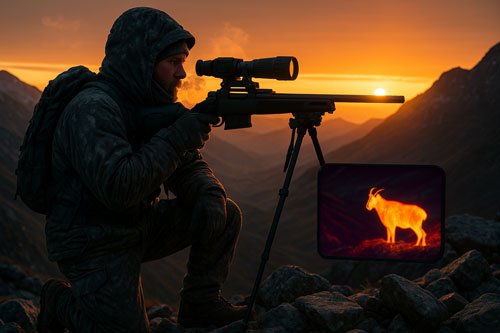
- Thermal Rifle Scopes: The flagship of any hunting brand. We offer high-recoil resistant designs that maintain zero even after thousands of rounds. For specialized needs, see our Thermal Rifle Scopes OEM/ODM page.
- Thermal Monoculars: The most versatile tool for any outdoor kit. Our Thermal Monoculars OEM/ODM services focus on compact footprints and long-range observation capabilities.
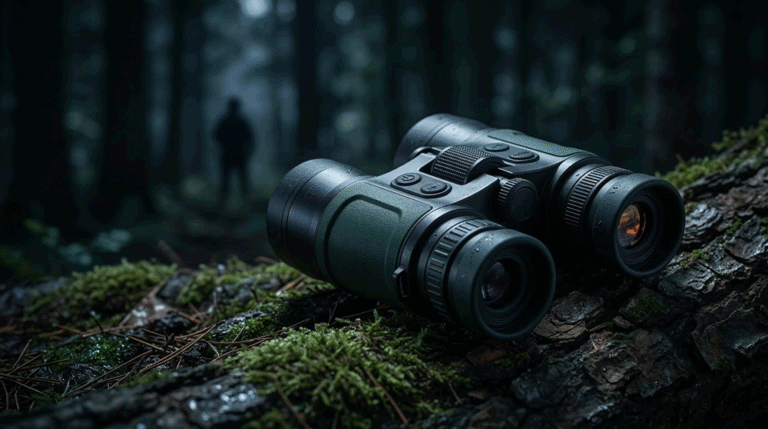
- Thermal Binoculars: Designed for extended surveillance. Dual-eye observation reduces eye strain and provides superior depth perception for professional scouts.
- Thermal Clip-On Sight: One of the fastest-growing market segments. These units allow users to keep their expensive daytime glass while adding thermal capabilities. Explore our Thermal Clip-on Sights OEM/ODM for integration details.
- Thermal Pistol Sights: A frontier in compact optics. These require extreme miniaturization and high shock resistance. Our Thermal Pistol Sights OEM/ODM are at the cutting edge of this niche.
Complementing these devices, we provide a full suite of Accessories, including custom mounting systems, external batteries, and protective cases, creating a “turnkey” solution for your customers.
6. Advanced Integration: The Smart Optics Revolution
The modern consumer is no longer satisfied with “just” a thermal image. They want an integrated digital experience. We are leaders in the “Smart Optics” revolution.
Laser Rangefinder (LRF) Integration
In the precision hunting world, knowing the distance is as important as seeing the target. We offer seamless Laser Rangefinder Module integration across all form factors. This isn’t just about sticking a module on the side; it’s about our Rangefinder Module Integration expertise, which ensures the laser beam is perfectly aligned with the optical axis.
Fusion, Ballistics, and AI
We are pushing the boundaries of what is possible on-board a handheld device:
- Thermal + LRF Fusion & Ballistics: This represents the pinnacle of our engineering. We combine the thermal image with LRF data and environmental sensors to provide real-time ballistic hold-over points.
- AI Target Recognition: Using machine learning, our devices can automatically identify humans, vehicles, or specific animal species, providing a tactical advantage for the end-user.
- Connectivity: Integration with mobile apps via Wi-Fi for live streaming, remote control, and over-the-air (OTA) firmware updates.
7. Manufacturing Excellence and Global Quality Standards
In the B2B world, quality isn’t just a buzzword; it’s a financial requirement. A 5% failure rate in the field can destroy a brand’s reputation and lead to massive logistics costs.
The Gemin Quality Gauntlet
Our Manufacturing & Quality facility is an ISO-certified environment. Every device must pass a series of “stress tests”:
- Shock and Recoil Simulation: Scopes are tested on a high-G vibration table to simulate the recoil of heavy-caliber rifles (up to 6000 Joules).
- Environmental Chambers: We cycle the temperature from -40°C to +70°C to ensure the internal seals and electronic components don’t fail in extreme climates.
- Water Immersion: All devices are tested to IP67 or IP68 standards, ensuring they remain functional after being submerged in water.
We are also deeply committed to Sustainability, utilizing energy-efficient manufacturing processes and responsible sourcing of raw materials. You can view our verified compliance and industry standards on our Certificates page.
8. Business Operations: Logistics, Warranty, and Compliance
Launching a global product requires more than just engineering; it requires an understanding of the legal and logistical landscape.
Regulatory Compliance and ITAR/EAR
Thermal imaging is a dual-use technology. We help our partners navigate the complex web of export regulations (such as CE, RoHS, and FCC) to ensure that your products can be legally sold in your target markets.
Warranty and After-Sales Support
A strong brand is built on trust. Our Warranty program is designed to be a “backstop” for your business. We offer tiered support levels, from module-level repair to full unit replacement, ensuring that your customers are always supported. For a list of common technical resolutions, our FAQs serve as an excellent first-line resource for your customer service team.
Strategic Asset Management
We provide a dedicated partner portal where you can find Downloads of high-resolution marketing materials, technical whitepapers, and the latest firmware builds to keep your inventory up-to-date.
9. Conclusion: Forging the Future of Thermal Technology
The thermal imaging market is entering its most innovative decade. As sensors become more sensitive and AI becomes more integrated, the brands that succeed will be those that prioritize technical excellence and strategic agility.
Partnering with Gemin Optics provides you with a turnkey engineering and manufacturing powerhouse. We don’t just build products; we build the future of your brand. Whether you are looking to integrate a specific Thermal camera module into an existing system or launch a revolutionary new line of smart optics, our team is ready to deliver.
Take the next step in your brand’s evolution.
Contact us today to speak with a senior project manager about your OEM/ODM needs. From initial concept to global distribution, we are your partner in infrared innovation.