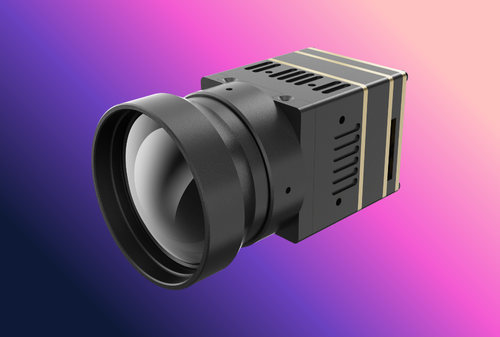
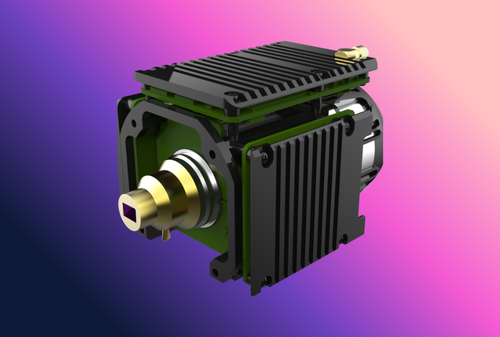
In thermal camera module projects, many teams feel confident once the sample powers on, outputs image, and responds to the basic interface commands. But for an OEM buyer, that is only the beginning. The more serious question comes next: will this module stay stable enough under time, stress, temperature change, transport, handling, and real product use to justify deeper integration?
Table of Contents
ToggleThat is why a reliability test plan matters. For thermal camera modules, reliability is not only a quality label. It is the bridge between a promising sample and a module the buyer can trust inside a real product program.
Why Reliability Planning Matters
A thermal camera module usually enters a larger system. Once it is integrated into a handheld device, industrial product, vehicle payload, embedded platform, or OEM enclosure, the cost of instability becomes much higher. A weak connector fit, poor startup consistency, marginal thermal tolerance, or hidden assembly sensitivity may not be obvious during short lab evaluation, but can become very expensive after the buyer has already committed software, mechanics, and supply-chain resources.
For thermal camera modules, reliability planning matters because the buyer is rarely only asking whether the module works today. The buyer is asking whether the module can survive enough real-world stress to support the next stage of investment. Without a reliability test plan, that question stays vague. Engineering may trust the sample, but quality may still hesitate. Purchasing may want to move ahead, but the program manager may not know what technical risks remain open. A structured reliability plan reduces that uncertainty.
What the Plan Should Do
A useful reliability test plan should do four things.
First, it should define which reliability risks matter for the project.
Second, it should connect those risks to realistic test items.
Third, it should separate early-stage screening from later-stage validation.
Fourth, it should help the OEM team decide what level of confidence has really been earned.
The goal is not to run every possible stress test on every sample. The goal is to build a reliability path that matches the real project stage and the real system risk.
Reliability Is Not the Same as Basic Function
A module can pass basic functional checks and still be a weak reliability candidate. That distinction matters because many OEM teams first evaluate the module for image quality, startup, SDK access, and interface behavior. Those checks are necessary, but they are not the same as proving that the module remains stable under repeated use, environmental change, transport, handling, or product-level stress.
For thermal camera modules, reliability means the module keeps behaving within an acceptable range after realistic stress events and over realistic operating patterns. It is not about perfection. It is about controlled confidence.
Reliability by Project Stage
A strong reliability plan should change by project stage. EVT does not need the same reliability depth as DVT, pilot build, or pre-production release. If the project tries to perform full production-level reliability testing too early, it can slow learning. If it does too little too late, the buyer may discover avoidable weakness only after serious integration work has already been completed.
For thermal camera modules, EVT reliability work is often focused on early screening of major risk areas. DVT reliability work should become more structured and closer to the intended system conditions. Pilot or PVT reliability work should help confirm that the approved module baseline can support controlled product release. This stage-based view keeps the plan realistic.
Start With the Reliability Scope
The first step is to define scope. What exactly is being tested for reliability? Is it the bare module? The module with lens? The module with carrier board? The module inside a preliminary enclosure? The module with one specific cable or adapter set?
For thermal camera modules, scope matters because reliability conclusions are only meaningful if the tested configuration is clear. A module may perform well in one support arrangement and less well in another. If the project does not define the tested configuration, later results become hard to interpret and hard to compare.
A reliability plan should therefore always begin by identifying the exact hardware, optics, interface, and support configuration under test.
Define the Operating Profile
A reliability plan is much stronger when it reflects the actual operating profile of the intended OEM product. Some systems run briefly and occasionally. Others run for long observation sessions. Some live indoors. Others experience larger ambient swings, vibration, field transport, or repeated startup cycles.
For thermal camera modules, the module cannot be tested intelligently unless the buyer and supplier define the intended use pattern at least in broad terms. A short-cycle industrial module may need different stress emphasis from a compact battery-powered observation platform. A design expected to see heavy transport or field handling may need stronger mechanical and packaging-related attention than one fixed inside stable equipment.
The reliability plan should follow the product reality, not a generic test wish list.
Incoming Quality and Reliability Are Connected
Incoming inspection and reliability planning support each other. Incoming inspection confirms that the correct module baseline was received. Reliability testing confirms that this baseline remains stable enough under the stresses the OEM project cares about.
For thermal camera modules, this connection is important because reliability testing becomes much more meaningful when it is performed on clearly identified, correctly documented modules. If the lot identity, revision status, or optics state is unclear from the start, later reliability conclusions become weaker.
That is why good OEM programs usually treat incoming control and reliability planning as linked steps, not separate worlds.
Functional Stability Test
One of the most practical reliability tests is a functional stability check over repeated operation. This is not always dramatic, but it is often very revealing.
For thermal camera modules, a functional stability test may include repeated startup cycles, repeated interface initialization, continuous image output over a defined run period, or repeated control commands under ordinary operating conditions. The purpose is to see whether the module continues to behave consistently, not only whether it works once.
This kind of test is especially useful because many weak modules do not fail completely. They drift into intermittent behavior. A structured stability check helps expose that early.
Power Cycle Reliability
Repeated power cycling is often one of the most important and most practical reliability screens for a thermal camera module. Many OEM products do not stay powered continuously forever. They boot, shut down, restart, and enter different power states.
For thermal camera modules, power cycle testing can reveal startup weakness, sequencing sensitivity, unstable initialization, or condition-dependent behavior that a one-time bench power-up would never show. This is particularly important when the host system includes complex power rails, batteries, or other subsystems that make startup less ideal than the lab bench.
A strong reliability plan usually includes repeated startup as a core element, not as an optional extra.
Continuous Run Test
A continuous run test is also valuable because some thermal issues, image drift, or interface instability only appear after time, not immediately. A module that looks good in the first few minutes may become less stable later.
For thermal camera modules, continuous run testing helps the OEM team see whether the module maintains stable image output, command response, and general operating behavior over a realistic session length. The right duration depends on the product profile, but the idea is simple: test long enough to expose more than only the first startup state.
This is especially useful in products where long session use matters to end customers or system operation.
Thermal Operating Test
Thermal operating tests are important because the module rarely lives in ideal ambient conditions forever. Even modest ambient change can affect startup margin, image stability, enclosure interactions, or power behavior.
For thermal camera modules, a thermal operating test may involve functional verification at different ambient conditions, longer enclosed operation, or checking whether startup and image behavior remain stable as the environment shifts. The plan does not always need extreme stress immediately. It does need to reflect the real thermal questions the product will face.
If the buyer expects the module to live inside a more compact or thermally dense product, thermal operating review becomes even more important.
Thermal Cycling
Thermal cycling is useful because it tests not only steady-state operation, but also how the module reacts to repeated temperature change. Mechanical interfaces, optics retention, connector behavior, and assembly stability can all be affected by thermal expansion and contraction.
For thermal camera modules, thermal cycling is often a very informative test when the product will move across storage, transport, and operating environments with noticeable temperature differences. It may expose subtle weaknesses that static room-temperature validation never reveals.
A good plan does not always need aggressive cycling immediately, but it should consider whether temperature transitions are relevant to the intended market.
Storage Condition Test
Operating stress is not the only concern. Storage and transport conditions also matter. A module may spend time in shipping, warehouse storage, or field logistics before entering final product use.
For thermal camera modules, storage-condition testing can help the OEM buyer understand whether the module remains mechanically and functionally stable after non-operating exposure to realistic conditions. This may include temperature-related storage review, packaging-related stress exposure, or post-storage functional confirmation.
This matters because some issues do not appear during active operation. They appear when the module returns from storage to operation.
Vibration and Mechanical Stress
If the intended OEM product will be transported frequently, used in mobile systems, or exposed to regular handling stress, vibration-related testing becomes more relevant. Even when the module is small, mechanical stability can still matter a great deal.
For thermal camera modules, vibration review may help reveal connector weakness, optics retention issues, mounting sensitivity, or internal stability problems that do not show up in a static lab environment. The exact profile depends on the product category, but the principle is clear: if the final system moves, the reliability plan should reflect motion.
A module that performs well only in static bench conditions may still be a weak OEM choice if transport or field motion is part of normal use.
Shock and Handling Review
Shock review is slightly different from broader vibration. It focuses more on discrete handling events, transport incidents, or sudden mechanical stress that may affect the module or its optics state.
For thermal camera modules, this does not always mean extreme drop-style abuse at the module level. It may mean handling shock, shipment shock, or controlled packaging stress relevant to how the module will actually be received and installed. The OEM team should ask a practical question: what kind of mechanical event could realistically happen before or during integration?
If that question matters in the real supply path, the reliability plan should not ignore it.
Connector Reliability
Connector reliability is often underestimated in module programs. A connector that works during the first lab session may still be weak under repeated use, repeated mating, or real fixture handling.
For thermal camera modules, connector reliability testing can help reveal wear sensitivity, alignment weakness, retention problems, or communication instability under repeated connection cycles. This is especially important in projects that use test fixtures, adapter boards, service access, or repeated engineering connection during development.
A connector problem is often mistaken for a communication or software problem until repeated-use testing makes the true cause more visible.
Cable and Interface Reliability
Where the module depends on cables, carrier boards, or interface adapters, the reliability plan should include the path around the module, not only the module itself. The OEM system usually experiences the full chain, not the module in isolation.
For thermal camera modules, cable routing, mating repeatability, adapter-board behavior, and host-interface stability can all influence what the buyer experiences as “module reliability.” If the cable or adapter is part of the delivered or approved configuration, then the plan should reflect that.
This prevents a common problem where the core module is judged stable but the practical integration path remains fragile.
Optics Stability Review
If the module includes optics, then reliability planning should also consider optical stability. Focus condition, lens retention, and image consistency may all be affected by mechanical or thermal stress.
For thermal camera modules, this does not always require a full optics requalification during every reliability screen, but it does mean the buyer should confirm whether the optical baseline remains acceptable after meaningful stress events. If the project uses a locked or controlled focus state, the reliability plan should test whether that state stays stable enough to support future builds and comparisons.
This is especially important when the OEM buyer will use the delivered module as a system baseline.
Image Consistency Under Stress
Image consistency review is often one of the most practical reliability checks for a module buyer. The question is not only whether image still exists after stress, but whether it remains consistent enough to support the application and the integration baseline.
For thermal camera modules, this may involve comparing image behavior before and after thermal cycling, vibration, or repeated operating runs, always under controlled enough conditions that the result means something. The point is not to over-interpret small variation. The point is to look for drift large enough to affect engineering trust, system tuning, or product quality.
A module that stays electrically alive but becomes too inconsistent is still a project risk.
Firmware and Interface Stability Under Stress
Reliability is not only mechanical or thermal. Firmware-related and interface-related stability also matter. The module should continue behaving predictably at the control and communication level after relevant stress conditions.
For thermal camera modules, this may involve confirming that command behavior, initialization logic, and interface output remain consistent after repeated thermal, startup, or handling events. If the module passes image checks but begins showing communication irregularity only after stress, that still belongs in the reliability conversation.
A strong OEM test plan therefore does not isolate software stability from hardware reliability.
Reliability by Lot and Unit Count
The depth of the plan should also reflect how many units are being evaluated and what decision the project is trying to make. Testing one engineering sample is useful, but it does not give the same confidence as testing multiple units from a controlled lot.
For thermal camera modules, this matters especially in DVT and pilot-stage work. If the OEM buyer is about to trust the module more deeply, some level of multi-unit reliability view becomes much more valuable. The project should understand whether it is looking at one unusually good sample or a more repeatable module baseline.
The reliability plan should therefore state whether it is screening one unit, comparing several, or validating across a more controlled lot.
Reliability and Golden Sample Control
If the project already uses a golden sample, reliability testing should connect back to that reference. This helps the team understand whether the stressed modules still remain close enough to the approved baseline.
For thermal camera modules, this is especially useful when the buyer later compares incoming lots, pilot units, or revision changes. Reliability results become easier to interpret when the project already knows what the approved baseline looked like before the test began.
A good reliability plan does not float in isolation. It connects to the project’s real reference model.
Pass, Fail, and Conditional Acceptance
A good reliability plan should also define what counts as a pass, what counts as a fail, and what counts as a condition that may still allow progress with controlled follow-up.
For thermal camera modules, this is important because not every finding has the same weight. Some results may reveal a clear reliability blocker. Others may only show a need for tighter packaging, stronger receiving control, or a more careful fixture design. If every issue is treated the same way, the plan becomes harder to use for real decision-making.
A useful structure often separates hard blockers from observations that still allow staged project progress.
Reliability Records
Reliability work becomes much more valuable when it leaves a usable record. The project should be able to show which modules were tested, what stress was applied, what the pre- and post-test condition was, and what conclusion the team reached.
For thermal camera modules, this matters because later questions often return. Did the earlier lot pass startup cycling? Was the optical baseline checked after thermal stress? Did the pilot units show the same behavior? Without records, the team repeats discussions instead of building knowledge.
A reliability plan should therefore produce not only results, but traceable project memory.
Reliability Plan Matrix
A simple matrix helps keep the plan practical.
| Test area | Main question | Main purpose |
|---|---|---|
| Power cycling | Does startup stay stable over repeated use? | Boot confidence |
| Continuous run | Does the module stay stable over time? | Session reliability |
| Thermal operation | Does behavior remain acceptable under heat or ambient change? | Operating margin |
| Thermal cycling | Does repeated temperature change create drift? | Mechanical and optics confidence |
| Vibration and shock | Can the module survive realistic transport or system motion? | Structural confidence |
| Connector and interface | Does repeated connection remain stable? | Integration robustness |
| Image consistency | Does the imaging baseline stay usable after stress? | Application confidence |
This kind of structure keeps the plan focused on practical OEM questions rather than abstract testing.
Common Mistakes
Several mistakes appear repeatedly. One is assuming that basic sample function already proves reliability. Another is copying a generic reliability list without tying it to the real product profile. Another is running stress tests without defining what the results actually mean for project decisions. Another is testing only one perfect engineering sample and assuming the module family has now been validated.
A further mistake is separating reliability from integration reality. For thermal camera modules, the best reliability plans reflect how the module will really be powered, handled, enclosed, connected, and used — not how it looked on an open bench for ten minutes.
The strongest plans are not the longest. They are the ones that answer the real risk questions of the OEM project.
Conclusion
A thermal camera module reliability test plan is a practical OEM confidence tool. It helps the buyer and supplier define which stress conditions matter, how module stability will be checked, and what level of confidence has really been earned before deeper product commitment.
For OEM buyers, this reduces integration risk and helps separate good samples from reliable module baselines. For suppliers, it improves technical credibility and reduces later disagreement about what the module was actually proven to do. For both sides, it turns “the sample looks fine” into a more useful statement: “the module has now passed the reliability checks that matter for this project stage.”
The most useful principle is simple: do not ask only whether the thermal camera module works today. Ask whether it remains stable enough, under the right stresses, to deserve the next investment decision.
FAQ
Why does an OEM buyer need a reliability test plan for a thermal camera module?
Because the module is usually being integrated into a larger product, and basic sample function alone is not enough to prove that it will remain stable under real project conditions.
Is reliability testing the same as acceptance testing?
No. Acceptance testing checks whether the delivered module matches the expected baseline. Reliability testing checks whether that baseline remains stable enough under relevant stress conditions.
What are the most useful early reliability checks?
Repeated power-up, continuous run, thermal operation, connector repeatability, and basic image-consistency checks are often some of the most practical early reliability tests.
Should reliability testing change by project stage?
Yes. EVT, DVT, pilot build, and production-facing decisions usually need different reliability depth and different confidence thresholds.
What is the biggest reliability-planning mistake?
A common mistake is assuming that a good engineering sample automatically represents a reliable OEM module baseline.
CTA
If you are building an OEM or integration program around a thermal camera module, a stronger reliability test plan will improve project confidence and reduce late-stage surprises. For project discussion, please visit CONTACT.