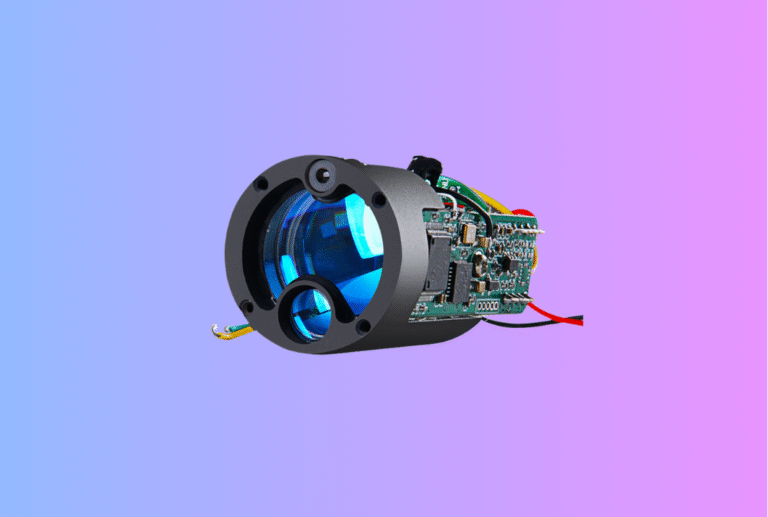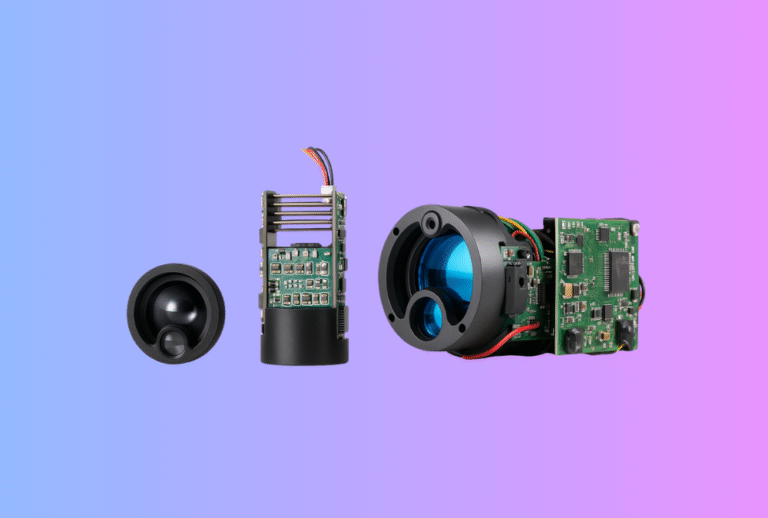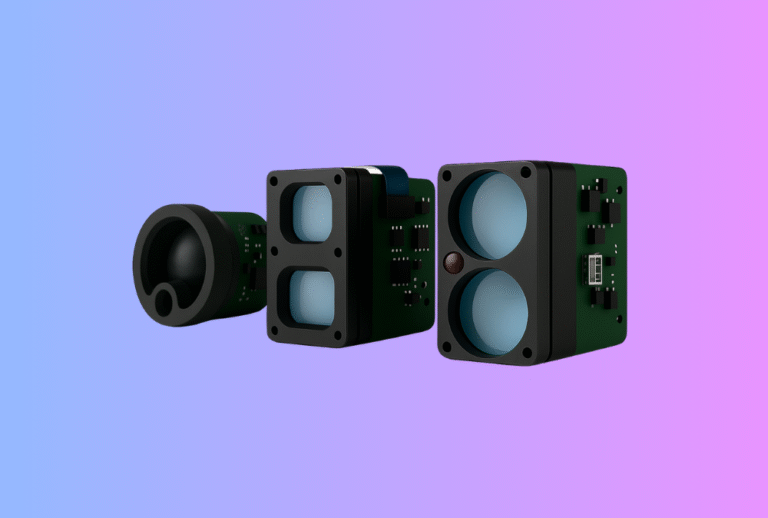
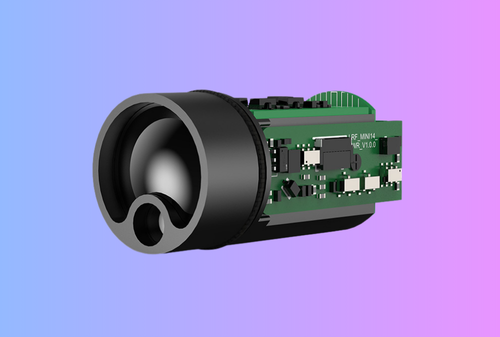
A laser rangefinder module is never only a hardware deliverable. For an OEM buyer, the real deliverable is a usable engineering package. The module itself may be electrically sound, optically stable, and mechanically compact, but if the document set around it is incomplete, scattered, outdated, or hard to interpret, the project still slows down.
Table of Contents
ToggleThis is why a laser rangefinder module integrator documentation pack matters. It is the document layer that allows the OEM team to move from curiosity to execution. It helps electrical engineers start board planning, mechanical engineers begin enclosure work, embedded engineers bring up communication, quality teams define control points, and project managers understand what is mature versus what is still provisional.
Your current Gemin site already makes this a natural next article. The LRF side now includes an integration page, a configurable product page, a development kit page, acceptance and environmental planning content, and a quality page that emphasizes traceability and controlled processes. The thermal side also already has a dedicated Integrator Documentation Pack article. That means the missing piece on the LRF side is not the idea of documentation itself, but a dedicated page showing OEM buyers what a good rangefinder-module document set should look like.
Why the documentation pack matters as much as the module
In many OEM projects, teams underestimate documentation because the sample arrives and works. The module powers up. A GUI reads distance. The first test result looks fine. At that point, it is tempting to assume the hard part is over.
In reality, that is often when the real project begins. The host team now needs pin definitions, interface behavior, revision status, mechanical references, mounting constraints, startup expectations, and file traceability. If those items live in informal emails, old screenshots, half-finished PDFs, or multiple contradictory folders, the project will lose time even if the module hardware is good.
This logic is already built into your existing site positioning. The Rangefinder Module Integration page explicitly presents interface specifications, wiring, 3D files, test procedures, and compliance support as part of a documented OEM handoff, while the product page highlights CAD, calibration records, traceability, and supporting files as part of the value of the platform. That means the documentation-pack article is not introducing a new promise. It is making an existing promise clearer and easier for buyers to understand.
A documentation pack is not just a folder of files
One of the most common mistakes suppliers make is to confuse “many files” with “a useful documentation pack.” Buyers do not benefit from a random archive of PDFs, old CAD, and partially named spreadsheets. What they need is a structured set of files that supports the actual engineering workflow.
A good laser rangefinder module documentation pack should help the OEM team answer practical questions quickly. Which version are we using? Which file is current? Which dimensions are for early packaging only, and which are frozen enough for tooling discussion? Which protocol file matches this firmware revision? Which test procedure should quality use? Which safety note is still provisional? Which files can the buyer send to its contract manufacturer, and which should remain internal to engineering review?
The difference between a weak and strong pack is not quantity. It is control.
Start by organizing the pack around project stages
The most practical way to structure a documentation pack is by project stage. Not every buyer needs the same depth of documentation at the same time. If the pack is not staged, one of two things usually happens. Either the supplier sends too little and the buyer cannot progress, or the supplier sends too much, too early, and the buyer cannot tell which files are authoritative.
A stage-based pack is more useful. At sample and feasibility stage, the buyer usually needs enough information to confirm architecture fit and start evaluation. At engineering integration stage, the buyer needs deeper interface, mechanical, and power detail. At pilot and production stage, the buyer needs stronger revision control, test procedures, traceability, and release confidence.
This staged approach aligns naturally with how your site already presents OEM development. The OEM Project Timeline page frames work as a sequence from requirements through samples, validation, pilot build, and mass production. The new LRF Acceptance Test Plan article also treats approval as a stage-gate decision rather than a one-time yes-or-no event. A documentation pack should follow the same logic.
The sample-stage pack should support fast engineering judgment
At the earliest stage, the buyer does not necessarily need every production document. But it does need a clean and current starter pack. That usually includes a current datasheet, pin definition, power requirements, interface summary, basic mechanical outline, operating notes, and sample revision identification.
At this stage, the goal is not to freeze the world. It is to enable fast engineering judgment. Can the host system power the module correctly? Does the interface fit the processor plan? Can the mechanical team estimate packaging feasibility? Does the safety class and beam behavior fit the intended product path? Can the team decide whether to move into acceptance and deeper integration?
Your current LRF content already supports exactly these buyer questions. The product page positions the platform around configurable range, accuracy, beam divergence, and interface choices, while the development kit page emphasizes early access to protocol, bring-up tools, and evaluation support. The starter documentation pack is what allows those promises to turn into practical first-step engineering.
The engineering-integration pack should reduce guesswork
Once the buyer moves past basic sample evaluation, the documentation pack must become more detailed. This is the point where weak suppliers start to create friction. The hardware may still be good, but the buyer’s electrical, mechanical, and software teams are now blocked by ambiguity.
At engineering stage, the documentation pack usually needs a fuller interface description, command and response behavior, startup sequence expectations, mechanical reference dimensions, mounting notes, window and alignment constraints where relevant, known limitations, and a clearer file-revision structure. If the module has evaluation code, protocol examples, or host integration notes, they should be included in a way that matches the current revision.
This stage also connects strongly to the rest of your new LRF article set. The Integration Checklist, Power and EMI Design Guide, Mechanical Integration and Alignment Guide, and Interface Protocol Guide all assume the buyer has enough structured information to act on. The documentation pack is the bridge that makes those technical decisions practical. Without it, the team is forced to reconstruct the engineering contract from scattered messages.
The pilot and production pack should emphasize control and traceability
At pilot and pre-production stage, the role of the documentation pack changes again. It is no longer mainly about enabling exploration. It is about reducing confusion and protecting repeatability.
At this point, the buyer usually needs a clearer revision baseline, more formal file naming, test procedures, acceptance criteria references, current compliance documents where relevant, calibration or traceability references, and enough change-control discipline that contract manufacturing and quality teams know what they are working from.
This is where your existing quality page becomes especially relevant. It emphasizes controlled processes, key process checks, logged parameters, traceability, and consistent inspections. The LRF product page also points to stored calibration files and serial-number traceability. Those claims are much stronger when the documentation pack visibly supports them. A controlled pack tells the buyer that the supplier is not only selling a module, but also supporting a repeatable engineering and manufacturing path.
File naming and folder structure should be boring on purpose
A documentation pack should not be creative. It should be boring in the best sense of the word. Engineers should be able to locate the current file without guesswork.
One of the strongest practices is to divide the pack into a small number of stable categories such as datasheet, interface, mechanical, software or SDK, test and validation, compliance, and project notes. Inside those categories, file naming should communicate version, date or release marker, and status clearly. Provisional files should look provisional. Released files should look released. Archived files should not sit beside current files without obvious separation.
This may sound administrative, but it directly affects engineering speed. If the buyer’s embedded team is using one protocol file while the mechanical team is referencing an older CAD package and purchasing is circulating a third revision of the datasheet, the project will slow down whether or not anyone notices immediately.
That is why the thermal-side documentation-pack article is such a useful structural precedent on your site. It reinforces the principle that document control is part of integration quality, not paperwork for its own sake.
Revision control is one of the biggest signals of supplier maturity
A supplier can appear highly capable during early discussions and still create major project friction if revision control is weak. In practice, many OEM integration problems are not caused by bad engineering. They are caused by mixed files, unclear document ownership, or outdated attachments continuing to circulate.
For a laser rangefinder module, revision control is especially important because the document pack often includes electrical behavior, protocol details, mechanical references, and validation assumptions that evolve during the project. If the buyer cannot tell which version of a file is current, it may build decisions on obsolete information.
This concern is already implied throughout your current site. The integration page presents documented handoff as part of de-risked OEM support. The quality page emphasizes controlled processes and traceability. The acceptance-test article now frames documentation maturity as part of approval logic. Taken together, those pages support a strong argument: document revision discipline is not a back-office issue. It is an engineering-risk issue.
The pack should separate stable documents from live project notes
Not every useful project file belongs in the same layer of control. This is another point that many teams mishandle. Stable engineering references and live project notes serve different purposes, and mixing them can create confusion.
Stable documents are things like current datasheets, released mechanical drawings, interface definitions, test procedures, and compliance files. Live project notes may include open issue trackers, test observations, provisional integration comments, or customer-specific discussion records. Both matter, but they should not look equally authoritative.
A good documentation pack often separates these two layers. That way the buyer’s engineering team can work from controlled references while still benefiting from current project context. This is especially useful in OEM programs where several topics move in parallel and not every engineering note is ready to become a released document.
A documentation pack should help multiple teams, not only engineers
It is easy to think of the documentation pack as something mainly for R&D. In reality, several different functions depend on it.
Electrical engineering needs current I/O and power definitions. Mechanical engineering needs outlines, datum notes, and packaging constraints. Embedded teams need protocol behavior and version clarity. Quality needs test references and traceability links. Purchasing needs revision certainty and approved document identity. Project management needs to know what is still provisional and what is mature enough for the next gate.
This cross-functional value is already visible on your site. The integration page speaks to engineering handoff and production enablement. The quality page speaks to inspection and control. The development kit page speaks to fast trials and bring-up. The documentation pack is the shared asset that makes all of those claims usable across teams.
A weak documentation pack usually fails in predictable ways
Most weak packs fail in a small number of familiar patterns.
The first is incompleteness. Critical files simply are not there when the buyer needs them.
The second is inconsistency. The files exist, but they disagree with one another.
The third is poor status visibility. The buyer cannot tell which files are draft, current, or obsolete.
The fourth is no project-stage logic. The supplier either sends too little or dumps everything at once.
The fifth is weak ownership. No one clearly controls updates, so old and new files circulate together.
The sixth is poor handoff discipline. The buyer receives files, but not in a form that can actually support internal approval, supplier review, or later manufacturing discussion.
These failure modes are precisely why a dedicated article is useful. Buyers often know documentation matters, but they rarely see the subject treated as an engineering deliverable in its own right.
The pack should connect naturally to acceptance and validation
A strong documentation pack does not sit in isolation. It should support the buyer’s acceptance flow and later validation work.
At acceptance stage, the pack should provide enough clarity to let the buyer decide whether the sample is ready for deeper engineering work. At integration stage, it should help reduce bring-up confusion and speed decision-making. At environmental and production-validation stage, it should connect the team to the right procedures, version references, and test baselines.
This is one reason the article fits so well after the LRF Acceptance Test Plan. The acceptance article explains how the buyer should decide whether a sample is mature enough to proceed. The documentation-pack article explains what file structure helps that decision happen smoothly and repeatably. Together, they form a stronger front-end content pair for OEM buyers.
Documentation quality can shorten the buyer’s internal approval cycle
One practical advantage of a strong documentation pack is that it helps the buyer itself move faster internally. In B2B OEM projects, supplier approval is rarely just an engineer’s decision. Samples, risks, files, and next steps often have to be reviewed across multiple internal stakeholders.
When the supplier package is clean, structured, and obviously controlled, internal review gets easier. The buyer can circulate a smaller set of reliable files, explain the current revision state more clearly, and separate what is already known from what remains open. That reduces friction not only in technical integration, but also in commercial and managerial alignment.
This is an underappreciated sales advantage. A disciplined documentation pack does not just support engineering. It makes the supplier easier to approve.
Conclusion
A laser rangefinder module integrator documentation pack is valuable because it turns supplier information into an engineering asset. It gives the OEM buyer a structured set of files that supports evaluation, integration, validation, and later production handoff without constant guessing about which document is current or what a revision means.
For your current Gemin content stack, this topic is a strong next article after the acceptance-test piece. You already have pages covering the module platform, integration workflow, development kits, quality control, and multiple technical subtopics. A dedicated documentation-pack article helps connect those promises into one practical buyer-side deliverable. It also makes the LRF line more symmetrical with the thermal line, where this documentation concept is already visible and useful.
FAQ
Why does a laser rangefinder module need an integrator documentation pack?
Because the module alone is not enough for efficient OEM integration. The buyer also needs a controlled file set for electrical, mechanical, software, and quality work.
Is a datasheet enough?
Usually not. Most OEM projects also need interface details, mechanical references, revision clarity, and stage-appropriate engineering support files.
Should the documentation pack change by project stage?
Yes. Early sample work, engineering integration, and pilot or production preparation usually require different depth and control levels.
Why is revision control so important in the pack?
Because mixed or outdated files can create design errors, approval delays, and confusion across engineering, quality, and purchasing teams.
What is the biggest documentation-pack mistake?
Treating it as a random folder of files instead of a controlled engineering deliverable with clear status, ownership, and stage logic.
CTA
If your team is evaluating an LRF platform for a real OEM program, do not judge the supplier only by the hardware sample. Look at the documentation pack as well. Start with our Rangefinder Module Integration overview, review the configurable Laser Rangefinder Module platform, and then use our contact page to discuss the document set, revision structure, and engineering handoff support your project needs. This article also pairs naturally with your next-stage reads on acceptance, interface, mechanics, environment, and quality control.
Related Articles
- Rangefinder Module Integration
- Laser Rangefinder Module
- Laser Rangefinder Module Acceptance Test Plan
- Laser Rangefinder Module Integration Checklist
- Laser Rangefinder Module Interface Protocol Guide
- Laser Rangefinder Module Mechanical Integration and Alignment Guide
- Laser Rangefinder Module Environmental Test Plan
- What a Good OEM Development Kit Looks Like for Thermal Camera Modules and Laser Rangefinder Modules
- Manufacturing & Quality