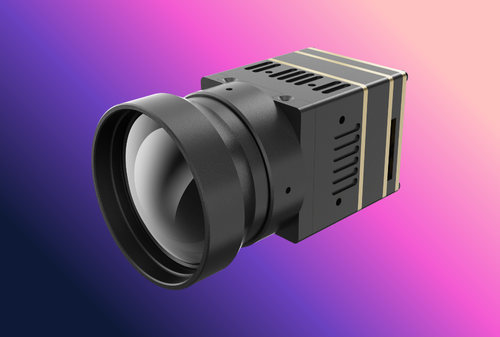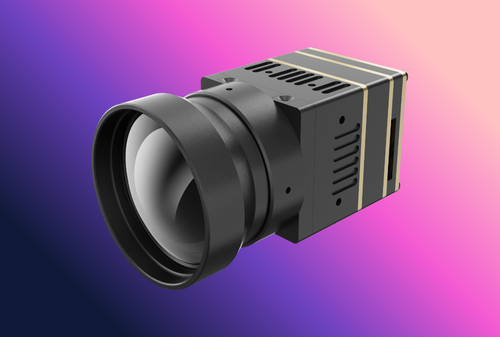
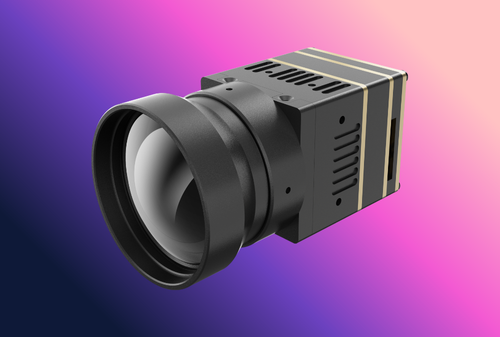
OEM Thermal Camera Module: A Buyer's Guide
Integrating a thermal camera module into your product is a game-changer, unlocking new capabilities from industrial inspection to security surveillance. This guide provides OEM/ODM product managers and system engineers with a comprehensive framework for selecting the right thermal core, navigating complex integration challenges, and maximizing return on investment.
Table of Contents
ToggleExecutive Summary
For B2B buyers launching a thermal-enabled product, success lies in understanding the technology’s nuances. Here are the essential takeaways for your next project:
- Image Quality Hinges on NETD: While resolution is important, Noise Equivalent Temperature Difference (NETD), measured in millikelvins (mK), is the most critical specification for image clarity and performance in low-thermal-contrast scenes. A lower NETD value (<40mK) is always better.
- Optics Define the Mission: The lens system (focal length and F-number) determines the module’s Field of View (FOV) and its effective range. A long focal length provides narrow-FOV, long-range detection, while a short focal length offers wide-FOV situational awareness. There is no one-size-fits-all solution.
- Software Integration is Key: A module’s value is directly tied to its software development kit (SDK) and interface flexibility (e.g., USB, LVDS, UART). A well-documented SDK and robust control protocols drastically reduce development time and engineering costs.
- Compliance is Non-Negotiable: High-performance thermal modules, particularly those with frame rates above 9Hz, are often subject to strict export controls (e.g., US EAR). Understanding these regulations from the outset is crucial to avoid project-killing delays and legal penalties.
Use Cases & Buyer Scenarios
A thermal camera module is a versatile sensor that can be the core of numerous innovative products. The optimal choice depends entirely on the end application.
Unmanned Aerial Vehicle (UAV) Payloads
For drone manufacturers and payload integrators, size, weight, and power (SWaP) are the primary constraints. Thermal modules enable critical applications like search and rescue, precision agriculture (crop health monitoring), solar farm inspection, and infrastructure surveillance. Buyers in this segment need lightweight, low-power modules with robust control interfaces (like MAVLink over UART) and reliable video output for downlink.
Security and Surveillance Systems
In the security sector, thermal modules are integrated into PTZ cameras, perimeter defense systems, and critical infrastructure monitoring solutions. The key requirement is 24/7 detection performance, regardless of lighting conditions or camouflage. Product managers for security brands prioritize high-resolution detectors (640×480 or higher), long-range detection optics, and advanced image processing features like Digital Detail Enhancement (DDE).
Handheld Devices and Sights
Brands developing products for firefighting, law enforcement, hunting, or industrial diagnostics rely on thermal modules to build powerful handheld devices. Examples range from Thermal Monoculars and Thermal Rifle Scopes to predictive maintenance tools. Here, the focus is on a balance of performance, power efficiency for long battery life, rapid start-up time, and ruggedness to withstand harsh field use.
Figure 1: A thermal camera module (left) is the core component that enables finished products like handheld thermal monoculars (right).
Spec & Selection Guide
Navigating thermal module datasheets requires a clear understanding of what each parameter means for real-world performance.
Key Performance Parameters:
-
Detector Resolution: The number of pixels in the sensor array (e.g., 384×288, 640×512). Higher resolution provides greater detail and improves identification range, but often at a higher cost and power consumption.
-
Pixel Pitch (µm): The distance between the centers of adjacent pixels. Modern cores use smaller pitches (e.g., 12µm vs. 17µm), which allows for more compact optics for a given focal length, reducing overall system SWaP.
-
NETD (Noise Equivalent Temperature Difference): The smallest temperature difference the sensor can detect, measured in mK. A lower NETD (<40mK) results in a sharper, higher-contrast image, especially in scenes with minimal temperature variation. It is arguably the most important metric for image quality.
-
Spectral Range: Most commercial thermal modules operate in the Long-Wave Infrared (LWIR) spectrum (8-14µm), which is ideal for detecting thermal energy emitted by terrestrial objects.
-
Optics (Lens): Defined by focal length (mm) and F-number (e.g., f/1.0). Focal length determines the FOV and range, while the F-number indicates how much infrared energy the lens can gather. A lower F-number is better.
-
Frame Rate (Hz): The number of times the image is updated per second. For viewing moving objects smoothly, 25Hz or higher is ideal. However, modules with rates >9Hz are often export-controlled.
Comparison of Thermal Module Classes
| Specification | Compact / SWaP | Mainstream / UAV | High-Performance / Surveillance |
| Typical Resolution | 160×120 – 384×288 | 384×288 – 640×512 | 640×512 – 1280×1024 |
| NETD | <50 mK | <40 mK | <30 mK |
| Pixel Pitch | 12µm / 17µm | 12µm | 12µm / 10µm |
| Typical Lens (Focal Length) | 4mm – 19mm | 13mm – 35mm | 25mm – 100mm+ |
| Frame Rate | 9Hz / 25Hz | 9Hz / 30Hz / 50Hz | 9Hz / 30Hz / 60Hz |
| Primary Interface | CMOS, SPI | CMOS, LVDS, USB | LVDS, USB, Camera Link |
Decision Flow for Module Selection
Use this logic to guide your initial selection process:
-
Is the primary goal long-range detection (>1.5km) of human-sized targets?
-
Yes: Prioritize a 640×512 resolution module with a long focal length lens (≥35mm). Confirm export compliance for a >9Hz frame rate.
-
No: Proceed.
-
-
Is the product a battery-powered handheld device where SWaP is critical?
-
Yes: Focus on compact 12µm pitch modules with low power consumption (<1W). A 384×288 resolution often provides the best balance.
-
No: Proceed.
-
-
Is the application imaging fast-moving targets (e.g., vehicles, drones)?
-
Yes: A frame rate of at least 25Hz is essential to avoid motion blur.
-
No: A 9Hz module may be sufficient and simplifies export compliance.
-
Integration & Engineering Notes
A successful product launch depends on seamless integration of the thermal core into your system.
Electrical & Interfaces
Modules offer various video output formats. Digital interfaces like LVDS or USB UVC are preferred for their noise immunity and direct connection to modern processors. Control is typically handled via UART, allowing your host system to command functions like zoom, color palette changes, and calibration. A comprehensive SDK with sample code is invaluable, saving hundreds of hours in software development.
Optics & Mechanics
The module must be mounted securely to a thermally conductive chassis to dissipate heat generated by the sensor. The lens system must be protected by a housing with a sealed IR-transmissive window (typically Germanium or Chalcogenide glass). Proper sealing to achieve a high IP rating (e.g., IP67) is crucial for products intended for outdoor use.
Firmware/ISP/Tuning
The on-board Image Signal Processing (ISP) pipeline is what turns raw sensor data into a clear, actionable image. Key firmware features include:
-
Non-Uniformity Correction (NUC): Calibrates for pixel-to-pixel variations, creating a smooth image. This is often performed by an internal shutter.
-
Automatic Gain Control (AGC): Optimizes contrast and brightness for the current scene.
-
Digital Detail Enhancement (DDE): Advanced algorithms that sharpen edges and improve clarity.
-
Sensor Fusion: Firmware can be designed to accept inputs from other sensors. For example, data from a Laser Rangefinder Module can be overlaid on the thermal video to provide precise distance-to-target information.
Testing & Validation
Validation should move from the lab to the real world.
-
Bench Testing: Use calibrated blackbody sources to verify NETD and thermal sensitivity.
-
Field Testing: Evaluate performance using the DRI (Detection, Recognition, Identification) methodology.
-
Acceptance Criteria: Define clear pass/fail standards. For example: “The system must be able to recognize a human-sized target at 700 meters under clear night conditions.”
Compliance, Export & Certifications
Navigating the regulatory landscape is critical for global market access.
-
CE/FCC/RoHS: These are standard certifications ensuring electromagnetic compatibility and restricting hazardous substances, required for market access in Europe and the US.
-
Export Controls: This is the most significant compliance hurdle for thermal imaging. Uncooled thermal modules, especially those with frame rates greater than 9Hz, are typically controlled under the US Department of Commerce’s Export Administration Regulations (EAR) under ECCN 6A003.b.4.b. Selling or transferring these modules to certain countries or end-users requires a license. Always verify the export classification with your supplier. The thermal imaging market’s growth, projected to reach $14.9 billion by 2030, is heavily influenced by these defense and dual-use applications (Allied Market Research, 2024).
Business Model, MOQ & Lead Time
Partnering with the right module supplier streamlines your supply chain.
-
Minimum Order Quantity (MOQ): Samples and development kits are available in single units. Production MOQs typically start between 50 and 200 units, with volume pricing tiers.
-
Lead Times: Expect 2-4 weeks for samples. Mass production can range from 10-18 weeks, so plan your procurement cycle accordingly.
-
Customization: As an OEM/ODM partner, we can provide customization services, from modifying the lens mount and connectors to tuning the firmware’s image processing algorithms for your specific application, such as building custom Thermal Binoculars.
Simple ROI Model for an OEM
Consider an OEM developing a new thermal security camera:
| Item | Assumption (per unit) | Value |
| Thermal Module Cost | Bulk pricing for 200 units | $700 |
| Other BOM & Assembly Cost | Housing, CPU, PSU, labor | $250 |
| Total Cost of Goods Sold (COGS) | $950 | |
| Manufacturer’s Sale Price (MSP) | $1,900 | |
| Gross Profit per Unit | $950 | |
| Breakeven Volume | Assuming $100k R&D upfront | ~106 units |
This model demonstrates that despite the higher initial component cost, the strong market value of thermal-enabled products allows for a rapid return on R&D investment.
Pitfalls, Benchmarks & QA
Avoid these common mistakes to de-risk your project.
Common Pitfalls & How to Avoid Them:
-
Focusing Only on Resolution: A high-res sensor with high NETD will produce a noisy, poor-quality image. Solution: Prioritize low NETD (<40mK) for better performance in all conditions.
-
Mismatching Lens to Application: Using a wide-angle lens for a long-range task. Solution: Use modeling tools or consult with our engineers to select the right focal length for your DRI requirements.
-
Poor Thermal Management: Overheating the sensor degrades performance and lifespan. Solution: Ensure your mechanical design provides an adequate heat sink for the module.
-
Underestimating Software Effort: Assuming “plug and play” integration. Solution: Allocate sufficient engineering resources for software development and leverage the supplier’s SDK.
-
Ignoring Export Laws: Discovering late in the project that your chosen module cannot be sold to your target market. Solution: Discuss export compliance during your very first technical consultation.
Figure 2: The Johnson’s Criteria for DRI, the industry standard for defining thermal system performance.
Field Benchmarks (DRI): The industry standard for defining performance is based on Johnson’s Criteria, which quantifies the number of pixels required on a target:
-
Detection (1.5 pixels): An object is present.
-
Recognition (6 pixels): You can classify the object type (e.g., human vs. vehicle).
-
Identification (12 pixels): You can identify a specific object or person.
FAQs
1. What is more important, resolution or NETD? For most applications, NETD is more important. A module with lower resolution but excellent NETD will often produce a more usable image than a high-resolution module with poor NETD, especially in challenging weather conditions.
2. What is a Non-Uniformity Correction (NUC) and why do I hear a “click”? A NUC is a calibration process that corrects for detector drift, ensuring a uniform image. The “click” is the sound of an internal shutter moving in front of the detector to provide a flat reference. This is a normal and necessary function.
3. Why are thermal modules with >9Hz frame rates export-controlled? Regulators classify high-frame-rate thermal imagers as dual-use items because their performance is suitable for military applications (e.g., weapon sights). This control helps prevent their proliferation to restricted entities. We can help you navigate the licensing process or select a high-performance 9Hz module.
4. Can you provide a “lensless core” module? Yes, for OEMs who design and build their own custom optics, we can supply lensless thermal cores. This requires significant optical design expertise on the customer’s part, but allows for maximum product differentiation.
5. What level of technical support do you provide during integration? We offer comprehensive OEM support, including detailed datasheets, interface control documents, SDKs, and direct access to our application engineering team to help you resolve hardware and software integration challenges quickly.
Build Your Vision with Us
Integrating a thermal camera module opens up a world of product possibilities. Success requires a deep understanding of the technology and a partner you can trust. Our team is ready to help you select the perfect thermal core and support you from concept to mass production.
Contact our OEM solutions team today to request a quote, order a dev kit, or schedule a technical consultation for your project.