Night missions punish weak payloads. This buyer-first guide shows OEM/ODM teams how to assemble FPV-ready Thermal Imaging Module kits for search-and-rescue (SAR)—with practical specs, acceptance tests, and a simple ROI model that makes procurement clear. We also outline how to add an optional range overlay using a Laser Rangefinder Module for safer approaches and landing decisions.
Table of Contents
ToggleExecutive Summary
- Build for repeatable detection, not demo sizzle. Pick optics, NETD, and frame rate that fit SAR search patterns; standardize a short acceptance test (FAT/SAT) so every unit behaves like the pilot unit.
- Follow public-safety playbooks. NFPA 2400 defines minimum requirements for sUAS operations in public safety; align your procedures and training materials to speed approvals.
- Thermal is proven for night SAR. Recent studies and NIST programs highlight thermal UAVs for human detection/tracking and repeatable operator tests—use these to justify kit budgets.
- Export compliance matters. Thermal modules may be dual-use. In the EU, exports are governed by Regulation (EU) 2021/821; in the US, many >9 Hz thermal cameras fall under ECCN 6A003. Plan classifications early.
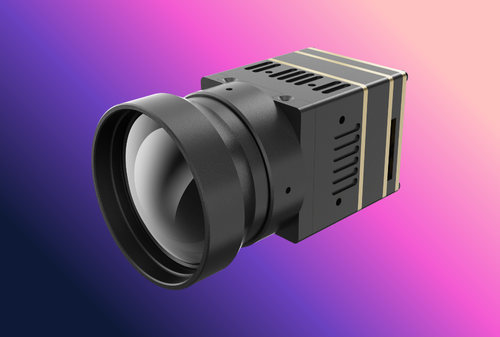
Start with our Thermal camera module lineup. If you need absolute distance for standoff and landing checks, add our Laser Rangefinder Module—the same HUD pipeline can overlay range and confidence.
Use Cases & Buyer Scenarios
Night SAR teams (urban rooftops, tree lines)
Need wide-to-medium FOV to scan façades and canopies, with overlays that stay readable in fast yaw. Optional range overlay helps judge standoff to obstacles and roofs during close approaches.
Disaster response and utility patrols
Inspect hotspots after storms or outages. Pilots favor consistent palettes/AGC and logging, so findings hold up in post-incident reviews. For ground confirmation, equip responders with Thermal Monoculars or Thermal Binoculars to converge quickly.
Agency pilots and training fleets
Standardized kits reduce training time and NFF (no-fault-found) returns. A shared acceptance script and clip per serial number accelerates onboarding and budget renewals.
Spec & Selection Guide (the heart)
Key parameters explained with trade-offs
-
Resolution & optics
256×192 / 384×288 pair well with FPV overlays; choose focal length to match typical standoff distances. Wider FOV scans faster; longer lenses help confirmation. -
NETD (mK)
Lower is better; ≤50 mK keeps small hotspots visible at dusk/night without heavy lenses or high power. (NETD is the minimum temperature change resolvable above noise.) -
Frame rate
25–50 fps feels natural in FPV; note some jurisdictions control >9 Hz thermal exports (plan classifications early). -
HUD & timestamps
Use event time at capture, not publish time, and preserve timestamps through SDK → OSD/goggles for stable overlays during fast maneuvering. -
Optional range overlay
A forward Laser Rangefinder Module gives distance/confidence to roofs/obstacles and helps landing checks when visual cues are poor (haze/smoke).
Comparison table—three SAR kit archetypes
| Kit archetype | Optic & FOV | Resolution | NETD target | Frame rate | Typical mass | Power | Notes |
|---|---|---|---|---|---|---|---|
| Wide-area search | Short focal, wide FOV | 256×192 / 384×288 | ≤50 mK | 25–30 fps | 60–90 g | 1.5–3 W | Fast coverage; easiest for pilot training. |
| Target confirmation | Medium focal | 384×288 / 640×512 | ≤40–50 mK | 30–50 fps | 80–120 g | 2–4 W | For rooftop/line checks; steady hover friendly. |
| Fusion with range | Short-to-medium + LRF | 384×288 | ≤50 mK | 25–30 fps | +30–60 g (LRF) | +1–2 W | Adds standoff/landing safety cues in HUD. |
Decision flow
If mission = wide-area search → pick wide FOV + ≤50 mK NETD + simple HUD.
If mission = confirmation/inspection → add medium focal + higher frame rate.
If close approaches at night → add Laser Rangefinder Module for range/confidence.
Always standardize event timestamps → stable overlays across rigs and pilots.
Integration & Engineering Notes
Electrical & Interfaces
-
Isolate video TX and compute rails; use low-noise buck with LC filters to avoid banding/dropped frames.
-
Size DC-DC for 2× steady-state current to survive cold starts and AGC peaks.
-
Expose SDK fields:
t_event_ns,temperature_px,palette_id, and optional hotspot candidates (x, y, T, conf). -
For future range fusion, reserve UART/CAN for LRF data and keep a shared time base.
Optics & Mechanics (mounting, alignment, sealing)
-
Use V-groove/dowel datums so boresight repeats after service; add elastomer standoffs to tame high-frequency vibration.
-
If enclosed, specify AR + anti-fog coatings and torque consistency for windows; include quick-swap hardware for field service.
-
For LRF fusion, align axes at two distances (near/far) and log residuals.
Firmware/ISP/Tuning (AGC, palettes, HUD)
-
Offer a small set of palettes and document LUTs so teams share a “thermal language.”
-
Keep HUD to three primitives: temperature cursor, palette tag, confidence bar.
-
Gate alarms with persistence (e.g., “>80 °C for >0.5 s”) to avoid flicker during fast yaw.
Testing & Validation (bench → field, acceptance criteria)
-
Bench: verify overlay latency with a blinking heat source and a photodiode on display; record power, fps, and lag.
-
Field: design a three-scene SAT—indoor hot/cold plates, outdoor dusk panorama, rooftop/treeline search; save a 10–20 s clip per serial.
-
NIST and DHS programs provide reproducible drone test frameworks you can mirror for operator proficiency and system validation.
Compliance, Export & Certifications
-
Dual-use/export controls
Thermal imaging can be controlled. The EU’s Regulation (EU) 2021/821 governs dual-use exports; in the US, higher-frame-rate thermal cameras typically fall under ECCN 6A003 on the Commerce Control List. Build your compliance pack (classification, end-use statements) before quoting. -
Operational standards
Align SOPs and training with NFPA 2400 to support public-safety adoption and risk reviews. -
Materials & EMC
Prepare CE/FCC/UKCA, RoHS/REACH, and user manuals; even when a thermal module is ≤9 Hz, channel partners expect a full documentation pack.
Business Model, MOQ & Lead Time (OEM/ODM)
-
Sampling: 2–4 weeks (standard lenses & SDK); 4–6 weeks when custom FOV/housings or HUD skins are required.
-
MOQ: 50–200 pcs baseline; 300+ for custom enclosures/windows.
-
Kitting: Ship “FPV Thermal SAR Kit” (module, harness, buck, mounts, acceptance checklist). Offer an upsell to Laser Rangefinder Module for range overlay.
-
Mini ROI example for agencies/distributors
| Driver | Before kit standardization | After kit standardization | Units/yr | Impact |
|---|---|---|---|---|
| Training time to competency | 6 h | 3.5 h | — | ↓ onboarding cost |
| Operator dwell per hotspot | 14 s | 8 s | 1,000 sorties | ↑ mission throughput |
| NFF returns | 1.0% | 0.5% | 2,000 units | −10 RMAs |
Pitfalls, Benchmarks & QA
Seven common mistakes (and fixes)
-
Overspec resolution and lenses → heavier, hotter, laggier. Match to standoff & task.
-
No acceptance script → subjective “quality” debates. Ship a 3-scene SAT and per-serial clip.
-
HUD overdesign → latency spikes. Keep three widgets and event timestamps.
-
Dirty power → banding/drops. Add LC filters; isolate VTX and compute rails.
-
No boresight datums → drift after service. Use V-groove/dowel pins.
-
Ignore export class → shipment delays. Pre-classify (EU 2021/821; US 6A003/6A993).
-
Skip range fusion where it helps → wasted sorties. In tight approaches, add LRF for distance/confidence overlays.
Benchmark recipe (copy-ready)
-
Scenes: indoor hot/cold plates; outdoor dusk panorama; rooftop/treeline search.
-
Metrics: detection persistent ≥N frames at confidence ≥C; overlay latency; power draw; flight time; (if LRF) range & confidence vs marker.
-
Artifacts: 10–20 s clip + CSV log per serial; signed acceptance.
FAQs
1) What NETD should agencies target?
≤50 mK is a practical target for legible overlays in night SAR without heavy optics or high power.
2) How many palettes do pilots really need?
Three well-documented palettes (e.g., white-hot, black-hot, ironbow) keep training short and decisions consistent.
3) Do we need >9 Hz frame rate?
For FPV HUDs, 25–30 fps feels best—but >9 Hz may trigger export controls. Confirm classifications and destinations before quoting.
4) When is adding range worth it?
If missions include close approaches to roofs/obstacles or landing in poorly lit areas, an LRF overlay reduces operator workload and improves safety margins.
5) What acceptance data should we store?
Per serial: power draw, fps, NETD check, overlay lag; a 10–20 s clip for the three standard scenes; (if LRF) range accuracy at two distances.
Tell us your airframe class, target FOV, and training goals. We’ll package a FPV Thermal SAR Kit—module, mounts, low-noise power, SDK/HUD scripts, and a copy-ready acceptance checklist—with an option to fuse range via Laser Rangefinder Module. Start with our Thermal camera module; handheld Thermal Monoculars and Thermal Binoculars support ground teams.