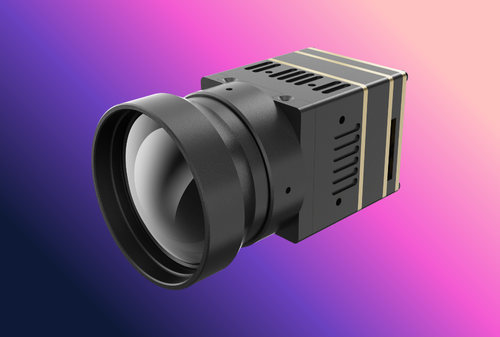
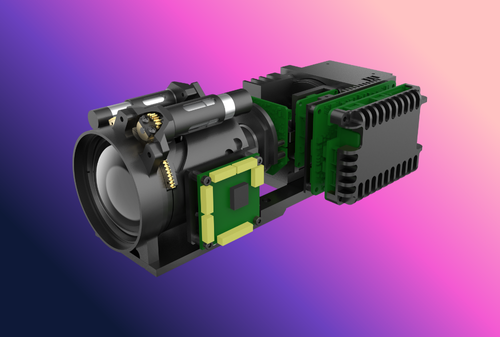
A thermal imager module lives or dies by its front optics, and the Germanium-versus-Chalcogenide lens decision sets the tone for transmittance, weight, cost, and long-term durability in the LWIR atmospheric window. Pick well and you improve SNR, stabilize gimbals, and protect budgets; pick poorly and you’ll fight noise, wind shake, and replenishment headaches for the product’s entire life. The goal of this article is to help engineering and procurement teams choose a lens material that fits real missions—ground security, UAV payloads, and industrial monitoring—without relying on vendor folklore.
Table of Contents
ToggleWhat these materials actually are
Germanium is a crystalline IR optic mainstay: it is transparent in the long-wave infrared, carries a very high refractive index (~4.0 around 10 µm), and is commonly coated with diamond-like carbon (DLC) for environmental robustness—hence its prevalence as the protective front window on many thermal cameras.
Chalcogenide glass (e.g., As–S/Se, Ge–As–Se families) is a moldable infrared glass used to make aspheric lenses and IR fibers; its big practical advantage is that it can be press-molded at scale and transmits across wide IR bands, including LWIR, enabling compact optics at lower unit cost than many crystalline materials.
Both materials operate in the same 8–14 µm “infrared window”, where the atmosphere is relatively transparent—precisely the band most thermal imaging camera modules and thermal camera cores exploit.
System-level implications you can’t ignore
Transmittance → SNR. The more energy the lens passes, the better your signal-to-noise floor—especially at higher f/-numbers or through protective windows. In practice, both Germanium and modern Chalcogenides are designed for healthy LWIR transmittance; system differences often come from coatings, thickness, f/-number, and window contamination, not the base material alone. The key is validating whole-camera SNR and NETD, not just datasheet transmittance. (NETD/MRTD are system outcomes influenced by detector physics and optics.)
Refractive index → lens count and size. Germanium’s high index makes compact, high-power elements feasible—great for short back-focal distances and tight packages. Chalcogenides also have high indices (though typically lower than Ge), but the ability to mold aspheres can cut element count and weight for the same performance, which matters in UAV gimbals.
Weight and moment of inertia. Germanium lenses tend to be denser/heavier than Chalcogenide glass equivalents for a given optical power and aperture. On masts, that raises wind-shake demands; in the air, it eats endurance and gimbal torque headroom.
Durability and coatings. Germanium usually ships with hard DLC coatings and is favored in harsh environments; Chalcogenide glasses are comparatively softer and more brittle, so programs with severe abrasion/erosion or space/DoD requirements often still specify Germanium and add protective measures.
Cost and supply risk. Germanium is a minor-metal, by-product material with volatile pricing and geopolitics—recent years saw sharp price moves and export controls that reverberated through IR supply chains. Chalcogenide feedstocks and processes are not immune to supply issues, but their press-molding economics can de-risk volume programs. When price stability matters, consult up-to-date USGS data and market reports before freezing a lens tree.
A practical material comparison
| Factor | Germanium | Chalcogenide glass |
|---|---|---|
| IR transmittance (LWIR) | Excellent in 8–14 µm with proper AR/DLC coatings | Excellent across wide IR ranges; composition-dependent; well-suited for LWIR lenses |
| Refractive index | Very high (~4 at 10 µm) → compact, high-power elements | High (material-dependent), plus aspheric molding reduces element count |
| Weight / density (system effect) | Heavier optics → higher gimbal/mount load | Typically lighter for similar optical power/aperture |
| Manufacturing | Diamond-turning/polishing common; DLC coating standard | Press-moldable aspheres at scale; cost leverage in volume |
| Durability | Robust with DLC; widely accepted for harsh duty | Softer/brittle in comparison; may need protective design/coatings |
| Supply & price | Prone to price/supply swings (minor-metal, export controls) | Less exposed to Ge price spikes; still dependent on specialty glass supply |
| Typical use | Defense, space, harsh environments, premium optics | High-volume commercial/UAV optics where weight & cost matter |
Sources for core claims: atmospheric/LWIR use, Ge index/IR role, chalcogenide molding and IR use, durability context, and supply volatility.
How the choice plays out by mission
Fixed security (perimeter, critical infrastructure). If your site faces abrasive dust, rain erosion, or frequent cleaning, Germanium with DLC is the safe bet. You’ll likely pair a modest-FOV lens for area awareness with a longer-focal node for distant corridors. Where maintenance is gentle and fleets are large, Chalcogenide aspheres can lower total camera cost and mast loads without sacrificing detection quality in the thermal imager module class.
UAV gimbals (public safety, inspection). Weight and balance rule. A molded-asphere Chalcogenide objective can shave tens of grams, improving flight time and easing PID tuning. If your mission includes salt spray, sand, or frequent wipe-downs, consider a Germanium front window even if the objective group is Chalcogenide, or specify protective coatings and sacrificial windows.
Industrial monitoring. For enclosed housings looking through clean viewports, Chalcogenide often delivers the best cost/performance. For hot, abrasive process zones (e.g., steel, cement) where viewport cleaning is rough, Germanium with DLC keeps optics alive longer.
Technical notes engineers ask first
1) Transmittance and the LWIR window. Your usable signal rides the 8–14 µm atmospheric window and your material’s bulk/AR transmission. Fresnel reflections are higher on high-index Ge, so AR stacks matter. In any case, judge system NETD/MRTD, not catalog curves.
2) Refractive index and element count. High index (Ge) shrinks lens forms; molded aspheres (Chalcogenide) can beat a spherical Ge stack on weight and count for the same MTF/field. Both routes can win—pick the one aligned to your thermal imaging camera module packaging and gimbal limits.
3) Durability and coatings. DLC on Ge is widely documented and yields a tough, abrasion-resistant outer surface. Chalcogenide elements benefit from careful housing design (recessed apertures, sacrificial windows) and coating selections suited to their softer substrate.
4) Cost and supply. USGS reporting and major-press coverage show that Ge pricing can shift quickly with policy and stockpiling; this can ripple into lens quotes and lead times. When life-cycle cost matters, model multiple lens trees (all-Ge, all-ChG, hybrid objective+window) against price scenarios rather than locking into a single BOM.
Mini decision framework
- If your platform is mass-constrained (small UAV gimbal) and environments are moderate → start with Chalcogenide aspheres for the objective, validate MTF and stray-light, and protect with coatings or a thin protective window.
- If your environment is abrasive/harsh or cleaning is frequent → specify Germanium with DLC at the front surface, possibly with Chalcogenide internal groups if weight or cost needs relief.
- If your procurement is exposed to Ge price swings → press-molded Chalcogenide can buffer BOM cost; keep an engineering-change path to a hybrid design if durability testing flags issues.
OEM/ODM integration notes
Standardize the mechanicals so you can drop in either a Germanium or Chalcogenide objective without re-cutting housings: same flange focal distance, clear aperture, and filter thread. Publish a common SDK for thermal camera core controls (gain/AGC, NUC cadence, palettes) so image tuning stays consistent across materials. For productization, start from our configurable Thermal camera module, review implementation details in Thermal camera module integration, align terms via the OEM/ODM Partner Program, and when your shortlist is ready, contact us to model MTF, NETD, and life-cycle cost against your exact ranges and environments.
FAQs
Is Germanium always more durable than Chalcogenide?
For abrasive, high-cleaning scenarios, yes in practice—especially with DLC on the outer surface. Chalcogenide is comparatively soft/brittle; design mitigations help but don’t fully erase the gap.
Does Chalcogenide truly lower cost?
At volume, press-molding enables cost-effective aspheres and weight savings, which can cascade into lighter gimbals and longer flights. Still, validate actual quotes and coating stacks; “glass is cheap” only holds with the right process plan.
What about image quality—can Chalcogenide match Ge?
Yes, when well-designed. Modern Chalcogenide glasses offer broad IR transmission and high index; molded aspheres can reduce element count while maintaining MTF. For severe environments, Ge retains an edge with DLC and proven hard-duty performance.
How do market shocks affect my lens choice?
Germanium prices and availability can move with export policies and stockpiling; that risk flows into lens BOMs. Keep an alternate Chalcogenide or hybrid path approved to avoid re-qualification under time pressure.
Call to Action
Ready to lock a material choice that survives technical and commercial scrutiny? We’ll quantify transmittance, MTF, weight, and life-cycle cost for Germanium, Chalcogenide, or a hybrid stack on your actual ranges, gimbal limits, and cleaning regime—then return a procurement-ready lens plan. Start with our configurable Thermal camera module, review mechanics/firmware details in Thermal camera module integration, align teams through the OEM/ODM Partner Program, and contact us to see data before you cut POs.