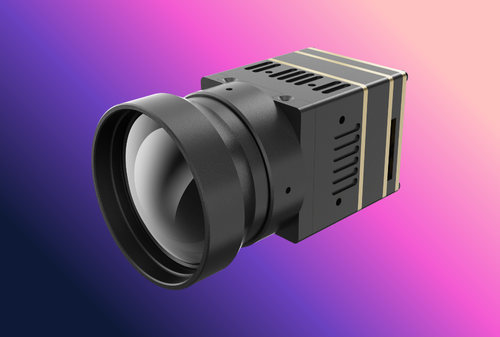
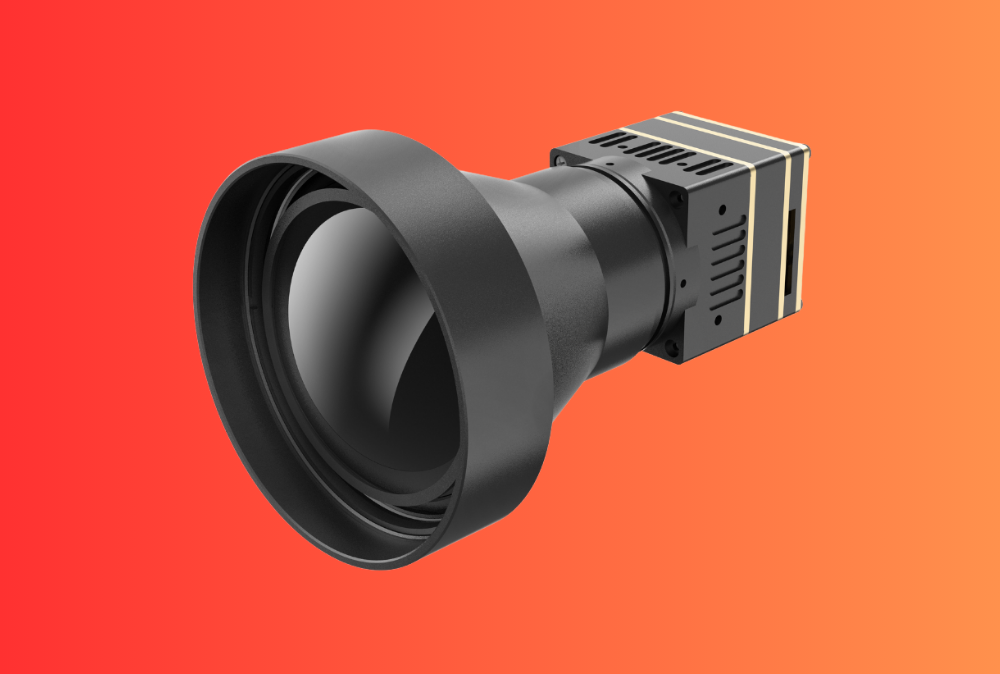
A thermal camera core delivers real range and clarity only when resolution is matched to FOV, IFOV, NETD, and the mission—not when a datasheet headline is picked in isolation. If you’re choosing between 256, 384, and 640, this guide shows how each resolution tier behaves in ground security and UAV workflows, what it costs in optics and weight, and how to write buyer-proof specs that will still look smart after field trials.
Table of Contents
ToggleWhy resolution choices are system choices, not marketing choices
Resolution sets sampling: how many pixels you can place across a target at a given field of view. That sampling only converts to detection/recognition/ID when the rest of the chain—lens MTF, focus discipline, NETD, atmosphere, encoder/display—preserves contrast at the spatial frequencies that matter. Think of resolution as opportunity; MTF and SNR are what cash the check. The practical question is not “Which is higher?” but “Which puts enough pixels on target at my distances with tolerable cost, weight, and workload?”
The geometry that decides everything
Two relations drive the decision:
- Angle of view (FOV): FOV≈2arctan (s/2f)), where sss is the sensor width and fff is focal length.
- Instantaneous FOV (IFOV) per pixel: roughly pixel pitch ÷ focal length (in radians). Smaller IFOV → more pixels across a given target angle.
Once you know FOV and IFOV, you can estimate pixels across the target at each mission distance and check where you sit against Johnson-style thresholds (roughly detection ≈ ~2 px across, recognition ≈ ~6–8 px, identification ≈ ~12–14 px across the critical dimension). Use this as planning, then verify in field clips.
What each tier really means in the field
When 256 (e.g., 256×192) is enough
256-class cores shine in short-range, wide-coverage roles or where cost and power dominate. Examples:
- Fixed security: close-in awareness nodes watching gates or small yards where standoff is modest.
- UAV search at low altitude where ground swath matters more than long-range recognition and where flight time is tight.
- Embedded/edge devices with small displays, low bitrates, or analytics that trigger on coarse blobs.
What to expect: With a moderate/wide FOV, you’ll hit detection reliably at short ranges and recognition only when you can fly/aim closer or narrow the view. The upside is a lighter, cheaper lens and simple compute loads. If your spec includes confident recognition beyond a few hundred meters, 256 often forces trade-offs you won’t like (very narrow HFOV, twitchy gimbals, or heavy optics).
When 384 (e.g., 384×288) is the practical middle
384 is the workhorse for many B2B builds because it balances pixels, lens size, and platform demands.
- Perimeter corridors and medium sites where the longest approach is a few hundred meters.
- UAV search at 100–120 m AGL with HFOV in the 20–35° band for efficient swath and manageable jitter.
- Cost-sensitive fleets where 640 would demand bigger germanium and heavier gimbals.
What to expect: With sane focal lengths, 384-class can support recognition of human-sized targets at moderate distances and identification at shorter standoffs, assuming decent NETD and stable mounts. It also leaves headroom for bitrate and compute budgets.
When 640 (e.g., 640×512) is justified
640 is the clarity tier for long corridors, overwatch, and evidence-grade clips—if the platform can actually hold the view.
- Long-range security where you must recognize vehicles far down an approach or ID people near fence lines in wind.
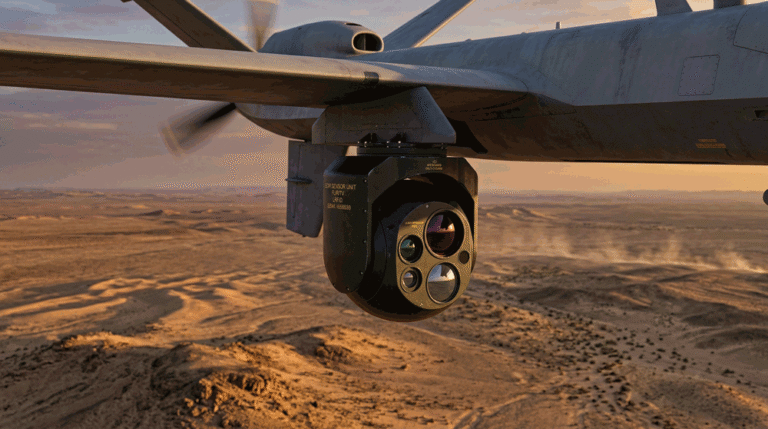
- UAV overwatch where pilots can hover and the gimbal is truly stabilized; you can fly a moderate FOV for search and switch to a narrower lens or dual-FOV block for confirmation.
- Analytics at distance where more pixels reduce false positives and help post-event review.
What to expect: 640 raises pixels-on-target at the same FOV, or lets you hold a wider FOV while retaining recognition probabilities—both are valuable. The costs are heavier optics, higher bitrate, and more demanding stabilization. If the mount or gimbal is marginal, the benefit can evaporate as motion blur and focus error flatten MTF.
Pitch, IFOV, and lens cost: the stealth factors behind resolution
Resolution isn’t the whole story: pixel pitch and focal length shape IFOV and lens size.
- For the same focal length, a 12 µm array yields smaller IFOV than a 17 µm array, placing more pixels across the same target angle.
- For the same FOV, a 12 µm sensor achieves it with a shorter focal length, which usually means a smaller, lighter, cheaper LWIR lens (for the same f/#).
Practically, that’s why some 384-class 12 µm builds challenge older 640-class results in the wild: smarter FOV choices and better stabilization beat naive “more pixels” in shaky, humid reality.
Security vs. UAV: same physics, different “good enough”
Ground security lives on repeatability: distances are known, wind and window cleanliness are the enemies. A common pattern is a wide node (awareness) plus a tele node (corridor). If your far end is 300–500 m, 384 may meet recognition with disciplined optics; beyond that, 640 helps—provided your mount is stiff and focus is nailed.
UAV runs on swath and stability. For brisk search at 100–120 m AGL, a 384 or 640 core at 19–25 mm (12 µm pitch) keeps swath productive; for clarification, a 35 mm view (or a second, narrower FOV) is useful only when the gimbal holds steady. Flying narrow all the time is a trap—jitter steals the very pixels you bought.
A plain-English way to size resolution (and defend the choice)
- List target widths and ranges that matter (e.g., 0.5 m human torso at 250/400/600 m; 2.0 m vehicle width at 1.0/1.5/2.0 km).
- Pick candidate FOVs based on mission (wide for awareness/search; moderate/narrow for corridors/overwatch).
- Compute pixels across the target at each distance for 256/384/640 with your likely pitch and focal lengths.
- Check Johnson-style tasks at those distances, then derate for real NETD, atmosphere, and stabilization.
- Price the optics/gimbal that achieve those FOVs. If the lens or gimbal class jumps, reconsider whether 640 is truly returning value or a smarter 384 build would win on total system ROI.
A comparative snapshot (indicative, mission-dependent)
| Resolution tier | Where it wins | Where it struggles | Typical optics & platform impact |
|---|---|---|---|
| 256×192 | Low-altitude UAV search; close-range gates/rooms; ultra-low power | Recognition at mid-range; evidence-grade clips | Small/light lenses; low bitrate; gentle on gimbals |
| 384×288 | Mid-range corridors; 100–120 m AGL search; cost-sensitive fleets | ID at long standoff unless optics are narrow and stable | Moderate lenses; manageable bitrate; stable on most PTZ/gimbals |
| 640×512 | Long-range recognition/ID; overwatch; analytics at distance | Weight, germanium cost, and stabilization needs | Larger lenses; higher bitrate; demands stiffer mounts and tuned gimbals |
Use this as a conversation map, not a promise. Your atmosphere, NETD, lens quality, and motion control decide who actually wins.
What about NETD, MTF, and atmosphere?
- NETD (lower is better) keeps faint ΔT features visible as distance grows. A real 20–30 mK advantage can move a difficult detection into “reliable” at the same resolution.
- MTF (contrast transfer) determines whether those pixels carry usable detail; slight de-focus or window contamination can flatten mid-high spatial frequencies and cancel a resolution bump.
- Atmosphere eats contrast over long, humid paths even in the LWIR window; plan seasonal range swings and test in your worst month.
Resolution alone cannot overcome poor SNR, soft optics, or humid air; it is the first lever, not the only one.
Cost, weight, and encoder: the budget reality of moving up a tier
- Optics: stepping from 384 to 640 at the same FOV usually means longer focal length or bigger image circle, driving germanium diameter and cost.
- Weight: heavier lenses raise mount/gimbal class, wind sensitivity, and power draw.
- Encoder/bitrate: more pixels mean more bits; long standoffs demand conservative compression to avoid washing out low-contrast details.
- Compute/UI: higher resolutions raise inference and display loads; ensure your UI keeps overlays legible without glare or flicker on night shifts.
When you total CAPEX + OPEX, a crisp 384 system can outperform a shaky 640 system simply because the latter creates re-flights, nuisance alarms, and exhausting reviews.
Procurement patterns that avoid regret
- Specify the Johnson task and distance (e.g., “recognition of 0.5 m human at 400 m, ≥50% probability”) rather than “we want 640.”
- Lock FOV and IFOV math in the PRD so the lens choice is clear.
- Require NETD at your fps and f/#, plus an MRTD curve on the final camera.
- Bake display/encoder presets into acceptance (bitrate floor, tone-curve, no oversharpening halos).
- Validate in worst-month weather and windy days, not only on blue-sky demos.
Mini case studies
Refinery perimeter (ground). The team needs recognition of persons at 350 m and detection of vehicles at 1.5 km on an approach. A 384 core with a 35 mm lens handles person recognition at 350 m in average humidity; a single 640 node watches the long, straight approach with a 50 mm lens. The hybrid layout beats an “all-640” plan on BOM and wind performance.
Public safety UAV (air). Search at 120 m AGL with occasional recognition during hover. A 640 core with a 19–25 mm lens keeps a productive swath and excellent detection; a brief switch to a 35 mm view during hover provides clarity if the gimbal is stable. If weight is tight, a carefully tuned 384 at 25–35 mm can meet spec while extending flight time.
Integration notes (OEM/ODM) so results don’t drift
Standardize behavior around your thermal camera core so resolution changes don’t create operator surprises:
- Ship the same AGC/NUC and palette presets across 256/384/640.
- Provide identical encoder profiles (search vs overwatch) so bitrate and tone-mapping are predictable.
- Keep mechanical optical keep-outs common (clear aperture, flange distance) so focal length swaps don’t re-spin housings.
- Version-control tone-curve LUTs and acceptance test scripts with the firmware.
If you want a turnkey baseline, start with our configurable Thermal camera module, review implementation details in Thermal camera module integration, align terms via the OEM/ODM Partner Program, and for mixed thermal + ranging builds see Laser Rangefinder Modules for sync and overlay planning. When you’re ready to put numbers on a page your CFO will sign, contact us for a resolution/FOV/NETD modeling session based on your real distances and atmospheres.
FAQs
Is 640 always better than 384?
Not if the lens, mount, or bitrate can’t support it. 640 helps only when MTF, NETD, and stabilization preserve its extra pixels. A well-tuned 384 often beats a shaky 640.
Will 256 save money without hurting outcomes?
For close-range detection or low-altitude search, yes. For mid-range recognition/ID, 256 usually forces narrow FOVs or closer standoff—check your geometry first.
What’s the single best predictor of success?
How many usable pixels you put across the target at range. “Usable” means preserved by optics, SNR, atmosphere, and encoder—not just counted on a spec sheet.
How do I future-proof?
Standardize on two FOV families and keep mechanical/firmware surfaces common so you can swap lens blocks or step up resolution later without retraining operators.
Call to Action
Want a shortlist you can actually buy this quarter—backed by numbers you can defend? We’ll model FOV/IFOV and Johnson-style ranges for your targets and weather, price the lens trees and gimbal classes that meet them, and return a spec that balances detection/recognition with CAPEX and OPEX. Start with the Thermal camera module, dig into Thermal camera module integration, align via the OEM/ODM Partner Program, and contact us to schedule a 30-minute resolution planning session.