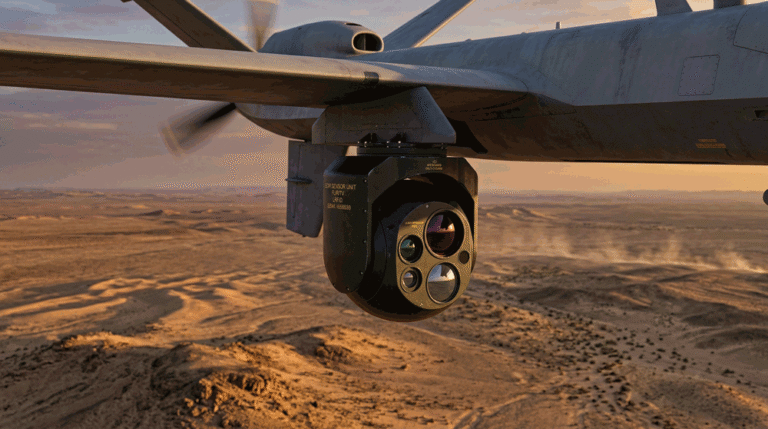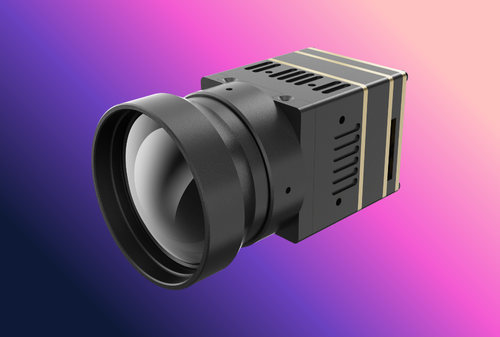
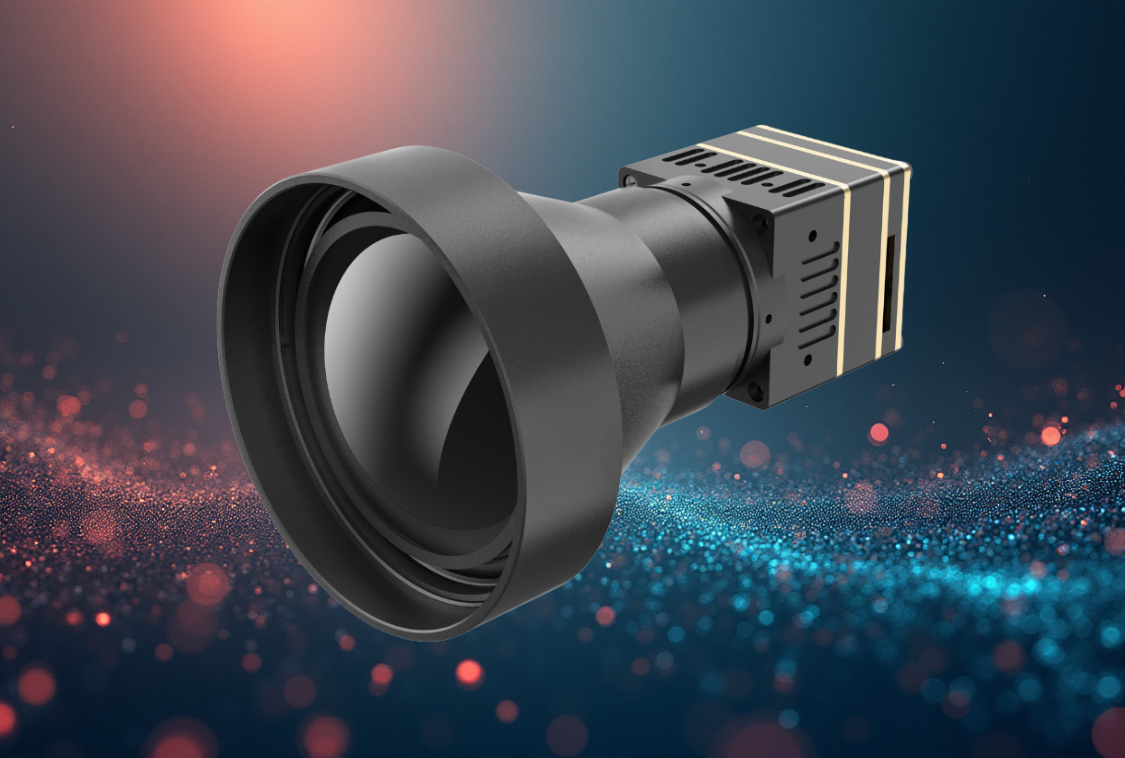
A thermal imaging module on a UAV pays for itself when the mission, optics, and settings are matched to real distances, weather, and operator workload— not to a brochure number. Below is a practical guide to ten UAV missions where thermal consistently returns value, with the specs that matter, the pitfalls that quietly cap range or reliability, and the integration choices that keep pilots confident and footage usable.
Table of Contents
ToggleBefore the missions: a short, system-level primer
Thermal success in the air is rarely about one number. Range and clarity come from a chain: optics (FOV, f/#, coatings) preserve contrast; the thermal camera core converts it with a noise floor set by NETD; IFOV (pixel pitch ÷ focal length) determines pixels on target; NUC policy (shuttered/shutterless/hybrid) keeps the image uniform as the focal plane’s temperature drifts; the gimbal and airframe decide how much motion blur you suffer; display/codec choices either preserve or crush mid-tones. Keep that stack in mind as we walk through missions—the same physics shows up in different clothing.
1) Search & Rescue (SAR)
What “good” looks like. Fast area coverage, then confident confirmation. Pilots need a moderate HFOV (20–35°) to spot spread-out heat signatures quickly from 80–150 m AGL, with a momentary narrower view for confirmation during hover.
Minimum viable specs.
- Core: 384×288 or 640×512 thermal imager module with 12 µm pitch.
- Lens: 19–25 mm for search; optional 35 mm for confirm.
- NETD: ≤50 mK @ 30–60 fps, f/1.0.
- NUC: shutterless-dominant (no freeze mid-search) with operator-triggered calibrate in hover.
- Encoder: “Search” preset ~8–12 Mb/s; “Overwatch” ~14–20 Mb/s for confirm clips.
Integration notes. Emphasize latency ≤150–200 ms glass-to-glass for steering; keep palettes simple (white-hot/black-hot + one high-contrast LUT). Add an on-screen temperature spot for triage but avoid treating absolute numbers as medical-grade.
Pitfalls. Flying narrow FOV for the entire mission increases micro-jitter and operator fatigue; over-aggressive sharpening adds halos that look like false positives.
2) Law Enforcement Overwatch
What “good” looks like. Steady, readable video during long loiters, with enough mid-tone preservation to follow people moving through mixed backgrounds (asphalt, trees, rooftops).
Minimum viable specs.
- Core: 640×512 thermal camera core with strong MTF and motorized focus.
- Lens: 25–35 mm at 12 µm pitch for 15–25° HFOV.
- NETD: ≤40–50 mK @ 30 fps; prioritize clean uniformity over the absolute minimum number.
- NUC: hybrid (shutterless most of the time; low-frequency shutter during hover or on command).
- Encoder: Overwatch ≥16 Mb/s; stable frame pacing; avoid long GOPs that smear motion.
Integration notes. Calibrate focus and MTF for night; keep a fixed “Evidence” LUT that preserves mid-tones. Log NUC events and FPA temperature with timestamps for evidentiary chain.
Pitfalls. Assuming “640 beats 384.” If the gimbal is light, wind blur wipes out the pixels you paid for; a shorter, stiffer lens often wins.
3) Industrial Inspection (Roofs, Solar, Substations, Pipelines)
What “good” looks like. Reliable detection of hotspots and insulation anomalies, repeatable from flight to flight so trending is meaningful.
Minimum viable specs.
- Core: 640×512 thermal imaging module with radiometric output (if trending).
- Lens: 13–25 mm for roofs/solar (swath); 35 mm for substation standoff.
- NETD: ≤40–50 mK; publish system NETD @ fps/f/#, not detector-only.
- NUC: hybrid for radiometry; schedule shutters pre- and post-flight, optionally during stable hover.
- Encoder: bitrate floor adequate for fine gradients (≥14 Mb/s for evidence clips).
Integration notes. Provide temperature scale lock and “delta from ambient” readouts; for solar, add a grid overlay to guide flight lines. Pair with RGB for context.
Pitfalls. Treating shutterless-only footage as radiometric truth; without periodic reference, drift accumulates.
4) Powerline & Tower Inspection
What “good” looks like. Crisp images of connectors, insulators, and splices from safe offsets, stable under gusts.
Minimum viable specs.
- Core: 640×512 with motorized focus and low latency (gimbal steering near structures).
- Lens: 25–35 mm; consider a dual-FOV block for fast in/out framing.
- NETD: ≤50 mK; focus repeatability across temperature.
- NUC: hybrid; freeze events only during hover.
- Encoder: Overwatch preset; no oversharpening halos (they mimic cracks).
Integration notes. Mechanical stiffness and focus discipline beat a tiny NETD win. Publish back-focus tolerance and a focus SOP; mount windows with low wedge.
Pitfalls. Over-narrow FOV that forces twitchy maneuvers; forgetting to raise shutter speed/exposure to fight motion blur during close fly-bys.
5) Wildlife & Livestock Monitoring
What “good” looks like. Broad-area scans at dawn/dusk, minimal disturbance, and safe identification of animals or herd count without chasing them.
Minimum viable specs.
- Core: 384×288 or 640×512 thermal imager module.
- Lens: 13–19 mm for swath; 25–35 mm for confirm during hover.
- NETD: ≤50–60 mK is usually sufficient; atmosphere and palette choice dominate.
- NUC: shutterless-dominant; animals don’t hold poses for calibration freezes.
- Encoder: “Search” preset for flight economy; short “Overwatch” clips for ID.
Integration notes. Use quiet airframes and keep standoff to avoid stress. Add geotagging/track overlays for count audits.
Pitfalls. Over-confident species ID at range; heat signatures overlap—train operators that thermal aids detection first, confirmation second (often with RGB).
6) Firefighting & Hotspot Mop-Up
What “good” looks like. Rapid situational awareness through smoke, mapping of hot edges or spot fires, and safe standoff from heat/domino hazards.
Minimum viable specs.
- Core: 384×288 or 640×512 with high frame rate (50–60 fps) to manage helicopter or rotorcraft vibration.
- Lens: 13–25 mm; wider FOV tolerates platform motion.
- NETD: ≤60 mK is typically adequate; dynamic range and tone curve matter more (avoid clipping).
- NUC: shutterless-dominant; show a confidence indicator when scene diversity is low (uniform smoke/sky).
- Encoder: high, stable bitrate; avoid long GOP during fast pans.
Integration notes. Provide preset palettes tailored for fire (e.g., Fire, White-hot with compressed highlights). Consider isotherms to highlight critical temperature bands.
Pitfalls. Using a narrow FOV that amplifies micro-jitter and motion blur in rotor wash; letting the tone curve crush mid-tones, hiding spot fires.
7) Maritime & Coastal Patrol
What “good” looks like. Clear detection of small craft and people against uniform sea/sky, with minimal false positives from wave sparkle and engine wakes.
Minimum viable specs.
- Core: 640×512; strong uniformity, excellent scene-based NUC with fallback for low-diversity horizons.
- Lens: 19–35 mm; consider dual-FOV for confirm.
- NETD: ≤50 mK; humidity erodes contrast—choose optics and bitrate accordingly.
- NUC: hybrid; schedule rare shutters in long loiters to reset drift; provide single-image fallback when diversity is low.
- Encoder: Overwatch bitrate; steady frame pacing; avoid temporal artifacts that smear fine wakes.
Integration notes. Stabilization is king over water; log NUC state and FPA temp for after-action review.
Pitfalls. Relying on shutterless-only with uniform scenes; residual striping becomes noticeable and fatiguing.
8) Building Envelope & Energy Audits
What “good” looks like. Repeatable, radiometric imagery that highlights heat leaks, poor insulation, or HVAC faults, captured at consistent geometry.
Minimum viable specs.
- Core: 640×512 radiometric thermal imaging module with documented system NETD.
- Lens: 13–25 mm; plan swath and altitude for roof grid lines.
- NETD: ≤40–50 mK; publish MRTD snapshot for common spatial frequencies.
- NUC: hybrid; shutters allowed at waypoints; temperature spot and scale lock options.
- Encoder: favor clarity over extreme compression; keep mid-tones intact.
Integration notes. Fly planned lanes with overlap; lock temperature ranges for before/after comparisons; pair with RGB orthos.
Pitfalls. Changing palettes/scales mid-run; mixing cloudy and sunny passes in the same report without normalization.
9) Wildlife Hazard Management at Airports (WHMP)
What “good” looks like. Detect and track birds or animals near runways/taxiways at dawn/dusk, supplying alerts to ground teams without spooking wildlife.
Minimum viable specs.
- Core: 384×288 or 640×512; low latency matters for cueing.
- Lens: 19–25 mm for runway swath; 35 mm confirm near fence lines.
- NETD: ≤50–60 mK is fine; motion/contrast dominate.
- NUC: shutterless-dominant; schedule shutters on the apron, not on final approach runs.
- Encoder: Search preset, steady pacing; design alerts for modest false positives to err on safety.
Integration notes. Integrate time sync and geo-fencing to prioritize hot zones; use KLV metadata so ATC logs align with detections.
Pitfalls. Over-tuning for far recognition and losing real-time search productivity.
10) Disaster Assessment & Mapping (Post-Event, Night Ops)
What “good” looks like. Safely locate survivors, downed lines, or gas leaks after storms or earthquakes; deliver geo-accurate products quickly.
Minimum viable specs.
- Core: 640×512, 12 µm pitch; radiometric (if utility trending required).
- Lens: 13–19 mm for wide coverage; 25–35 mm confirm.
- NETD: ≤50 mK; ensure system figure at mission fps/f/#.
- NUC: shutterless-dominant for continuity; hybrid if radiometry required during static hovers.
- Encoder: Overwatch for evidence clips; map products may ingest stills (TIFF) rather than stream.
Integration notes. Plan for PPS/PTP time sync and precise geotagging; coordinate with GIS teams for deliverables. Thermal pairs well with gas sensors and visible HDR in these missions.
Pitfalls. Overreliance on streaming only; for mapping, still capture workflows are often stronger and easier to post-process.
A quick cross-mission cheat sheet
| Mission | Typical HFOV | Recommended Lens (12 µm) | NUC Policy | Bitrate Preset | Notes |
|---|---|---|---|---|---|
| SAR | 20–35° | 19–25 mm (35 mm confirm) | Shutterless-dominant | Search 8–12 Mb/s | Latency ≤200 ms |
| LE Overwatch | 15–25° | 25–35 mm | Hybrid | Overwatch ≥16 Mb/s | Log NUC/FPA temp |
| Roof/Solar | 25–40° | 13–25 mm | Hybrid (radiometric) | Overwatch ≥14 Mb/s | Lock temp scale |
| Powerline | 10–20° | 25–35 mm | Hybrid | Overwatch ≥16 Mb/s | Motorized focus |
| Wildlife/Livestock | 25–40° | 13–19 mm (25–35 confirm) | Shutterless-dominant | Search 8–12 Mb/s | Quiet airframe |
| Fire/Hotspots | 25–40° | 13–25 mm | Shutterless-dominant | Overwatch ≥14 Mb/s | Isotherms useful |
| Maritime | 15–25° | 19–35 mm | Hybrid + fallback | Overwatch ≥16 Mb/s | Stability is king |
| Building Energy | 25–35° | 13–25 mm | Hybrid | Overwatch ≥14 Mb/s | Radiometric stills |
| Airport WHMP | 20–35° | 19–25 mm (35 confirm) | Shutterless-dominant | Search 8–12 Mb/s | Geo-fencing |
| Disaster Mapping | 25–35° | 13–19 mm (25–35 confirm) | Shutterless → Hybrid in hover | Overwatch ≥14 Mb/s | Stills for maps |
Use this as orientation, not a promise; your airframe stability, atmosphere, and optics MTF ultimately decide.
How to present UAV use cases on your product page
- Lead with a mission menu (the ten above), not just feature bullets.
- For each mission, show a 15–20 s clip in the worst month of your weather.
- Offer two encoder presets (Search/Overwatch) and explain when to use each.
- Publish IFOV math once per mission; keep it simple and round.
- Document your NUC policy with pilot-facing UI behaviors (freeze countdown, calibrate button, confidence indicator).
FAQs
Which pixel resolution is best across these missions?
None universally. Match IFOV to the target sizes and distances you actually fly. A well-tuned 384 with a shorter, stiffer lens can beat a shaky 640 at recognition.
Is shutterless NUC always the right answer for UAVs?
For continuity, yes; for radiometry and uniform horizons, a hybrid with occasional shutters or single-image fallback yields steadier results.
How much bitrate do I really need?
For long standoff recognition, push Overwatch to ≥14–20 Mb/s to preserve mid-tones; use Search at 8–12 Mb/s for area scans. Avoid long GOPs during fast pans.
Do I need radiometric output?
Only when you’re trending temperatures (solar, substations, energy audits). For SAR or overwatch, non-radiometric with conservative tone curves is usually enough.
Call to Action
If you’re mapping UAV missions to a thermal imaging module and want a plan your pilots and procurement both trust, we’ll size FOV/IFOV to your targets, set NUC and encoder presets for each mission, and return a shortlist of lenses and windows you can actually source this quarter—plus acceptance tests you can paste into the PO. Start with Thermal camera module, dive into Thermal camera module integration, add overlays via Laser Rangefinder Modules, align with the OEM/ODM Partner Program, then contact us to schedule a 30-minute UAV mission workshop.
References — Authoritative
-
Thermography (LWIR fundamentals). Wikipedia.
-
Microbolometer (uncooled detector). Wikipedia.
-
Infrared atmospheric window (8–14 µm). Wikipedia.
-
Johnson’s criteria (D/R/I planning). Wikipedia.
-
Instantaneous field of view (IFOV). Wikipedia.
-
Unmanned aerial vehicle (UAV) — operations context. Wikipedia.
We cite only authoritative sources. Validate final settings with flight tests in your worst-weather month and on your actual airframe and gimbal.