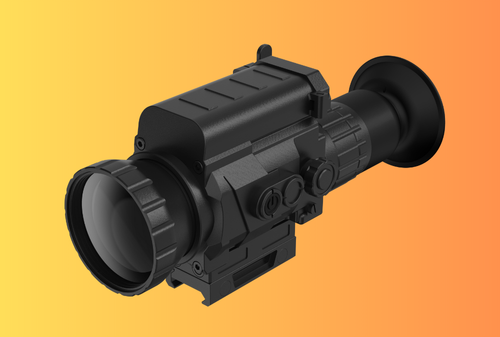
When hunters search for the best thermal scope, they are really asking three different questions: which scope fits their budget, which fits their terrain and distances, and which brand they can trust when a shot matters. For a new or growing hunting brand, the challenge is to turn that scattered search demand into a clear good–better–best product ladder that fits your dealers’ price steps and still makes technical sense.
Table of Contents
ToggleThis guide shows brand owners and distributors how to design a thermal scope line that feels like a “best thermal scope” answer at every price band, instead of one flagship model trying to do everything.
Understanding the Core Concept
What “best thermal scope” means in engineering terms
Online reviews talk about the best thermal scope as if there were a single winner. In practice, “best” is the intersection of:
- Image performance (resolution, NETD, optics, refresh).
- User experience (FOV, controls, reticles, battery system).
- Reliability (recoil, waterproofing, firmware stability).
- Price and support (dealer margin, warranty, service).
A “best” scope at 1 500 USD is not the same as a “best” scope at 3 000 USD. Your job as a B2B buyer is not to chase a mythical absolute best thermal scope, but to define the best choice inside each price step your dealers actually sell.
Quick technical primer: how a thermal scope works
A thermal scope forms an image from infrared radiation instead of visible light. Infrared thermography typically uses long-wave infrared (LWIR) in the 7–14 µm band, where objects above absolute zero naturally emit radiation that can be mapped to surface temperature differences.
Inside the housing, the core optical path is:
- LWIR objective lens (germanium or chalcogenide) that focuses thermal radiation.
- Microbolometer focal plane array, an uncooled sensor whose pixels change resistance when heated by incoming IR; electronics measure that change to infer temperature patterns.
- Readout and processing electronics that digitize the signal, apply calibration (non-uniformity correction), adjust gain and contrast, and map temperatures to a greyscale or pseudocolor image.
- Microdisplay and eyepiece, similar in concept to a telescopic sight but showing a video image instead of a purely optical view.
The sensitivity of the system is often expressed as noise-equivalent temperature (NET) or NETD, the temperature difference that gives a signal equal to the detector noise; uncooled bolometric detectors typically achieve NET figures on the order of 30–200 mK depending on design.
For this article, you do not need to become a sensor designer—but you do need enough literacy to translate “best thermal scope” into a specification and test plan your OEM or ODM partners can deliver.
Market Relevance and Applications
Map search demand to real hunting segments
If you look at search analytics around “best thermal scope”, you can usually group queries into three intent bands that map nicely to a good–better–best ladder:
- “Affordable best thermal scope” / entry-level
- Hunters upgrading from glass or digital night vision.
- Typical shots: 50–150 m on hogs, foxes, or coyotes.
- Priorities: price, simple UI, first “wow” experience.
- “Best thermal scope for hogs/coyotes” / serious hunter
- Regular night hunters, often on larger properties.
- Typical shots: 100–250 m, sometimes 300 m.
- Priorities: image clarity, repeatable zero, battery life, video clips.
- “Best thermal scope for long range / pros”
- Guides, pest-control contractors, some LE users.
- Typical shots: 150–400 m, extended sessions.
- Priorities: robust mechanics, long-range recognition, service support.
Your dealers see the same structure from another angle: price ladders. They want a line where customers can:
- Start at a reachable entry price.
- Step up to a visibly better mid model.
- Stretch to a top model that truly feels like the “best thermal scope” they could justify.
Translate segments into price bands
A typical ladder might look like:
- Good: hits the lowest “serious” thermal price point in your market; often 256×192 or 384×288 scope with simple feature set.
- Better: 20–40 % more expensive; noticeable upgrade in resolution, FOV, and UX.
- Best: 60–100 % above entry; 640×512, stronger mechanics, more recording and integration features.
Exact numbers depend on currency and channel, but the pattern holds. Your design task is to make sure every step feels justified in both performance and specification, so your dealers are confident recommending the right rung.
Technical Insights and Key Specifications
In this section we will define a three-tier blueprint for a thermal scope line that answers “best thermal scope” at each price level.
Core optical and sensor tiers
First, define the optical/sensor backbone of your line.
| Tier | Candidate sensor | Pixel pitch | Typical lens | Approx. HFOV | Primary use |
|---|---|---|---|---|---|
| Good | 256×192 | 12 µm | 19 mm | ~9–10° | General hog hunting to ~150 m |
| Better | 384×288 | 12 µm | 25 mm | ~10–12° | Predators & hogs to ~250 m |
| Best | 640×512 | 12 µm | 35–50 mm | ~12–8° | Longer-range predators to ~400 m |
These choices reflect current microbolometer trends, where 12 µm pixels allow compact lenses and high spatial sampling.
Pair each tier with a base magnification that matches real use:
- Good: ~1.8–2.0× (fast scanning, moderate distance).
- Better: ~2.5× (balanced scanning and detail).
- Best: ~3–4× (priority on recognition/ID range).
Sensitivity, NETD, and frame rate per tier
Now anchor each tier with realistic sensitivity and refresh targets.
NETD and thermal sensitivity. As defined in radiometry, NET or NETD is the temperature that would produce a signal equal to the detector noise—often reported in mK. Lower NETD generally means better ability to see small temperature differences, but only when optics and processing are well matched. NIST performance evaluations of thermal imagers for fire service, for example, include thermal sensitivity alongside FOV, non-uniformity and spatial resolution as core image-quality metrics.
A practical target per tier:
- Good: NETD ≤ 50–60 mK at 25 Hz, f/1.0.
- Better: NETD ≤ 40–50 mK at 30 Hz, f/1.0.
- Best: NETD ≤ 35–40 mK at 50 Hz, f/1.0.
Frame rate.
- Good: 25 Hz is adequate; it keeps cost down and meets many export limits.
- Better: 30 Hz smooths panning and tracking.
- Best: 50 Hz supports fast vehicles and running game.
You can accept slightly worse NETD for higher refresh in the best tier if the field performance is clearly superior.
User-experience features by tier
Most hunters judge the “best thermal scope” on how it feels on the rifle before they ever ask about pixel counts.
Design your ladder so that UX improves clearly at each step:
Good
- 2–3 simple reticles, one main palette (white-hot/black-hot), basic digital zoom.
- Manual NUC plus low-frequency automatic NUC; freeze ≤1 s.
- CR123A or 18650 power; ~4–5 h runtime at 25 °C.
- Single zeroing profile.
Better
- Expanded reticle set and color palettes; configurable shortcut button.
- Hybrid NUC (shutterless dominant with smart auto-shutter at power-on).
- 18650 or proprietary pack; ~6–8 h runtime.
- 3–4 zeroing profiles with names.
- On-board recording and simple mobile app for clip transfer.
Best
- Full reticle catalog with user presets.
- Very smooth digital zoom, picture-in-picture mode.
- Hybrid NUC with user override; freeze strongly minimized.
- Long-life battery pack, external power option.
- 5+ zero profiles; integration with optional rangefinder for holdover display.
Across tiers, keep control layout and menu logic consistent. This reduces training cost and makes upgrades easy to sell.
Integration and OEM/ODM Considerations
Launching a “best thermal scope” line that fits your dealers’ price ladder requires re-use with discipline: common cores, housings, and firmware where possible, and limited, strategic variation.
Common platform vs unique models
From an OEM/ODM perspective, you gain speed and reliability by standardizing:
- A common mechanical chassis with modular lens mounts.
- A shared electronics platform and firmware base.
- Identical control layouts and eyepiece ergonomics.
Within that platform, vary:
- Sensor resolution and lens.
- NETD grade of the core.
- Enabled firmware features (recording, Wi-Fi, ballistic apps).
This lets you amortize R&D and testing across the whole line while still giving dealers a clear ladder.
Firmware, NUC policy, and testable quality
Because microbolometers drift with temperature, non-uniformity correction (NUC) is essential for usable images. NIST work on thermal imagers for fire service shows that non-uniformity, spatial resolution, effective temperature range, and thermal sensitivity interact in determining image quality and task performance.
In your OEM brief, define:
- NUC policy per tier (frequency, automatic vs manual control).
- Maximum allowed freeze duration and frequency.
- Simple field tests for non-uniformity (view a uniform wall or sky and grade banding).
Build these into your acceptance-test checklist, not just marketing brochures.
Interfaces and future integrations
Plan ahead for system integrations:
- Use a common internal interface to the thermal core so you can reuse it in clip-ons or scanners.
- Reserve a UART or CAN channel for future accessories, such as external rangefinders or ballistic computers.
- Document a minimal control API that can later be exposed as part of an integrator SDK.
As you refine the line, you can also use your existing <a href=”/thermal-camera-module/”>Thermal camera module</a> platforms as building blocks to shorten development cycles and improve consistency across products.
Cost, Compliance, and Lifecycle ROI
CAPEX structure and price ladder alignment
Your ex-factory cost is driven mainly by:
- Sensor and wafer cost (higher resolution and lower NETD grades cost more).
- Optics (larger, faster LWIR lenses are expensive).
- Housing and mount complexity.
- Microdisplay and power system.
A well-designed ladder typically keeps housing, electronics, and many mechanical parts common, and lets you pay more only where customers value it: sensor grade, lens, and UX features.
Think in dealer price steps:
- Good: benchmark against “entry-level best thermal scope” models already selling.
- Better: add 25–40 % retail; make sure the added features are visible in 10 seconds on demo.
- Best: add 60–100 % over Good; ensure dealers can justify it as the “last step before professional gear”.
Compliance and export
Thermal scopes are subject to both consumer electronics regulation and, in some regions, dual-use/export controls. You may need to consider:
- EMC and safety standards underlying CE and FCC marks.
- Material restrictions such as RoHS/REACH in the EU.
- National limits on thermal resolution and frame rate for export.
Work with your OEM/ODM partner to define:
- A “domestic” configuration with full frame rate.
- An “export-compliant” configuration (e.g., ≤9 Hz) sharing most hardware.
Lifecycle: warranty, service, and firmware
A thermal scope line is a multi-year asset for your brand. To protect ROI:
- Design mounts and eyepieces so they stay compatible across generations.
- Agree up front on warranty terms, RMA logistics, and spare-parts availability.
- Plan at least annual firmware maintenance releases that can be rolled out via SD card or a branded app.
Buyer insights checklist
- Treat “best thermal scope” as three best-in-class answers, one per price band.
- Anchor each tier in real distances and game, not only spec sheet deltas.
- Make NETD and resolution believable by tying them to test scenes and acceptance criteria.
- Re-use platforms aggressively, but give each price step a visible upgrade story.
- Budget for firmware maintenance and service; they quietly decide long-term reputation.
Partnering and Next Steps
Turning search demand for the best thermal scope into a coherent product ladder is easier when you stand on proven building blocks instead of starting from zero.
A practical next step is to sit down with an engineering-driven partner who can:
- Map your dealers’ price bands and hunting scenarios to sensor + lens + NETD combinations.
- Reuse proven cores and optics from your Thermal camera module integration work so development risk stays low.
- Add optional ranging and ballistic features by pairing scopes with your existing Laser Rangefinder Modules.
- Formalize a multi-year roadmap and exclusivity terms under an OEM/ODM Partner Program.
If you want to turn “best thermal scope” from a vague search phrase into a three-step line your dealers can sell with confidence,contact us to schedule a working session. We will build a first-pass ladder—Good, Better, Best—with specs, tests, and pricing logic that you can refine into your next catalog.
FAQs — Building a “Best Thermal Scope” Line
Q1: Does every model in the line need 640×512 resolution to be competitive?
No. Many hunters asking for the “best thermal scope” actually mean “best scope I can afford this season.” A carefully tuned 384×288 scope with an appropriate FOV and good mechanics can be the “best” answer at an entry or mid price point, while 640×512 is reserved for your true flagship.
Q2: How do I relate detection and recognition range to my specs?
A practical approach is to use Johnson’s criteria, which estimate how many line-pairs or pixels across a target are needed for detection, recognition, and identification. Ask your OEM to provide “pixels on a 0.5 m target” at several distances and check that your Better and Best tiers satisfy recognition thresholds at your target ranges.
Q3: What should be the price gap between Good, Better, and Best?
There is no universal rule, but many successful lines use roughly 1 : 1.3 : 1.8 or 1 : 1.4 : 2.0 retail ratios across Good–Better–Best. The important part is that each step shows a clearly visible upgrade in a 30-second counter demo—sharper image, more comfortable FOV, smoother zoom, or extra features.
Q4: How many models should I launch in the first year?
For most brands, two or three is enough: one solid mid-tier model that can be your volume workhorse, one more affordable “on-ramp” model, and optionally a true flagship for image and brand halo. Additional variants (different lenses or regional configs) can come later once the ladder is proven.
If you want to turn “best thermal scope” from a vague search term into a clear good–better–best product ladder your dealers can sell, our team can help map real hunting ranges and price bands into concrete specs and tests. Start by reviewing platforms in Thermal camera module, explore mechanics and firmware in Thermal camera module integration, add ranging and ballistic options with Laser Rangefinder Modules, align roadmap and exclusivity through the OEM/ODM Partner Program, then contact us to schedule a 30-minute product line workshop.